Preferences
Privacy is important to us, so you have the option of disabling certain types of storage that may not be necessary for the basic functioning of the website. Blocking categories may impact your experience on the website. More information
Privacy is important to us, so you have the option of disabling certain types of storage that may not be necessary for the basic functioning of the website. Blocking categories may impact your experience on the website. More information

Compare 9 off-page SEO tools for backlinks, outreach, citations and mentions: free options, prices checked on official sites, strengths and limits.
In short
Off-page SEO tools are the software you use to measure, earn and protect the signals other sites send about you: backlinks, brand mentions and local citations. Google Search Console and Ahrefs Free cover your own links at no cost. Ahrefs, Semrush or Majestic research competitors, BuzzStream and Hunter run outreach, and Sorank earns contextual links for you.
Want to go further? Ask
Quick quiz
Which kind of SEO tool is right for you?
Sorank matches your answers


Test it for 3 days on your own site and see where you stand on Google, ChatGPT and the other AIs.
Start 3-day free trial3 days free, then stop whenever you want. 90-day results guarantee, conditions apply.
The best off-page SEO tool depends on the job: earning links, researching links, running outreach, building citations or tracking mentions. No single tool does all five well. The table gives the job each tool does best and the cheapest plan published on its official site, read on November 27, 2026.
| Tool | Best for | Main strength | Published starting price |
|---|---|---|---|
| 1. Sorank | Site owners who want links earned without outreach | Contextual dofollow links from sites in your niche, tracked until verified | $49 a month, billed yearly |
| 2. Ahrefs | SEO teams researching any site's links | Backlink research on any domain, free version for your verified sites | Free for verified sites, then €119 a month (Lite) |
| 3. Semrush | Marketers who want links inside a full SEO suite | Backlink Audit with disavow file, Backlink Gap | Free plan (10 reports a day), then €134 a month (SEO) |
| 4. Majestic | Link specialists and auditors | Trust Flow, Topical Trust Flow, historic index | £39.99 a month (Lite) |
| 5. Google Search Console | Every site owner | Google's own sample of the links to your site | Free |
| 6. BuzzStream | Teams running link outreach and digital PR | Prospects, emails and link monitoring in one place | $49 a month (Starter) |
| 7. Hunter | Finding the right contact for a pitch | Email finder that shows the public source of each address | Free (50 credits a month), then €34 a month billed yearly |
| 8. BrightLocal | Local businesses and local SEO agencies | Citation building and citation tracking | $41 a month (Track), citations from $2 each in bulk |
| 9. Brand24 | Brands with press, forum and social coverage | Mention monitoring to find unlinked mentions | $249 a month ($199 billed yearly) |
A tool had to pass three tests to enter: a working official site we could read, a feature that serves off-page SEO directly, and a published price or a clear free plan. Every price and feature below comes from the tool's own product or pricing page. We did not copy prices from other lists, and we left out temporary promotions.
The order follows impact on results. A tool that gets you new links ranks above a tool that measures them, and a tool that measures any site ranks above one that only sees yours. A lower rank does not mean a weaker product: Google Search Console is fifth, and it is still the first tool every site should open.
Two well-known tools are missing on purpose. We could not read Moz's official pricing page or Bing Webmaster Tools' backlink documentation on the day of this review, so we did not rank them on second-hand facts.
Note on currencies
Ahrefs, Semrush and Hunter show prices in euros to visitors in Europe, Majestic shows pounds sterling, and the others show US dollars. The amount on your screen may differ. Prices exclude VAT.
Each review says what the tool is, who it suits, what it does well, one honest limit and the price read on its official site on November 27, 2026. Read the "for whom" line first: it saves you from paying for a research suite when what you need is links.
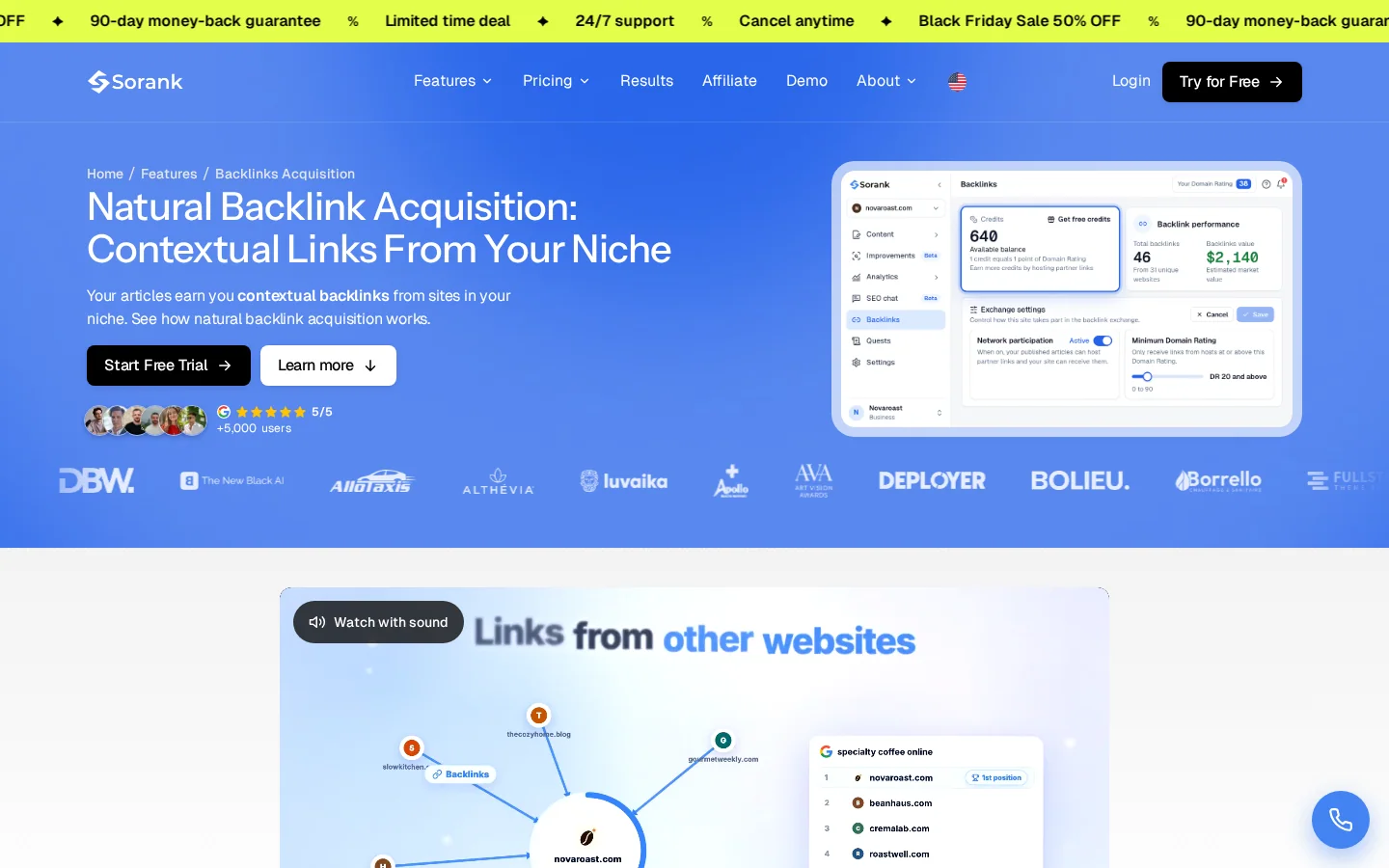
What it is. Sorank is an SEO and GEO platform that runs on autopilot. On the off-page side, its natural backlink acquisition feature places contextual, dofollow links to your site inside articles published by other Sorank users in your niche. You do not send a single outreach email.
Who it suits. Founders, small teams and agencies who know they need links but have no time for prospect lists, cold emails and follow-ups.
Strengths.
What to know before you start. Backlink exchanges are part of a paid subscription; the 3-day free trial lets you test the rest of the platform first. For deep research on a competitor's link profile, pair it with one of the data tools below.
Price. From $49 a month per site on the Essential plan billed yearly, with backlink exchanges included. The Pro plan ($129 a month billed yearly) adds 100 backlink credits a month, the minimum DR filter and link targeting of your best pages. 3-day free trial and 90-day money-back guarantee, conditions apply (Sorank pricing).
 Ahrefs
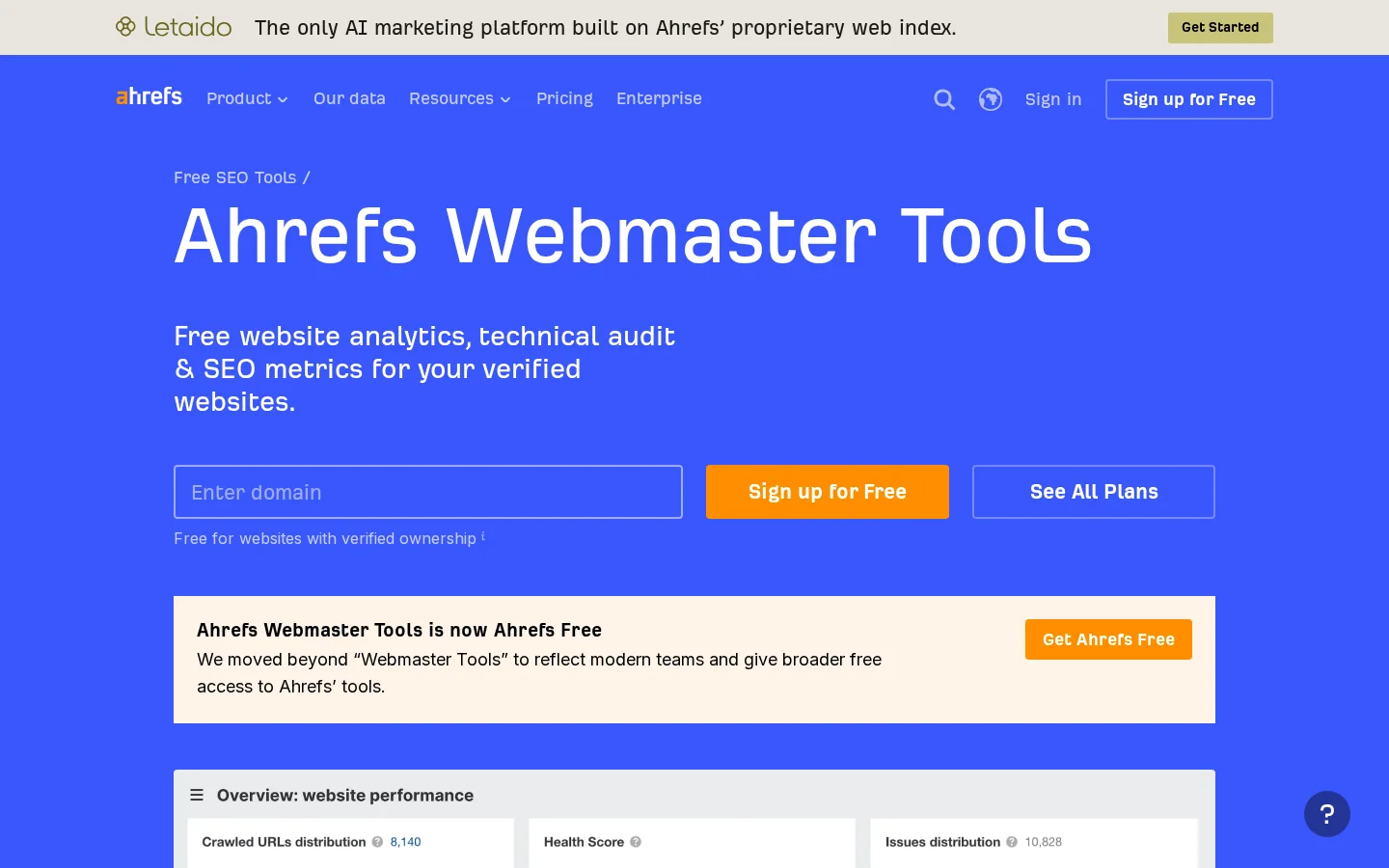
What it is. Ahrefs is an SEO data suite. Its Site Explorer shows the backlinks, referring domains and anchors of any domain, and its Domain Rating has become the common language of link sellers and buyers.
Who it suits. SEO teams and consultants who research competitors' links every week. Site owners on a budget can start with Ahrefs Free on their own sites.
Strengths.
Limit. History depends on the plan: 6 months on Lite, 2 years on Standard, 5 years on Advanced. If you audit old penalties or a long-running link campaign, Lite will feel short.
Price. Ahrefs Free costs nothing for verified sites. Paid plans on the Ahrefs pricing page: Lite €119 a month, Standard €229, Advanced €419, with up to 17% off when you pay yearly. Lite includes 1 user.
 Semrush
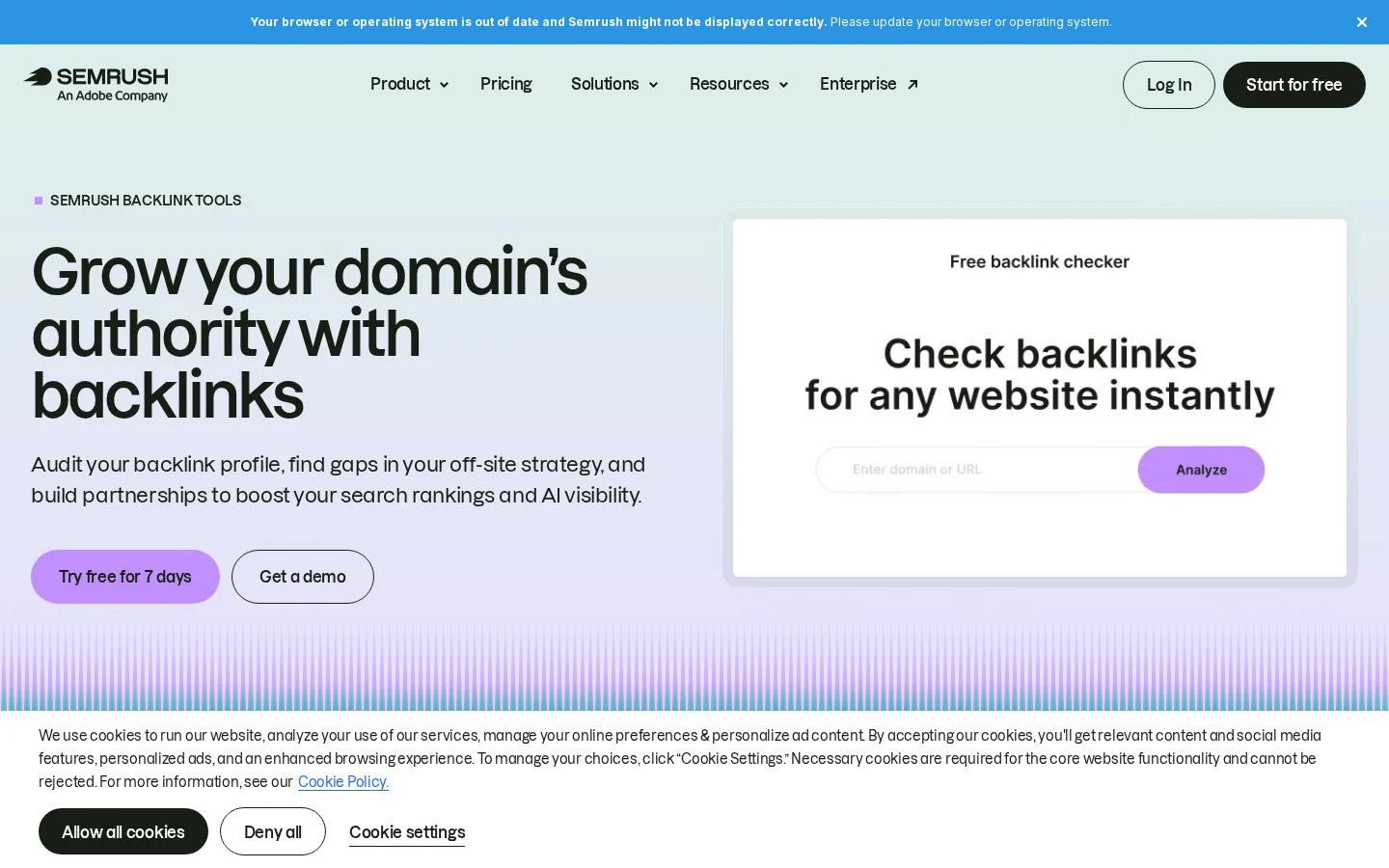
What it is. Semrush is an all-in-one marketing suite. Its link toolkit includes Backlink Analytics, Backlink Audit and Backlink Gap.
Who it suits. Marketing teams that want keyword research, rank tracking and link data under one login.
Strengths.
Limit. You pay for a whole suite. If links are your only need, a specialist like Majestic or a link acquisition tool costs less.
Price. A free plan with 10 reports a day and no credit card. The SEO plan costs €134 a month, or €112.52 a month billed yearly; paid plans come with a 7-day free trial.
 Majestic
What it is. Majestic is a link intelligence tool and nothing else. It built its own crawler and its own metrics: Trust Flow, Citation Flow and Topical Trust Flow, which classifies the links you get by topic.
Who it suits. Link builders, auditors and anyone who vets sites before buying or accepting a link.
Strengths.
Limit. The Historic Index and the API are not in Lite. If you audit a site with a long history, you need Pro.
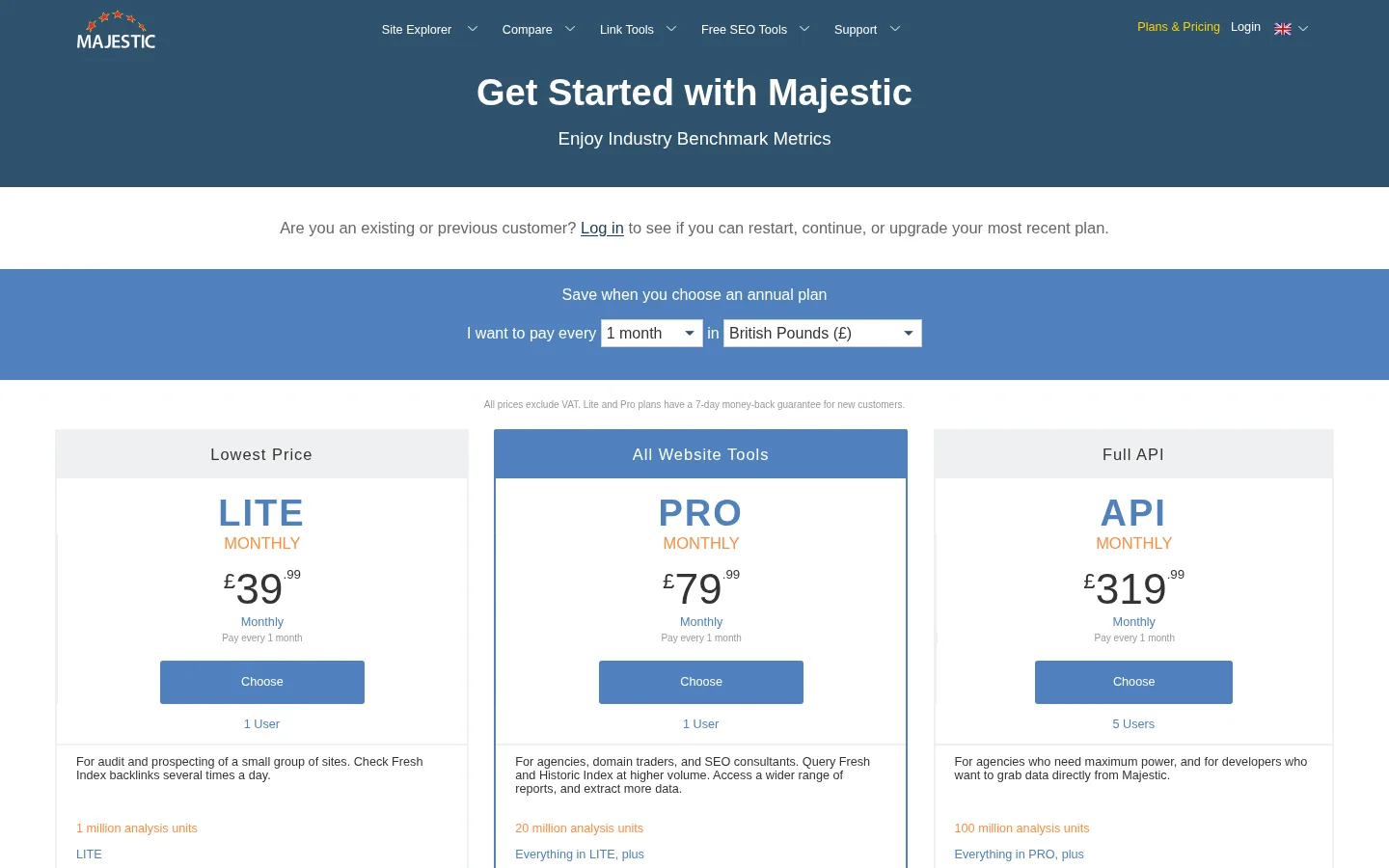
Price. On the Majestic plans page: Lite £39.99 a month (£399.90 a year), Pro £79.99 a month, API £319.99 a month. New customers on Lite and Pro get a 7-day money-back guarantee.
 Google Search Console
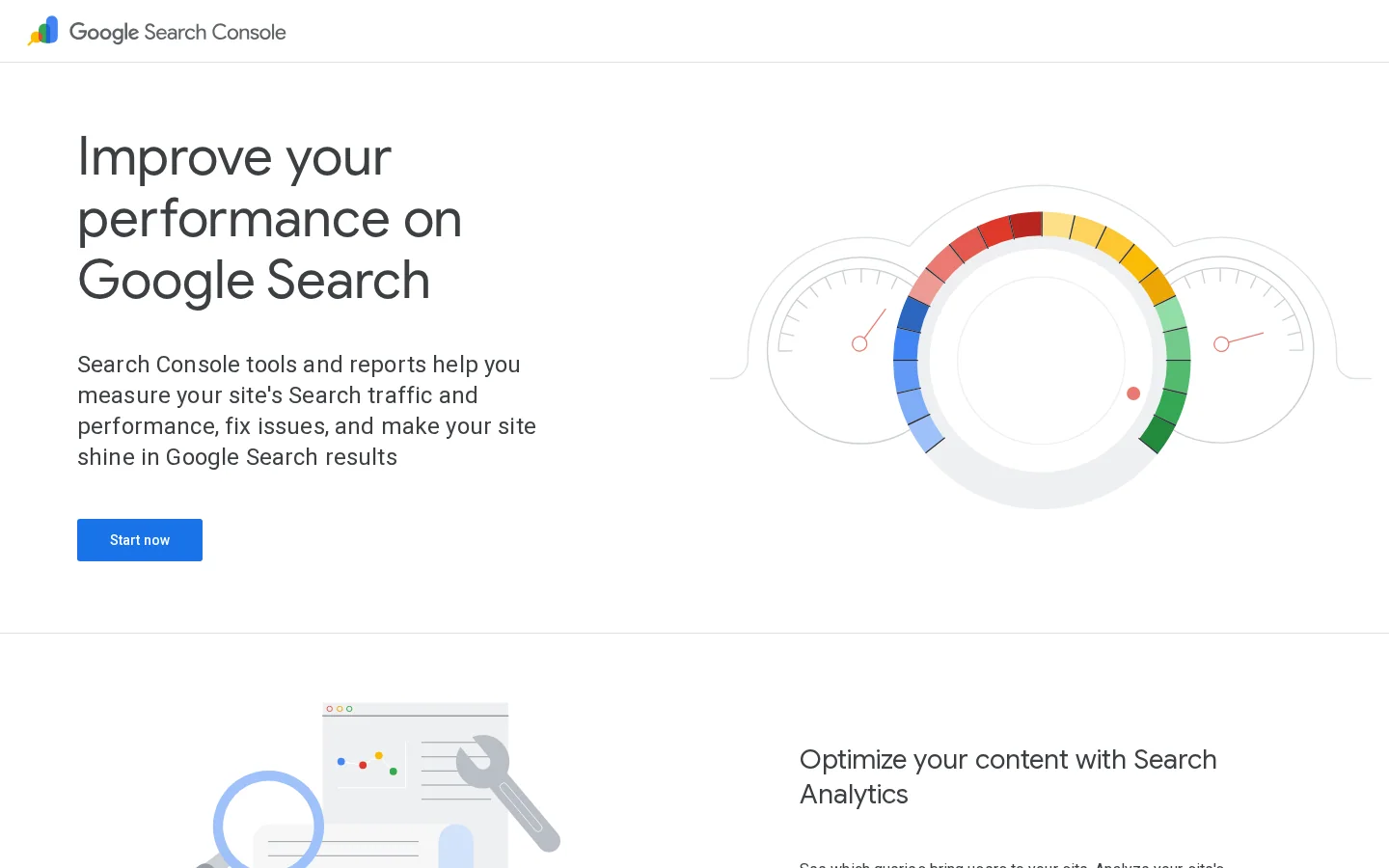
What it is. Google describes Search Console as "a free service offered by Google" to monitor your site's presence in its results. Its Links report is the only backlink data that comes from Google itself.
Who it suits. Every site owner, from day one.
Strengths.
Limit. Google says the report is a sample, "isn't a comprehensive list of every link", and does not show whether a link is nofollow. It only covers sites you have verified, so it tells you nothing about competitors.
Price. Free.
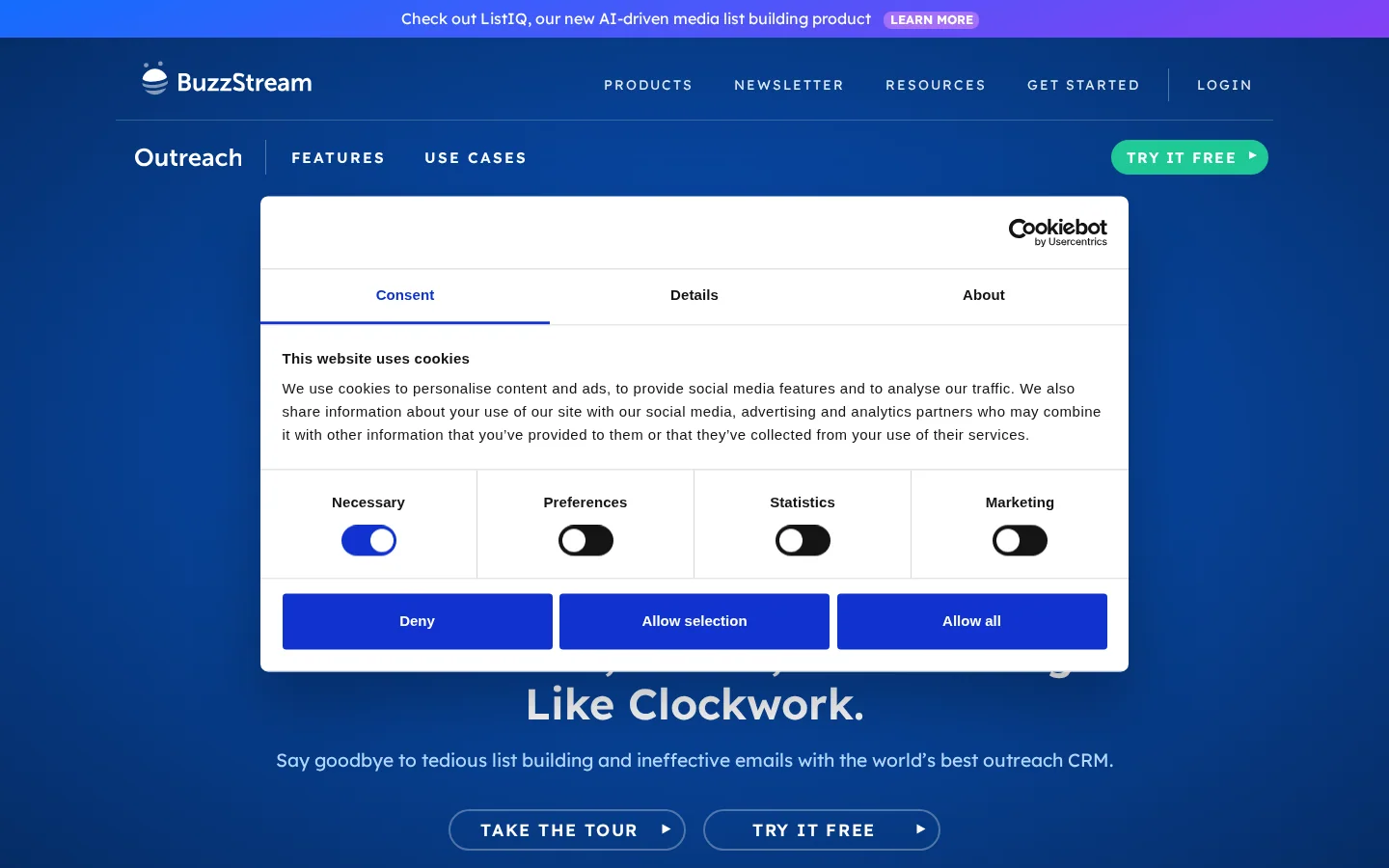
What it is. BuzzStream is an outreach platform for link building and digital PR. It keeps prospects, contact details, emails, replies and placed links in one database built around websites.
Who it suits. Consultants and teams that earn links through guest posts, resource pages, broken link building or PR.
Strengths.
Limit. Starter is tight: 1 user, 500 contacts, 30 prospecting searches and 1000 monitored links. Bulk sending and automated follow-ups start at Growth ($174 a month).
Price. On the BuzzStream pricing page: Starter $49 a month, Growth $174, Professional $424, Custom from $999. Free trial available. Our comparison of blogger outreach tools reviews nine alternatives in detail.
 Hunter
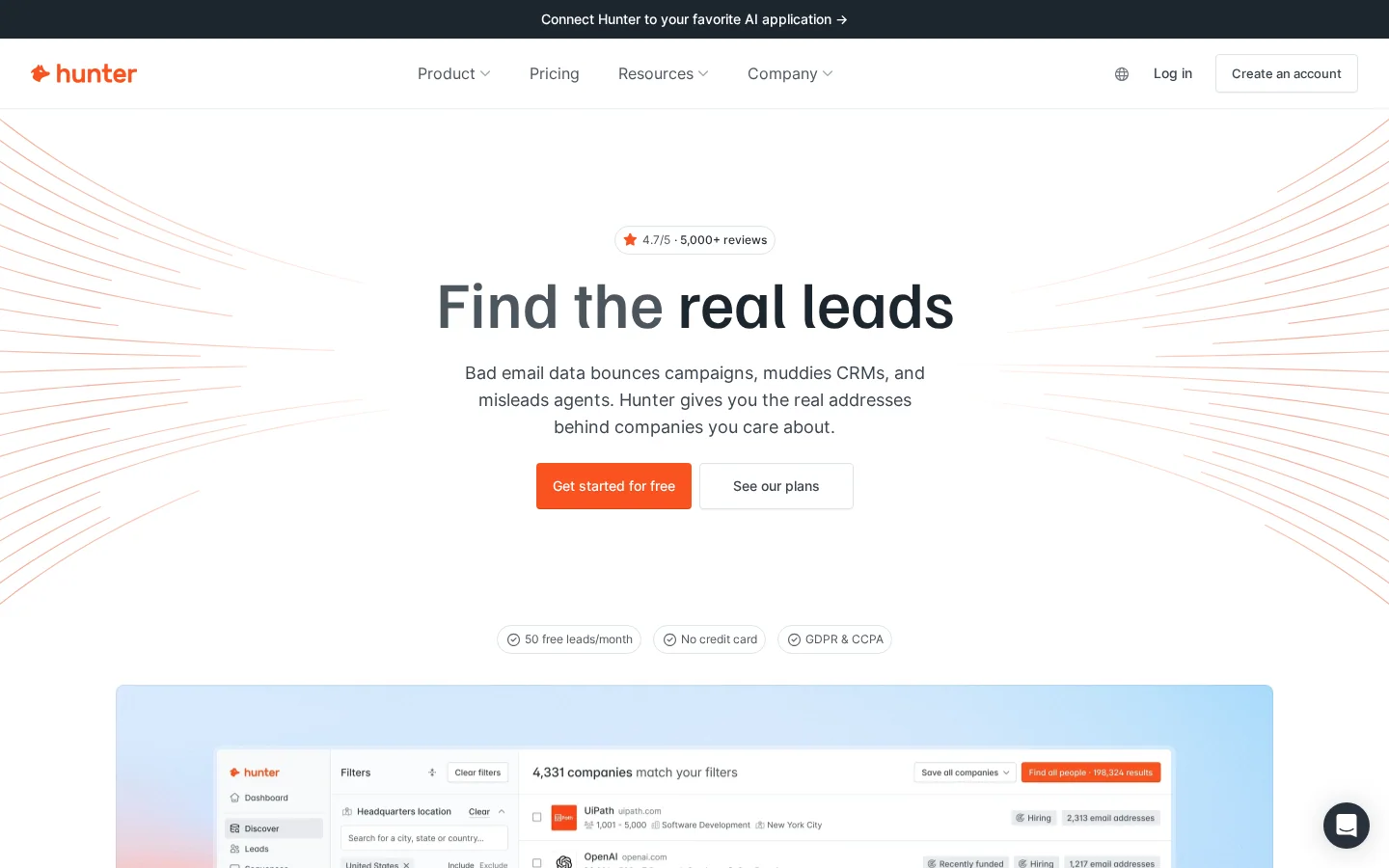
What it is. Hunter finds and verifies professional email addresses. Domain Search lists the contacts of a website, Email Finder finds one person's address, Email Verifier checks it, and Sequences send the emails.
Who it suits. Anyone who pitches editors and site owners and keeps landing on contact forms.
Strengths.
Limit. Credits reset every month and do not roll over. Hunter finds who to write to; it does not tell you whether the site deserves a pitch, so pair it with a link data tool.
Price. On the Hunter pricing page: Free with 50 credits a month, Starter €49 a month or €34 a month billed yearly (2000 credits a month), Growth €149, Scale €299.
 BrightLocal
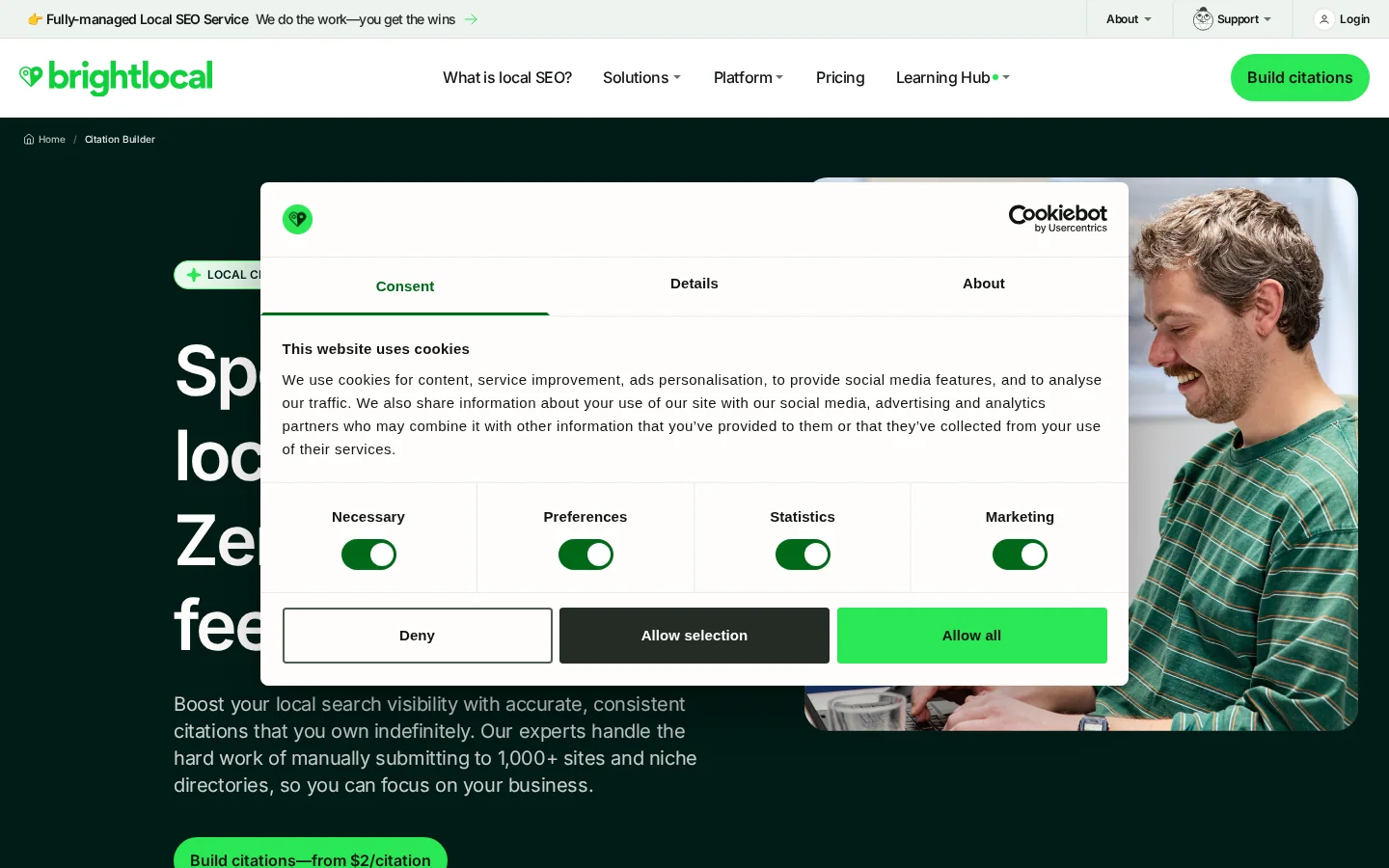
What it is. BrightLocal is a local SEO platform. For off-page work, two parts matter: Citation Tracker, which checks your listings, and Citation Builder, where its team submits your business to directories by hand.
Who it suits. Businesses with a physical address or a service area, and the agencies that serve them.
Strengths.
Limit. Submission is done within 7 days, but BrightLocal states that some directories "can take up to 6 weeks" to publish. Plan your reporting around that delay.
Price. Track $41 a month ($31 a month billed yearly), Manage $54, Grow $65, for one location. Citation Builder: $3.20 per site, or $2 per site with bulk credits.
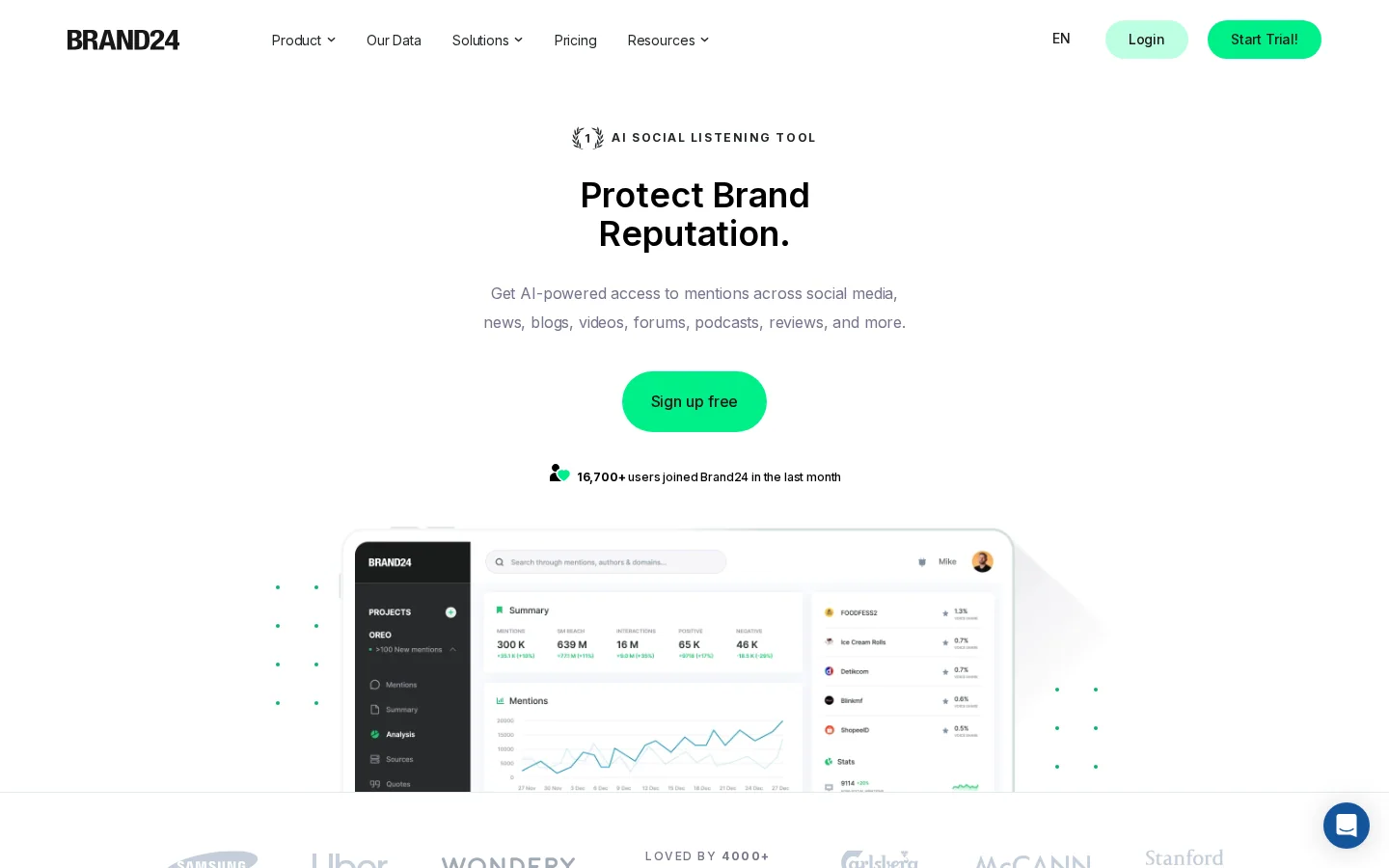
What it is. Brand24 monitors mentions of your brand, products or founders across news, blogs, forums and social networks, with AI sentiment analysis.
Who it suits. Brands that already get talked about and want to turn mentions without a link into links.
Strengths.
Limit. The entry plan is expensive for a small site and tracks only 3 keywords. If you get a few mentions a month, start with Google Alerts, which lets you monitor the web for new content on your brand name daily or weekly.
Price. On the Brand24 prices page: Individual $249 a month ($199 billed yearly), Team $349, Pro $499, Business $699.

Off-page SEO tools fall into five families: link data, link acquisition, outreach, local citations and mention monitoring. Knowing which family you need saves you from the most common waste: paying for a research suite when your problem is that nobody links to you. For the theory behind each signal, see our definition of off-page SEO.
Links still matter because they decide which pages get found at all. An Ahrefs search traffic study by Tim Soulo (December 2023) found that most pages get no Google traffic, and named the lack of backlinks as one of the three main reasons, next to no search demand and the wrong search intent.
Why off-page work decides who gets traffic
Source: Ahrefs, Tim Soulo, December 2023
| Family | Question it answers | Tools in this list | When you need it | Typical trap |
|---|---|---|---|---|
| Link data | Who links to me and to my competitors? | Ahrefs, Semrush, Majestic, Google Search Console | Before any campaign, then monthly | Reading metrics without acting on them |
| Link acquisition | How do I get new links without spending my week on it? | Sorank | When your pages are good but nobody links to them | Buying links from sellers with no topical fit |
| Outreach | Who do I write to, and did they answer? | BuzzStream, Hunter | Guest posts, digital PR, broken link building | Mass emails with no personal reason to link |
| Local citations | Is my business listed, and listed correctly? | BrightLocal | Any business with an address or a service area | Inconsistent name, address and phone across directories |
| Mention monitoring | Who talks about me without linking? | Brand24 | Once you get press or forum coverage | Tracking mentions and never asking for the link |
Each data tool runs its own crawler, so each sees a different part of the web. Ahrefs' Domain Rating, Semrush's Authority Score, Majestic's Trust Flow and Moz's Domain Authority are all third-party estimates. Google uses none of them. Use them to compare sites inside the same tool, never across tools: a DR 40 and an Authority Score 40 are not the same thing.
The detail that changes decisions: count referring domains, not backlinks. One sitewide footer link can create 10000 backlinks from a single domain. Every tool in this list lets you switch the view to referring domains; do it before reading any chart.
Data tools tell you what is missing. The other three families fill the gap. Outreach tools help you ask for links by hand, which works for high-value targets: a trade press article, a resource page, a partner. Link acquisition tools like Sorank handle the steady flow of contextual links from sites on your topic. Citation tools cover the directories and maps that local search relies on.
A free stack covers about everything you need to see your own links: Google Search Console, Ahrefs Free and a few free checkers. What it cannot do is show you a competitor's full link profile or get links for you. That is where paying starts to make sense.
Free stack vs paid link data suite
Tip
Need a quick look at a site's links without creating an account anywhere? Run it through the free backlink checker from Sorank: you get the referring domains, the anchors and the share of dofollow links in seconds.
The Search Console export gives you URLs, not domains. Paste the "Latest links" export into Google Sheets (URLs in column A) and use this formula in an empty column to get the unique list of linking domains:
=UNIQUE(ARRAYFORMULA(REGEXEXTRACT(FILTER(A2:A, A2:A<>""), "^https?://(?:www\.)?([^/]+)")))Repeat it every month on a new tab, then compare the two lists with a COUNTIF to see which domains appeared and which ones vanished. That is a basic lost and new link report, for free.
Choose by the job you need done this quarter, not by the longest feature list. A site with 20 referring domains needs links before it needs analytics; a site with 2000 needs auditing and monitoring before it needs more links.
| Your situation | Start with | Add later |
|---|---|---|
| New site, few links, no time | Sorank and Google Search Console | Ahrefs Free |
| Small business with a shop or office | BrightLocal and Google Search Console | Sorank for topical links |
| In-house SEO in a competitive market | Ahrefs or Semrush | BuzzStream and Hunter |
| Link auditor or penalty recovery | Majestic Pro and Semrush Backlink Audit | Ahrefs Standard for broken backlinks |
| Known brand with press coverage | Brand24 | BuzzStream for the follow-up emails |
Checklist before you pay for an off-page SEO tool
Two technical points decide more than any feature list. First, index freshness: a tool that keeps a 120-day fresh index, like Majestic, will drop old links that still exist, so a "lost link" may just be a link nobody recrawled. Second, credit logic: Hunter's credits do not roll over, BuzzStream caps prospecting searches per month, and Ahrefs Lite caps credits per user. Map your monthly volume before choosing a plan.
A good off-page routine takes about one session a week: measure, find gaps, earn links, protect what you have. Here is the order we use, with the tool for each step.
The 6-step off-page SEO workflow
Write down three numbers on day one: referring domains, Domain Rating and the share of links pointing to pages other than your home page. Then pick three competitors that rank on your main keyword, not the biggest brands in your sector. Our 7-step backlink gap method shows how to score each gap domain.
A prospect is worth a pitch when it publishes on your topic, gets organic traffic and links out to other sites in its articles. Reject sites whose "write for us" page lists prices for dofollow links: Google's spam policies list "buying or selling links for ranking purposes" as link spam. For your pitches, our guide to email outreach has commented templates.
To find pages that mention your brand without a link, run this search in Google and in Brand24:
"yourbrand" -site:yourbrand.com -site:linkedin.com -site:facebook.comTo find resource pages on your topic that already link to tools or guides like yours:
intitle:"resources" OR intitle:"useful links" "your topic"Every month, list lost referring domains and sort them: page deleted, link removed, or site redirected. Most lost links are recoverable with one polite email, as shown in our link reclamation method. Also check that anchors stay varied: if one exact-match keyword dominates your anchor list in Search Console, slow down on that anchor.
The most expensive mistakes come from reading tool data as if it were Google's own view. Here are the ones we see most, how to spot them and how to fix them.
Off-page SEO tooling: before and after a clean setup
What it is: subscribing to Ahrefs, Semrush and Majestic at the same time "to have all the data". How to spot it: you log into one of them less than once a week. How to fix it: keep one suite for competitor research, use Search Console and Ahrefs Free for your own site, and put the saved budget into earning links.
What it is: uploading every link a tool flags as "toxic" to Google's disavow tool. How to spot it: your disavow file has hundreds of lines and you never checked the pages by hand. How to fix it: disavow only links you or a former provider built through a scheme, or links tied to a manual action in Search Console. Read our guide on when disavowing toxic backlinks is actually needed. A clean file looks like this:
# Disavow file for example.com, reviewed 2026-11-27
# Paid links bought by a former agency in 2024
domain:paid-links-network.example
domain:cheap-guest-posts.example
# Single spam page, rest of the site is fine
https://forum.example.org/thread/12345
If you need to build the file from a list, the free disavow file generator formats it for you.
What it is: celebrating a jump from 500 to 5000 backlinks. How to spot it: referring domains barely moved while backlinks exploded; one domain added a sitewide link. How to fix it: switch every report to referring domains and judge progress on new unique sites.
What it is: chasing links that a crawler stopped seeing. How to spot it: the source page still loads and still contains your link when you open it. How to fix it: open the page, view its source with Ctrl+U (Option+Cmd+U on Mac) and search for your domain before you send any email.
What it is: setting a DR target as the goal of your link building. How to spot it: you accept off-topic links because the host site has a high DR. How to fix it: judge each link on topic fit, real traffic and placement in the content. Our step-by-step backlink audit gives a grid you can reuse.
What it is: a local business that only works on backlinks. How to spot it: your name, address or phone differ between your site, Google Business Profile and Yelp. How to fix it: fix the main listings first, then use a citation builder for the rest.
Start with the free base: Google Search Console and Ahrefs Free on your own site. If your problem is that too few sites link to you, the fastest gain comes from earning links rather than measuring them: Sorank's contextual backlinks from your niche run in the background while you work on your business. Add one research suite (Ahrefs for link depth, Semrush for an all-in-one, Majestic for topic-based vetting) once you have someone to read it every week. Add BuzzStream and Hunter when you pitch high-value targets by hand, BrightLocal if you serve a local area, and Brand24 when people start talking about you. Then check whether those links also make you visible in AI answers with AI mention tracking.
Your task for today: export the Links report from Search Console, run the formula above, and write down your number of referring domains. Every off-page decision you make next starts from that number.
This ranking reflects my own experience and opinion as an SEO expert with more than 7 years in the field. It is based on verified facts, but the order itself is my personal view.
Off-page SEO tools are the software you use to measure and improve the signals other websites send about you: backlinks, brand mentions and local citations. They fall into five families: link data (Ahrefs, Semrush, Majestic, Search Console), link acquisition (Sorank), outreach (BuzzStream, Hunter), local citations (BrightLocal) and mention monitoring (Brand24).
Google Search Console is free and shows a sample of the links to your verified site, with an export of up to 100000 rows. Ahrefs Free shows up to 1000 backlinks on sites you verify, Semrush has a free plan with 10 reports a day, and Hunter gives 50 free credits a month to find contact emails.
Not to watch your own links: Search Console and Ahrefs Free cover that. You need a paid suite to see competitors' full link profiles, run a backlink gap or keep years of link history. If your real problem is that few sites link to you, spend first on earning links, then on measuring them.
We analyse your competitors, your website and your AI visibility to create a tailored content plan for free.
 Website Value Calculator
 Website Accessibility Checker
 Google Analytics Checker
 Duplicate Content Checker
 Mobile-Friendly Test
 Website Speed Test
 Subdomain Finder
 Domain Age Checker
 CMS Detector
 Googlebot Simulator
 Nofollow Link Checker
 Meta Tag Checker
 Keyword Cannibalization Checker
 Keyword Intent Checker
 Keyword Extractor
 Google Ads Cost Calculator
 CPC Calculator
 Local Citation Finder
 Reddit Threads Finder
 Disavow File Generator
 Redirect Generator
 Canonical Tag Generator
 Passive Voice Checker
 Google Location Changer
 Google Review Calculator
 Google Review Link Generator
 Keyword Combiner
 Podcast Show Notes Generator
 AI Content Rewriter
 AI Text Humanizer
 ChatGPT Prompt Generator
 Twitter Thread Generator
 Tweet Generator
 Landing Page Copy Generator
 Google Ads Copy Generator
 Pinterest Pin Description Generator
 Anchor Text Generator
 Social Media Post Generator
 LinkedIn Post Generator
 Free AI Writer
 Review Response Generator
 LSI Keyword Generator
 YouTube Video Ideas Generator
 YouTube Tag Generator
 YouTube Description Generator
 Product Description Generator
 CTA Generator
 Blog Introduction Generator
 Conclusion Generator
 Hook Generator
 AI Content Brief Generator
 FAQ Schema Generator
 AI Blog Post Ideas Generator
 Structured Data Validator (Schema Validator)
 Alt Text Checker
 Internal Link Analyzer
 Backlink Challenge
 AI Meta Description Generator
 AI Blog Title Generator
 Google Indexability Checker
 AI Blog Outline Generator
 UTM Link Builder
 Keyword Clustering Tool
 Canonical Tag Checker
 XML Sitemap Generator
 Broken Link Checker
 AI SEO Title Generator
 Headline Analyzer
 SERP Preview Tool
 Redirect Checker
 Hreflang Tag Generator
 Heading Structure Analyzer
 HTTP Headers Checker
 Favicon Extractor
 SERP CTR Calculator
 SEO vs Paid Search Savings Calculator
 SEO Share of Voice Calculator
 SEO ROI Calculator
 SEO Traffic and Revenue Forecast Calculator
 SEO Budget Calculator
 SEO Break-Even Calculator
 SaaS SEO ROI Calculator
 ROAS Calculator
 Reading Time Calculator
 Ranking Gain Simulator
 Organic Traffic Value Calculator
 Organic Traffic Estimator and Website Traffic Checker
 LTV to CAC Ratio Calculator
 Local SEO ROI Calculator
 Link Building Cost Calculator
 Keyword Value Calculator
 Keyword Opportunity Score Calculator
 Keyword Density Calculator
 GEO ROI Calculator
 GEO Content Investment Calculator
 Ecommerce SEO ROI Calculator
 Customer Lifetime Value Calculator
 Customer Acquisition Cost Calculator
 CTR Calculator
 Cost Per Article Calculator
 Conversion Rate Calculator
 Content Marketing ROI Calculator
 ChatGPT Referral Traffic Estimator
 Bounce Rate Calculator
 Backlink ROI Calculator
 AI Visibility Score Calculator
 AI Traffic Value Calculator
 AI Share of Voice Calculator
 Cost of AI Invisibility Calculator
 AI Citation Rate Calculator
 llms.txt Validator
 AI Overview Checker and AI Overviews Rank Checker
 Robots.txt Checker
 AI SEO Audit
 LLM Readability Checker
 SearchGPT Readiness Checker
 Structured Data LLM Audit
 Website Crawlability AI Audit
 Why ChatGPT Is Not Recommending My Website
 Gemini Ranking Tool
 Perplexity Ranking Checker
 LLM Citation Checker
 Answer Engine Optimization Audit
 GEO Audit
 AI Search Visibility Test
 ChatGPT Visibility Checker
 llms.txt Generator
 URL Extractor
 Webpage to Markdown
 Sitemap Checker
 SERP Volatility Sensor
 Page Size Checker
 Word Counter
 Slug Generator
 Schema Generator
 Robots Generator
 OG Preview
 Meta Tags Generator
 Image Compressor
 Favicon Generator
 On-Page SEO Audit: SEO Checker and SEO Analyzer
 Backlink Analysis Tool
 Keyword Research Tool
 Domain Authority Checker
 “I tested Sorank on a real client site and it's insane. It does everything an agency would bill you $1500 a month for. It's going into production on that client now.”

 Guillaume Guersanguersanguillaume.com“We are an Ads agency and we wanted to get our SEO back on track once and for all. Sorank gave us a clear view of our site, helped us prioritize optimizations, and properly structure our content. The tool is easy to use, well designed for a team, and very practical for centralizing tracking without having to juggle multiple platforms. A very solid foundation to start fresh with our SEO.”
 Gaspard MadouiAds Agency
 “I just let the Sorank software do its thing, and now my DR is 25 and my page is ranking higher.”
 Lucas Flandrefoundertrace.fr“I specialized in GEO thanks to Sorank. The GEO Leaderboard allows me to show my clients their position vs competitors on ChatGPT. It’s a real commercial differentiator.”
 MélanieSEO Freelance“Great service, works well for our website and helps us understand how to improve it to rank better on Google and elsewhere. Congrats, keep going, I recommend it.”
 Hugo T.E-commerce merchant