Preferences
Privacy is important to us, so you have the option of disabling certain types of storage that may not be necessary for the basic functioning of the website. Blocking categories may impact your experience on the website. More information

Privacy is important to us, so you have the option of disabling certain types of storage that may not be necessary for the basic functioning of the website. Blocking categories may impact your experience on the website. More information

The best SEO newsletters in 2027, checked one by one: frequency, price and author of SEOFOMO, Growth Memo, Search Engine Land, Abondance and more.
Tools


In short
the best SEO newsletters in 2027 are SEOFOMO by Aleyda Solis for a free weekly roundup of everything that mattered, Growth Memo by Kevin Indig for strategy and research on AI search, and Search Engine Land or Search Engine Roundtable if you need the news every day. For GEO, the Sorank newsletter covers visibility in ChatGPT, Perplexity and Google AI Overviews in under five minutes a week, and French readers should add Abondance. Three subscriptions, one per layer (daily, weekly, deep), cover almost everything.
Want to go further? Ask
Transparency: Sorank is our own software and its newsletter appears in this list, in seventh position. I ranked every newsletter on the same criteria (signal to noise ratio, frequency, depth, independence, coverage of AI search) and checked each one on its own website in October 2026: who writes it, how often it is sent, whether it is free. Anything I could not confirm on an official page is left out.
An SEO newsletter is a recurring email that selects and explains what changed in search, so you do not have to monitor dozens of sources yourself. The need is real: Google reports 4,781 launches to Search in 2023 alone, out of more than 700,000 experiments, which is over a dozen changes shipped every day. Most are invisible. A few move rankings, and since AI Overviews, AI Mode and ChatGPT search, a growing share of them change how your brand is quoted rather than where your page sits.
Newsletters solve a filtering problem. A good one reads the documentation, the studies and the forums for you, then tells you which three things deserve your attention this week. A bad one forwards press releases. The ranking below is built around that difference.
I scored each newsletter on five criteria, chosen before looking at who wins them:
Every frequency, price and subscriber figure below comes from the newsletter's own website, checked in October 2026. Two candidates I considered were removed because I could not confirm on an official page that they are still sent in 2026 with the format usually described.
What it is. SEOFOMO is a free weekly newsletter written by SEO consultant Aleyda Solis. It lands every Sunday and gathers the week's search news, the most useful articles, tools and job offers. The site states more than 45,000 subscribers, and the archive shows editions published every week through October 2026.
Best for. Anyone who wants one email a week that answers "what did I miss?" without reading the trade press every day. The selection leans international and covers technical SEO, content and AI search in the same issue.
Limit. It curates more than it analyses: you get the link and a short context, and the depth lives in the articles it points to.
What it is. Growth Memo is written by Kevin Indig, who spent ten years as an operator at Shopify, G2 and Atlassian before advising growth companies. The site describes it as research-backed insights on SEO, organic growth and AI-driven search for senior marketing leaders, and states more than 29,000 subscribers. The archive shows several posts a week in September and October 2026, from essays to studies such as what makes a listicle get cited.
Price. The free memo is open to everyone. The Premium tier costs $150 per year according to the official premium page, and adds a library of templates and tools, the twice-monthly Growth Intelligence Briefs and the full archive.
Best for. Heads of SEO and marketing leads who must explain to management why traffic moves while AI answers absorb clicks.
Limit. Few quick tips. Each issue asks for real reading time.
What it is. Search Engine Land sends a free daily newsletter covering SEO and PPC news and analysis. The publication is run by the team that programs the SMX conference, and since its acquisition it belongs to Semrush. Optional emails about SMX events and webinars can be refused at sign-up or later.
Best for. Professionals who must know about a core update, a Search Console change or a new AI Mode feature the day it ships.
Limit. Daily volume. Read the headlines and open only what concerns your sites, or the backlog grows fast.
What it is. Search Engine Roundtable is Barry Schwartz's site, published by RustyBrick. Its Daily Search Forum Recap is available by email and summarises what was discussed that day in forums, on social networks and in Google statements. The recaps of 8 and 9 October 2026 were online when I checked.
Best for. Spotting ranking volatility, unconfirmed updates and statements from Google's search relations team before they reach the mainstream press.
Limit. Raw and fast. Many items are signals to watch, not conclusions to act on.
What it is. Search Engine Journal offers a Daily SEO and Digital Marketing Newsletter with the day's news, guides and expert columns. A separate paid offer, SEJ Pro, is sold at $97 per month; the newsletter sign-up itself only asks for an email address.
Best for. Marketers who handle SEO alongside paid search, social or content and want one daily source for all of it.
Limit. It overlaps heavily with Search Engine Land. Choose one of the two for your daily layer.
What it is. Ahrefs' Digest is a free weekly newsletter from the Ahrefs team, with industry news, reading recommendations and the best new posts from the Ahrefs blog. The page states about 284,000 subscribers, the largest audience in this list.
Best for. Practitioners who learn best from data studies and step-by-step tutorials.
Limit. It is published by a software company, so a share of each issue promotes its own blog and tools. The tutorials remain useful whichever tool you use.
What it is. The Sorank SEO AI newsletter is written every week by me, Thibault Besson-Magdelain, founder of Sorank. It promises less than five minutes of reading per week on how to get a website cited in AI answers and strengthen its Google SEO. The page states more than 9,000 subscribers.
What you get. Three recurring formats: GEO case studies that break down companies dominating ChatGPT, Perplexity and Google AI Overviews and how to replicate their strategy; playbooks on prompt tracking, reputation mapping, GEO silos and authority scoring; and founder notes on industry shifts, ranking experiments, failures and successes.
Best for. Founders and marketers who want the AI visibility side of search in a short format. It complements a news source; it does not replace one.
Limit. It is the newsletter of a software company, focused on GEO, and it does not cover daily Google news.
What it is. Abondance is a French media outlet on SEO, search marketing and AI. Its newsletter is free, sent every Thursday, and covers the week's search news worldwide plus French-language SEO content. The site published articles almost every day in early October 2026. A separate premium publication, Réacteur, offers five in-depth articles a month from 67.90 euros excluding tax for six months.
Best for. French-speaking teams, or anyone working on the French market who wants news filtered through local examples.
Limit. French only.
What it is. WebRankInfo was created in 2002 by Olivier Duffez. Its newsletter, Décryptage SEO, is published on LinkedIn and explains SEO news edition by edition. The site itself was updated in late September and early October 2026.
Best for. French readers who prefer a commented reading of Google changes and already use LinkedIn daily.
Limit. No sending frequency is published, and you need a LinkedIn account to subscribe.
| Newsletter | Author or publisher | Frequency | Language | Access | Best for |
|---|---|---|---|---|---|
| SEOFOMO | Aleyda Solis | Weekly (Sunday) | English | Free | Weekly roundup |
| Growth Memo | Kevin Indig | Several posts a week | English | Free, Premium $150/year | Strategy, AI search research |
| Search Engine Land | Third Door Media (Semrush) | Daily | English | Free | Daily news |
| SER Daily Recap | Barry Schwartz | Daily | English | Email sign-up | Community pulse, volatility |
| Search Engine Journal | SEJ editorial team | Daily | English | Email sign-up (SEJ Pro paid) | SEO plus digital marketing |
| Ahrefs' Digest | Ahrefs | Weekly | English | Free | Tutorials, data studies |
| SEO AI Newsletter | Thibault Besson-Magdelain (Sorank) | Weekly | Not specified | Email sign-up | GEO in five minutes |
| Abondance | Abondance editorial team | Weekly (Thursday) | French | Free | French market |
| Décryptage SEO | Olivier Duffez (WebRankInfo) | Not published | French | LinkedIn subscription | Commented analysis |
Three is enough for most people: one per layer. A daily layer tells you that something happened (Search Engine Land, Search Engine Journal or the Roundtable recap, pick one). A weekly layer tells you what mattered (SEOFOMO, Ahrefs' Digest, or Abondance in French). A deep layer tells you what to do about it (Growth Memo for strategy, the Sorank newsletter for GEO).
Subscribing to two sources in the same layer doubles the reading time without adding information: Search Engine Land and Search Engine Journal cover largely the same stories on the same day. If you only have time for one newsletter, take a weekly roundup. You will learn about every important change, at most seven days late, which is fast enough for almost every SEO decision.
A sustainable SEO watch takes about 30 to 45 minutes a week if each source has a fixed slot. The routine below is the one I use:
For AI search, add a measurement habit to the reading habit. Newsletters tell you that AI answers are changing; they cannot tell you whether your brand is mentioned. A free check such as the ChatGPT visibility checker answers that question for your own site in a minute.
Newsletters are the most efficient format for staying current, but they are short by design. Three other formats fill the gaps. Blogs hold the long tutorials and studies newsletters link to: see our selection of the best SEO and digital marketing blogs. Podcasts turn commute time into learning time: here are the best SEO podcasts. And structured training is the right choice when you need fundamentals rather than news: compare the best SEO training courses.
Every newsletter in this list explains what to do. None of them does it. Between reading that listicles get cited by AI and publishing twenty well-structured articles a month, there is keyword research, writing, internal linking, publishing and weekly checks in ChatGPT, Claude and Gemini.
That repetitive part is what Sorank automates. The software reads your site, asks the AI the questions your customers ask every week to measure whether your brand is cited, finds your competitors' keywords, then writes and publishes the articles on your CMS (WordPress, Shopify, Webflow, Wix and others). You keep the strategy and the decisions; the software produces the volume. SEO results usually take two to four months to show, which is also a good reason to start before the next newsletter tells you a competitor got there first.
If you subscribe to only three SEO newsletters in 2026, take SEOFOMO for the weekly roundup, Search Engine Land for daily news and Growth Memo for strategy, then add the Sorank newsletter if AI visibility is your priority and Abondance if you work on the French market. Read them in fixed slots and turn each week's reading into one action on your site.
When you want the actions themselves to run without you, Sorank starts at $49 per month billed annually (Essential, 20 articles a month and 25 AI prompts tracked) or $99 per month without commitment, with a 3-day free trial and a 90-day money-back guarantee: see Sorank pricing.

SEOFOMO by Aleyda Solis is the most complete free option: one email every Sunday with the week's search news, articles and tools, read by more than 45,000 subscribers. Ahrefs' Digest is the free alternative if you prefer tutorials and data studies, and Abondance is the free reference in French.
Yes. Growth Memo by Kevin Indig publishes research on AI-driven search and organic growth, and the Sorank SEO AI newsletter covers visibility in ChatGPT, Perplexity and Google AI Overviews in under five minutes a week. Daily news newsletters such as Search Engine Land also report every AI Mode and AI Overviews change.
A weekly review is enough for most sites, because very few changes require action within days. Skim one daily source in two minutes if you manage several sites, and check the Google Search Status Dashboard directly when a ranking update is announced.
 Backlink Challenge
 AI Meta Description GeneratorAI Blog Title Generator
 Google Indexability CheckerAI Blog Outline GeneratorUTM Link Builder
 Keyword Clustering ToolCanonical Tag Checker
 XML Sitemap GeneratorBroken Link CheckerAI SEO Title GeneratorHeadline AnalyzerSERP Preview ToolRedirect Checker
 Hreflang Tag GeneratorHeading Structure AnalyzerHTTP Headers CheckerFavicon Extractor
 SERP CTR Calculator
 SEO vs Paid Search Savings Calculator
 SEO Share of Voice Calculator
 SEO ROI Calculator
 SEO Traffic and Revenue Forecast Calculator
 SEO Budget Calculator
 SEO Break-Even Calculator
 SaaS SEO ROI Calculator
 ROAS Calculator
 Reading Time Calculator
 Ranking Gain Simulator
 Organic Traffic Value Calculator
 Organic Traffic Estimator
 LTV to CAC Ratio Calculator
 Local SEO ROI Calculator
 Link Building Cost Calculator
 Keyword Value Calculator
 Keyword Opportunity Score Calculator
 Keyword Density Calculator
 GEO ROI Calculator
 GEO Content Investment Calculator
 Ecommerce SEO ROI Calculator
 Customer Lifetime Value Calculator
 Customer Acquisition Cost Calculator
 CTR Calculator
 Cost Per Article Calculator
 Conversion Rate Calculator
 Content Marketing ROI Calculator
 ChatGPT Referral Traffic Estimator
 Bounce Rate Calculator
 Backlink ROI Calculator
 AI Visibility Score Calculator
 AI Traffic Value Calculator
 AI Share of Voice Calculator
 Cost of AI Invisibility Calculator
 AI Citation Rate Calculatorllms.txt ValidatorAI Overview CheckerRobots.txt Checker
 AI SEO AuditLLM Readability CheckerSearchGPT Readiness Checker
 Structured Data LLM AuditWebsite Crawlability AI AuditWhy ChatGPT Is Not Recommending My Website
 Gemini Ranking ToolPerplexity Ranking CheckerLLM Citation CheckerAnswer Engine Optimization AuditGEO AuditAI Search Visibility TestChatGPT Visibility Checkerllms.txt Generator
 URL ExtractorWebpage to MarkdownSitemap CheckerSERP Volatility SensorPage Size Checker
 Word Counter
 Slug GeneratorSchema GeneratorRobots Generator
 OG PreviewMeta Tags Generator
 Image CompressorFavicon Generator
 On-Page SEO Audit
 Backlink Analysis Tool
 Keyword Research Tool
 Domain Authority Checker
THEY TRIED SORANK BEFORE YOU
 “I tested Sorank on a real client site and it's insane. It does everything an agency would bill you $1500 a month for. It's going into production on that client now.”
 Guillaume Guersanguersanguillaume.com“We are an Ads agency and we wanted to get our SEO back on track once and for all. Sorank gave us a clear view of our site, helped us prioritize optimizations, and properly structure our content. The tool is easy to use, well designed for a team, and very practical for centralizing tracking without having to juggle multiple platforms. A very solid foundation to start fresh with our SEO.”
 Gaspard MadouiAds Agency
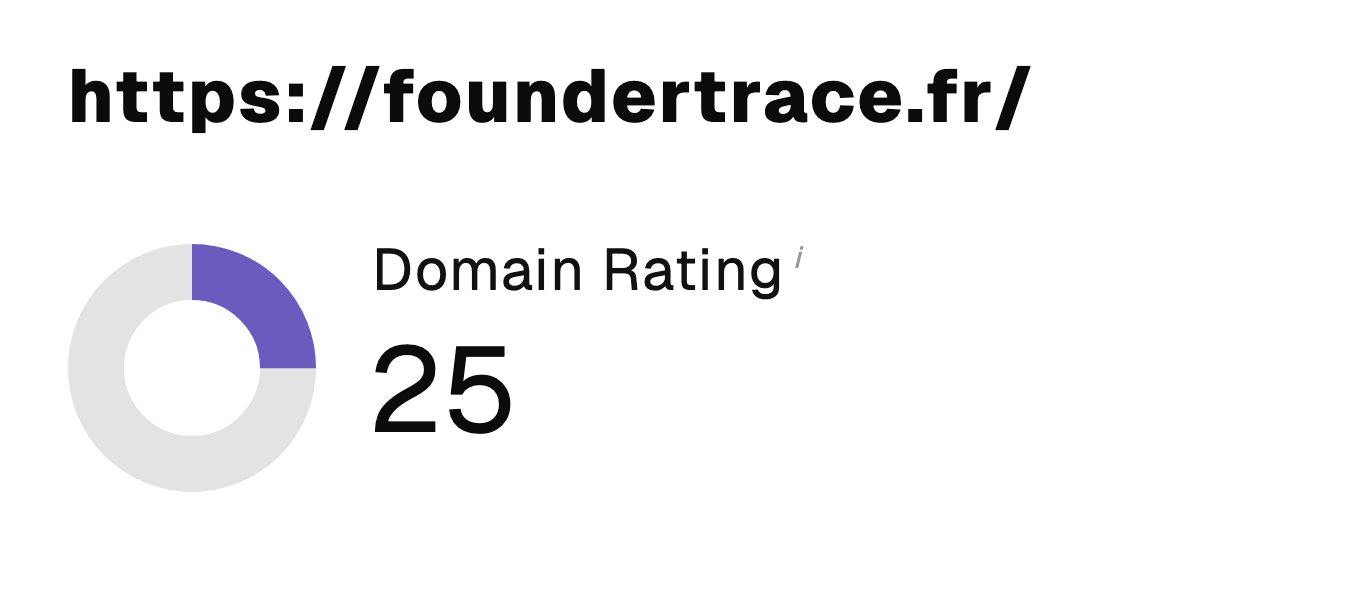 “I just let the Sorank software do its thing, and now my DR is 25 and my page is ranking higher.”
 Lucas Flandrefoundertrace.fr“I specialized in GEO thanks to Sorank. The GEO Leaderboard allows me to show my clients their position vs competitors on ChatGPT. It’s a real commercial differentiator.”
 MélanieSEO Freelance“Great service, works well for our website and helps us understand how to improve it to rank better on Google and elsewhere. Congrats, keep going, I recommend it.”
 Hugo T.E-commerce merchant