Preferences
Privacy is important to us, so you have the option of disabling certain types of storage that may not be necessary for the basic functioning of the website. Blocking categories may impact your experience on the website. More information

Privacy is important to us, so you have the option of disabling certain types of storage that may not be necessary for the basic functioning of the website. Blocking categories may impact your experience on the website. More information

The best SEO blogs and digital marketing blogs of 2027, each checked as active in October 2026: who they serve, how often they publish, what they do best.

Tools


In short
the best SEO blogs to follow in 2027 start with the Google Search Central Blog, the only primary source on Google Search, then Search Engine Land and Search Engine Journal for daily news, Search Engine Roundtable for the fastest signal on updates, and the Ahrefs, Semrush, Moz and Backlinko blogs for methods and tutorials. For the best digital marketing blogs, read the HubSpot marketing blog for breadth, Content Marketing Institute for content strategy, Social Media Examiner for social platforms, Think with Google for consumer research and Marketing Brew for industry news. Every blog in this list published at least one new article between September and October 2026.
Want to go further? Ask
Transparency: the Sorank blog appears in this ranking and Sorank is our own software. I placed it where it is useful (a GEO and SEO resource in 11 languages), not at the top. Method: I checked each blog's RSS feed or homepage on 10 October 2026, noted the date of the latest article and counted recent posts to estimate the publishing pace. No blog paid to appear here.
Following the best SEO blogs is the cheapest way to keep up with a field that changes every few weeks. Google's own Search Status Dashboard lists seven confirmed ranking updates between February and September 2026 alone: a Discover update, two core updates (March and May) and four spam updates. Add the spread of AI Overviews and answers from ChatGPT, Gemini or Claude, and a strategy built in January can be out of date by June. The right blogs tell you what changed, why it matters and what to test next.
I kept only blogs that still publish in 2026, then ranked them on four criteria. Freshness: the date of the latest article, checked on 10 October 2026. Pace: the number of articles in the latest RSS feed window, which separates daily news sites from monthly guide publishers. Proximity to the source: an official announcement beats a commentary on that announcement. Depth: original data, tested methods and step-by-step tutorials beat rewritten news.
Blogs published by SEO software companies are included because they produce some of the best tutorials and data studies in the field. Keep in mind that their examples naturally use their own tools. The blogs are split into two groups: SEO blogs first, then digital marketing blogs, followed by a short list of French-language resources.
The best SEO blogs in 2026 are the Google Search Central Blog for official information, Search Engine Land, Search Engine Journal and Search Engine Roundtable for news, and the Ahrefs, Semrush, Moz and Backlinko blogs for methods. Each one below is described by audience, pace and strength.
What it is. The Google Search Central Blog is Google's official blog for site owners. It describes itself as the place for official algorithm updates, announcements of new Google Search features and SEO best practices.
Who it is for. Anyone who works on organic traffic, from a blogger to a technical SEO lead. The tone is factual and the posts are short.
Pace. Around three posts a month: its feed held ten articles between 18 June and 6 October 2026, the latest being an announcement of new learning paths on Search fundamentals and technical SEO.
What it does best. It settles debates. When a rumour spreads about a ranking factor, this is where you check what Google has stated, and Search Console features are announced here first.
What it is. Search Engine Land is a news site on search marketing, covering SEO, paid search (Google Ads and other ad platforms), analytics and the search marketing job market.
Who it is for. SEO and paid search professionals who need to know the same day what Google, Bing or the ad platforms have changed.
Pace. Several articles a day: its feed showed ten new articles over 8 and 9 October 2026.
What it does best. It covers both organic and paid search in one place, with in-depth guides alongside the news, which suits teams that manage both channels.
What it is. Search Engine Journal publishes news and guides on SEO, AI search visibility, GEO, paid search and content marketing.
Who it is for. Marketers and SEO practitioners at every level, from beginners reading its guides to experts following its news.
Pace. About five articles a day: twenty articles between 6 and 10 October 2026. Its weekly SEO Pulse column summarises the week's main changes, which is useful if you only have ten minutes.
What it does best. Clear explanations of Google statements, with a weekly summary that saves you from reading every article.
What it is. Search Engine Roundtable reports on discussions from search marketing forums and social networks, mostly written by Barry Schwartz.
Who it is for. SEO practitioners who want to know whether a traffic drop is theirs alone or shared by many sites.
Pace. Many short posts a day, plus a Daily Search Forum Recap and a weekly video recap. The latest recap seen was dated 9 October 2026.
What it does best. Speed. Ranking volatility, Search Console bugs and statements from Google staff on social networks often appear here first, before a fuller article elsewhere.
What it is. The Ahrefs blog publishes SEO and marketing tutorials and data studies built on the company's own crawl and keyword data.
Who it is for. Practitioners who want methods backed by numbers, especially on keyword research, link building and measuring visibility in AI answers.
Pace. Two to three articles a week: ten articles between 16 September and 6 October 2026, several of them on measuring visibility in AI answers and on the presence of AI Overviews in branded searches.
What it does best. Large-scale studies that put figures on questions everyone asks, such as how often AI Overviews appear or which pages get cited.
What it is. The Semrush blog covers SEO, AI search visibility, content marketing and social media with step-by-step guides.
Who it is for. Beginners and intermediate marketers who need a clear guide on a precise question, such as the types of keywords or a multi-location SEO strategy (two topics published in October 2026).
Pace. Five to seven articles a week: twenty articles between 17 September and 9 October 2026.
What it does best. Coverage. Almost every SEO question has a dedicated, regularly updated guide, written for people who are not yet experts.
What it is. The Moz blog publishes expert advice, research and how-tos on SEO and digital marketing.
Who it is for. SEO practitioners who prefer opinionated, experience-based articles over news.
Pace. About two articles a week in September 2026 (16, 18, 22 and 25 September), the latest seen being from 25 September 2026.
What it does best. Practitioner perspective: many articles are written by working consultants and in-house SEOs who explain what they tested and what they learned.
What it is. Backlinko presents itself as a place for advanced SEO training and link building strategies.
Who it is for. Readers who want one long reference guide rather than a stream of news.
Pace. One or two articles a month: five articles between 10 June and 9 September 2026, the latest on auditing a page in under three minutes.
What it does best. Depth per article. Its guides are worth bookmarking and rereading when you start a project.
What it is. The Sorank GEO and SEO blog covers search engine optimization and generative engine optimization (GEO), meaning visibility in answers from ChatGPT, Gemini, Claude and Perplexity. As stated above, Sorank is our software.
Who it is for. Business owners, marketers and agencies who want guides, comparisons and definitions on SEO and GEO in their own language: the blog is published in English, French, German, Spanish, Italian, Portuguese, Hebrew, Arabic, Chinese, Japanese and Korean.
Pace. Several articles a month, with new articles published in October 2026.
What it does best. GEO, with comparisons of tools and methods for tracking whether a brand is cited by AI assistants. It is a younger blog than the others in this list and does not cover breaking news.
The best digital marketing blogs in 2026 are the HubSpot marketing blog, Content Marketing Institute, Social Media Examiner, Think with Google and Marketing Brew. They cover what SEO blogs leave aside: content strategy, social networks, advertising, consumer research and the marketing industry.
What it is. The HubSpot marketing blog covers inbound marketing in all its forms: content, SEO, email, social media, advertising, and recently a series of guides on answer engine optimization (AEO), meaning visibility in AI answers.
Who it is for. Marketing generalists, small business owners and marketing teams who need practical guides and templates.
Pace. Almost one article a day: fifty-one articles between 10 August and 8 October 2026. HubSpot states on the page that the blog attracts over 4.5 million monthly readers.
What it does best. Breadth. Whatever the marketing topic, there is a structured guide with examples.
What it is. Content Marketing Institute (CMI) states its mission as advancing the practice of content marketing through online education and events, including the Content Marketing World conference.
Who it is for. Content managers and marketing directors, mostly in B2B, who manage editorial teams and budgets.
Pace. Several articles a week, with articles dated 1, 6, 7 and 8 October 2026 on the homepage.
What it does best. Content operations and governance: how to organise, measure and justify a content programme within a company.
What it is. Social Media Examiner publishes articles, podcasts and industry news on marketing through social networks.
Who it is for. Social media managers, creators and businesses that sell through YouTube, Instagram, LinkedIn, TikTok or Facebook.
Pace. Several publications a week: twenty-five items between 27 August and 8 October 2026, the latest on YouTube viewer retention.
What it does best. Platform tactics explained by people who apply them, with a strong focus on video and AI tools for creators.
What it is. Think with Google is Google's publication for marketers, with research, consumer insights, interviews and case studies. It is now hosted on Google's business site.
Who it is for. Marketing directors and strategists who need data on consumer behaviour, search and video.
Pace. Several articles a month, with articles in August, September and October 2026, including pieces on how AI agents change holiday shopping and travel search.
What it does best. First-hand data from Google on how people search and buy, useful to justify a strategy to a management team.
What it is. Marketing Brew, from the Morning Brew group, covers brand strategy, social media and advertising technology through a weekday newsletter, its website, events and guides.
Who it is for. Marketing professionals who want to follow brands, agencies and ad tech in a few minutes a day.
Pace. Daily on weekdays, with articles dated 7 and 8 October 2026 on its homepage.
What it does best. A short, readable view of the marketing industry: campaigns, agency moves and advertising market trends.
If you read French or work on the French market, four French-language sites are active in October 2026. Abondance publishes SEO, search and AI news almost every day, plus a free weekly newsletter. WebRankInfo, created in 2002 by Olivier Duffez, publishes fewer but very detailed SEO guides (latest on 1 October 2026). For digital marketing, Blog du Modérateur covers marketing, social media, AI and tools several times a day, and the Journal du Net publishes daily news and analysis on the digital economy.
The table below summarises each blog by topic, audience and observed pace. Dates are the latest articles seen on 10 October 2026.
| Blog | Topic | Best for | Observed pace | Latest article seen |
|---|---|---|---|---|
| Google Search Central Blog | SEO (official) | Confirmed Google information | About 3 per month | 6 Oct 2026 |
| Search Engine Land | SEO and paid search | Complete daily news | Several per day | 9 Oct 2026 |
| Search Engine Journal | SEO, GEO, paid search | News plus weekly digest | About 5 per day | 10 Oct 2026 |
| Search Engine Roundtable | SEO and paid search | Fastest signal on updates | Many per day | 9 Oct 2026 |
| Ahrefs blog | SEO | Data studies | 2 to 3 per week | 6 Oct 2026 |
| Semrush blog | SEO and marketing | Beginner guides | 5 to 7 per week | 9 Oct 2026 |
| Moz blog | SEO | Practitioner advice | About 2 per week | 25 Sep 2026 |
| Backlinko | SEO | Long reference guides | 1 to 2 per month | 9 Sep 2026 |
| Sorank blog | SEO and GEO | GEO in 11 languages | Several per month | Oct 2026 |
| HubSpot marketing blog | Digital marketing | Breadth and templates | Almost daily | 8 Oct 2026 |
| Content Marketing Institute | Content marketing | Content strategy | Several per week | 8 Oct 2026 |
| Social Media Examiner | Social media | Platform tactics | Several per week | 8 Oct 2026 |
| Think with Google | Consumer research | Data from Google | Several per month | Oct 2026 |
| Marketing Brew | Marketing industry | Industry news | Weekdays | 8 Oct 2026 |
Read the pace column before subscribing. The four news sites alone produce dozens of articles a week; nobody reads all of them, and you do not need to.
The simplest method is to sort blogs into three reading rhythms and use an RSS reader or email alerts rather than visiting each site.
Always go back to the primary source when a news article reports a Google statement. Google's documentation on creating helpful, reliable, people-first content is the reference that most commentary on core updates paraphrases.
For GEO, favour blogs that publish their data and sources. The GEO study by Princeton University and partners (KDD 2024) measured that adding statistics raised visibility in generative answers by about 32% and citing sources by about 30%. The same logic applies to your reading: an article that shows its numbers is easier to check and to apply.
A blog teaches you what to do; it does not do the work. Reading three guides on keyword research does not research your keywords, write your articles or check whether ChatGPT mentions your brand. That is where the gap between knowing and ranking usually sits.
The repetitive part of SEO and GEO can be automated. Sorank is software that reads your site, asks the questions your customers ask to ChatGPT, Claude and Gemini every week to see whether your brand is mentioned, finds the keywords of your competitors, fills an editorial calendar, writes the articles (internal links, sources, FAQ, meta tags, JSON-LD schema) and publishes them automatically on more than 10 CMS. Strategy, positioning and decisions stay with you. To check a page without subscribing, the free SEO tools include an on-page audit, a keyword research tool and an AI Overview checker.
Blogs work best alongside other formats. Newsletters bring a curated selection to your inbox: see our ranking of the best SEO newsletters, or subscribe to the Sorank GEO and SEO newsletter. Podcasts suit commutes and workouts: our selection of the best SEO podcasts lists the active shows. And if you want a structured path rather than scattered articles, our guide to the best SEO training courses compares the options.
For SEO, follow the Google Search Central Blog for confirmed information, one news site (Search Engine Land, Search Engine Journal or Search Engine Roundtable) and one guide blog (Ahrefs, Semrush, Moz or Backlinko). For digital marketing, add HubSpot for breadth and the specialist that matches your channel. Five well-chosen sources read regularly are worth more than twenty skimmed ones.
Once you know what to do, the time to apply it is the real constraint. Sorank writes and publishes the articles and tracks your visibility in AI answers from $49 per month billed annually (Essential: 20 articles per month, 25 AI prompts tracked), with a 3-day free trial and a 90-day money-back guarantee. See Sorank plans and pricing.

For a beginner, the Semrush blog and the HubSpot marketing blog explain each topic step by step, and Backlinko offers long reference guides. Once you know the basics, the Google Search Central Blog is the reference for what Google confirms, and the Ahrefs blog adds data studies. Start with one guide blog and the official Google blog rather than ten sources at once.
Read one news source every day or every week, such as Search Engine Roundtable or the weekly SEO Pulse from Search Engine Journal, and check the Google Search Central Blog and the Search Status Dashboard when an update is announced. An RSS reader groups all these sources in one place. Test changes on your own site before acting on commentary.
The blogs of Ahrefs, Semrush and Moz publish some of the most useful tutorials and data studies in SEO, and their methods apply whatever tool you use. Their examples naturally feature their own products, so separate the method from the tool. For anything Google states, check the official Google documentation.
 Backlink Challenge
 AI Meta Description GeneratorAI Blog Title Generator
 Google Indexability CheckerAI Blog Outline GeneratorUTM Link Builder
 Keyword Clustering ToolCanonical Tag Checker
 XML Sitemap GeneratorBroken Link CheckerAI SEO Title GeneratorHeadline AnalyzerSERP Preview ToolRedirect Checker
 Hreflang Tag GeneratorHeading Structure AnalyzerHTTP Headers CheckerFavicon Extractor
 SERP CTR Calculator
 SEO vs Paid Search Savings Calculator
 SEO Share of Voice Calculator
 SEO ROI Calculator
 SEO Traffic and Revenue Forecast Calculator
 SEO Budget Calculator
 SEO Break-Even Calculator
 SaaS SEO ROI Calculator
 ROAS Calculator
 Reading Time Calculator
 Ranking Gain Simulator
 Organic Traffic Value Calculator
 Organic Traffic Estimator
 LTV to CAC Ratio Calculator
 Local SEO ROI Calculator
 Link Building Cost Calculator
 Keyword Value Calculator
 Keyword Opportunity Score Calculator
 Keyword Density Calculator
 GEO ROI Calculator
 GEO Content Investment Calculator
 Ecommerce SEO ROI Calculator
 Customer Lifetime Value Calculator
 Customer Acquisition Cost Calculator
 CTR Calculator
 Cost Per Article Calculator
 Conversion Rate Calculator
 Content Marketing ROI Calculator
 ChatGPT Referral Traffic Estimator
 Bounce Rate Calculator
 Backlink ROI Calculator
 AI Visibility Score Calculator
 AI Traffic Value Calculator
 AI Share of Voice Calculator
 Cost of AI Invisibility Calculator
 AI Citation Rate Calculatorllms.txt ValidatorAI Overview CheckerRobots.txt Checker
 AI SEO AuditLLM Readability CheckerSearchGPT Readiness Checker
 Structured Data LLM AuditWebsite Crawlability AI AuditWhy ChatGPT Is Not Recommending My Website
 Gemini Ranking ToolPerplexity Ranking CheckerLLM Citation CheckerAnswer Engine Optimization AuditGEO AuditAI Search Visibility TestChatGPT Visibility Checkerllms.txt Generator
 URL ExtractorWebpage to MarkdownSitemap CheckerSERP Volatility SensorPage Size Checker
 Word Counter
 Slug GeneratorSchema GeneratorRobots Generator
 OG PreviewMeta Tags Generator
 Image CompressorFavicon Generator
 On-Page SEO Audit
 Backlink Analysis Tool
 Keyword Research Tool
 Domain Authority Checker
THEY TRIED SORANK BEFORE YOU
 “I tested Sorank on a real client site and it's insane. It does everything an agency would bill you $1500 a month for. It's going into production on that client now.”
 Guillaume Guersanguersanguillaume.com“We are an Ads agency and we wanted to get our SEO back on track once and for all. Sorank gave us a clear view of our site, helped us prioritize optimizations, and properly structure our content. The tool is easy to use, well designed for a team, and very practical for centralizing tracking without having to juggle multiple platforms. A very solid foundation to start fresh with our SEO.”
 Gaspard MadouiAds Agency
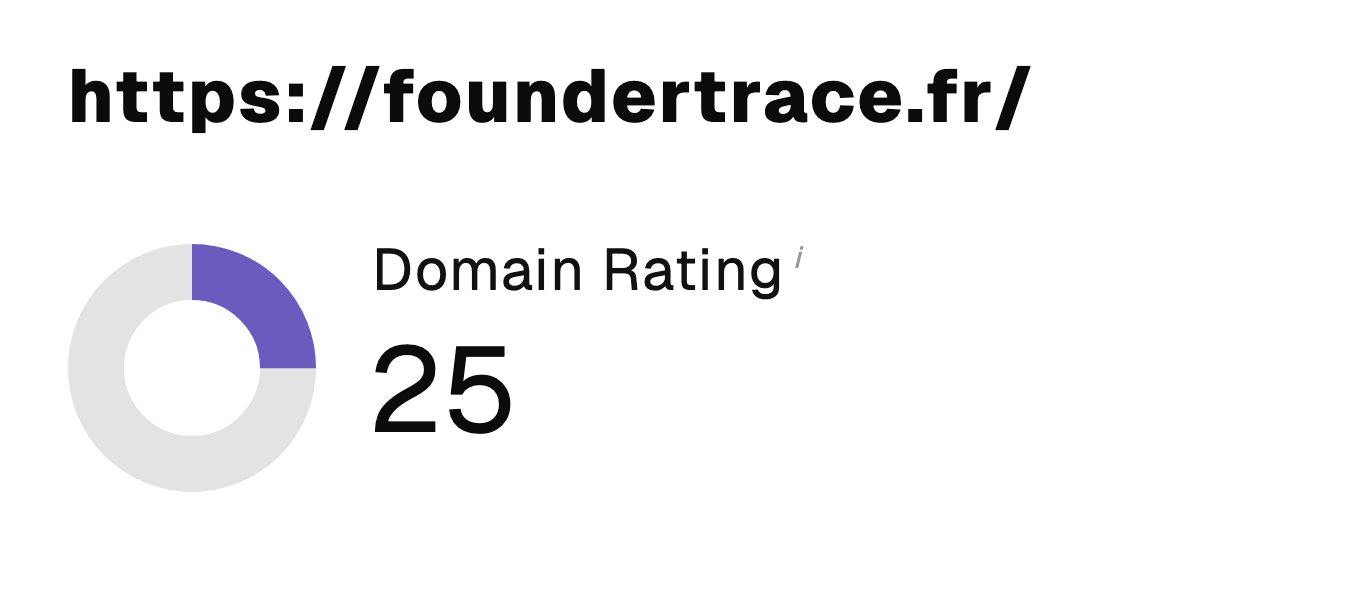 “I just let the Sorank software do its thing, and now my DR is 25 and my page is ranking higher.”
 Lucas Flandrefoundertrace.fr“I specialized in GEO thanks to Sorank. The GEO Leaderboard allows me to show my clients their position vs competitors on ChatGPT. It’s a real commercial differentiator.”
 MélanieSEO Freelance“Great service, works well for our website and helps us understand how to improve it to rank better on Google and elsewhere. Congrats, keep going, I recommend it.”
 Hugo T.E-commerce merchant