



Google rolls out thousands of algorithm changes every year, but only a handful trigger significant ranking shifts across the web. The ability to detect these shifts in real time separates proactive SEO teams from those left scrambling to understand why their traffic dropped overnight.
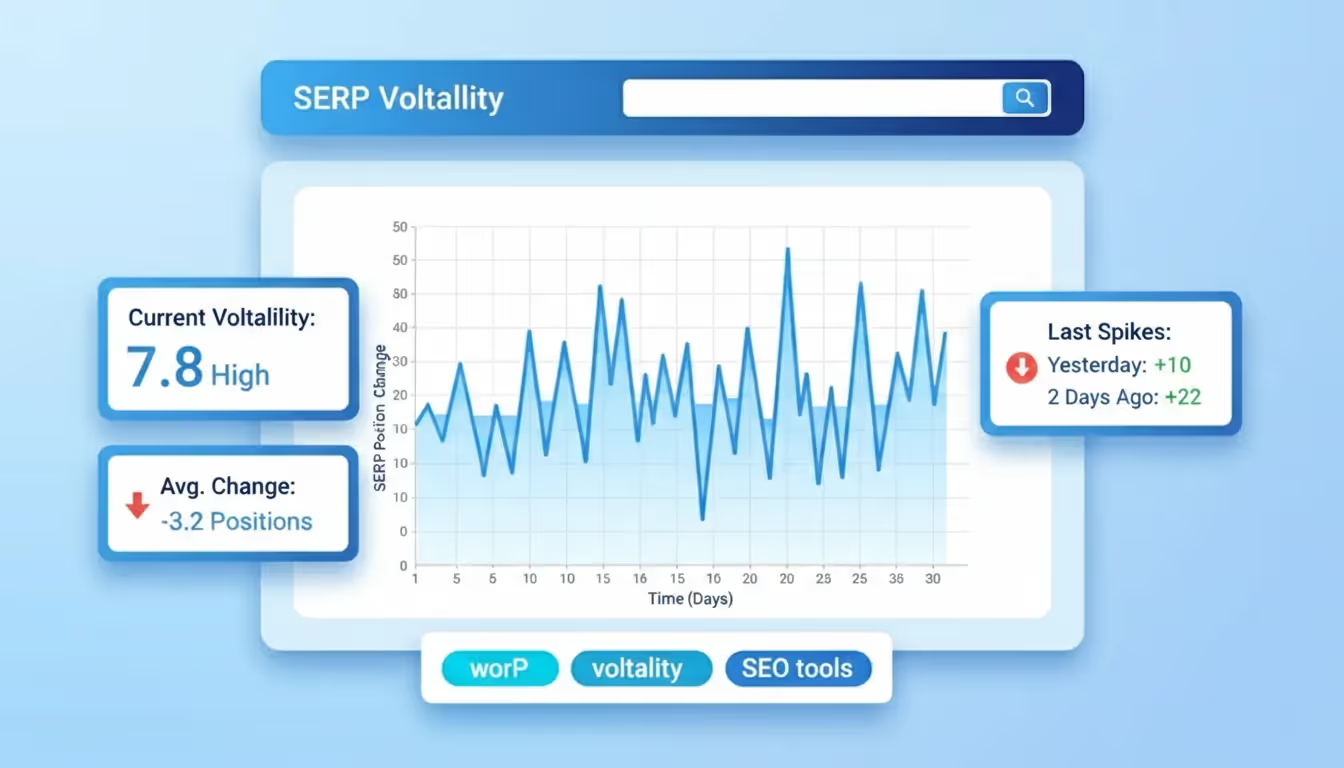
The Sorank SERP Volatility Sensor monitors daily fluctuations in Google's search results across five major industries, giving you a clear signal when something unusual is happening in the SERPs, before it impacts your site.
Why SERP Volatility Matters for SEO
SERP volatility measures how much search engine results change over a given period. High volatility means rankings are shifting significantly, while low volatility indicates a stable search landscape. Understanding volatility is essential for several reasons:
- Early detection of algorithm updates: Google confirms only a fraction of the updates it deploys. A sudden spike in volatility across multiple industries is often the first signal that a major update is rolling out.
- Context for ranking changes: When your rankings drop, knowing whether the entire SERP is volatile helps determine if the issue is site-specific or part of a broader algorithmic shift.
- Strategic timing: Launching a new site, migrating content, or publishing a major update during a period of high volatility adds unnecessary risk. Monitoring volatility helps you choose calmer windows for critical SEO actions.
- Competitive intelligence: Volatility in your industry means opportunities. When rankings shuffle, sites that are well-optimized and fast to react can capture positions that were previously locked by competitors.
- Client communication: For SEO agencies and freelancers, volatility data provides objective evidence to explain ranking fluctuations to clients, reducing panic and building trust.
How the Volatility Score Works
The SERP Volatility Sensor assigns a daily score from 0 to 10 for each monitored industry. This score reflects the degree of change observed in Google's search results compared to the previous day:
- 0-2 (Low): Minimal changes in rankings. The search landscape is stable, and any ranking shifts are within normal daily noise. This is a good time for routine SEO work.
- 3-5 (Moderate): Noticeable fluctuations across some queries. This may indicate minor algorithm tweaks, index refreshes, or seasonal shifts. Monitor your own rankings but avoid drastic actions.
- 5-7 (High): Significant ranking movement across many queries. This level often accompanies confirmed or unconfirmed Google updates. Document your current positions and watch for patterns.
- 7-10 (Extreme): Major SERP upheaval. This almost always indicates a core algorithm update or a significant change in how Google evaluates content. Hold off on major site changes until the dust settles.
The sensor uses a color-coded gauge for instant visual interpretation: green for stability, yellow for moderate activity, orange for high volatility, and red for extreme turbulence.
Industries Monitored
Not all industries are affected equally by algorithm updates. The sensor tracks five distinct verticals to give you a nuanced view of what is happening in the SERPs:
E-commerce
Online retail and product-related queries. E-commerce SERPs are particularly sensitive to product review updates, shopping algorithm changes, and seasonal demand shifts. Monitoring this vertical helps online retailers and affiliate sites anticipate ranking changes around major shopping events.
Health
Medical, wellness, and health-related queries. This is one of Google's most closely regulated verticals, frequently impacted by E-E-A-T and YMYL updates. Health content creators need to react quickly when Google tightens quality standards in this space.
Finance
Banking, insurance, investment, and financial services queries. Like health, finance is a YMYL category where Google applies heightened quality standards. Financial content sites must maintain impeccable E-E-A-T signals to survive volatility periods.
Technology
Software, hardware, SaaS, and tech industry queries. Tech SERPs tend to evolve quickly as new products launch and comparison content gets refreshed. This sector sees frequent fluctuations tied to freshness signals and review-based updates.
Travel
Tourism, hotels, flights, and destination queries. Travel SERPs are heavily influenced by seasonal patterns and local search algorithm changes. Travel sites experience predictable volatility cycles around holiday seasons and booking periods.
By comparing volatility across industries, you can determine whether a disruption is broad (affecting all verticals) or targeted (hitting specific content types). Core updates typically cause cross-industry volatility, while niche updates may only affect one or two sectors.
What to Do During High Volatility Periods
When the sensor shows elevated volatility, resist the urge to make immediate changes to your site. Instead, follow this step-by-step approach:
- Document your current positions: Take screenshots or export your ranking data for key terms before any changes settle. This gives you a baseline for comparison once the update completes.
- Check official channels: Look for announcements on Google Search Central, the Google SearchLiaison X account, and SEO news sites like Search Engine Roundtable for confirmation of updates.
- Analyze affected pages: If your rankings shift, identify which pages and queries are impacted. Look for patterns, are informational pages dropping while transactional pages hold? Are specific content types affected?
- Compare with competitors: Check if competitors in your space are experiencing similar shifts. If everyone's rankings are shuffling, it is likely an algorithm change rather than a penalty.
- Wait for stabilization: Most algorithm updates take 1-2 weeks to fully roll out. Making changes to your site during the rollout can muddy the data and lead to overcorrection.
- Act on data, not panic: Once the update settles, analyze the winners and losers. Look for quality signals that correlate with ranking gains, better content depth, stronger E-E-A-T signals, improved page experience metrics.
Using Volatility Data in Your SEO Strategy
Beyond reacting to algorithm updates, SERP volatility data should inform your ongoing SEO strategy:
Daily Monitoring
Check the volatility sensor as part of your daily SEO routine. A quick glance tells you whether today's ranking data is meaningful or potentially distorted by SERP turbulence. This prevents you from over-analyzing normal noise and helps you focus on actionable signals.
Content Publishing Timing
When planning major content launches or site updates, aim for periods of low volatility. Publishing during a stable SERP environment gives your content the best chance to be evaluated fairly by Google's algorithms without interference from ongoing updates.
Client Reporting
Include volatility context in your SEO reports. When rankings dip during a confirmed update, showing the volatility data alongside your ranking charts demonstrates that the change is market-wide, not a failure of your strategy. This builds credibility and reduces unnecessary alarm.
Historical Pattern Analysis
Over time, tracking volatility patterns helps you predict when updates are likely to occur. Google tends to deploy major core updates at regular intervals, and the volatility sensor's historical data helps you identify these cycles and prepare your sites accordingly.
SERP Volatility vs. Your Own Ranking Data
The volatility sensor and your ranking tracker serve different but complementary purposes:
- Volatility sensor: Tells you what is happening across the entire search ecosystem. It answers the question "Is Google changing things right now?"
- Ranking tracker: Tells you how your specific site is performing. It answers the question "How are my pages doing?"
When your ranking tracker shows a sudden drop, the volatility sensor provides context. If volatility is high, the drop may be temporary and algorithmic. If volatility is low, the drop is more likely site-specific and requires investigation into technical issues, content quality, or manual actions.
Common Mistakes When Interpreting Volatility
Avoid these errors when using SERP volatility data:
- Overreacting to moderate scores: A volatility score of 3-4 is normal daily variation. Do not launch emergency audits or make hasty content changes based on moderate fluctuations that are part of the natural rhythm of search.
- Ignoring industry differences: Health and finance SERPs are naturally more volatile due to stricter quality requirements. A score of 5 in health may be more routine than a 5 in technology. Always interpret scores within their industry context.
- Making changes during updates: Modifying your site while an algorithm update is rolling out makes it impossible to isolate the impact of the update from the impact of your changes. Wait for the dust to settle before acting.
- Attributing all changes to algorithms: Not every ranking shift is caused by a Google update. Competitor actions, seasonal trends, crawl budget issues, and technical problems can all cause fluctuations during stable periods.
- Forgetting the bigger picture: Volatility data is one signal among many. Always combine it with your own analytics, Search Console data, and on-page analysis for complete situational awareness before making strategic decisions.
The Sorank SERP Volatility Sensor gives you the real-time signal you need to stay ahead of Google's algorithm changes, whether you are managing a single site or overseeing an entire portfolio of clients.