Preferences
Privacy is important to us, so you have the option of disabling certain types of storage that may not be necessary for the basic functioning of the website. Blocking categories may impact your experience on the website. More information

Privacy is important to us, so you have the option of disabling certain types of storage that may not be necessary for the basic functioning of the website. Blocking categories may impact your experience on the website. More information

Best time to post on TikTok in 2026: Sprout Social, Hootsuite and Buffer data day by day, then a 4-week method to find your own slots in TikTok Analytics.

Tools


In short
the best time to post on TikTok in 2026 is weekday afternoons for most brands: Sprout Social finds Tuesday to Thursday between 2 p.m. and 6 p.m. local time, Hootsuite points to Thursday 7 a.m. to 9 a.m. and Saturday late morning, and Buffer ranks Sunday 9 a.m. first. The three studies disagree because they measure different accounts and metrics, so treat them as a starting grid. Your own TikTok Analytics, tested over 3 to 4 weeks at 2 to 5 posts per week, gives the only answer that fits your audience.
Want to go further? Ask
The best time to post on TikTok is the window when your followers are online and the For You feed can show your video to an engaged first audience. The largest public dataset this year comes from Sprout Social's 2026 TikTok study, based on 2 billion engagements across 307,000 profiles between November 27, 2025 and February 27, 2026. I compared it with the Hootsuite and Buffer editions, then wrote down the test method I use when an account has enough history to stop relying on averages.
Three public studies were checked in October 2026. Each one publishes its hours differently, so I quote them as written, with the time zone convention each study uses.
Sprout Social states that the overall best times are Tuesday through Thursday between 2 p.m. and 6 p.m. Local Time, meaning the audience's own time zone. Wednesday has the widest window (1 p.m. to 8 p.m.). The study advises avoiding Saturday and names Sunday the worst day of the week. Its sample covers the profiles of Sprout customers, that is, accounts run with a professional social media management tool.
The Hootsuite study on the best time to post on TikTok, published in November 2025, analyzed over 1 million social posts and localized the time of day across 118 countries. Its headline answer is Thursday morning (6 a.m. to 9 a.m.) and Saturday midday (10 a.m. to 6 p.m.). Its day-by-day list gives slightly different windows, reproduced in the table below.
The Buffer analysis of 7.1 million TikTok posts ranks by median engagement rate. It names Saturday the best day and Sunday at 9 a.m. the best single slot, followed by Monday at 1 p.m. and Sunday at 1 p.m. Buffer says its data team made the times universally applicable, so you read them in your own time zone.
| Day | Sprout Social 2026 (local time) | Hootsuite 2025 (localized) | Buffer 2026 (main slot, then others) |
|---|---|---|---|
| Monday | 3 - 5 p.m. | 5 p.m. | 1 p.m. (11 a.m., 8 a.m.) |
| Tuesday | 2 - 6 p.m. | 10 a.m. - 1 p.m. | 6 a.m. (10 p.m., 7 a.m.) |
| Wednesday | 1 - 8 p.m. | 4 - 6 p.m. | 10 p.m. (6 a.m., 9 p.m.) |
| Thursday | 1 - 5 p.m. | 7 - 9 a.m. | 1 p.m. (10 p.m., 6 a.m.) |
| Friday | 3 - 5 p.m. | 4 - 6 p.m. | 6 p.m. (10 p.m., 8 p.m.) |
| Saturday | Avoid posting | 10 a.m. - 7 p.m. | 5 p.m. (4 p.m., 3 p.m.) |
| Sunday | Avoid posting (worst day) | 8 a.m. - 12 p.m. | 9 a.m. (1 p.m., 12 p.m.) |
The weekend shows the gap: Sprout Social advises against it, Buffer ranks Saturday first. Three differences explain it. The samples differ (307,000 profiles of Sprout customers, over 1 million posts for Hootsuite, 7.1 million posts from Buffer users). The metric differs (total engagements for Sprout, median engagement rate per post for Buffer, which rewards slots with less competition). The periods differ (winter 2025-2026 for Sprout, 2025 for Hootsuite). The safe reading: weekday afternoons are a reliable default for a brand account, and the weekend is worth a test, especially if your audience is consumers rather than professionals.
A study gives an average of millions of accounts; your analytics describe the people who follow you. A B2B software brand, a restaurant and a gaming creator do not share an audience, and an average hides those differences.
Open TikTok Studio from your profile (or the web version on desktop), then Analytics. Depending on the app version, the hours and days when your audience is most active appear in the Viewers or Followers tab. Three readings matter:
Check the time zone the chart uses before copying the hours into your schedule, and compare it with your device's clock. A one-hour offset is enough to miss the peak.
A clean test isolates time as the only variable. I run it over 3 to 4 weeks because one week is too short: a single strong video can distort the result.
| Week | Window A (analytics peak) | Window B (study window) | Window C (contrast) |
|---|---|---|---|
| 1 | Monday | Wednesday | Saturday |
| 2 | Wednesday | Saturday | Monday |
| 3 | Saturday | Monday | Wednesday |
| 4 (optional) | Best window from weeks 1 to 3, twice | Runner-up | Repeat of the weakest, to confirm |
TikTok's own advice is old: its Creative Solutions guide, dated October 2021, suggests posting 1 to 4 times per day to test how different content is received. For most brands that pace is unsustainable without cutting quality.
More recent data points to a lower target. The Buffer study of 11.4 million TikTok posts from over 150,000 accounts recommends 2 to 5 posts per week. Compared with one post per week, accounts posting 2 to 5 times saw up to 17% more views per post, 6 to 10 times up to 29% more, and 11 or more up to 34% more. The gain shrinks as volume grows, and Buffer's best-time guide adds that consistency matters more than posting every day.
My rule: choose the highest pace you can hold for three months without lowering quality, then spend your effort on the first seconds of each video. Posting at the right hour does not save a video people swipe away from.
If Top territories shows several countries, plan for the market that matters most to your business, then check what time it is elsewhere. Sprout Social expresses its windows in local time for that reason: 2 p.m. to 6 p.m. means the afternoon of each audience.
| Post at (Paris, winter time) | London | New York | Tokyo |
|---|---|---|---|
| 9 a.m. | 8 a.m. | 3 a.m. | 5 p.m. |
| 2 p.m. | 1 p.m. | 8 a.m. | 10 p.m. |
| 6 p.m. | 5 p.m. | 12 p.m. | 2 a.m. (next day) |
TikTok has become a place where people look for answers. According to the Pew Research Center, 1 in 5 American adults regularly got news on TikTok in 2025, up from 3% in 2020, and 43% of adults under 30 did. TikTok itself built a tool for this demand: Creator Search Insights shows what people search on the platform and flags content gap topics, searched often but covered by few videos.
Posting time decides the first hours of a video. Search decides the months after: a video titled, captioned and spoken around a real question keeps being found long after the posting window has passed. Our guide to TikTok SEO and GEO details captions, keywords and profile settings for that.
AI assistants are a different story. In our study of social media citations in AI answers (about 301,025 answers from ChatGPT, Gemini, Perplexity, Claude and Grok), TikTok was cited 0.09 times per 100 answers, against 2.35 for YouTube. If you want your videos to feed the answers of the AI, publish the long version on YouTube as well: our page on YouTube SEO and GEO explains why its transcripts get cited. And if you plan to boost your best organic videos with paid campaigns, our ranking of the best TikTok Ads agencies in France compares the specialists.
To be clear about our own tool: Sorank does not publish on TikTok or read TikTok Analytics. It works on your website, tracks whether ChatGPT, Claude and Gemini mention your brand, and writes and publishes the articles that answer your customers' questions; the plans are on the pricing page.
Start with weekday afternoons in your audience's local time (Sprout Social's 2 p.m. to 6 p.m. window), compare it with your TikTok Analytics peak, and run the 3 to 4 week test at 2 to 5 posts per week before fixing your schedule. Retest every quarter, and spend the time you save on hooks and on search-friendly captions. To make each video easier to find on TikTok, Google and in AI answers, read our TikTok SEO and GEO guide.

For most brand accounts, the afternoon performs best: Sprout Social's 2026 study puts the strongest window between 2 p.m. and 6 p.m. local time from Tuesday to Thursday. Morning slots appear in other studies, such as Hootsuite's Thursday 7 a.m. to 9 a.m. Your TikTok Analytics show when your own audience is active, which settles the question for your account.
Posting time mainly affects the first hours, when TikTok shows a new video to a first audience; a video that holds attention can keep gaining views for days whatever the hour. Timing is a secondary lever behind the hook, watch time and topic. It is still worth a 3 to 4 week test, because posting while your followers are offline wastes that first push.
Sprout Social's 2026 study names Sunday the worst day and advises avoiding Saturday as well. Buffer's 2026 analysis of 7.1 million posts ranks Saturday as the best day instead, because it measures median engagement rate per post. The two studies disagree, so test one weekend slot on your own account before ruling it out.
 Backlink Challenge
 AI Meta Description GeneratorAI Blog Title Generator
 Google Indexability CheckerAI Blog Outline GeneratorUTM Link Builder
 Keyword Clustering ToolCanonical Tag Checker
 XML Sitemap GeneratorBroken Link CheckerAI SEO Title GeneratorHeadline AnalyzerSERP Preview ToolRedirect Checker
 Hreflang Tag GeneratorHeading Structure AnalyzerHTTP Headers CheckerFavicon Extractor
 SERP CTR Calculator
 SEO vs Paid Search Savings Calculator
 SEO Share of Voice Calculator
 SEO ROI Calculator
 SEO Traffic and Revenue Forecast Calculator
 SEO Budget Calculator
 SEO Break-Even Calculator
 SaaS SEO ROI Calculator
 ROAS Calculator
 Reading Time Calculator
 Ranking Gain Simulator
 Organic Traffic Value Calculator
 Organic Traffic Estimator
 LTV to CAC Ratio Calculator
 Local SEO ROI Calculator
 Link Building Cost Calculator
 Keyword Value Calculator
 Keyword Opportunity Score Calculator
 Keyword Density Calculator
 GEO ROI Calculator
 GEO Content Investment Calculator
 Ecommerce SEO ROI Calculator
 Customer Lifetime Value Calculator
 Customer Acquisition Cost Calculator
 CTR Calculator
 Cost Per Article Calculator
 Conversion Rate Calculator
 Content Marketing ROI Calculator
 ChatGPT Referral Traffic Estimator
 Bounce Rate Calculator
 Backlink ROI Calculator
 AI Visibility Score Calculator
 AI Traffic Value Calculator
 AI Share of Voice Calculator
 Cost of AI Invisibility Calculator
 AI Citation Rate Calculatorllms.txt ValidatorAI Overview CheckerRobots.txt Checker
 AI SEO AuditLLM Readability CheckerSearchGPT Readiness Checker
 Structured Data LLM AuditWebsite Crawlability AI AuditWhy ChatGPT Is Not Recommending My Website
 Gemini Ranking ToolPerplexity Ranking CheckerLLM Citation CheckerAnswer Engine Optimization AuditGEO AuditAI Search Visibility TestChatGPT Visibility Checkerllms.txt Generator
 URL ExtractorWebpage to MarkdownSitemap CheckerSERP Volatility SensorPage Size Checker
 Word Counter
 Slug GeneratorSchema GeneratorRobots Generator
 OG PreviewMeta Tags Generator
 Image CompressorFavicon Generator
 On-Page SEO Audit
 Backlink Analysis Tool
 Keyword Research Tool
 Domain Authority Checker
THEY TRIED SORANK BEFORE YOU
 “I tested Sorank on a real client site and it's insane. It does everything an agency would bill you $1500 a month for. It's going into production on that client now.”
 Guillaume Guersanguersanguillaume.com“We are an Ads agency and we wanted to get our SEO back on track once and for all. Sorank gave us a clear view of our site, helped us prioritize optimizations, and properly structure our content. The tool is easy to use, well designed for a team, and very practical for centralizing tracking without having to juggle multiple platforms. A very solid foundation to start fresh with our SEO.”
 Gaspard MadouiAds Agency
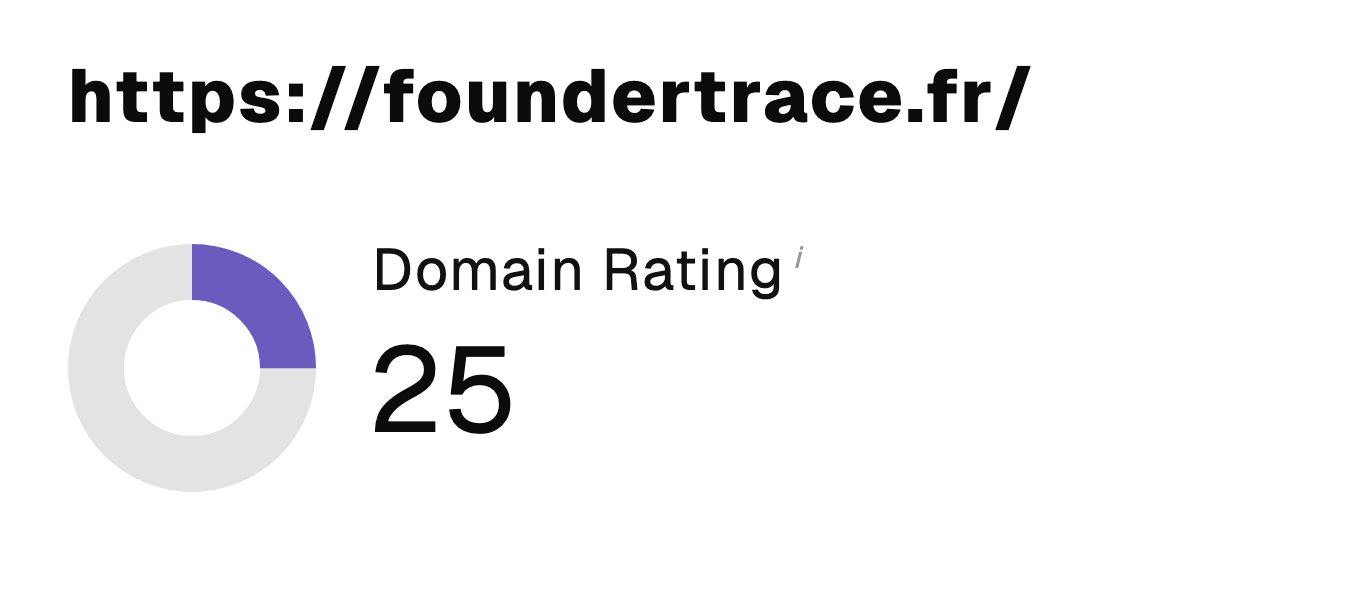 “I just let the Sorank software do its thing, and now my DR is 25 and my page is ranking higher.”
 Lucas Flandrefoundertrace.fr“I specialized in GEO thanks to Sorank. The GEO Leaderboard allows me to show my clients their position vs competitors on ChatGPT. It’s a real commercial differentiator.”
 MélanieSEO Freelance“Great service, works well for our website and helps us understand how to improve it to rank better on Google and elsewhere. Congrats, keep going, I recommend it.”
 Hugo T.E-commerce merchant