






A favicon is the smallest asset on your site and one of the most visible. Google shows it next to every mobile result, browsers show it in tabs and bookmarks, and link previews pull it into feeds and chat apps. When it is missing or served at the wrong size, your result looks unfinished next to competitors.
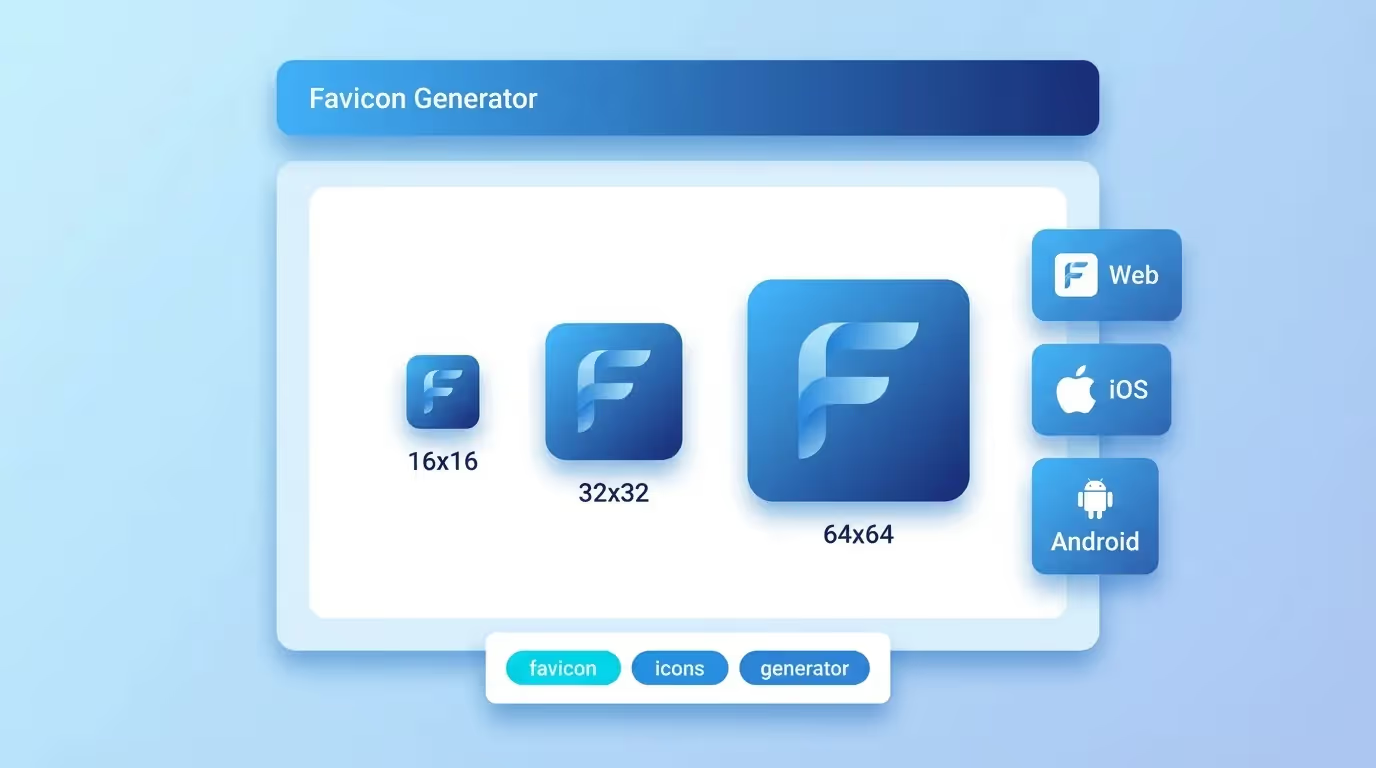
The Sorank Favicon Extractor fetches any page and lists every icon it declares, with its size, format and exact URL.
What the extractor finds
Sites declare icons in several places, and they rarely agree with each other. The tool reads all of them:
- Link tags in the head: the classic
rel="icon"andrel="shortcut icon"declarations, with whatever sizes and formats the page lists. - Apple touch icons:
rel="apple-touch-icon", used when someone adds your site to an iOS home screen. - Web app manifest icons: the icon array inside
manifest.json, which Android and installable web apps use. - The root fallback:
/favicon.ico, which browsers request whether or not you declare it.
Why this matters for search
Google displays favicons on mobile search results, and it has published requirements for them: the file must be a square multiple of 48 pixels, it must be crawlable, and it must be a visual representation of the brand rather than a generic shape. A missing or blocked favicon leaves a blank placeholder in the result, which costs attention at the exact moment a searcher is choosing where to click.
Three checks are worth running on your own domain:
- Is an icon actually served at 48 pixels or above? A 16 pixel icon scaled up looks blurred in results.
- Is the file reachable by crawlers? An icon behind a rule in robots.txt cannot be fetched, so it will not appear.
- Do the declarations agree? When the head points to one file and the manifest to another, different surfaces show different icons.
Practical uses
- Auditing your own site after a redesign, to confirm every size was regenerated and no old icon is still referenced.
- Building comparison pages and directories that need a clean brand icon for each entry.
- Checking a competitor's setup to see which sizes and formats they publish.
- Debugging link previews when a chat app or feed shows the wrong icon for your pages.
















.webp)
.webp)








.svg)
.svg)