Summary
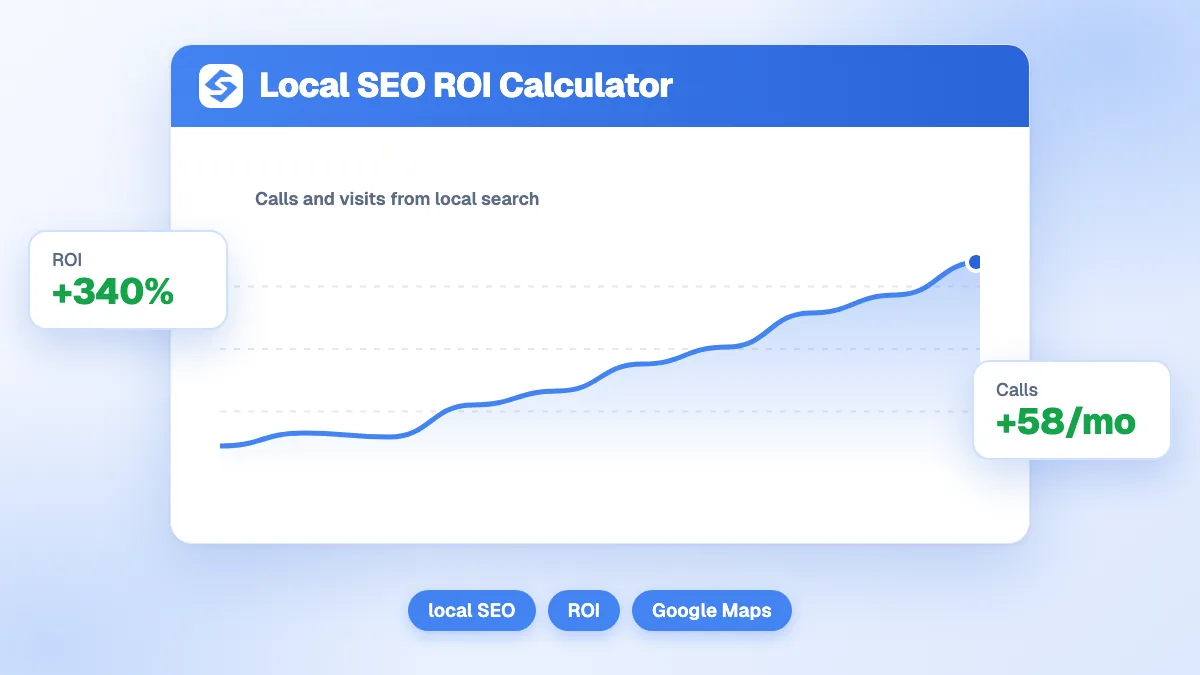
The local SEO ROI calculator follows the path from local searches to revenue: searches × share you capture = visits; visits × visit to call rate = calls and messages; calls × call to job rate = jobs won; jobs × average job value = monthly revenue. ROI = (revenue - monthly spend) ÷ spend. With 2,400 local searches, a 12% share, 15% of visitors calling, 35% of calls signed and a 320 job, a 900 monthly budget brings about 15 jobs and 4,838 of revenue: a 438% ROI.
Want to go further? Ask


A local SEO ROI calculator answers the question every local business owner asks before paying for SEO: how many jobs will it bring? Local search is a funnel with few steps, and Google is clear that there is no shortcut: there is no way to request or pay for a better local ranking (Google Business Profile Help, local ranking). The return depends on your visibility and on how well you turn visits into calls and calls into customers.
How is local SEO ROI calculated?
The calculator chains six inputs, one step at a time. Each step is a number you can measure.
| Step | Formula | Example (default values) |
|---|---|---|
| Visits | Monthly local searches × share you capture | 2,400 × 12% = 288 |
| Calls and messages | Visits × visit to call rate | 288 × 15% = 43 |
| Jobs won | Calls × call to job rate | 43.2 × 35% = 15 |
| Monthly revenue | Jobs × average job value | 15.12 × 320 = 4,838 |
| Return on investment | (Revenue - monthly spend) ÷ spend × 100 | (4,838 - 900) ÷ 900 = 438% |
The tool rounds visits, calls and jobs for display but computes revenue on the exact values. The ROI is labeled Losing money below 0%, Watch this up to 100%, Healthy up to 300% and Excellent above. Choose your currency in the tool.
Where do you find each input?
- Monthly local SEO spend: agency or freelancer fees, plus tools and content. Count your own time if you do it yourself.
- Monthly local searches: searches in your area for what you sell, all keywords combined ("plumber", "emergency plumber", "plumber near me"). Keyword Planner shows volumes by location; the Searches metric of your Business Profile shows the terms people already use to find you.
- Share you capture: the part of those searches that ends on your profile or site. Start from your current Business Profile and Search Console clicks divided by the search volume.
- Visit to call rate: calls, messages and quote requests divided by visits. Your Business Profile counts clicks on the call button (Google, Business Profile performance).
- Call to job rate: the share of calls that become paid work, from your own records.
- Average job value: the average invoice. Use the margin per job instead if you want a profit ROI rather than a revenue ROI.

How much does visibility change the result?
The share you capture is the lever local SEO acts on. The table keeps the other defaults fixed (2,400 searches, 15% calls, 35% signed, 320 per job, 900 spend).
| Share you capture | Visits | Calls | Jobs won | Monthly revenue | ROI |
|---|---|---|---|---|---|
| 3% | 72 | 11 | 4 | 1,210 | 34% |
| 6% | 144 | 22 | 8 | 2,419 | 169% |
| 12% | 288 | 43 | 15 | 4,838 | 438% |
| 20% | 480 | 72 | 25 | 8,064 | 796% |
With these conversion rates, the spend is covered once you capture about 2.2% of local searches. One signed job pays for a third of the monthly budget, which is why local SEO is often profitable for trades with a high job value, and harder to justify for low-ticket services.
What makes a business rank in local results?
Google says local results are mainly based on relevance, distance and prominence. You control two of the three.
| Factor | What Google looks at | What you can do |
|---|---|---|
| Relevance | How well your profile matches the search | Complete every field, choose precise categories, list your services |
| Distance | How far you are from the person searching | Nothing, except opening or declaring the areas you really serve |
| Prominence | How well known you are, including links to your business and the number of reviews and ratings | Earn reviews and reply to them, get cited by local sites, keep your website strong |
Reviews matter, and so do the rules around them. Google Maps removes reviews that were paid for or obtained with incentives such as discounts or free services (Google Maps user contributed content policy). Ask every satisfied customer instead; it is slower and it lasts. Learn the basics in our glossary entries on local SEO and Google Business Profile.

How do you track calls and jobs from local search?
Calls are the conversion that matters in local search, more than form fills. Without tracking them, the whole calculation rests on a guess.
- Read the Calls metric of your Business Profile every month, next to direction requests and website clicks.
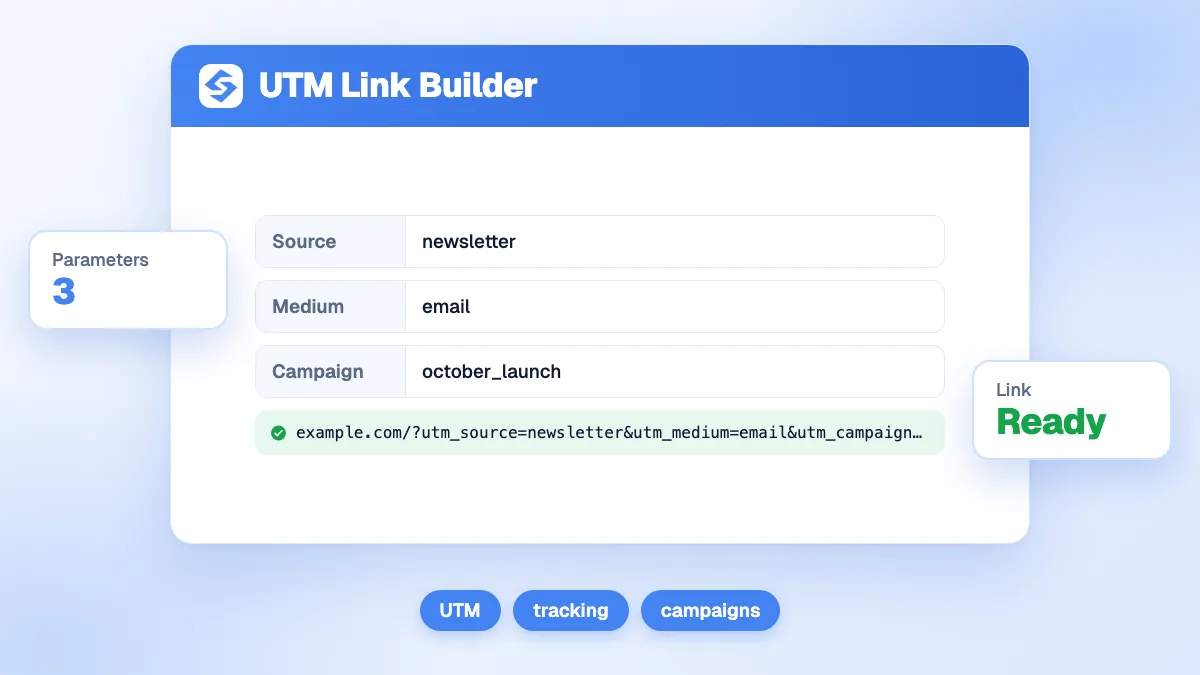
- Tag the website link of your profile with UTM parameters, so those visits appear as a separate source in Analytics (Analytics Help, URL builders). The UTM builder writes the link for you.
- Ask new customers how they found you, and note it with the job. It is the cheapest attribution there is.
- Recompute every quarter with real rates instead of estimates.
When is local SEO not worth it?
- Very low search volume. In a small town with a few dozen searches a month, even a large share brings few jobs.
- A low job value with a low close rate. If you need ten calls to sign a 60 job, check the spend covers the jobs before signing a contract.
- No capacity. More calls only help if you can answer them and take the work.
- A service area you cannot serve. Ranking in a town you do not cover creates calls you have to decline.
In those cases, start with the free basics (a complete profile, reviews, a clear website) and measure before paying for more. The SEO break-even calculator shows the traffic you need to cover a given budget, and the conversion rate calculator helps you measure each step.
What are the limits of this calculator?
It gives a monthly snapshot at cruising speed. It does not model the months it takes to climb in local results, repeat customers who come back without searching, seasonality, or referrals from happy customers. It also counts revenue, not profit, unless you enter a margin as the job value. Use it to compare scenarios and to set a target share, then replace the estimates with measured rates.
How do you grow local visibility beyond Google Maps?
Customers now also ask AI assistants for "the best plumber in town". Being named there depends on the same signals: a clear website, reviews and mentions on local sites.
- Check whether AI assistants recommend you with Sorank AI mention tracking, which tests your local questions in ChatGPT, Claude, Gemini and Perplexity every week.
- Publish pages for each service and area with the blog article generator.
- Follow clicks, calls to action and AI visits in the GEO and SEO dashboard.
Local SEO pays when a few extra jobs cover the monthly spend. Run the calculator with your own rates, then see the Sorank plans to grow your local and AI visibility on autopilot.