Preferences
Privacy is important to us, so you have the option of disabling certain types of storage that may not be necessary for the basic functioning of the website. Blocking categories may impact your experience on the website. More information

Privacy is important to us, so you have the option of disabling certain types of storage that may not be necessary for the basic functioning of the website. Blocking categories may impact your experience on the website. More information

Local SEO: dominate Google Maps and local search results. Optimize Google Business Profile, citations, reviews, and local keywords.






Tools


Summary
Local SEO optimizes your online presence to rank in Google Maps and local search results. Key tactics include Google Business Profile optimization, citation building, review management, and local keyword targeting.
Want to go further? Ask
Local SEO is the practice of optimizing your online presence to rank in local search results and on Google Maps. When someone searches "solar installation near me" or "best solar companies in California," Google displays a map with three local results plus a ranked list of local businesses. Ranking in these local results is critical for any business serving a geographic market. Local search drives 76 percent of smartphone searches for nearby businesses, and 28 percent of those searches result in a purchase.
Local SEO differs from organic SEO. It prioritizes location signals (address, service area, local citations), Google Business Profile optimization, review management, and local keyword targeting. A business can rank #10 organically for "solar installation" but rank #1 locally for "solar installation in San Diego." Both matter, but local ranking often drives higher-intent, higher-conversion customers because they are explicitly looking for your service in your area.
Google Business Profile (GBP) is the cornerstone of local SEO. It is the information panel appearing on Google Maps and in local search results. An optimized GBP includes: accurate business name (including local keywords if naturally applicable), verified address, consistent phone number (matching all citations), accurate business hours, high-quality photos, detailed business description (130 characters, with local keywords), service areas, appointment booking (if applicable), and product/service categories selected accurately.
Verify and claim your GBP at Google Business. Upload 5 to 10 high-quality photos showing your business interior, team, work samples, and customer interactions. Add a detailed business description emphasizing your location and specialties. Include service area boundaries (for service-based businesses). Update hours, contact info, and business attributes (handicap accessible, accepts credit cards, etc.). A fully optimized GBP ranks 5 to 10 positions higher in local results than an incomplete one.
Citations are online mentions of your business name, address, and phone number (NAP). Google uses citations to verify your business entity and location. Each citation acts like a vote confirming your location and legitimacy. Inconsistent citations (different phone numbers, variations in address format) confuse Google and suppress rankings. NAP consistency across citations is critical.
Priority citation sources include Google Business Profile (most important), Yelp, Apple Maps, local chambers of commerce, industry-specific directories, and regional business listings. Ensure your NAP is identical across all sources. Use standard formatting: street address without abbreviations, city state ZIP without variations. Update immediately if your business moves or phone number changes. Consistent citations across 50+ sources typically correlate with top local rankings.
Reviews are user-generated ratings and feedback on your GBP, Yelp, and other platforms. Google's algorithms weight reviews heavily for local ranking. Review volume, average rating, recency, and review content all influence local rankings. A business with 100 five-star recent reviews ranks higher than a competitor with 50 four-star old reviews. Actively encourage customers to leave reviews and respond to all reviews (positive and negative) to show engagement and boost ranking signals.
Implement a review collection process. Email customers after purchase with a link to leave a GBP review. Incentivize (legally): "We'd appreciate your feedback. Leave a review and enter our monthly drawing." Never fake reviews or incentivize reviews for positive ratings only (illegal under FTC rules). Respond to all reviews within 24 hours, thanking positive reviewers and addressing negative feedback professionally. This engagement signals to Google that you care about customer satisfaction.
Local keywords include geographic qualifiers: "solar installation in San Diego," "emergency plumber near me," "best Italian restaurant downtown." Optimize your website content for local keywords. Include location name in title tags (e.g., "Solar Installation San Diego"), meta descriptions, H1 tags, and naturally throughout content. Create location-specific landing pages for each service area (city). Link these pages internally from your homepage and service menu.
Beyond location pages, create local content: blog posts on local events, local hiring announcements, local partnership news, local customer stories. This signals to Google that you are locally embedded and engaged. Local content also attracts local links and mentions, strengthening local authority signals.
Local backlinks from local sources (news sites, local blogs, local directories, chamber directories, industry associations) strengthen your local authority. A link from a local newspaper ranks higher for local results than a link from a national publication. Pursue local partnerships, sponsorships, and media mentions. Contribute expert commentary to local news. Sponsor local events and request links from event pages. Participate in local trade associations and secure listings in their directories.
Build relationships with local journalists and bloggers. Provide local angles for stories that interest your community. Local PR generates the most valuable local links. One link from a major local news site is worth 20 links from national websites for local ranking purposes.
Most local searches happen on mobile devices while customers are actively looking for your service nearby. Mobile optimization is critical. Ensure your website loads quickly (under 2 seconds on mobile), displays clearly on small screens, and has prominent click-to-call buttons. Mobile users expect instant action: tappable phone numbers, direction buttons, booking forms. Slow or poorly designed mobile experiences suppress local rankings and lose customer conversions.
Implement Google Maps integration on your website. Add an embedded map showing your location. Allow users to click "Get Directions" to open navigation. Display your phone number prominently. Create a mobile-friendly contact form. These elements improve user experience and signal to Google that you are mobile-optimized for local searchers.
Use schema.org LocalBusiness and Organization schema to explicitly declare your business information to Google. Mark up your address, phone, hours, business type, service areas, and reviews. Proper schema helps Google understand your business structure and extract information more reliably. This improves both organic and local search visibility.
Implement schema using JSON-LD format on your homepage and location pages. Validate using Google's Rich Results Test. Proper schema implementation can improve local visibility and increase click-through rates from 5 to 15 percent.
If you operate multiple locations (chain stores, regional branches), create separate GBP profiles for each location with distinct addresses and phone numbers. Manage each profile with location-specific information: hours, phone, staff, photos. Link location pages from a parent domain structure. Each location builds its own authority through local citations and reviews while benefiting from parent domain authority.
Centralize citation management. Ensure all locations maintain consistent parent company name and branding while having distinct local identifiers. This structure helps Google understand your multi-location footprint and rank each location appropriately in local results.
Track your local SEO performance using Google Business Profile insights. Monitor map views, directions requests, phone call clicks, and message inquiries. These metrics indicate local visibility and intent. Track your local rankings for target keywords using rank tracking tools focused on local results (different from organic rankings). Monitor review volume and rating average monthly. Set targets: "Rank #1 for top 10 local keywords," "100+ monthly local review requests," "4.8+ star average rating."
Correlate local rankings with business results (phone calls, store visits, online bookings). Local SEO's primary value is customer acquisition. Track conversion rate from local search to actual customer. A local search strategy is successful only if it drives business results, not just rankings.
In multicultural cities and regions, serving multiple languages improves local visibility. Google Business Profile supports multiple languages. Provide business information in the languages your customers speak. Use hreflang tags on your website to signal language versions to Google. Create location pages in multiple languages if you serve non-English communities. Google's international site best practices apply to local multi-language optimization.
International local SEO adds complexity: different directory sites serve different countries, different citation formats are standard in different regions, review platforms vary by country. Research the dominant directories and review sites in your target markets. A business in Canada must optimize for Google.ca, while one in the UK optimizes for Google.co.uk. Google Business Profile supports service areas across country boundaries, enabling multi-country local optimization. Local citation sources and review platforms differ. Invest in understanding local market requirements rather than assuming US-centric approaches work globally.
Local SEO now covers two surfaces: the Google local pack and the answers AI assistants give to "best plumber near me" style questions. ChatGPT, Gemini and Perplexity build those answers from the same signals Google reads: your Google Business Profile, consistent name, address and phone number across directories, review volume and wording, and pages that clearly state what you do and where.
The practical difference is that AI answers name two or three businesses and explain why. They favour businesses described the same way everywhere, with reviews that mention the service and the city, and with a page per service area. If your listings disagree, an AI assistant has no reason to recommend you.
A local SEO tool stack covers four jobs, and most businesses need one tool per job rather than one platform for everything:
Sorank covers the last job: it writes and publishes optimized local pages and articles on autopilot and tracks how often ChatGPT, Claude and Gemini mention your business. Estimate what local rankings are worth with the free local SEO ROI calculator.
A local SEO audit checks, in one pass, everything that decides whether a business appears in the map pack and in local results. Work through it in this order:
Repeat the audit every quarter.
A few figures from primary sources show why local search deserves its own strategy:
Check the year of any local SEO statistic before quoting it: search habits, and AI answers in particular, change quickly.
Local SEO dominates customer acquisition for location-based businesses. Optimize your Google Business Profile completely. Build consistent citations across 50+ directories. Actively manage and encourage reviews. Create location-specific content and keywords. Earn local backlinks through partnerships and PR. Implement mobile optimization and schema markup. Track local rankings and customer acquisition monthly. A comprehensive local SEO strategy generates predictable, high-intent customer inquiries from local search and Google Maps.
To identify local SEO gaps and opportunities compared to competitors, use Sorank's geo-local audit tools. Get a complete assessment of your GBP, citation consistency, review strategy, and local keyword ranking. Develop a prioritized action plan to dominate your local market and drive consistent customer acquisition.
Sources

Google pulls information from multiple sources: your official GBP profile, verified citations (directories, local listings), user-generated content (reviews, posts), and web content. If conflicting information appears (different address, phone, hours), Google displays the most commonly verified data. Update your GBP profile immediately, then systematically update major citations (Yelp, Apple Maps, local directories). Changes typically sync within 24 to 48 hours.
Very important. Google uses review volume, ratings, and recency as ranking factors for local results. A business with 50 recent five-star reviews ranks higher than a competitor with 10 old reviews. Actively encourage customers to leave reviews. Respond to all reviews (positive and negative) to show engagement. Review recency matters more than volume, so consistent, recent reviews beat a large old review base.
Difficult but possible. Service area businesses (plumbers, roofers, contractors) can serve customers without a storefront. Use a service area instead of a street address in GBP. Use local keywords in your content. Build citations with service areas. You'll rank in maps results for searches within your service area. However, you rank lower than competitors with physical locations in that area. For maximum local dominance, a physical location is important.
THEY TRIED SORANK BEFORE YOU
 “I tested Sorank on a real client site and it's insane. It does everything an agency would bill you $1500 a month for. It's going into production on that client now.”
 Guillaume Guersanguersanguillaume.com“We are an Ads agency and we wanted to get our SEO back on track once and for all. Sorank gave us a clear view of our site, helped us prioritize optimizations, and properly structure our content. The tool is easy to use, well designed for a team, and very practical for centralizing tracking without having to juggle multiple platforms. A very solid foundation to start fresh with our SEO.”
 Gaspard MadouiAds Agency
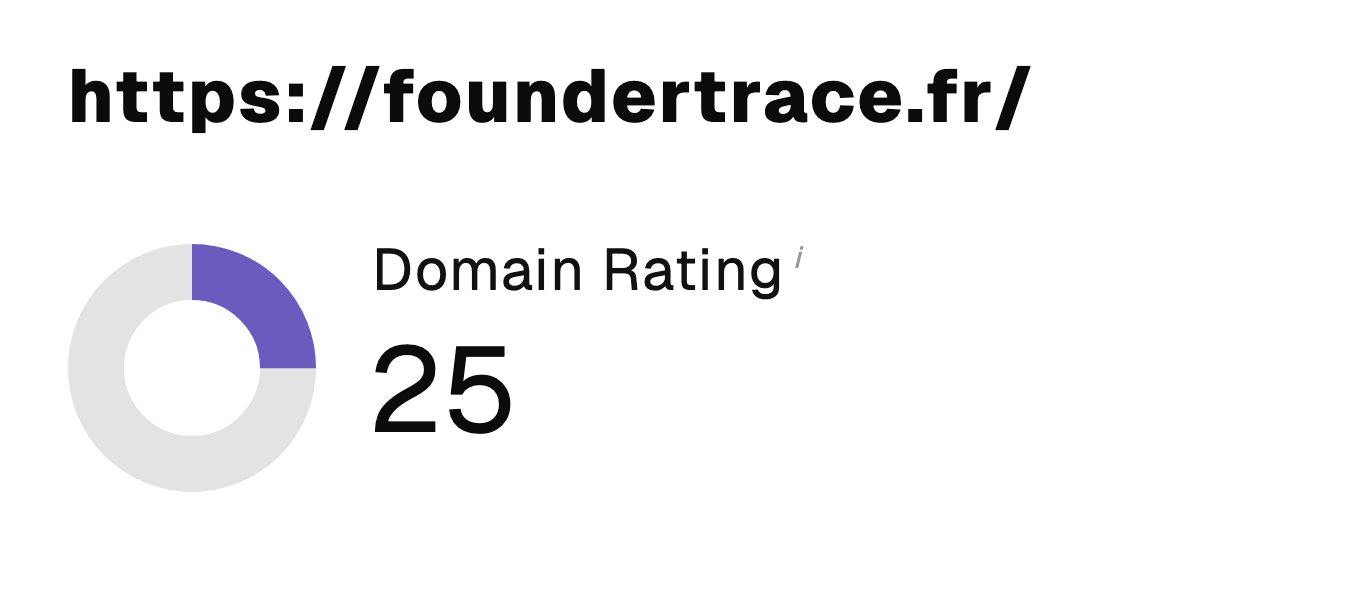 “I just let the Sorank software do its thing, and now my DR is 25 and my page is ranking higher.”
 Lucas Flandrefoundertrace.fr“I specialized in GEO thanks to Sorank. The GEO Leaderboard allows me to show my clients their position vs competitors on ChatGPT. It’s a real commercial differentiator.”
 MélanieSEO Freelance“Great service, works well for our website and helps us understand how to improve it to rank better on Google and elsewhere. Congrats, keep going, I recommend it.”
 Hugo T.E-commerce merchant