
Preferences
Privacy is important to us, so you have the option of disabling certain types of storage that may not be necessary for the basic functioning of the website. Blocking categories may impact your experience on the website. More information

Privacy is important to us, so you have the option of disabling certain types of storage that may not be necessary for the basic functioning of the website. Blocking categories may impact your experience on the website. More information
Find the best seo diagnostic software for your site. Compare features, market data, and expert tips to boost rankings and AI visibility in 2026.


A single undetected crawl error can silently erode months of organic growth. As the search landscape splits between traditional engines and AI answer platforms, the role of SEO diagnostic software has become more critical than ever. Whether you manage one website or dozens, choosing the right diagnostic platform determines how quickly you surface problems and how effectively you fix them. If you are already exploring our software for SEO optimization, understanding the full diagnostic category will help you make a more informed decision.
The stakes are not trivial. The global SEO software market was valued at $84.94 billion in 2025 and is projected to reach $96.42 billion in 2026, expanding at a CAGR of 13.26% through 2035, according to Precedence Research. With billions flowing into optimization tools each year, the question is no longer whether you need diagnostic software but which capabilities matter most for your situation.
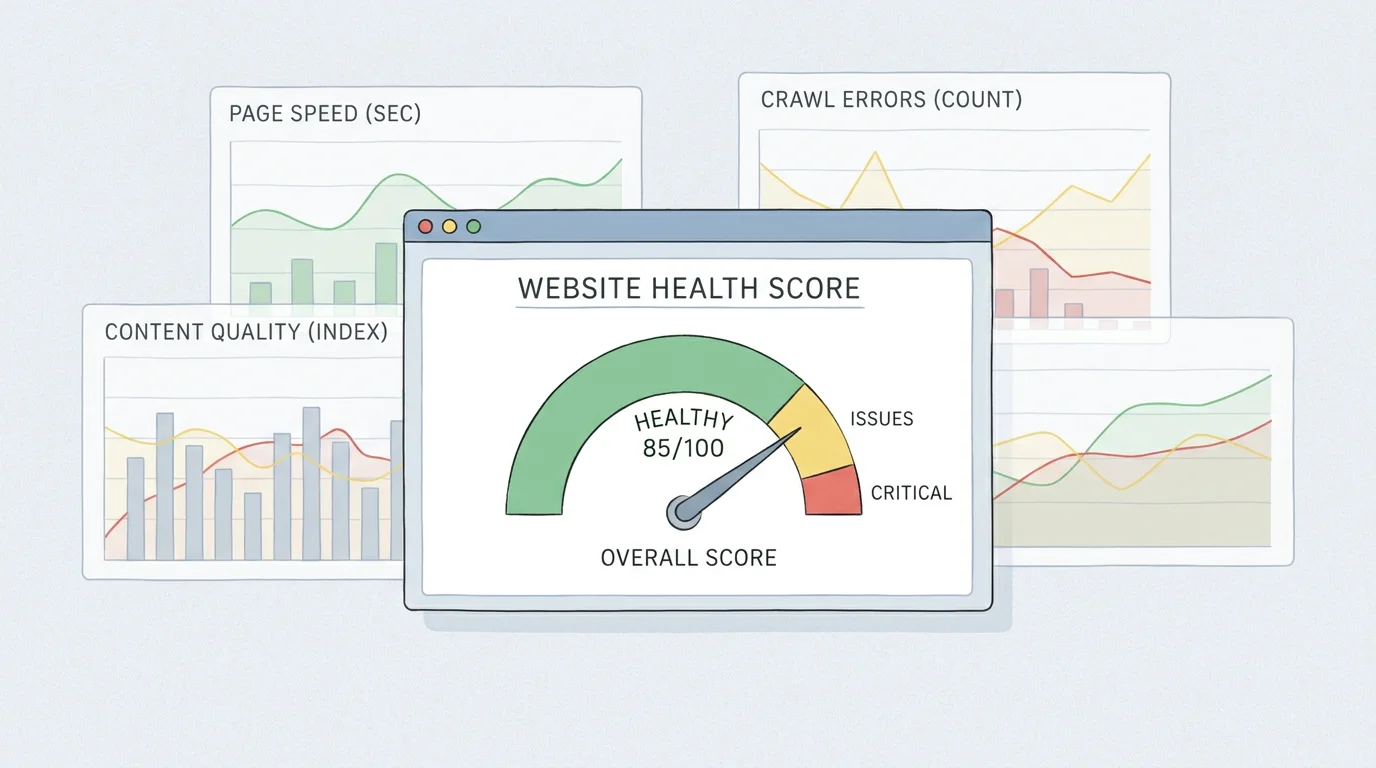
At its core, a diagnostic SEO tool scans your website for issues that hinder visibility, then prioritizes those issues so you can act on them. Think of it as a structured health check that examines your pages the same way search engine crawlers and, increasingly, large language models do.
Most platforms evaluate a common set of factors: metadata accuracy, page speed, mobile usability, crawlability, internal link architecture, schema markup, and content quality signals. SEO managers currently allocate approximately 25% of their budget to technical SEO, according to Xamsor. That figure alone reflects how central site health diagnostics have become within the broader optimization workflow.
What separates modern diagnostic platforms from older generation tools is their scope. Beyond traditional checks, newer solutions now evaluate AI search readiness, measuring whether your content is structured for citation by ChatGPT, Gemini, Perplexity, and other generative engines. This dual focus on classic SEO hygiene and AI visibility defines the current generation of diagnostic software.
Not every diagnostic tool covers the same ground. Before committing to a subscription, you should map your requirements against the feature categories below.
This is the foundation. Your tool should scan for broken links, redirect chains, duplicate content, missing canonical tags, robots.txt misconfigurations, and server response errors. The depth of the crawl matters: a surface scan of ten pages will not catch the issues buried on page 200 of your site architecture. Sites where these problems trace back to the underlying build, rather than a single page, often need a fix at the source; the 10 best creation sites agencies in France compares agencies that address architecture problems directly. If you need a thorough scan, consider starting with our technical SEO audit to identify high-priority fixes automatically.
Diagnostic software should measure content quality signals such as heading hierarchy, keyword density, readability, image alt attributes, and structured data compliance. These checks directly influence how search engines index and rank your pages, and how AI engines interpret your authority on a given topic.
Page load time, Core Web Vitals, and mobile rendering scores are not optional data points. They are ranking signals. The best diagnostic platforms integrate these metrics into the same report, so you do not need to cross-reference separate tools.
The Generative Engine Optimization (GEO) services market was valued at $886 million in 2024 and is projected to reach $7.32 billion by 2031. This growth signals that diagnostic software must now evaluate how well your pages are structured for AI citation, not just traditional SERP placement. Look for tools that track brand mentions across multiple AI engines and measure citability factors like entity clarity, factual density, and schema depth.
AI-powered search is dramatically changing SEO and the overall search experience. AI Overviews appeared in 60% of Google searches in the United States as of November 2025, according to the same Xamsor analysis. These numbers are shifting the diagnostic conversation. A page that scores perfectly on a traditional SEO checker may still be invisible in AI-generated answers if it lacks clear entity definitions, structured facts, or trust signals that LLMs rely on.
This is precisely why a growing number of diagnostic platforms now include GEO audit modules. These modules assess whether your content meets the criteria for AI recommendation, from schema completeness to sentiment alignment. If you want to evaluate your own AI visibility right now, our GEO SEO audit covers these checks in a single scan.
The market offers a wide range of diagnostic tools, from free single-page checkers to full-scale enterprise suites. The table below compares several options across the criteria that matter most to busy marketers, agencies, and website owners.
| Platform | Technical Audit | AI Visibility Tracking | Automated Fixes | CMS Integration | Starting Price |
|---|---|---|---|---|---|
| Sorank | Full-site | 5 AI engines | Yes (background patching) | WordPress, Shopify, Webflow, Wix | €99/month per site |
| SEO Site Checkup | Domain-level | 6 AI engines | No | Not specified | Freemium |
| SEOptimer | 100+ data points | Google AI rankings | No | Limited | Free tier available |
| Seobility | 200+ factors | AI answer engine tips | No | Not specified | Free / $50 mo (Premium) |
| Rank Math SEO Analyzer | Page-level | No | No | WordPress only | Free |
Free tools are useful for one-off checks, but they typically lack the automation, depth, and AI tracking that ongoing optimization demands. When you manage multiple sites or need to demonstrate ROI to clients, a platform that combines diagnostics with automated remediation saves significant time.
Competition in the global SEO software market is driven by consolidation and rapid feature convergence, with vendors using targeted acquisitions, platform partnerships, and AI product innovation to gain advantage, according to SkyQuest. This consolidation means that standalone checkers are giving way to integrated platforms that diagnose, prioritize, and fix issues within a single workflow.
Manual audits remain valuable for deep strategic analysis, but they do not scale. An automated diagnostic tool can monitor your entire domain continuously, alerting you to new issues within hours rather than waiting for the next quarterly review. For agencies managing portfolios, the difference between reactive and proactive diagnostics directly affects client retention.

A solo founder running a direct-to-consumer store has different diagnostic needs than a 20-person agency managing 50 client domains. Understanding these differences helps you avoid paying for features you will not use, or worse, choosing a tool that cannot grow with you.
The priority is clarity. You need a diagnostic tool that tells you exactly what is wrong and how to fix it, without requiring deep technical knowledge. Automated background patching, such as fixing meta tags or generating missing schema, eliminates the need for a dedicated developer. Founders who would rather skip the tooling altogether can also compare the 10 best seo agencies in France, which reviews agencies that run this diagnostic work for you. The SME segment is expected to grow significantly in the SEO software market during the forecast period, which means more tools are tailoring their interfaces and pricing to smaller teams.
Agencies need multi-site dashboards, white-label reporting, and the ability to track progress across client portfolios. Diagnostic data must translate into client-facing deliverables. If your agency also handles content, look for platforms that combine diagnostics with content generation and our on-page SEO audit capabilities to keep everything in one place.
Even experienced marketers make avoidable errors when choosing diagnostic software. Here are the ones we see most often.
Having the right tool is only half the equation. The workflow you build around it determines whether diagnostic data turns into ranking improvements.
Establishing this cycle ensures that diagnostics remain a continuous practice rather than a one-time event.
With the search ecosystem becoming more complex every quarter, software for SEO diagnostics is no longer an optional investment. It is the foundation on which content strategy, link building, and AI visibility all rest. Sorank combines automated technical diagnostics, AI mention tracking across five engines, and background patching into a single platform designed for founders, agencies, and busy marketers who need results without the overhead of manual auditing. To see how it works on your own domain, try our AI SEO audit tool and receive your first diagnostic report within minutes.
It is used to scan websites for technical errors, content quality issues, and visibility gaps that prevent pages from ranking in search engines and AI answer platforms. The goal is to surface actionable problems so you can fix them before they affect traffic.
For most websites, a weekly automated scan is sufficient to catch emerging issues. High-traffic or frequently updated sites benefit from daily monitoring. With Sorank, automated scans run in the background so you do not need to schedule them manually.
Free tools are helpful for one-off page-level checks, but they typically lack full-site crawling, AI visibility tracking, and automated remediation. For ongoing optimization across multiple pages or domains, a subscription platform provides significantly more depth and time savings.
THEY WIN WITH SORANK







.webp)



.webp)
.webp)








.svg)
.svg)