
Preferences
Privacy is important to us, so you have the option of disabling certain types of storage that may not be necessary for the basic functioning of the website. Blocking categories may impact your experience on the website. More information

Privacy is important to us, so you have the option of disabling certain types of storage that may not be necessary for the basic functioning of the website. Blocking categories may impact your experience on the website. More information
Compare the best seo tools for 2026, from keyword research to AI visibility tracking, and learn how to build an organic growth stack that ranks.


Search is no longer a single surface. Google AI Mode reportedly reached 75 million daily active users by early 2026, a fourfold increase since its launch, while AI Overviews now appear in roughly a quarter of all searches. Choosing the right seo tools has therefore become a question of covering both classic rankings and AI visibility at the same time. To manage that complexity without drowning in tabs, many teams now rely on our all-in-one SEO platform.
The stakes are measurable. The global search engine optimization market is worth $108.28 billion in 2026 and is projected to surpass $203 billion by 2030. With that much investment flowing into organic growth, the difference between a fragmented toolkit and a coherent one shows up directly in results. This guide explains the categories that matter, how to evaluate them, and how to assemble a stack that actually saves you time.
For two decades, an SEO software stack meant keyword volume, backlinks, and rank tracking. That foundation still matters, but the surfaces have multiplied. According to SparkToro research, 58.5% of US Google searches end without a click, which means visibility and traffic are no longer the same metric. A brand can appear prominently and still receive no referral visit.
This reality has reframed what good tooling must deliver. Beyond positions, teams now track how often a brand is cited inside AI answers and how it compares to competitors across multiple engines. The same Goodfirms data found that AI Overviews already surface in 89% of brand search results, so monitoring those appearances is no longer optional.
There is also reassurance in the numbers. SEO is not a dying channel. In May 2026, Google officially defined GEO and AEO as part of SEO rather than separate disciplines, confirming that the core principles endure even as the surfaces change. The tools you select simply need to keep pace with where answers now appear.

Most platforms fall into a handful of functional families. Understanding them helps you avoid paying twice for the same capability.
Free utilities cover slices of this work well. A standalone keyword density checker or page speed tester is genuinely useful for a quick diagnosis. The limitation is fragmentation: stitching a dozen single-purpose tools into spreadsheets consumes the very time you are trying to save. When you need a fast on-page signal, our keyword density calculator gives you that check inside a wider workflow rather than as an isolated tab.
Engagement metrics deserve the same treatment. Search behavior increasingly rewards content that holds attention, and a high exit rate can signal a mismatch between intent and page. You can measure that quickly with our bounce rate calculator before committing to a larger content revision.
The fastest-moving category is generative engine optimization. According to Semrush, when Google shows an AI summary only about 8% of users click a regular result below it, compared with roughly 15% when no summary is present. Being the cited source, rather than the buried link, is now the competitive objective.
This requires a different kind of measurement: tracking brand mentions across ChatGPT, Perplexity, Gemini, Claude, and Grok, and benchmarking your share of voice against rivals. We built this directly into our workflow, monitoring 300 prompts and a GEO Leaderboard so you can see exactly where you stand. Pairing AI citation tracking with classic technical fixes through our SEO audit tools keeps both surfaces under one roof.
The reason this matters financially is straightforward. AI-referred visitors tend to arrive with stronger intent, and early movers gain a durable advantage while most competitors remain unmeasured. Setting up even basic AI citation monitoring now puts you ahead of the majority of businesses that still report flying blind on this surface. For teams that would rather have specialists own this monitoring, the 10 best GEO and AI visibility agencies in France compares agencies built specifically for AI citation tracking.
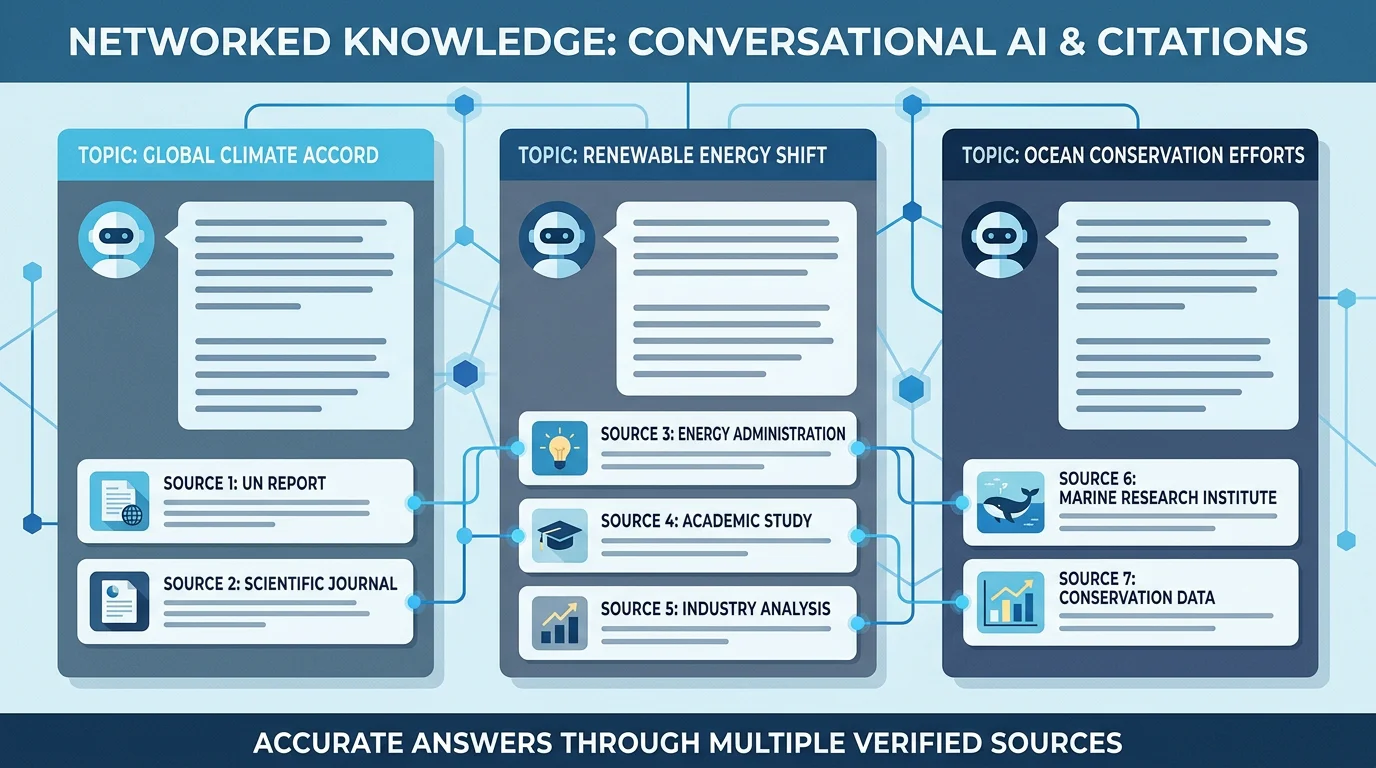
When you compare options, weigh five practical criteria: functional coverage, automation depth, AI visibility tracking, integrations with your CMS and analytics, and total time cost. The table below contrasts three common approaches so you can match a model to your situation.
| Approach | Coverage | AI / GEO tracking | Automation | Time to manage |
|---|---|---|---|---|
| Our autopilot platform | SEO and GEO combined | Yes, across 5 AI engines | Audits, publishing, backlinks automated | Low |
| Traditional all-in-one suite | Broad classic SEO | Partial, often paid add-on | Limited | High |
| Free single-purpose tools | Narrow, one task each | Rarely | None | Very high (manual) |
The honest tension here is between depth and effort. Powerful databases reward expert users who know exactly what to query, but they assume you have hours to spend each week. If your goal is organic growth without becoming a full-time SEO specialist, prioritize automation and unified reporting over raw data volume. If even that feels like too much to run in-house, the 10 best seo agencies in France reviews agencies that can manage the stack on your behalf.
The most common complaint about SEO software is not capability; it is time. Maintaining separate tools for audits, keywords, links, content, and AI tracking can quietly consume a full workweek each month. The fix is consolidation plus automation.
A practical setup looks like this. Connect your site once, let automated audits handle technical fixes such as schema, indexation, and broken links in the background, generate AI-first articles with sources and internal links, acquire contextual backlinks from real sites with real traffic, and receive a monthly visibility report in your inbox. That is the model we designed around, so a small team sharing one dashboard can grow visibility without wiring dozens of tools together.
Whichever route you choose, the principle holds: the best stack is the one you will actually maintain. A coherent platform you check weekly beats a sprawling toolkit you abandon after a month.
The search landscape now spans classic rankings and AI citations at once, and your tooling has to cover both. With SEO tools and platforms operating inside a market worth more than $108 billion in 2026, the cost of a fragmented, time-hungry stack is real, both in hours and in missed visibility. Focus on coverage, automation, and AI tracking rather than chasing every standalone utility. The teams that consolidate now, and start measuring their presence inside AI answers, will hold a lasting edge as zero-click search keeps expanding. Our autopilot approach to SEO and GEO is built precisely to remove that manual burden so you can focus on your product instead of your tool stack. To see the difference for yourself, try our SEO audit tools free for three days.
SEO tools optimize for traditional search rankings, keywords, and backlinks. GEO tools track and improve how often your brand is cited inside AI answers from engines such as ChatGPT and Perplexity. In 2026, the strongest platforms combine both.
Free tools handle individual checks well, such as keyword density or page speed. They become inefficient when you manage many of them manually. A consolidated platform that automates audits, content, and AI tracking usually saves significant time for growing teams.
Technical fixes and content can begin appearing in search within roughly two months, with compounding gains over time. AI citations can surface faster. Our platform is designed to track this progress and report visibility changes monthly so you can see momentum build.
THEY WIN WITH SORANK







.webp)




.webp)
.webp)









.svg)
.svg)