Preferences
Privacy is important to us, so you have the option of disabling certain types of storage that may not be necessary for the basic functioning of the website. Blocking categories may impact your experience on the website. More information

Privacy is important to us, so you have the option of disabling certain types of storage that may not be necessary for the basic functioning of the website. Blocking categories may impact your experience on the website. More information

Optimize your WordPress site for SEO and GEO. With 43.5% of the web on WordPress, learn how to use Rank Math, Yoast, AIOSEO, structured data, and llms.txt so Google, ChatGPT, Perplexity, and Claude find and cite your content.










































Tools


Want to appear inside AI answers, not just blue links? With WordPress powering 43.5% of all websites and holding 62.8% CMS market share, your WordPress site is competing for visibility across both Google and the AIs. Make your WordPress website SEO and GEO optimized to be found by AI. Improve pages and metadata to boost search visibility and AI reach. Start with a baseline geo seo audit and keep progress visible in a living geo seo dashboard. The goal is simple: be understandable, referenceable, and credible to generative AI. In this guide, you'll see how to implement it on WordPress.
Generative Engine Optimization focuses on how AI systems interpret, summarize, and cite your site. With ChatGPT surpassing 1 billion monthly searches and Perplexity reaching over 100 million monthly active users, AI-driven discovery is no longer a niche concern. Classic WordPress SEO organizes pages for search engines; GEO goes further by structuring entities, facts, sources, and clarity so models like ChatGPT, Gemini, and Perplexity can reuse and reference your content. When AIs assemble an answer, they look for authority, clean context, and machine-parseable meaning, which is where strong structured data, tight information architecture, and consistent branding help you be cited. According to Cloudflare's 2024 Year in Review, AI crawlers now make 3.6x more requests than traditional search crawlers, making GEO increasingly important for WordPress sites.
Get technical and editorial basics right before layering GEO. According to HTTP Archive data via corewebvitals.io, only 44% of WordPress sites pass all Core Web Vitals on mobile (compared to 65% for Shopify and 60% for Wix), and the average WordPress page loads in 3.4 seconds, above Google's recommended 2.5-second LCP threshold. Use a reliable SEO plugin like Rank Math or Yoast SEO to manage titles, meta descriptions, and canonical URLs. Align your permalink structure to be short, stable, and keyword-relevant. Keep one primary category per post when possible and prune thin tags. Compress and convert images to WebP/AVIF, lazy-load media, and minimize unused CSS/JS to improve Core Web Vitals. Since Google's March 2026 Core Update now evaluates Core Web Vitals at the site level rather than per page, poor performance on any section drags down your entire domain. A fast, stable site increases crawl efficiency and makes pages more likely to be retrieved and quoted by AI tools. Map priorities from your keyword research into your URL plan and navigation.
WordPress's plugin ecosystem is its greatest advantage for GEO. Here are the key plugins to consider in 2026:
Rank Math SEO now supports llms.txt generation, AI search traffic tracking, and unlimited keyword optimization. Its structured data wizard makes adding JSON-LD schema straightforward even for non-technical users.
Yoast SEO Premium includes an AI Optimize button powered by GPT for generating meta descriptions and titles. It remains one of the most widely installed SEO plugins with robust schema support.
AIOSEO (All in One SEO) provides TruSEO scoring with E-E-A-T signals, Link Assistant for internal linking, and Search Statistics integration for tracking performance.
For dedicated AI optimization, LovedByAI renders your pages specifically for LLM crawlers like ChatGPT and Gemini, ensuring they see fully rendered content. LLMagnet generates llms.txt files that serve as a sitemap designed specifically for language models (similar to how robots.txt guides traditional crawlers). MAIO tracks how ChatGPT and other AI assistants reference your content. And Better Robots.txt helps manage AI crawler access with granular controls for GPTBot, ClaudeBot, and PerplexityBot.
The llms.txt standard is a new protocol that helps AI models understand your site's structure and content, similar to how robots.txt guides traditional search crawlers. By placing an llms.txt file at your domain root, you provide a concise, markdown-formatted overview of your site that LLMs can quickly parse.
It is also important to understand the different types of AI crawlers visiting your WordPress site. There are three categories: training crawlers (like GPTBot and ClaudeBot) that collect data for model training, search bots (like OAI-SearchBot, Claude-SearchBot, and PerplexityBot) that index content for AI search results, and AI assistants that fetch content in real-time for user queries. Anthropic, for example, operates three separate bots: ClaudeBot for training data, Claude-User for real-time content fetching, and Claude-SearchBot for search indexing. You can manage access to each category independently in your robots.txt file.
AI models map topics to entities and attributes. Create an "entity home" for your brand with a comprehensive About page, team bios, and contact details, and reinforce identity across the site through consistent names, addresses, and profiles. Add author bios with credentials, relevant experience, and links to authoritative publications to strengthen E-E-A-T (Experience, Expertise, Authoritativeness, Trustworthiness). On key pages, define the concept, state who it's for, list prerequisites, and include cited facts or stats with outbound references to authoritative sources. This entity-first clarity increases your likelihood of AI citations.
Use JSON-LD schema markup to help AIs extract meaning without guesswork. Implement Organization and WebSite schema sitewide with logo, sameAs profiles, and search action. Mark content with Article, BlogPosting, Product, Service, or HowTo as appropriate; use BreadcrumbList everywhere. For pages with question-and-answer content, consider FAQPage or QAPage schema, and for step-driven guides, use HowTo. Add Open Graph and Twitter Card meta for consistent summaries across platforms. Keep canonical URLs unambiguous, implement noindex on duplicates, and prevent parameterized clutter so models resolve the definitive page. With Google AI Overviews now appearing in 65% of informational queries, well-structured schema markup is critical for being featured in both traditional and AI-generated results.
Write with reusability in mind. Lead with a concise TL;DR that states the claim and outcome, then expand with steps, definitions, and evidence. Use clear H2/H3 logic, short paragraphs, and plain language. Call out key terms and synonyms a model expects around the topic, and add a brief "Why it matters" to telegraph relevance. Include credible citations and dates to signal freshness. When appropriate, accelerate drafting with a controlled brief in a blog article generator and finalize with human editing and fact-checking.
Build clusters around your core topics so AI systems can traverse from overview to subtopic to proof. Use descriptive anchors that match user intent, not vague "click here" text. Create a cornerstone hub that summarizes the topic and links to deep dives, then have deep dives link back up and across. Plugins like AIOSEO's Link Assistant can automate internal linking suggestions across your WordPress site. Keep link depth shallow for your money and knowledge pages, and ensure pagination, archives, and facets don't dilute PageRank. Codify cluster planning with a topical cluster generator and map each node to a unique purpose.
Guide crawlers explicitly. In your WordPress robots.txt and HTTP headers, allow reputable AI-related crawlers you want to learn from your site and disallow obvious scrapers. Here is an example robots.txt configuration for WordPress that allows key AI search bots:
Allow OAI-SearchBot, PerplexityBot, and Claude-SearchBot for AI search indexing. Consider blocking training-only crawlers like GPTBot and ClaudeBot if you do not want your content used for model training. Use a plugin like Better Robots.txt to manage these rules through the WordPress admin interface.
Maintain a clean, auto-updated XML sitemap (both Rank Math and Yoast generate these automatically) and submit it to Google Search Console and Bing Webmaster Tools. Use server-level caching (WP Super Cache, W3 Total Cache, or LiteSpeed Cache) and a global CDN like Cloudflare to speed delivery. Normalize trailing slashes and set reliable canonical tags to reduce duplication. Monitor 404s and redirect cleanly with 301s. Technical consistency reduces ambiguity and improves how AIs assemble knowledge about your pages.
Show lived experience with specifics: methods, failures, tools used, and nuanced recommendations. Include original statistics, examples, or mini studies, and note the date of your findings. Attribute claims to trustworthy sources with outbound links. Add bylines, reviewer notes, and last-updated timestamps. This concrete evidence signals authority in both traditional search and GEO, making your page more likely to be referenced for nuanced questions.
For services and products, describe where your solution fits best, the alternatives you outcompete, and cases where you're not a fit. Include pricing ranges, implementation timelines, and technical requirements. Mark up with Product or Service schema, add pros and cons, and link to documentation. AI systems surface brands that clearly state scope, proof, and applicability. Whether your stack runs on bigcommerce, clickfunnels, joomla, kajabi, kartra, lovable, magento, podia, prestashop, shopify, squarespace, systeme-io, webflow, wix, or woocommerce, ensure core templates expose clear specs, FAQs, and structured data.
Map user intent by collecting the real prompts your audience asks in chat tools and forums. Expand pages to cover variants, related tasks, and decision criteria. Add a short "Key terms" segment to anchor synonyms models may expect. Use prompt expansion workflows like keyword query fan out ia to reveal adjacent intents and fold them into your outlines.
Attach meaning to media. Use descriptive filenames, alt text, and captions that reinforce entities and attributes. Provide full transcripts for videos and podcasts on the same URL. Add VideoObject and ImageObject metadata using your SEO plugin's schema settings. When AIs answer with multimodal content, assets with explicit context and structured data become eligible for inclusion and citation.
After publishing on WordPress, syndicate responsibly to platforms AIs crawl, such as professional networks, developer communities, and newsletters, and use canonical URLs when republishing. Share key assets on channels where your audience engages, and ensure every distribution includes consistent titles, summaries, and links back. Structured, multi-platform distribution increases the surfaces where models encounter and trust your brand.
Pursue high-quality backlinks and brand mentions from recognized publications, standards bodies, and authoritative blogs. Contribute expert quotes, original data, and open tools or checklists to attract editorial links. Track citations that reference your brand and pages with ai mention tracking and align your sameAs profiles in Organization schema so models reliably resolve your entity.
If you serve multiple markets, implement hreflang using plugins like Polylang or WPML and keep currency, measurement units, and examples localized. Mirror structured data per language and ensure all languages reflect the same entity identity. Provide consistent internal links within each locale and avoid auto-translation without human review. Clear localization helps models route regional queries to the right page and cite you accurately.
Set review cadences for your critical pages and note last updated dates. When facts change, update the page rather than spinning new fragments, preserving link equity and canonical authority. Keep a change log for long-running guides so models and users see evolution over time. Consolidate overlapping posts and redirect duplicates to strengthen single, authoritative URLs.
Instrument analytics to capture branded and non-branded demand influenced by AI. Create channel rules for referrals from chat tools and AI browsers, and tag campaigns with UTM parameters. Monitor mentions inside AI answers with ai mention tracking, benchmark authority growth via a domain authority tracker, and compare topical performance in a geo leaderboard. Attribute leads and conversions by content cluster to see which entities and formats drive the most AI-attributed discovery.
Audit your current AI visibility: test priority prompts across major assistants and record which pages appear as cited sources. Fix technical gaps first by stabilizing performance (target under 2.5 seconds LCP, above 44% CWV pass rate), cleaning canonicals, and tightening sitemap coverage. Next, design topic clusters and prioritize an entity-rich About page, detailed service pages, and cornerstone guides. Layer in JSON-LD across templates using Rank Math or AIOSEO and ensure sitemaps are complete and discoverable. Add an llms.txt file to your domain root using LLMagnet or manually. Expand content to cover real audience questions, add evidence and outbound references, and align summaries and titles across distribution channels. Round it out with competitive gap checks using seo competitor spy and targeted digital PR on authority sites that AI models already trust.
Sorank audits your presence in AI results, maps the prompts your audience uses, and identifies entity and schema gaps. It structures pages for AI readability, enriches metadata and structured data, and builds topical authority with strategic content and links. It then distributes assets across channels where models discover signals and monitors AI citations, traffic, and conversions, iterating as AI behavior shifts. The result is a site that's not just optimized for search, but explicitly designed to be cited by generative AI.
Keep titles clear, front-load primary intent, and match H1 to title where appropriate while avoiding duplication in metadata. Use unique meta descriptions that summarize outcomes, not just keywords. Add organization-level schema with logo, sameAs, and contact points. Implement BreadcrumbList and Product/Service types on commercial pages. Maintain concise, unambiguous navigation and use descriptive anchors for cross-linking. Enforce HTTPS, fix mixed content, and ensure a clean security posture; trust and safety signals influence both human and AI confidence.
Avoid thin, overlapping articles that split authority and fragment signals across multiple URLs. Don't stuff keywords or overuse autogenerated text without fact checks, evidence, and editorial voice. Prevent parameter-driven duplication and infinite archives from bloating crawl paths. Ensure your robots.txt doesn't accidentally block key assets or AI crawlers you want to allow. Avoid contradictory directives between meta robots, canonicals, and sitemaps. Keep brand names, product names, and executive profiles consistent across your site and external profiles to prevent entity confusion.
AI-driven discovery evolves quickly, but the fundamentals remain stable: speed, clarity, authority, and distribution. Revisit your entity map each quarter, add new use cases and comparisons as your market shifts, and update examples with fresh data. With Google's March 2026 Core Update enforcing site-level Core Web Vitals assessment, maintaining strong technical performance across your entire WordPress site is now more critical than ever. Expand cluster coverage methodically and refresh top performers so AIs continue to see your pages as current, credible, and reusable. Consistency compounds, and a steady cadence beats sporadic bursts.
Winning AI visibility on WordPress means combining classic SEO with GEO's entity clarity, structured meaning, and distribution strategy. With 43.5% of the web running on WordPress and AI crawlers making 3.6x more requests than traditional search bots, the opportunity is massive for sites that get this right. Prioritize performance, information architecture, and topic clusters. Enrich pages with evidence and schema markup. Configure your robots.txt and llms.txt for AI crawlers. Leverage WordPress's unmatched plugin ecosystem with tools like Rank Math, Yoast, and AIOSEO to implement structured data, monitor performance, and signal authority on and off your site. Do this well and AIs won't just find you, they'll quote you. That's how you convert answers into awareness, traffic, and revenue in the AI-first era.
Sources

WordPress powers 43.5% of all websites worldwide (source: W3Techs), making it the largest CMS with 62.8% market share. To optimize for AI search, you need to solve two problems: making your content crawlable by AI bots and making it citable. First, install a GEO-friendly plugin like Rank Math (which now supports llms.txt generation and AI search traffic tracking) or AIOSEO (with TruSEO scoring and E-E-A-T signals). Add structured data using JSON-LD schemas (FAQ, HowTo, Article) so AI crawlers can parse your content without guesswork. Write answer-first content with clear H2/H3 headings, cite sources with outbound links, and ensure fast load times. Configure your robots.txt to allow AI crawlers like GPTBot, PerplexityBot, and Claude-SearchBot. With ChatGPT receiving over 1 billion monthly searches and Perplexity surpassing 100 million monthly active users, AI search optimization is no longer optional.
Top WordPress plugins for GEO and AI visibility in 2026 include Rank Math SEO, which offers llms.txt support, AI search traffic tracking, and unlimited keyword optimization (wordpress.org/plugins/seo-by-rank-math). Yoast SEO Premium now includes an AI Optimize button powered by GPT for generating meta descriptions and titles (wordpress.org/plugins/wordpress-seo). AIOSEO provides TruSEO scoring with E-E-A-T signals, Link Assistant, and Search Statistics integration (wordpress.org/plugins/all-in-one-seo-pack). For dedicated AI optimization, LovedByAI renders your pages specifically for LLM crawlers like ChatGPT and Gemini, while LLMagnet generates llms.txt files that serve as a sitemap for AI models (similar to robots.txt but designed for language models). MAIO tracks how ChatGPT references your content. Better Robots.txt helps manage AI crawler access with granular controls for GPTBot, ClaudeBot, and PerplexityBot.
Sorank is the only platform offering a connector built specifically for WordPress that takes into account the unique structure of WP sites, including custom post types, ACF fields, Elementor blocks, and the WordPress REST API. Beyond the connector, Sorank provides automated GEO and SEO audits tailored for WordPress, AI mention tracking across ChatGPT, Perplexity and Gemini, real-time competitor monitoring, content optimization suggestions, and a unified dashboard combining classic SEO metrics with AI visibility data. This means that with a single platform, you can analyze, optimize, monitor, and improve your WordPress site by implementing both SEO and GEO simultaneously, something most competing platforms cannot offer for WordPress users today.
THEY TRIED SORANK BEFORE YOU
 “I tested Sorank on a real client site and it's insane. It does everything an agency would bill you $1500 a month for. It's going into production on that client now.”
 Guillaume Guersanguersanguillaume.com“We are an Ads agency and we wanted to get our SEO back on track once and for all. Sorank gave us a clear view of our site, helped us prioritize optimizations, and properly structure our content. The tool is easy to use, well designed for a team, and very practical for centralizing tracking without having to juggle multiple platforms. A very solid foundation to start fresh with our SEO.”
 Gaspard MadouiAds Agency
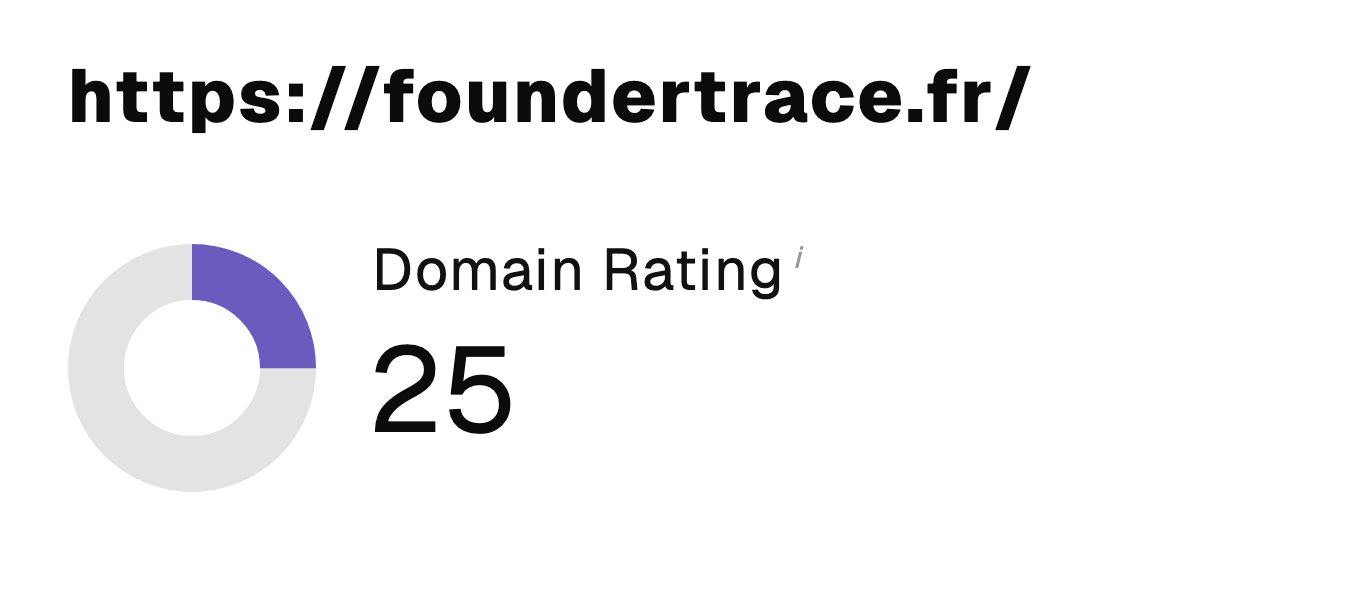 “I just let the Sorank software do its thing, and now my DR is 25 and my page is ranking higher.”
 Lucas Flandrefoundertrace.fr“I specialized in GEO thanks to Sorank. The GEO Leaderboard allows me to show my clients their position vs competitors on ChatGPT. It’s a real commercial differentiator.”
 MélanieSEO Freelance“Great service, works well for our website and helps us understand how to improve it to rank better on Google and elsewhere. Congrats, keep going, I recommend it.”
 Hugo T.E-commerce merchant