Preferences
Privacy is important to us, so you have the option of disabling certain types of storage that may not be necessary for the basic functioning of the website. Blocking categories may impact your experience on the website. More information

Privacy is important to us, so you have the option of disabling certain types of storage that may not be necessary for the basic functioning of the website. Blocking categories may impact your experience on the website. More information

Make your Shopify store GEO friendly so AI search tools like ChatGPT can recommend your products. AI orders on Shopify grew 11x in 2025, here is how to capture that traffic.











































Tools


Want AI to recommend your products at the exact moment shoppers ask? Make your Shopify store GEO-ready so AI search experiences can mention and link to your products inside answers. According to TechCrunch, orders flowing to Shopify stores from AI search queries increased 11x between January and November 2025, while AI-driven traffic grew approximately 7x over the same period. The growth lever has moved from blue links to brand citations. If your data is inconsistent and your authority thin, models won't reference you. Start by running a geo seo audit and set up ai mention tracking to see how often assistants already surface your brand.
| Metric | Value | Source |
|---|---|---|
| Growth in orders from AI search queries (January to November 2025) | 11x | TechCrunch |
| Growth in AI-driven traffic over the same period | 7x | TechCrunch |
| Shoppers likely to use AI when making purchases | 64% | Shopify survey |
| Self-built Shopify stores missing key schema types | 78% | Metricus |
| Liquid sites passing all Core Web Vitals | 59.5% | Shopify performance data |
| Typical time to first GEO results, against 6 to 12 months for classic SEO | 30 to 60 days | Stormy |
By 2026, product discovery begins in AI answers. When shoppers ask for "the best hiking daypacks under $150," systems synthesize sources, prefer structured facts, and cite brands with strong entity signals. Shopify's own GEO playbook confirms that classic Shopify SEO still matters, but without GEO you become invisible inside assistant responses. A Shopify survey found that 64% of shoppers said they're likely to use AI when making purchases. GEO aligns content, data, and authority so models can parse products, judge relevance, and select you for recommendations, then validate those choices through domain authority tracker trends and competitive panels like a geo leaderboard. Our agency guide for SEO and GEO provides strategic frameworks that many Shopify merchants leverage to compete effectively.
Starting late March 2026, all Shopify stores appear inside ChatGPT by default. This means your products can surface directly in ChatGPT Shopping, but only if your data is clean, your structured data complete, and your product feeds accurate.
Operational GEO is a repeatable system. Eight steps, in this order:
Classic SEO takes 6 to 12 months. GEO results often appear in 30 to 60 days, because models recrawl and re-evaluate information far more frequently.
Test brand and product queries in ChatGPT, Gemini, Perplexity, Copilot, and Apple's assistants. Document where you're cited, which sources are used, and who wins. Inspect your theme's JSON-LD coverage and the correctness of schema markup including SKU, MPN, and GTIN. According to Metricus, 78% of self-built Shopify stores are missing key schema types, effectively excluding them from AI shopping features regardless of product quality. Validate sitemaps, canonicals, and hreflang where relevant. Catalog public profiles AI relies on (Organization pages, LinkedIn, Crunchbase, manufacturer profiles) and ensure consistent naming, addresses, and sameAs links. Track shifts in visibility with ongoing ai mention tracking.
A growing standard for AI visibility is the llms.txt file, a structured, text-based map of your store specifically designed for LLMs to ingest. Think of it as a sitemap for AI crawlers. Several Shopify apps now support llms.txt generation, including LLMs.txt Optimizer, Arc: llms.txt, and LLMS.txt Agent. These tools create and maintain a machine-readable inventory at your root domain that AI crawlers can parse instantly, covering product names, descriptions, prices, categories, and availability.
LLMs favor pages with clear intent, consistent headings, and answer-first copy. Product pages should open with a concise, fact-dense summary and primary use cases. Collection and guide pages should declare the audience and decision supported. Keep one intent per page, enrich thin paginated collections with helpful buying context, and store factual attributes in Shopify metafields so models can extract reliable data points. For editorial content velocity, use a disciplined workflow or a blog article generator that enforces GEO structure.
Treat each product as a stable entity with precise identifiers and attributes. Use clear names, non-duplicative variant logic, consistent phrasing for materials and dimensions, and explicit audience/use cases. Add benefits, evidence (tests, certifications), and high-quality images with descriptive alt text. Provide comparisons to adjacent models, and interlink accessories and care guides to expose relationships across your internal knowledge graph. Complement this with targeted keyword research to mirror how shoppers describe the entity.
Cover fundamentals completely and consistently. For products, use Product with name, description, brand, sku, mpn, gtin, material, color, size, dimensions, and technical specs; pair with Offer (price, currency, availability, shipping). Add AggregateRating and Review when policy allows. For collections, use ItemList and sitewide BreadcrumbList. On your Organization page, expose verified sameAs and publisher IDs with consistent legal details. Understanding the difference between SEO and GEO helps you prioritize schema investments for AI discoverability.
| Page type | Schema types | Key properties |
|---|---|---|
| Product | Product + Offer | name, description, brand, sku, mpn, gtin, material, color, size, dimensions, price, currency, availability, shipping |
| Product with reviews | AggregateRating, Review | ratingValue, reviewCount, author |
| Collection | ItemList, BreadcrumbList | itemListElement, position |
| Organization page | Organization | legalName, sameAs, publisher identifiers, address |
A critical Shopify-specific issue: Shopify doesn't always auto-update price and availability in JSON-LD if these values are hardcoded. Always bind dynamic Liquid variables to live product data to keep your markup current. Apps like Ilana's JSON-LD for SEO and Smart SEO automate this, but audit regularly with Google's Rich Results Test to catch conflicts from third-party apps injecting incomplete or duplicate markup.
Assistants prefer pages that resolve tasks succinctly. Publish "best for" guides tied to real prompts, practical how-tos linked to your products, and side-by-side comparisons with explicit criteria. Lead with the answer, then support with specifics and evidence. Keep specs and prices synced with metafields to avoid drift. Add expert commentary, safety notes, and care tips to strengthen usefulness and E-E-A-T. Build clusters with a topical cluster generator so models perceive topical depth, then expand angles using keyword query fan out ia to cover adjacent intents. Leverage our YouTube strategy for GEO to produce video content that both AI systems and humans find valuable.
Models reward fast, stable, indexable sites. A key architectural decision for Shopify stores is Liquid themes versus Hydrogen (headless), and the trade-offs are measurable, according to Shopify's performance data:
| Criterion | Liquid theme | Hydrogen (headless) |
|---|---|---|
| Rendering | Server-rendered by default, full HTML sent to crawlers | React-based, needs careful server-side rendering to stay crawlable |
| Core Web Vitals | 59.5% of sites pass all metrics | Higher ceiling, lower average |
| PageSpeed score | Around 90 when optimized | 95 to 99 when done well |
| Build cost | Baseline | 3x to 5x higher |
| Best for | Most merchants, and the safer choice for AI visibility | Teams with in-house engineers and a custom storefront |
Regardless of stack: optimize Core Web Vitals, reduce app bloat, serve next-gen images with fixed dimensions, prevent parameterized faceted URLs from indexing, and maintain clean sitemaps. Track competitors' technical moves with seo competitor spy.
Shopify imposes certain URL and structural constraints you should be aware of:
The /collections/ and /products/ prefixes cannot be changed. Spend your effort on content quality and structured data instead.
Parameterized filter URLs should point to a canonical collection page. Avoid duplicate schema injection and pagination that clutters structured data.
Many apps inject heavy JavaScript. Audit installed apps monthly and remove what is not essential: slow pages hurt rankings and AI crawler access alike.
Shopify's native blog is basic. Use a blog app or a headless content system when editorial depth matters to your strategy.
Be present wherever models look. Sync accurate feeds to Google Merchant Center and Manufacturer Center, verify GTINs with GS1, and align marketplace detail pages. Feed quality is where most stores quietly lose AI visibility: thin titles, missing attributes, and inconsistent categories stop models from matching a product to a shopper's question. Feed tools like Clarmix audit and enrich those product attributes, and generate conversational attributes built for assistants like ChatGPT, Gemini, and Claude, which is exactly the structured detail models need before they will cite a catalog.
Publish specs and manuals on your domain and mirror on reputable partners where appropriate. Maintain trusted directory profiles and earn coverage on authoritative publications; consolidate sameAs links in Organization markup. This broad, coherent distribution improves the odds of high-quality mentions and measurable gains in ai mention tracking.
Seek links that cite your brand and products in context, ideally paired with the attributes you want to own. Contribute expert quotes to credible media, collaborate on benchmarks and studies, and secure inclusion on neutral comparison pages that assistants reference. Showcase press and expert features on your About/Press pages and link out to them to strengthen reconciliation signals, then quantify authority growth with a domain authority tracker and validate quality via ai mention tracking.
Collect prompts from support transcripts, onsite search, surveys, and community channels. Group by task (discover, compare, troubleshoot) and build content that mirrors the exact language and intent. Name sections with natural phrasing and answer in the first paragraph. Maintain a living prompt library and update quarterly as models and shopper vocabulary evolve. Expand coverage with keyword research and automate ideation with blog article generator.
Define KPIs beyond traffic. Monitor share of AI citations through periodic panel tests, visible assistant referrals, assisted conversions from guides and comparisons, and branded search lift after distribution pushes. Track ChatGPT referral traffic in GA4 by filtering for chatgpt.com and other AI referrers. Tag media links, attribute revenue to guides with last non-direct click and view-through models, and keep a changelog of model updates to correlate with visibility shifts. Centralize this view in a geo seo dashboard and benchmark against competitors with seo competitor spy.
Sorank operationalizes GEO end-to-end. It audits your current presence, captures real prompts, and restructures your information architecture and templates for entity SEO. It deploys deep structured data, fills topical gaps with authoritative content, manages high-signal mentions and links, distributes clean product data to places models ingest, and monitors citations, traffic, and conversions so you can iterate confidently. For scale, it adds topical cluster generator workflows, automated keyword query fan out ia, and ongoing ai mention tracking.
Running other commerce stacks alongside Shopify? Sorank also supports wordpress, woocommerce, magento, prestashop, bigcommerce, webflow, wix, squarespace, clickfunnels, systeme-io, kartra, kajabi, podia, joomla, and lovable for consistent GEO across ecosystems.
GEO is the missing layer between strong Shopify SEO and consistent AI recommendations. With AI-driven orders growing 11x and all Shopify stores now appearing in ChatGPT Shopping, the opportunity is massive but only for merchants who prepare their data and content. Clean structured data, authoritative coverage, and well-documented entities let models recommend your products with confidence. Implement the blueprint above to earn citations, and use Sorank to accelerate every step with tools like ai mention tracking and a centralized geo seo dashboard. Brands that act now will own AI-driven discovery, and the revenue that follows.
Sources

Write detailed, benefit-driven product descriptions that answer common customer questions. Add FAQ sections to your product pages using apps like Smart SEO. Implement structured data (Product, FAQPage, Review schemas) with accurate SKU, MPN, and GTIN identifiers. Create comparison blog content that the AIs can easily extract. Generate a llms.txt file at your root domain so AI crawlers can parse your entire inventory. Since 78% of self-built Shopify stores are missing key schema types, getting this right gives you a significant competitive advantage.
The llms.txt file is a new industry standard (documented at llmstxt.org) that provides a structured, text-based map of your store specifically designed for LLMs to ingest. It works like a sitemap but for AI crawlers, covering product names, descriptions, prices, categories, and availability. Several Shopify apps support it, including LLMs.txt Optimizer, Arc, and LLMS.txt Agent. Combined with proper JSON-LD schema and clean product feeds, llms.txt significantly improves your chances of being cited and recommended by ChatGPT, Perplexity, and other AI search tools.
AI commerce on Shopify is growing explosively. According to TechCrunch, AI-driven orders on Shopify grew 11x between January and November 2025, while AI traffic to Shopify stores grew 7x. Starting in late March 2026, all Shopify stores appear in ChatGPT Shopping by default, with OpenAI charging a 4% fee on completed sales. A Shopify survey found 64% of shoppers are likely to use AI when making purchases. GEO results often appear faster than traditional SEO, sometimes within 30-60 days, because LLMs recrawl content more frequently.
THEY TRIED SORANK BEFORE YOU
 “I tested Sorank on a real client site and it's insane. It does everything an agency would bill you $1500 a month for. It's going into production on that client now.”
 Guillaume Guersanguersanguillaume.com“We are an Ads agency and we wanted to get our SEO back on track once and for all. Sorank gave us a clear view of our site, helped us prioritize optimizations, and properly structure our content. The tool is easy to use, well designed for a team, and very practical for centralizing tracking without having to juggle multiple platforms. A very solid foundation to start fresh with our SEO.”
 Gaspard MadouiAds Agency
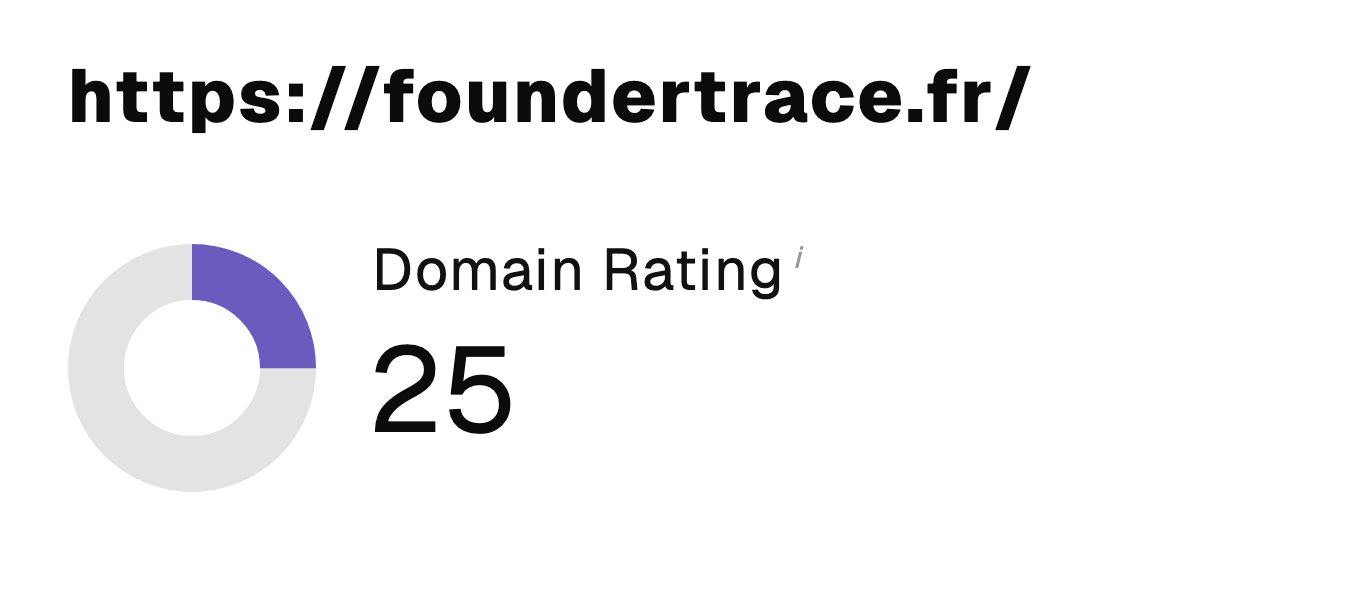 “I just let the Sorank software do its thing, and now my DR is 25 and my page is ranking higher.”
 Lucas Flandrefoundertrace.fr“I specialized in GEO thanks to Sorank. The GEO Leaderboard allows me to show my clients their position vs competitors on ChatGPT. It’s a real commercial differentiator.”
 MélanieSEO Freelance“Great service, works well for our website and helps us understand how to improve it to rank better on Google and elsewhere. Congrats, keep going, I recommend it.”
 Hugo T.E-commerce merchant