Preferences
Privacy is important to us, so you have the option of disabling certain types of storage that may not be necessary for the basic functioning of the website. Blocking categories may impact your experience on the website. More information

Privacy is important to us, so you have the option of disabling certain types of storage that may not be necessary for the basic functioning of the website. Blocking categories may impact your experience on the website. More information

Make your WooCommerce website SEO and GEO optimized. With 33% eCommerce market share and 6.5 million live stores, learn to configure structured data, llms.txt, and AI crawler settings so Google, ChatGPT, Perplexity, and Claude can find and cite your products.










































Tools


Want AI assistants to recommend your products, not just show your link? WooCommerce is the world's most popular open-source eCommerce platform with 33% eCommerce market share, powering over 6.5 million live websites and processing an estimated $35 billion in gross merchandise volume. Make your WooCommerce store SEO-optimized and explicitly referenced by AI systems. Improve product data, content, and GEO structure to gain more visibility with AI help. The rules of discovery have shifted from blue links to ai mention tracking. In this article, you'll learn how to turn your WooCommerce store into an AI citation magnet.
Search is now answer-first. Large language models summarize the web, cite a few trusted sources, and move users forward without a SERP. With ChatGPT surpassing 1 billion monthly searches and Perplexity reaching over 100 million monthly active users, AI-driven discovery is no longer a niche concern. For WooCommerce, GEO means structuring product pages and content so ChatGPT, Gemini, Perplexity, and Claude can easily parse, trust, and summarize them. GEO complements traditional WooCommerce SEO by focusing on how AI interprets your entities, products, and offers across the open web. With 60% of consumers now using AI for shopping decisions, optimizing your store for AI search is critical for growth.
WooCommerce is integrating agentic AI capabilities through its partnership with Stripe's Agentic Commerce Protocol. This enables AI assistants to search your catalog, understand product offerings, and complete purchases on behalf of customers. Use cases include prompts like "find me a gift for my sister who loves gardening" or "reorder my usual coffee beans." To prepare for agentic shopping, your product data must support multi-step reasoning: problem framing, option filtering, constraint checking, and price verification. Provide clear compatibility matrices, return conditions, and machine-checkable specifications.
Multiple WordPress plugins now generate llms.txt files with full WooCommerce integration. Website LLMs.txt outputs SKU data for WooCommerce products and respects catalog visibility settings. LLMs.txt Builder auto-detects WooCommerce and includes all products, categories, and tags. LLMs.txt Generator - AI Visibility includes product names, prices, categories, stock status, and short descriptions. The llms.txt standard works like robots.txt but is designed for AI models, providing a concise, markdown-formatted overview of your store that LLMs can quickly parse.
For AI crawler management, configure your robots.txt to control access by GPTBot (OpenAI), ClaudeBot (Anthropic), and PerplexityBot. Remember that Anthropic operates three separate bots: ClaudeBot for training data, Claude-User for real-time content fetching, and Claude-SearchBot for search indexing. You can manage access to each independently. Use plugins like Better Robots.txt for granular control, or configure bot rules through Cloudflare by navigating to Security > Bots. Important: AI crawlers can fire WooCommerce tracking pixels, potentially corrupting your analytics data. Consider server-side user-agent validation to filter bot events before they reach your ad platforms.
WooCommerce's performance varies dramatically based on optimization. According to PageSpeed Matters' 2026 eCommerce speed ranking, WooCommerce in default state is among the slowest platforms. However, HTTP Archive's 2025 Web Almanac data shows that properly optimized WooCommerce stores in the top quartile achieve a 78% Core Web Vitals pass rate, outperforming Shopify Plus (72%) and Magento Hyvea (74%).
This performance gap reflects WooCommerce's nature as an open platform. Common bottlenecks include plugin bloat loading scripts on every page, excessive database queries (some stores generate 5,000+ queries on shop page loads), and shared hosting limitations. Solutions include enabling High-Performance Order Storage (HPOS) which moves orders out of wp_posts tables, implementing Redis object caching to reduce database queries by 50-80%, and using Query Monitor to identify slow queries. Since Google's March 2026 Core Update now evaluates Core Web Vitals at the site level, consistent optimization across your entire store is essential for both rankings and AI crawler efficiency.
The top WooCommerce plugins for GEO and AI visibility include: Rank Math SEO, which offers llms.txt support, WooCommerce-specific SEO features, product schema optimization, and unlimited keyword tracking. AIOSEO provides the most comprehensive WooCommerce feature set with global product attributes configuration, TruSEO scoring with E-E-A-T signals, and Search Statistics integration. Yoast SEO includes a dedicated WooCommerce SEO module with AI-powered meta description generation and product schema support.
For AI-specific optimization, Website LLMs.txt generates llms.txt files with WooCommerce product SKUs and catalog visibility respect. AI Search enables semantic search across product descriptions, SKUs, categories, tags, and attributes, making your product catalog more discoverable by AI-powered search. For bot management, configure AI crawler access through your SEO plugin's robots.txt editor or through Cloudflare's bot management settings.
WooCommerce outputs structured data automatically in JSON-LD format on product pages, including Product and BreadcrumbList schema. However, for comprehensive GEO coverage, extend this with plugins. At minimum, implement: Product schema with Offer, AggregateRating, and Review; BreadcrumbList for hierarchical context; Organization schema with sameAs links to authoritative profiles; WebSite schema with SearchAction for sitelinks search; and Article/BlogPosting schema for guides and blog content.
For collections, consider ItemList with position and offer excerpts. For support content, use HowTo and FAQPage schema. Keep markup truthful and synchronized with on-page text. Add Review schema with AggregateRating for products with genuine customer feedback. Validate your structured data with Google's Rich Results Test and the Schema.org Validator. Use Google's recommended JSON-LD format throughout.
Start with intent mapping. List the real prompts your audience uses, then cluster them into themes your store should own. Use tools like keyword research to capture demand, topical cluster generator to organize coverage, and seo competitor spy to spot gaps against rivals. Consider consulting our agency guide for SEO and GEO optimization to understand how agencies approach multi-channel strategy. Design a shallow, predictable structure: /category/ to /category/subcategory/ to /product/. Keep category copy informative with feature blocks, use cases, and HTML comparison tables. Implement faceted navigation with crawlable, canonicalized filters. Add internal links from guides to categories and products with descriptive anchors that mirror the language customers use in AI chat tools.
AI answers fail when product data is vague or duplicative. Standardize titles following the format: brand + product + key attribute + quantity/unit. Normalize attributes (color, size, material) so variants map to a single parent with self-referential canonicals. Provide stable SKUs and GTINs. Write structured, vendor-neutral specifications and policies (shipping, returns, warranties) in consistent blocks. Clarify availability statuses and price currency in both markup and visible text. Keep product feeds accurate and aligned with on-site data: price, availability, shipping cost, return policy, and GTIN. Use sale_price and sale_price_effective_date when discounting. Synchronize inventory to minimize stale AI answers.
Write intent-aligned titles that include the core entity and outcome, then craft meta descriptions that summarize value in one sentence. In WooCommerce, set product titles and descriptions through the product editor and propagate consistent patterns with your SEO plugin's templates. Add canonical tags wherever duplication is possible: category archives, filtered views, and translated variants. Implement hreflang via plugins like WPML or Polylang so the correct locale surfaces. Complete Open Graph and Twitter Card tags to control previews used by chat interfaces. Keep robots directives simple (index, follow) except on thin or duplicate pages; maintain a clean robots.txt; and register your sitemap in Google Search Console and Bing Webmaster Tools.
AI models prioritize clarity, coverage, and credibility. Build content clusters: category explainers, product comparisons, buyer's guides, care and maintenance articles, and post-purchase help. Map intents across awareness, consideration, and purchase stages. Lead with concise executive summaries answering the target prompt in 2-3 sentences. Explicitly define entities and terms on first mention, link to primary sources, and include verifiable stats with dates. Add first-hand experience sections (tests, measurements, usage notes) to strengthen E-E-A-T. Include concise TL;DRs so LLMs can lift accurate snippets. Scale outlines and drafts with tools like blog article generator, then add expert review and citations.
Collect real buyer prompts: "What's the best X for Y?", "Is X compatible with Z?", "How does X compare to Y?" Convert them into specific page sections with concise answers, specs, pros/cons, and contextual recommendations. Use phrasing that reflects prompt language so models find direct matches. Expand intents using keyword query fan out ia to uncover adjacent queries. Create reusable page templates with fields for: problem summary; decision criteria; steps; risks; metrics; sources. Add "In brief" segments at the top and "Key sources" near the end; models frequently lift these verbatim with attribution.
Models resolve entities by triangulating evidence. Treat your brand, categories, and hero products as distinct entities. Publish a robust About page with Organization schema, founding date, leadership, locations, awards, and sameAs links to LinkedIn, Crunchbase, GitHub, YouTube, and high-authority directories. Create canonical glossaries for category concepts and synonyms, especially understanding the difference between SEO versus GEO. Reference external identifiers (Wikidata, GS1 GTIN) when available. Pursue brand mentions from editorial features, niche directories, supplier/manufacturer pages, and industry associations. Track authority trends with domain authority tracker. Publish original research and cite your own data with downloadable assets. This is entity SEO updated for the citation economy.
Many WooCommerce themes render product listings dynamically using client-side JavaScript. Product names, prices, images, and descriptions may not be visible in the initial HTML, creating crawlability issues for bots that do not render JavaScript. AI crawlers like GPTBot and ClaudeBot can render JavaScript, but processing is slower and less reliable. For maximum AI visibility, prioritize server-side rendering (SSR) where the server sends pre-rendered HTML that crawlers can immediately parse. Consider dynamic rendering as a hybrid approach: serve static, crawlable versions to search engine bots while displaying the interactive JavaScript version to human visitors. Ensure product grids, variation selectors, cart previews, and checkout pages load without excessive script dependencies.
Collect verified reviews marked up with AggregateRating and Review schema. Include moderator notes and timestamps to surface recency. Publish precise, plain-language policies (shipping times, return windows, refund conditions) in reusable snippets sitewide. These trust primitives stabilize AI summaries about your store and reduce inaccurate claims in generated answers. On-site quizzes and guided selling can collect preference data with consent, and surfacing aggregated insights in public guides (e.g., "80% of shoppers prefer X for Y") creates original, citable statistics.
Fast pages get crawled more deeply and read more reliably by LLM retrievers. In WooCommerce, minimize plugin count and deactivate unused extensions. Enable HPOS for order-heavy stores. Implement Redis or Memcached object caching. Use a quality managed hosting provider instead of shared hosting. Audit with Lighthouse and PageSpeed Insights; prioritize Core Web Vitals targets: LCP under 2.5s, CLS under 0.1, INP under 200ms. Compress images, serve WebP/AVIF, and lazy-load below-the-fold assets. Use a CDN and keep template bloat low across dynamic pages.
Traditional analytics will not show when an AI cited your products. Monitor branded and non-branded citations in leading models over time with ai mention tracking. Track assisted conversions, branded search lifts after AI campaigns, and changes in click-through from AI Overviews. Watch authority shifts with domain authority tracker, benchmark intent share with geo leaderboard, and consolidate KPIs in a geo seo dashboard. Build a "share of mention" metric for category prompts and correlate it with revenue.
Install and configure a GEO-capable SEO plugin (Rank Math, AIOSEO, or Yoast). Deploy llms.txt using a WooCommerce-compatible plugin. Configure robots.txt to allow AI search crawlers while optionally blocking training-only crawlers. Implement Product, Offer, AggregateRating, BreadcrumbList, and Organization schema. Standardize product titles with brand + product + attribute format. Enable HPOS and optimize database performance. Set up Redis or object caching. Build hub-and-spoke internal linking between guides, categories, and products. Create comparison pages, buyer's guides, and FAQ content. Register sitemaps in Google Search Console and Bing Webmaster Tools. Synchronize product feeds with Merchant Center. Enable AI Visibility monitoring. Run a periodic geo seo audit and document updates in changelogs.
If you also operate stores on other platforms, the same GEO playbook applies across shopify, wordpress, webflow, squarespace, wix, magento, prestashop, joomla, clickfunnels, kajabi, kartra, podia, bigcommerce, systeme-io, and lovable.
Winning AI visibility is systematic: clarify product entities, structure data for extraction, and earn trust with verifiable signals. With 33% eCommerce market share, over 6.5 million live stores, full code access, and a rich plugin ecosystem for llms.txt, structured data, and AI crawler management, WooCommerce gives you unmatched flexibility to build a GEO-optimized store. When you align product data, schema markup, and content depth with a strong link graph and performance, you maximize your chance of being quoted inside AI answers. Use a GEO workflow to audit gaps, optimize at scale, and measure citations, not just clicks, so your store stays seen and referenced across the AI ecosystem.
Sources

WooCommerce powers over 6.5 million live websites with 33% eCommerce market share globally, making it the largest open-source eCommerce platform. To optimize for AI, focus on two priorities: making your product data machine-readable and making your content quotable. Install structured data plugins like Rank Math or AIOSEO to add Product, Offer, AggregateRating, and FAQPage schema in JSON-LD format. WooCommerce outputs basic product schema natively, but plugins extend coverage to reviews, breadcrumbs, and FAQ content. Configure your robots.txt to allow AI crawlers like GPTBot, ClaudeBot, and PerplexityBot. Deploy llms.txt using plugins like Website LLMs.txt or LLMs.txt Builder that automatically include WooCommerce product data, prices, categories, and stock status. Write answer-first product descriptions with specifications, use cases, and comparisons. With WooCommerce now integrating agentic commerce capabilities through the Stripe Agentic Commerce Protocol, AI-optimized product data is more critical than ever.
The top WooCommerce plugins for GEO and AI visibility in 2026 include Rank Math SEO, which offers llms.txt support, WooCommerce-specific SEO features, and unlimited keyword optimization (wordpress.org/plugins/seo-by-rank-math). AIOSEO provides the most comprehensive WooCommerce feature set with global product attributes, TruSEO scoring, and E-E-A-T signals (wordpress.org/plugins/all-in-one-seo-pack). Yoast SEO Premium includes a dedicated WooCommerce SEO module with AI-powered meta description generation and product schema support (wordpress.org/plugins/wordpress-seo). For AI-specific optimization, Website LLMs.txt generates llms.txt files with WooCommerce product SKUs and catalog visibility settings. LLMs.txt Builder auto-detects WooCommerce and includes products, categories, and tags. AI Search plugin enables semantic search across product descriptions, SKUs, categories, and attributes.
Traditional SEO remains the essential foundation for AI visibility on WooCommerce. WooCommerce's performance depends heavily on optimization quality: while default installations often struggle with Core Web Vitals, properly optimized stores achieve a 78% CWV pass rate in the top quartile, outperforming even Shopify Plus (72%). Since Google's March 2026 Core Update evaluates Core Web Vitals at the site level, poor performance on any section of your store drags down your entire domain. The AIs primarily pull information from well-indexed, authoritative pages. Strong on-page SEO (optimized product titles, meta descriptions, internal linking, fast load times) combined with GEO-specific tactics (structured data, conversational content, llms.txt) creates the ideal setup. WooCommerce's plugin ecosystem and full code access give you unmatched flexibility to implement both SEO and GEO simultaneously. With 60% of consumers now using AI for shopping decisions, optimizing for both traditional and AI search is no longer optional.
THEY TRIED SORANK BEFORE YOU
 “I tested Sorank on a real client site and it's insane. It does everything an agency would bill you $1500 a month for. It's going into production on that client now.”
 Guillaume Guersanguersanguillaume.com“We are an Ads agency and we wanted to get our SEO back on track once and for all. Sorank gave us a clear view of our site, helped us prioritize optimizations, and properly structure our content. The tool is easy to use, well designed for a team, and very practical for centralizing tracking without having to juggle multiple platforms. A very solid foundation to start fresh with our SEO.”
 Gaspard MadouiAds Agency
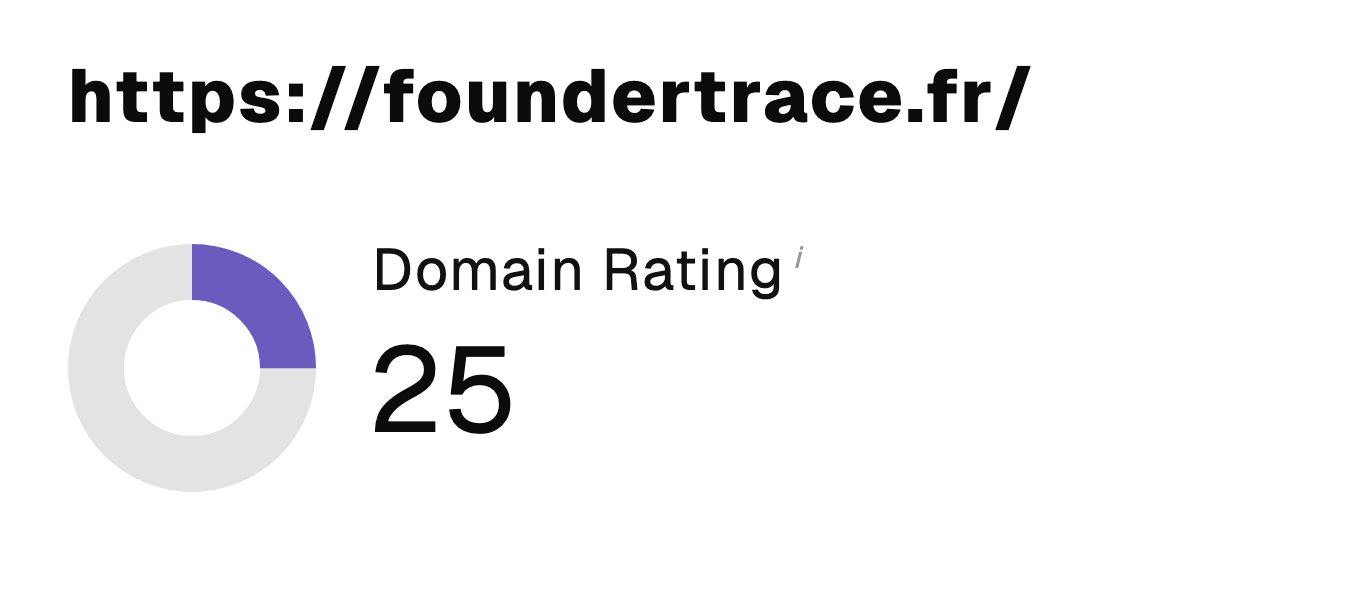 “I just let the Sorank software do its thing, and now my DR is 25 and my page is ranking higher.”
 Lucas Flandrefoundertrace.fr“I specialized in GEO thanks to Sorank. The GEO Leaderboard allows me to show my clients their position vs competitors on ChatGPT. It’s a real commercial differentiator.”
 MélanieSEO Freelance“Great service, works well for our website and helps us understand how to improve it to rank better on Google and elsewhere. Congrats, keep going, I recommend it.”
 Hugo T.E-commerce merchant