Preferences
Privacy is important to us, so you have the option of disabling certain types of storage that may not be necessary for the basic functioning of the website. Blocking categories may impact your experience on the website. More information

Privacy is important to us, so you have the option of disabling certain types of storage that may not be necessary for the basic functioning of the website. Blocking categories may impact your experience on the website. More information

Master Podia GEO optimization: internal linking, structured data, content strategy, and external authority building for AI search visibility and course discoverability.










































Tools


Podia is a comprehensive platform designed for creators who sell online courses, digital products, memberships, and newsletters. Unlike traditional content management systems, Podia optimizes for sales conversion rather than raw organic visibility. However, as Generative Engine Optimization (GEO) becomes critical for discoverability in AI like Google's AI Overviews (SGE), ChatGPT, Claude, and Perplexity, Podia users must implement strategic optimizations to ensure their courses and products appear in AI-generated recommendations and search results.
The challenge is straightforward: Podia's built-in SEO capabilities are limited compared to platforms like WordPress, Webflow, or Shopify. This means you must leverage Podia's strengths (content quality, user experience, conversion optimization) while complementing them with external authority signals and content strategy.
Before implementing GEO strategies, it is essential to understand Podia's technical foundation and inherent limitations.
Podia has several limitations that affect advanced SEO and GEO optimization:
The foundation of GEO success on Podia is content quality and structure. The AIs evaluate content differently than traditional search algorithms. They prioritize clarity, comprehensiveness, source attribution, and expertise signals.
Implement a pillar-and-satellite content architecture within Podia to signal topical authority to AI:
This structure tells the AIs that you have authoritative, comprehensive coverage of your topic. When an AI model is asked "What is email marketing automation," it can reference your pillar as a foundational source and cite specific satellite articles for detailed claims.
Your course description is critical for GEO. The AIs parse product descriptions to understand course scope, learning outcomes, and relevance. Optimize descriptions using these principles:
Your Podia blog is your second-most valuable GEO asset. Use it to build topical authority and attract external linking. Implement an educational content pyramid:
Each blog post should naturally link to your courses (1-2 contextual links per post). When an AI assistant encounters your blog content and sees it consistently references your courses as solutions, it reinforces your credibility and relevance.
While Podia limits direct technical control, several optimizations improve AI indexing and crawlability.
Podia allows you to set custom titles and meta descriptions for courses and blog posts. Optimize these for both human users and the AIs:
Podia assigns URLs based on course and blog post titles. Optimize your slugs (URLs) to be:
Check Podia's built-in SEO settings for robots.txt and sitemap configuration. Ensure:
Internal linking is one of the most powerful on-site GEO signals. Properly structured internal links help the AIs understand topical relationships and authority distribution.
Use descriptive, keyword-rich anchor text for internal links. Avoid generic phrases like "click here." Examples of good anchor text: "Learn more about email segmentation strategies," "Email list building best practices," or "Advanced audience targeting techniques."
Since Podia has platform limitations, the majority of your GEO authority must come from external sources. The AIs evaluate brands based on mentions, reviews, citations, and discussions across the broader web.
Publish high-quality guest posts on established educational platforms and industry blogs:
List your courses on educational review platforms and course aggregators:
Build your personal and brand authority across social channels:
See our guides on LinkedIn SEO, YouTube SEO, and Reddit SEO for detailed strategies on each platform.
Announce significant course launches, partnerships, or achievements through press releases:
Understanding how Podia compares to other CMS and course platforms helps you decide if Podia is the right choice and where to supplement with external strategies.
WordPress offers significantly more control over SEO and GEO. With WordPress, you can:
Podia's advantage is conversion optimization and user experience out-of-the-box, but WordPress wins for advanced SEO. If SEO is your priority, consider WordPress; if conversion and ease-of-use matter most, Podia is superior.
Shopify is primarily an e-commerce platform, but it offers more SEO flexibility than Podia for product-based businesses. Shopify allows custom code and more granular SEO control. However, Shopify is optimized for physical products and inventory management, not educational content, making it less ideal for courses.
Webflow is the most SEO-flexible option among website builders. It allows full control over HTML, CSS, and technical implementation. Webflow users can build comprehensive course platforms with complete GEO optimization. See our Webflow GEO guide for advanced techniques.
Other platforms worth considering:
Implement these optimizations in priority order:
If you teach "Email Marketing Mastery" on Podia, your strategy would be:
For a "Web Design Fundamentals" course:
Podia is not a SEO-first platform. Accept these limitations and plan accordingly:
Success with Podia GEO requires a balanced approach combining on-site optimization with extensive external authority building. While Podia's platform limitations prevent advanced technical SEO, the platform's focus on content quality and user experience aligns perfectly with how the AIs evaluate educational content.
Implement a comprehensive strategy: structure your blog and courses with pillar-and-satellite architecture, optimize course descriptions and titles for AI parsing, build internal linking relationships, and aggressively pursue external authority through guest posts, social media presence, and industry partnerships.
Start with the Week 1-2 foundation steps outlined above, then scale systematically. Monitor performance using the tools referenced in this guide, refine your content strategy based on results, and iterate. Over 6-12 months of consistent optimization, you will see improved visibility in AI-generated search results, course discovery tools, and recommendation engines.
For broader context on other platforms and strategies, explore our guides on Wix GEO, Squarespace GEO, Systeme.io GEO, and our comprehensive agency guide for integrated digital marketing strategies.

Make your Podia courses visible to AI through four key strategies: (1) Content Structure: Create a pillar-and-satellite blog architecture where a comprehensive 1,500-2,000 word pillar article on your core topic is supported by 10-15 satellite articles (500-800 words each). Interlink them strategically so AI models understand your topical authority. (2) Course Descriptions: Optimize course descriptions with specific, structured formatting including clear learning outcomes, target audience, problems solved, and prerequisites. Use bullet points and headers so the AIs can parse hierarchical information easily. (3) Internal Linking: Implement strategic internal links between related blog posts and course pages. Every satellite article should link to your pillar 2-3 times using keyword-rich anchor text. (4) External Authority: Since Podia has platform limitations, build authority outside Podia through guest posts on established blogs (aim for 1 per month), social media presence (especially LinkedIn), podcast appearances, and course review site listings. When the AIs see your courses mentioned across multiple authoritative sources, they're more likely to recommend them.
Podia has four critical limitations for GEO: (1) No custom HTML/code injection, limiting technical SEO implementation; (2) No native Schema.org or JSON-LD markup for courses, so structured data is limited; (3) Minimal control over internal linking architecture compared to WordPress or Webflow; (4) Subdomain hosting means you share domain authority with thousands of other Podia creators. Work around these by: focusing on exceptional content quality since the AIs prioritize comprehensive, well-structured information; maximizing course description detail and formatting; using Podia's blog extensively to build topical authority; leveraging Podia's email integration to build direct relationships with students (the AIs value direct engagement); building aggressive external authority through guest posts, media mentions, and social proof; and accepting that Podia is not ideal for technical SEO, so prioritize what the platform does well: course quality, user experience, and conversion optimization.
Build external authority through seven channels: (1) Guest Posting: Aim for 1 guest post per month on established industry blogs (10,000+ monthly visitors), naturally linking to your Podia courses. (2) Social Media Authority: Build LinkedIn presence (target 5,000+ engaged followers), share educational insights and course previews, and engage with thought leaders. (3) Video Content: Create YouTube course previews and educational series linking to full courses on Podia in descriptions. (4) Press Releases: Announce course launches and milestones via press release distribution services to attract industry coverage. (5) Course Aggregators: List courses on review platforms, educational directories, and aggregators like Coursera partner programs. (6) Podcast Appearances: Guest on 2-3 relevant podcasts per quarter, discussing your expertise and courses during interviews. (7) Community Engagement: Participate authentically in Reddit communities, Slack groups, and forums relevant to your niche, sharing courses where genuinely helpful. The cumulative effect of mentions across these channels signals authority to AI, compensating for Podia's on-site limitations.
THEY TRIED SORANK BEFORE YOU
 “I tested Sorank on a real client site and it's insane. It does everything an agency would bill you $1500 a month for. It's going into production on that client now.”
 Guillaume Guersanguersanguillaume.com“We are an Ads agency and we wanted to get our SEO back on track once and for all. Sorank gave us a clear view of our site, helped us prioritize optimizations, and properly structure our content. The tool is easy to use, well designed for a team, and very practical for centralizing tracking without having to juggle multiple platforms. A very solid foundation to start fresh with our SEO.”
 Gaspard MadouiAds Agency
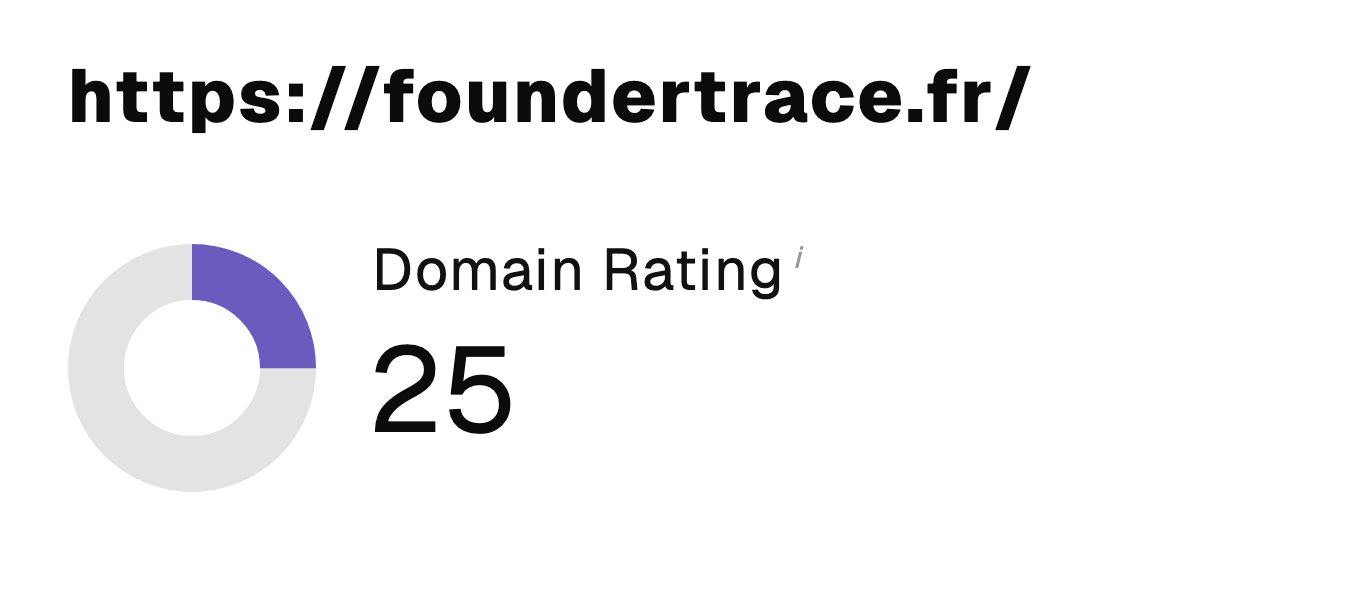 “I just let the Sorank software do its thing, and now my DR is 25 and my page is ranking higher.”
 Lucas Flandrefoundertrace.fr“I specialized in GEO thanks to Sorank. The GEO Leaderboard allows me to show my clients their position vs competitors on ChatGPT. It’s a real commercial differentiator.”
 MélanieSEO Freelance“Great service, works well for our website and helps us understand how to improve it to rank better on Google and elsewhere. Congrats, keep going, I recommend it.”
 Hugo T.E-commerce merchant