
Preferences
Privacy is important to us, so you have the option of disabling certain types of storage that may not be necessary for the basic functioning of the website. Blocking categories may impact your experience on the website. More information

Privacy is important to us, so you have the option of disabling certain types of storage that may not be necessary for the basic functioning of the website. Blocking categories may impact your experience on the website. More information

Optimize your Prestashop eCommerce store for GEO and AI search. Enhance product pages with entity clarity, internal links, and schema. 12-week execution plan included.










































Tools


Turn your Prestashop store into a canonical reference for your products using GEO best practices.
Prestashop's product pages rank well because they have clear product entities, user reviews, structured pricing data, and checkout flows that signal strong purchase intent to search engines. But AI models and AI assistants care about more: factual clarity, source attribution, detailed specifications, and internal topology. Here's how to enhance your Prestashop store for GEO (Generative Engine Optimization) so that AI assistants cite and recommend your products over competitors.
Prestashop powers over 300,000 eCommerce stores worldwide. It's built for product discovery and has several built-in GEO advantages: product entities are clear and structured, you can add rich reviews and ratings, pricing is explicit, and product attributes allow detailed specifications.
What Prestashop lacks, though, is often the supporting content ecosystem and internal linking topology that models need to confidently cite you. A product page alone is rarely enough. Models want to see pillar content, feature comparisons, use-case guides, integration documentation, and case studies. They want internal links that create a web of authority around your product category.
If you're building on a different eCommerce platform, compare how Shopify handles GEO, how BigCommerce's approach differs, or how WooCommerce structures product content. Each has unique strengths; Prestashop's is product clarity and entity structure.
Start with research. Before optimizing product pages, understand what queries drive product discovery in your niche.
Research the top 30 to 50 queries users search before buying. Use tools like SEMrush, Ahrefs, or Google Keyword Planner. If you sell CRM software, queries might include: "best CRM for nonprofits," "CRM integrations," "CRM pricing comparison," "CRM vs. Salesforce," "CRM free trial," "CRM with email automation," "CRM API," and "CRM customer support."
Map each query to a Prestashop page (or a new page you need to create). Create a spreadsheet: Query, Search Volume, Current Prestashop Page (if any), Page Type (product page, comparison page, guide, blog post), Gap (yes/no).
Example mapping for a CRM Prestashop store:
Queries with high intent but no Prestashop page are GEO wins. Create content for these gaps. A high-intent query with no existing page is an opportunity to earn citations because competitors may not be addressing it comprehensively.
For each top product page, audit how clearly you describe the product entity and its relationships.
Ask these questions:
Now audit consistency. Does the product name appear the same in the product title, description, attributes, breadcrumbs, and metadata? If your page sometimes calls it "CRM," sometimes "customer relationship management," and sometimes "CRM tool," models see inconsistency and lose trust.
Consistency checklist:
Lock down one canonical name per entity, then update Prestashop: product title, attributes, descriptions, and meta-description. This is foundational work, and it pays dividends.
A product page alone is rarely sufficient for GEO. Models want to see supporting content that validates your product's claims and differentiates it from alternatives.
Create supporting content: pillar, satellites, and comparison pages.
Pillar: "CRM Software: 20 Features Explained" (1,500 words) - A comprehensive guide covering major CRM features, use cases, and when to use them. This is your category authority page.
Satellites:
All of these pages should link back to your primary product page, creating a web of internal authority. Prestashop's menu system and internal linking feature make this straightforward.
Structure: Product page as the hub. Feature guide, use-case guide, and competitor comparison as satellites. Each satellite links back to the product page 3 to 5 times. The product page links to each satellite once. This topology tells models: "This site has deep knowledge of CRM software."
You can host these supporting pages in a Prestashop blog or as custom pages in your theme. The key is that they're on your domain and internally linked to your product pages.
This is critical. Every claim on a Prestashop product page should have a source or validation.
Examples:
Models treat claims with sources as more trustworthy. Without sources, your claims are just assertions. With sources, they're validated facts.
Prestashop's rich text editor allows for internal and external links, so this is straightforward. Use descriptive anchor text: "See our integrations" instead of "click here."
Product attributes in Prestashop are powerful. Use them to add structured, machine-readable data about your product.
Key attributes to include:
These attributes make your product entity clearer to models and to search engines. They also enable faceted search on your site, which improves user experience and provides more opportunities for internal linking.
Use JSON-LD schema to annotate product pages with rich, machine-readable metadata.
Essential schemas for Prestashop:
Prestashop supports these schemas natively, and many modules enhance schema support. Ensure every product page has complete Product schema with price, availability, description, and review aggregates.
Validate your schema: Use Google's Rich Results Test or Semrush's schema checker. Invalid schema can confuse models, so get it right. Make sure ratings, reviews, and availability data are complete and up-to-date.
Missing or incorrect schema weakens your product entity. Complete schema strengthens it, making models more confident in citing your product pages.
Models want to see how your product compares to alternatives. Create transparent, data-driven comparison content.
Comparison page structure:
Be honest. If a competitor has a genuine advantage in a specific area, acknowledge it. Honesty builds trust with models and readers. Models are good at detecting biased or misleading comparisons.
Comparison pages are high-intent content. Users (and models) searching "CRM vs. Salesforce" are deep in the decision funnel. Ranking and earning citations on these pages drives direct product interest.
Internal links create the topology that models use to infer importance and authority.
Linking strategy for Prestashop:
Aim for 5 to 10 internal links per product page. Use descriptive anchor text: "Explore our CRM integrations" instead of "click here" or generic "learn more" anchors.
Internal linking topology is often the missing piece on Prestashop stores. Most stores focus on product pages and ignore broader content architecture. Building the architecture transforms your store from a catalog into an authority site.
You need to measure both GEO (citations) and SEO (rankings) to understand your progress.
Weekly tracking for your top 5 product pages:
Tools for citation tracking: Perplexity API, SearchAPI, or custom monitoring with Semrush.
Analysis after 4 weeks:
Use these insights to iterate. A product page with zero citations might be unclear, under-linked, or lacking external validation. Add more case studies, enhance the product description, build internal links from related pages, or add customer testimonials and reviews.
A product page earning 3 to 10 citations per month is performing well. Scale it: replicate its structure on similar product pages, ensure consistent internal linking, and monitor if citations increase with each iteration.
Weeks 1 to 2: Research and Mapping - Research top 30 to 50 product discovery queries. Map queries to Prestashop product pages. Identify content gaps and opportunities.
Weeks 3 to 4: Entity Audit and Lockdown - Audit your top 5 product pages for entity clarity and consistency. Lock down product names, descriptions, and attributes. Update Prestashop with consistent data.
Weeks 5 to 8: Supporting Content Creation - Create 3 to 5 supporting pages: a feature guide, use-case guides, a comparison page, and a pricing guide. Link all supporting content back to product pages. Target 800 to 1,500 words per page.
Weeks 9 to 10: Schema, Links, and Attributes - Enhance product pages with complete schema markup. Add or improve product attributes. Build internal linking from guides, blog posts, and category pages to product pages. Ensure 5 to 10 internal links per product page.
Weeks 11 to 12: Publish and Monitor - Publish all new and updated pages. Set up citation tracking for your top 5 product pages. Measure weekly for 4 weeks. A high-performing product page should earn 2 to 10 citations per month (depending on product niche) and rank in the top 5 for its primary query within 3 months.
Don't neglect category pages. Category pages often see high traffic and can become powerful GEO assets.
Category page best practices:
Category pages are less product-specific but broader in scope. A category page for "CRM Software" might earn citations for queries like "what is CRM," "CRM features," "CRM use cases," and "best CRM." These are informational queries with high volume and lower intent, but they build topical authority and drive brand awareness.
Internal link from category pages to product pages, and from product pages back to the category. This bidirectional linking strengthens both.
Prestashop has unique strengths for GEO among eCommerce platforms. If you're evaluating Prestashop against alternatives, consider how it compares:
Magento offers more advanced customization but is more complex. WooCommerce is simpler but has less built-in structure. Shopify is fastest to set up but offers less customization for schema and internal linking. Prestashop strikes a balance: it's powerful, flexible, and has solid structure for GEO.
If you're on a different platform and want to understand how to optimize, check out our guides for Lovable, Kartra, or Podia. Each CMS has a unique approach to GEO.
Prestashop is a powerful platform for eCommerce GEO. Its product structure, attribute system, and schema support give you the tools to build deep product entity clarity. Here's what you need to execute:
Within 12 weeks, a disciplined GEO program on Prestashop can increase product citations 5 to 10x, turning your store from a catalog into a canonical reference. High-citation products drive both direct traffic (from AI recommendations) and organic SEO traffic. This is sustainable competitive advantage.
Start with research, execute the 12-week plan, measure citations, and iterate. Your Prestashop store can become the go-to reference for your product category in AI search.
Sources

AI models cite product pages that have clear product entities, detailed specifications, customer reviews, source attribution, and strong internal linking. Start by auditing your top product pages for consistency: ensure the product name is identical in the title, description, attributes, and metadata. Add detailed product attributes (industry, company size, use cases, integrations, pricing model) to make the entity machine-readable. For every claim on the page, add a link to proof: link 'integrates with 50+ tools' to your integrations page, link '5,000+ customers' to a customer testimonials or case studies page. Create supporting content: feature guides, use-case guides, competitor comparisons. Link all supporting content back to product pages 3 to 5 times. Publish complete schema markup (Product schema with reviews, ratings, availability). This combination signals to models that your product page is a trustworthy, citable source.
Create content that surrounds and supports your core product pages. For a Prestashop CRM store, create: a pillar page called 'CRM Software: 20 Features Explained' (1,500 words, category authority). Satellite pages: 'Best CRM for Nonprofits' (800 words, use-case guide), 'CRM Integrations: Complete Guide' (800 words), 'CRM Pricing Comparison' (800 words, compare prices across vendors including yours), 'CRM vs. HubSpot vs. Salesforce' (1,000 words, direct competitor comparison). All satellites link back to product pages and the pillar. This creates a web of topical authority. Each satellite answers a high-intent discovery query. Models cite supporting content more frequently than product pages alone because guides and comparisons appear more authoritative. Focus on queries with 1,000+ monthly searches but fewer than 10 top-ranking competitors; these are GEO wins.
GEO results take 12 to 16 weeks to materialize, depending on your niche and content quality. In weeks 1 to 4, you'll audit and optimize existing pages (no citation lift yet). In weeks 5 to 8, you'll create supporting content (citations may start appearing for high-intent keywords). In weeks 9 to 12, you'll finalize schema, links, and attributes; citations should accelerate. By week 12 to 16, you should see 2 to 10 citations per month for individual product pages, depending on your niche. Benchmark by industry: SaaS/software (15 to 50 citations per month for top pillars), eCommerce/products (5 to 20 citations per month for category pages), professional services (10 to 30 citations per month). Start by tracking your baseline (zero citations likely), then measure weekly. A page earning 3+ citations per month is performing well. When you identify high-performing pages, study their structure and replicate it across your catalog.
THEY TRIED SORANK BEFORE YOU
 “I tested Sorank on a real client site and it's insane. It does everything an agency would bill you $1500 a month for. It's going into production on that client now.”
 Guillaume Guersanguersanguillaume.com“We are an Ads agency and we wanted to get our SEO back on track once and for all. Sorank gave us a clear view of our site, helped us prioritize optimizations, and properly structure our content. The tool is easy to use, well designed for a team, and very practical for centralizing tracking without having to juggle multiple platforms. A very solid foundation to start fresh with our SEO.”
 Gaspard MadouiAds Agency
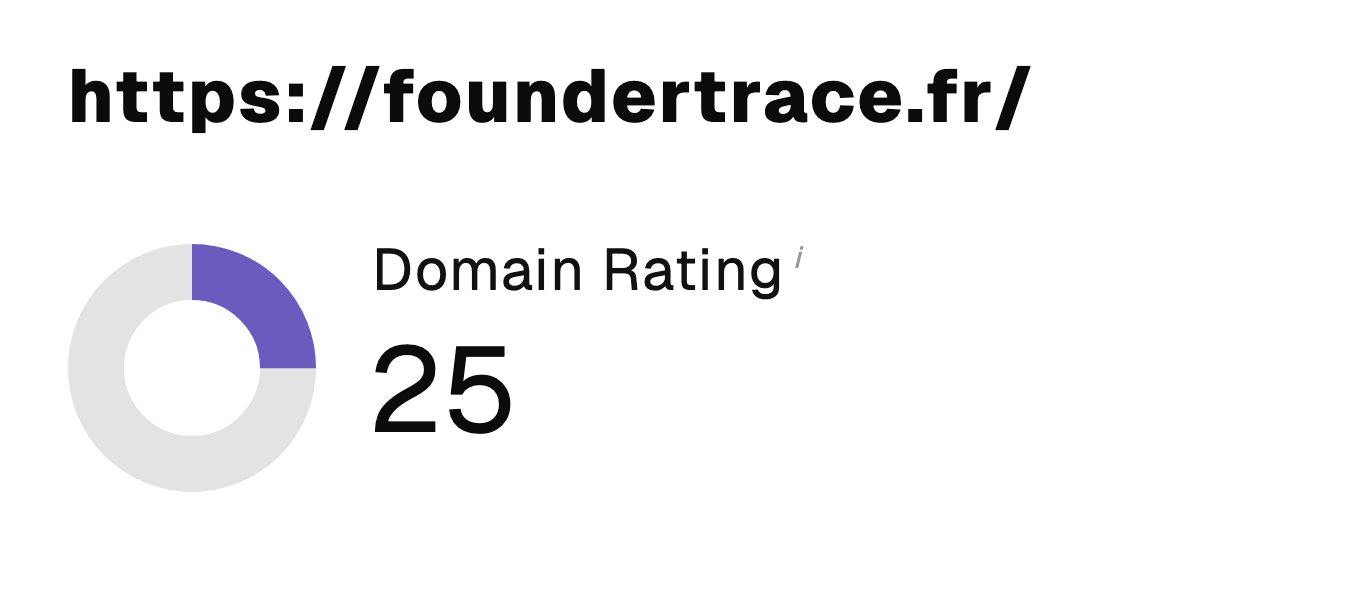 “I just let the Sorank software do its thing, and now my DR is 25 and my page is ranking higher.”
 Lucas Flandrefoundertrace.fr“I specialized in GEO thanks to Sorank. The GEO Leaderboard allows me to show my clients their position vs competitors on ChatGPT. It’s a real commercial differentiator.”
 MélanieSEO Freelance“Great service, works well for our website and helps us understand how to improve it to rank better on Google and elsewhere. Congrats, keep going, I recommend it.”
 Hugo T.E-commerce merchant