Preferences
Privacy is important to us, so you have the option of disabling certain types of storage that may not be necessary for the basic functioning of the website. Blocking categories may impact your experience on the website. More information

Privacy is important to us, so you have the option of disabling certain types of storage that may not be necessary for the basic functioning of the website. Blocking categories may impact your experience on the website. More information

Make your Lovable website SEO and GEO ready. Fix React SPA rendering issues so Google, ChatGPT, Perplexity and Claude can crawl and cite your content.










































Tools


Want to make your Lovable website visible to AI and traditional search? You're facing a real challenge. Lovable generates full-stack React applications using React 18, TypeScript, Vite, Tailwind CSS, and shadcn/ui, with Supabase powering the backend. While this modern stack produces great user experiences, it creates significant barriers for search engine and AI crawler discoverability. In this guide, you'll learn exactly why Lovable sites struggle with SEO and GEO, backed by data, and how to fix it.
Lovable builds every site as a React single-page application (SPA) with client-side rendering (CSR). When a crawler visits your site, it receives an almost empty HTML shell , just a <div id="root"></div> , and must execute JavaScript to see your actual content. Here's the problem: most AI crawlers don't execute JavaScript at all.
According to Vercel's research on AI crawlers, an analysis of over 500 million GPTBot fetches found zero evidence of JavaScript execution. The same applies to ClaudeBot (Anthropic), PerplexityBot, and other AI crawlers , they only fetch static HTML and bypass JavaScript entirely. This means your Lovable website's content is completely invisible to ChatGPT, Claude, Perplexity, and other AI systems.
The scale of this problem is massive. Cloudflare data shows that AI crawlers now make 3.6x more requests than traditional search crawlers. OpenAI's GPTBot alone generates 569 million requests per month on Vercel's network, while Anthropic's ClaudeBot follows with 370 million. If your site can't be read by these bots, you're missing the fastest-growing discovery channel on the web.
Even Google, the only major crawler with full JavaScript rendering capability, takes approximately 9x longer to index JavaScript-heavy pages compared to static HTML. Google uses a two-phase indexing process: first it crawls the raw HTML, then it queues the page for rendering , which can mean your content waits days instead of hours to appear in search results. Google has officially deprecated dynamic rendering as a long-term solution, signaling that sites must solve JavaScript SEO at the source through proper SSR implementation.
For Lovable sites, this creates a double penalty: slow Google indexing and zero visibility in AI. Your competitors using server-rendered frameworks are getting indexed faster and cited by AI systems while your React SPA remains in the dark.
Lovable's tech stack is well-documented in their official documentation. Every project uses:
Frontend: React 18 + TypeScript, built with Vite, styled with Tailwind CSS and shadcn/ui (Radix UI components), using React Router v6 for navigation and React Context API for state management.
Backend: Supabase provides PostgreSQL database, authentication (email, Google, GitHub), file storage, and Edge Functions (JavaScript/TypeScript). No custom server is generated.
Deployment: Code syncs to GitHub with full ownership. Deploy to Lovable subdomains, Vercel, Netlify, or custom servers.
The critical issue is that Vite serves a minimal HTML shell and lets React hydrate everything client-side. There is no built-in server-side rendering. Lovable acknowledges these limitations in their SEO and GEO documentation, noting that indexing can take "days instead of hours" and that social media previews are broken by default.
There are three main approaches to making your Lovable site crawlable, each with different trade-offs:
1. Add SSR with Vike Framework , Vike lets you add server-side rendering to your existing Lovable React app without restructuring your code. Keep React Router, gain full SEO benefits. You add 4 wrapper files, a renderer, and an Express server while keeping your src/ folder untouched. Vike's wildcard route feature delegates all routing to React Router while Vike handles the SSR.
2. Static Site Generation (SSG) , Create a server entry point (src/entry-server.tsx) using React's renderToString and build both client and server bundles with Vite's SSR mode. This pre-renders your pages at build time, producing static HTML files that any crawler can read instantly. Best for content-heavy sites with predictable URLs.
3. Migrate to Next.js , For production-critical applications, migrating from Vite+React to Next.js gives you SSR, SSG, and ISR (Incremental Static Regeneration) out of the box. Services like NextLovable specialize in converting Lovable projects to Next.js 15 with full SEO support.
Regardless of which rendering solution you choose, these fundamentals apply to every Lovable project:
Ensure every key route outputs content-first HTML. Verify your main navigation is text-based and present in source, not solely injected by client-side code. Provide a complete XML sitemap, submit it in Google Search Console, and maintain a robots.txt that allows crawling of CSS/JS required for rendering. Use clean, descriptive slugs and return correct HTTP status codes for all routes.
Handle internationalization using hreflang and prevent duplication with canonical tags. For media-heavy Lovable sites, lazy-load responsibly and include width/height attributes to avoid layout shifts. Minify CSS/JS and ship critical CSS inline to preserve Core Web Vitals.
Treat each page as a focused entity document. Use a single H1 that mirrors search intent, structured H2/H3s, and concise, scannable paragraphs. Write definitions, comparisons, and step-by-steps that map to answer-seeking behavior. Embed entity names, attributes, and relationships naturally so models can build your brand into their Knowledge Graph understanding.
Add comprehensive structured data for your content type , Organization, WebSite, WebPage, Article, Product, Service, FAQPage, BreadcrumbList, and Review where applicable. Include sameAs links to authoritative profiles. In Lovable, add JSON-LD in your app's <head> section using React Helmet or a similar library. For planning, jumpstart topics with our agency guide for SEO and GEO, then use keyword research and scale clustering with topical cluster generator.
GEO (Generative Engine Optimization) is about being the source AI chooses to cite. Frame your pages for direct answers: short, quotable summaries followed by expandable depth. Use explicit claims with dates, numbers, and sources. Each claim should be supported by outbound citations to trusted references and by internal links to foundational explainers to reinforce topical authority.
The key insight from Search Engine Journal's research is that ChatGPT is now crawling 3.6x more than Googlebot. If your Lovable site renders server-side, you're positioned to capture this growing traffic. If it doesn't, you're invisible to the fastest-growing discovery channel. To expand prompt coverage, analyze YouTube SEO strategies and prototype queries with keyword query fan out AI.
Include machine-readable context: Organization schema with sameAs to key profiles and a stable About page. Publish author bios with credentials to strengthen E-E-A-T. Use glossaries for core terms like SEO vs GEO definitions, models favor consistent, unambiguous terminology.
AI systems prefer fast, stable, and reliable sources. Lovable's Vite-based build already provides good development performance, but production optimization requires attention. Audit your app shell size and split code aggressively to avoid blocking the main thread. Target a sub-2.5s LCP on mobile, less than 0.1 CLS, and sub-200ms INP.
Reduce JavaScript payloads by code-splitting routes with React.lazy() and Suspense. Preload key fonts and consolidate third-party tags. Remember that mobile-first indexing means your mobile HTML is what Google understands , keep parity between desktop and mobile.
While AI surfaces answers, rich results still drive qualified traffic and train models with high-quality context. Implement Product, HowTo, Event, and JobPosting markup as relevant. For Articles, include author, datePublished, and dateModified. Validate with Google's Rich Results Test and align your visible content with markup.
Add Open Graph and Twitter Card tags , these shape how your content is shared, linked, and discussed, signals that LLMs ingest indirectly. In Lovable, configure these in your index.html or dynamically via React Helmet for page-specific metadata.
LLMs prioritize brands the web already trusts. Build high-quality backlinks from relevant publications, niche directories, and expert roundups, and specifically track AI citations via AI mention tracking. Pursue unlinked mentions and convert them to links. Publish original data, run small studies, and share visualizations to attract coverage. Monitor growth with domain authority tracker.
Design "answer-first" pages: a 2 to 3 sentence abstract, a featured definition, then deep dives. Provide TL;DR sections and FAQ content that matches how users prompt AI. Add timestamped updates and changelogs for evolving topics to signal freshness. For scale, seed drafts using blog article generator and refine with your editors.
Create topic hubs with hub-and-spoke architecture. Each hub should summarize the theme, link to in-depth spokes, and return contextual links. This reinforces topical coverage and helps models map your internal ontology. Keep an eye on changing SERPs and rivals with SEO competitor spy.
If your Lovable stack uses the default client-rendered setup, here's a concrete action plan:
Step 1: Audit what crawlers see. Use curl -s https://yoursite.com | head -50 to see the raw HTML served. If you see an empty <div id="root">, crawlers can't read your content.
Step 2: Choose your rendering solution (Vike SSR, SSG build script, or Next.js migration). For most Lovable projects, Vike SSR offers the lowest migration effort.
Step 3: Validate rendering parity. Compare human vs bot output using Google Search Console's URL Inspection and test with curl to ensure content, internal links, and JSON-LD appear identically.
Step 4: Submit your updated sitemap and monitor indexing. Track AI visibility via AI mention tracking and benchmark your niche using GEO leaderboard.
AI systems learn from the broader web. Publish content natively on platforms where your audience engages, and ensure consistent Open Graph metadata across channels. Syndicate responsibly with canonical links back to your Lovable origin.
Consider developer-friendly documentation, public changelogs, and READMEs , these are frequently ingested by LLM training pipelines. Maintain a clear, stable brand voice to reduce model confusion. Establish your baseline with a comprehensive GEO/SEO audit tool to.
Success goes beyond traditional rankings. Track impressions, clicks, and Core Web Vitals, then add AI-era KPIs: share of answer in AI Overviews, citations in Perplexity, and branded queries. Centralize tracking with GEO/SEO dashboard, monitor brand mentions via AI mention tracking, and benchmark using GEO leaderboard.
If you're coordinating multi-CMS rollouts or migrations, ensure parity across stacks like BigCommerce, Shopify, Webflow, WordPress, Wix, Squarespace, and WooCommerce. Normalize structured data, canonical policies, and internal link patterns across the ecosystem.
Lovable is a powerful AI app builder , from free to $50/month , but its React SPA architecture creates a fundamental SEO and GEO gap. With AI crawlers now making 3.6x more requests than Googlebot and none of them executing JavaScript, the cost of ignoring this problem grows daily. Fix your rendering, add structured data, build topical authority, and monitor AI citations. Do this, and your Lovable site won't just rank , it'll be referenced by AI. That is how you make your Lovable website SEO and GEO ready to appear in AI results.
Sources

Lovable generates React single-page applications with client-side rendering. When AI crawlers like GPTBot, ClaudeBot, or PerplexityBot visit your site, they receive an empty HTML shell and cannot execute JavaScript to see your content. Vercel's analysis of over 500 million GPTBot fetches found zero evidence of JavaScript execution. This means your Lovable site's content is completely invisible to ChatGPT, Claude, Perplexity, and other AI systems. The solution is to implement server-side rendering (SSR) using frameworks like Vike, static site generation (SSG), or migrating to Next.js.
There are three main approaches. First, you can use the Vike framework to add SSR without restructuring your code , it wraps your existing React Router setup with 4 wrapper files and an Express server. Second, you can implement Static Site Generation by creating a server entry point using React's renderToString and building with Vite's SSR mode. Third, you can migrate to Next.js 15 for built-in SSR, SSG, and ISR support. Lovable's official documentation at docs.lovable.dev/tips-tricks/seo-geo also covers basic SEO improvements you can make within the platform.
SEO (Search Engine Optimization) ensures your Lovable site is discovered, crawled, and ranked by Google. GEO (Generative Engine Optimization) makes your content understandable, trusted, and quotable by AI systems like ChatGPT, Gemini, and Perplexity. For Lovable sites, both require solving the JavaScript rendering problem first. Once crawlers can read your HTML, SEO focuses on structured data, meta tags, and backlinks, while GEO focuses on answer-first content, explicit claims with sources, and entity clarity. With AI crawlers making 3.6x more requests than traditional search crawlers (per Cloudflare data), GEO is becoming as important as SEO.
THEY TRIED SORANK BEFORE YOU
 “I tested Sorank on a real client site and it's insane. It does everything an agency would bill you $1500 a month for. It's going into production on that client now.”
 Guillaume Guersanguersanguillaume.com“We are an Ads agency and we wanted to get our SEO back on track once and for all. Sorank gave us a clear view of our site, helped us prioritize optimizations, and properly structure our content. The tool is easy to use, well designed for a team, and very practical for centralizing tracking without having to juggle multiple platforms. A very solid foundation to start fresh with our SEO.”
 Gaspard MadouiAds Agency
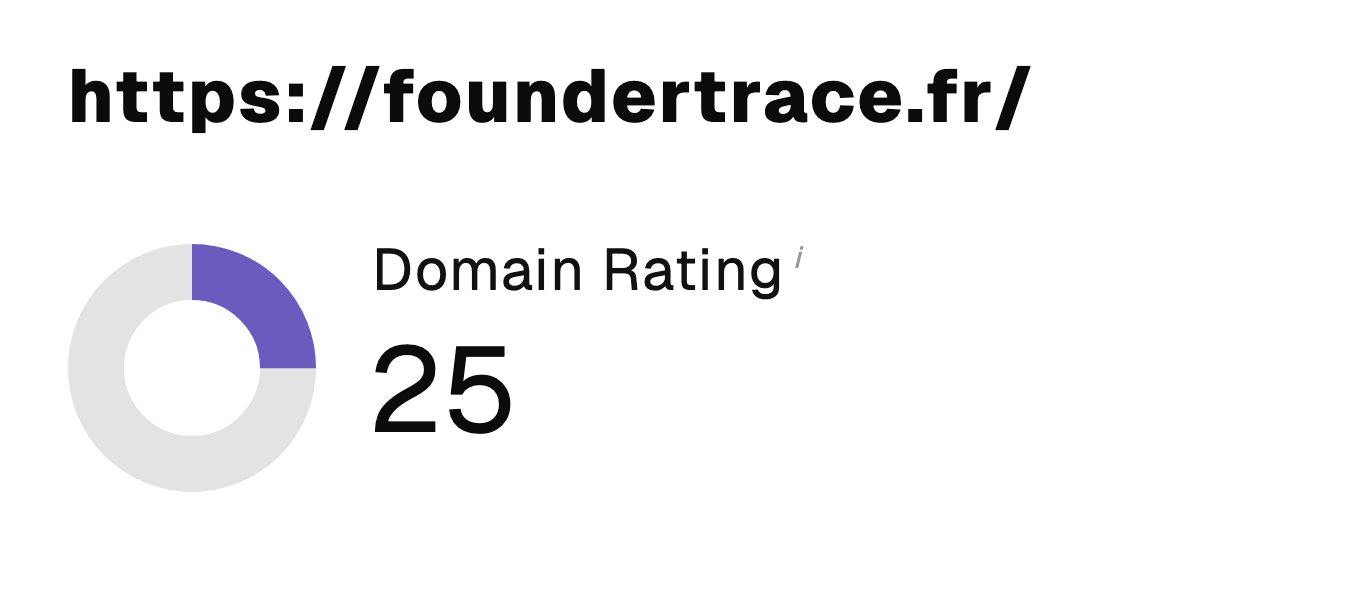 “I just let the Sorank software do its thing, and now my DR is 25 and my page is ranking higher.”
 Lucas Flandrefoundertrace.fr“I specialized in GEO thanks to Sorank. The GEO Leaderboard allows me to show my clients their position vs competitors on ChatGPT. It’s a real commercial differentiator.”
 MélanieSEO Freelance“Great service, works well for our website and helps us understand how to improve it to rank better on Google and elsewhere. Congrats, keep going, I recommend it.”
 Hugo T.E-commerce merchant