
Preferences
Privacy is important to us, so you have the option of disabling certain types of storage that may not be necessary for the basic functioning of the website. Blocking categories may impact your experience on the website. More information

Privacy is important to us, so you have the option of disabling certain types of storage that may not be necessary for the basic functioning of the website. Blocking categories may impact your experience on the website. More information

Optimize your Systeme.io funnels for AI. Combine sales conversion with content clarity, entity consistency, and source attribution to earn citations from ChatGPT, Claude, and Perplexity.










































Tools


Systeme.io is a powerful sales and marketing platform designed for entrepreneurs who want to move fast. It combines landing pages, email sequences, sales funnels, and online courses into one integrated system. However, most Systeme.io users focus exclusively on conversion optimization, overlooking a critical opportunity: making their pages discoverable and citable by AI. This comprehensive guide shows you how to layer generative engine optimization (GEO) into your Systeme.io strategy without sacrificing conversion focus.
The opportunity is significant. While Systeme.io has limitations compared to content-first platforms like WordPress or Webflow, you can still earn citations from AI models like ChatGPT, Claude, Perplexity, and Google Gemini by writing clear, factual, well-sourced content that answers real questions.
Systeme.io is built for sales conversion. Its strength lies in speed: you can launch a landing page, email funnel, and checkout flow in days, not weeks. This speed is an advantage, not a constraint. However, Systeme.io's limitations are real. The platform has restricted custom code options (making JSON-LD schema harder to implement), limited blog functionality (no native CMS collections), and less fine-grained control over HTML structure compared to WordPress or Webflow.
But here's the insight: GEO success depends more on content quality and clarity than on technical perfection. A Systeme.io page with crystal-clear writing, specific claims backed by data, and thoughtful internal links will earn more citations than a technically perfect WordPress site with vague, generic copy. This is your opportunity. By obsessing over clarity and content quality, you can punch above your platform's technical weight.
Start with a comprehensive audit of your existing Systeme.io presence. Identify the 3 to 5 core claims driving your business. Examples: "We help entrepreneurs earn passive income," "30-day implementation guarantee," "1,000+ successful case studies," or "3x average return on investment."
For each claim, ask these questions:
Lock down the numbers. Make them the source of truth. Then repeat them consistently across all Systeme.io pages and emails. This consistency creates a signal: your brand stands for something specific and measurable.
Your Systeme.io funnel is built for conversion. But AI models crawl content. Create a content hub (a blog section or external linked site) that complements your funnel without competing with it. This hub serves a different purpose: it provides depth, answering the questions your prospects ask when they're researching, not buying.
Map your funnel to content topics. Example:
Funnel: Landing page titled "Done-For-You Service." Email sequence on benefits and proof. Checkout page with FAQs and testimonials.
Content Hub mirrors this with:
This structure gives AI models two signals: topical depth (your site has comprehensive content on this topic) and conversion intent (you've built products and funnels around this). Models reward both signals because they indicate real-world validation of your claims.
Systeme.io's email sequences are optimized for emotional triggers and urgency. These are effective for conversion. Layer in clarity to improve GEO.
Current funnel copy: "Get results in 30 days or we'll refund you."
GEO-optimized version: "Implement our proven 3-step process (week 1: onboarding and setup, week 2: customization for your niche, week 3: launch and optimization) and see measurable results within 30 days. If you don't, we'll refund 100% of your investment, no questions asked."
The second version is clearer because it specifies the process (what are the three steps?), the timeline (exactly 30 days from start to launch), and the promise (measurable results). AI models can parse this, cite it, and verify it. The first version is too vague to cite confidently.
Apply this principle across all Systeme.io copy:
Landing page headlines: Instead of "Transform Your Business," write "Increase Lead Generation by 40% in 60 Days Using Our Proven Sales Funnel System."
Email subject lines: Instead of "Don't Miss Out," write "How Sarah Increased Sales by $30K/Month Using Our Process."
Checkout confirmation: Instead of "Thanks for Your Purchase," write "You've just joined 5,000+ entrepreneurs who've implemented our system. You'll receive your first onboarding email in 2 hours."
Specificity, quantification, and process clarity are the hallmarks of GEO-ready copy. They're also more persuasive. People buy based on specific, believable claims, not vague promises.
Systeme.io lets you customize page titles, meta-descriptions, and URLs for each landing page and funnel step. Treat these as GEO opportunities, not afterthoughts.
Should be specific and keyword-rich: "Done-For-You Service: How [Company Name] Saves Entrepreneurs 20 Hours Per Week and Increases Revenue by $30K+" is better than "Our Service" or "Done-For-You." Include your primary claim and a specific benefit.
Summarize your page's value proposition in 155 characters: "Tired of doing it yourself? Our done-for-you service implements your sales system in 30 days. Guaranteed results or your money back. Join 5,000+ entrepreneurs."
Use clean, descriptive slugs: /done-for-you-service, /case-studies, /our-process, /implementation-process. Avoid /lp1, /page-1, /checkout-v3. Clean URLs are readable by humans and machines, signaling professionalism and clarity.
If Systeme.io is on a custom domain, you have full control. If you're on a subdomain, you lose some SEO leverage, but clarity still matters.
Systeme.io's custom code injection is limited, but you can still add schema markup. Focus on the highest-impact schemas:
For service landing pages, add Service schema that specifies your service name, description, provider, and price range.
If you have testimonials or reviews, add AggregateRating schema with your average rating and review count. Example: 4.9 stars from 150 verified customer reviews. This tells models your service is highly rated.
If you have tiered pricing, add Offer schema for each tier, specifying price, currency, and availability.
Work with Systeme.io's support to inject these snippets into your page code. Even partial schema implementation is better than none.
Systeme.io lets you collect and display customer testimonials. Reframe your testimonial request process to elicit specific, quantifiable results.
Generic request: "How did our service help you?"
Specific request: "After implementing our system, what specific result did you achieve? Please include: the metric you improved (revenue, leads, hours saved), the numerical change (increased by $X, decreased by Y%), and the timeframe (in how many days/weeks/months)."
This yields testimonials like: "Using their done-for-you service, I increased my monthly revenue by $5,000 in 45 days while saving 15 hours per week on admin work." These testimonials are specific, citable, and compelling.
Publish them in a dedicated "Case Studies" section in Systeme.io, and link to this page from your landing page, email signature, and checkout page. The more specific the testimonial, the more likely AI models cite it.
If you run multiple products or funnels, link between them. Mention your ClickFunnels alternatives guide if you compare funnel builders. Link to Kajabi comparison if you offer similar features. These cross-platform connections show breadth of knowledge and increase your discoverability.
Also link to our agency guide if you serve agency clients, or our sitemap checker tool if you help clients with technical SEO. Every link expands your citation surface.
Week 1 to 2: Audit your Systeme.io funnels. List 3 to 5 core claims. Verify accuracy in your CRM and data sources. Lock down final figures. Check for inconsistencies across all pages and emails. Fix any discrepancies.
Week 3: Design your content hub structure. Sketch 1 pillar article and 3 to 5 satellite topics that mirror your funnel's journey. Assign ownership and deadlines.
Week 4 to 5: Write and publish content. Pillar should be 1,200 to 1,500 words. Satellites should be 600 to 800 words each. Every claim should be specific and sourced. Link satellites back to the pillar. Link content to relevant Systeme.io pages naturally (not as aggressive sales pitches).
Week 6: Reframe your Systeme.io sales copy. Go through landing pages, emails, and checkout pages. Replace vague language with specific claims, processes, and timelines. Make every claim followable by proof (link to testimonial, case study, or data).
Week 7: Update all page titles, meta-descriptions, and URLs in Systeme.io. Add schema markup where possible. Ensure your robots.txt allows AI crawlers (GPTBot, Claude-web, PerplexityBot). Check page load speed.
Week 8: Publish and measure. Set up citation tracking. Monitor weekly for 4 weeks. Log any citations from AI models, noting which page was cited and in what context. After 4 weeks, analyze patterns. What worked? Replicate it for your next funnel or offer.
Systeme.io isn't built for GEO, so accept tradeoffs. You won't have native CMS collections like Shopify or Wix offer. You won't have fine-grained schema control. But you can compensate by excelling at content clarity and specificity. Write better. Be more specific. Source every claim. Link thoughtfully.
If you hit a ceiling with Systeme.io's GEO capabilities, consider building a content hub on an external platform (WordPress, Webflow, or even a simple static site) and linking to it from Systeme.io. This gives you the best of both: Systeme.io's conversion excellence and a more flexible platform for content depth.
If you achieve liftoff with GEO (10+ model citations per month after 3 months), you've validated the strategy. At this point, consider whether Systeme.io is constraining your growth. Options:
But don't move prematurely. Many companies achieve strong GEO results on constrained platforms by obsessing over content quality. Systeme.io can be one of them.
To deepen your Systeme.io GEO knowledge, reference these external resources: Systeme.io's official help center; Schema.org for structured data definitions; Google Search Central for SEO best practices. Also explore keyword research tools to identify topics where you can build authority and earn citations.
Your Systeme.io funnel is designed to convert. By layering in clarity, specificity, and thoughtful content, you make it citable by AI models. A well-executed Systeme.io strategy with supporting content can earn 2 to 15 AI model citations per month, establishing you as a trusted voice in your niche. Start with clarity, measure what works, and iterate.
Sources

Yes, Systeme.io pages can earn citations from AI models, but the platform has limitations. Systeme.io lacks native CMS collections and has restricted custom code options, making JSON-LD schema harder to implement. However, AI models reward content quality and clarity over technical perfection. By writing crystal-clear copy, making specific claims, sourcing everything, and building a content hub alongside your funnel, you can earn citations. Many high-performing Systeme.io sites earn 2-15 AI model citations per month.
Build a content hub (blog or external linked site) that mirrors your sales funnel. Create pillar articles (1,200-1,500 words) explaining your core concepts, then satellite articles (600-800 words) on micro-topics that link back to pillars. Reframe your Systeme.io copy from emotion-focused (urgency, benefit) to clarity-focused (specific claims, processes, timelines, proof). Instead of 'Get results in 30 days,' write 'Implement our 3-step process (week 1: setup, week 2: customization, week 3: launch) and see measurable results in 30 days.' Specificity is citable.
Compensate for platform limitations through content excellence. Use Systeme.io's custom code to add Service and AggregateRating schema where possible. Build a complementary content hub on WordPress, Webflow, or a static site for deeper content. Link between your funnel and content hub naturally. Request specific, quantified testimonials (not vague praise) from customers. Ensure all page titles, meta-descriptions, and URLs in Systeme.io are clear and keyword-rich. If you hit GEO ceiling (plateau in citations), consider expanding with external platforms or migrating to a more flexible CMS.
THEY TRIED SORANK BEFORE YOU
 “I tested Sorank on a real client site and it's insane. It does everything an agency would bill you $1500 a month for. It's going into production on that client now.”
 Guillaume Guersanguersanguillaume.com“We are an Ads agency and we wanted to get our SEO back on track once and for all. Sorank gave us a clear view of our site, helped us prioritize optimizations, and properly structure our content. The tool is easy to use, well designed for a team, and very practical for centralizing tracking without having to juggle multiple platforms. A very solid foundation to start fresh with our SEO.”
 Gaspard MadouiAds Agency
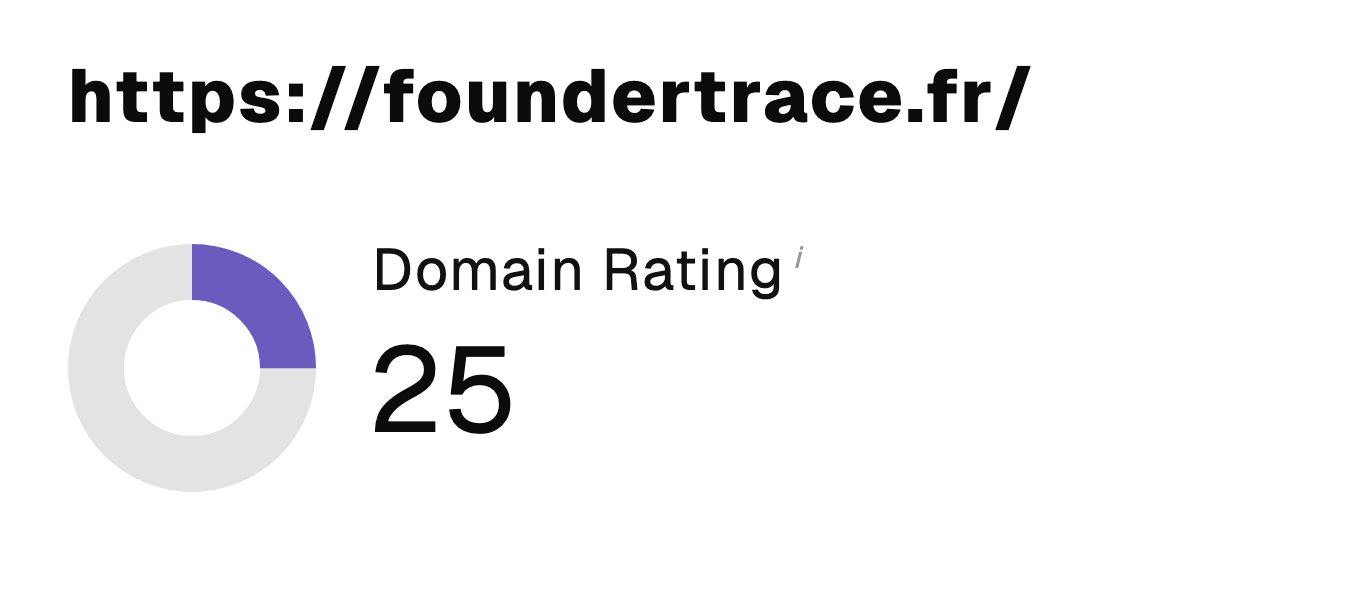 “I just let the Sorank software do its thing, and now my DR is 25 and my page is ranking higher.”
 Lucas Flandrefoundertrace.fr“I specialized in GEO thanks to Sorank. The GEO Leaderboard allows me to show my clients their position vs competitors on ChatGPT. It’s a real commercial differentiator.”
 MélanieSEO Freelance“Great service, works well for our website and helps us understand how to improve it to rank better on Google and elsewhere. Congrats, keep going, I recommend it.”
 Hugo T.E-commerce merchant