
Preferences
Privacy is important to us, so you have the option of disabling certain types of storage that may not be necessary for the basic functioning of the website. Blocking categories may impact your experience on the website. More information

Privacy is important to us, so you have the option of disabling certain types of storage that may not be necessary for the basic functioning of the website. Blocking categories may impact your experience on the website. More information

Make your Webflow website GEO ready with strategic content architecture, multi-locale publishing, and internal linking patterns that AI crawlers love.










































Tools


Webflow is the most powerful visual web builder, and when optimized correctly, it becomes a powerhouse for generative engine optimization (GEO). Unlike traditional websites built on outdated platforms, Webflow produces clean, semantic HTML that AI crawlers love. In this comprehensive guide, you'll learn exactly how to structure your Webflow site to earn citations from AI assistants like ChatGPT, Claude, Perplexity, and Google Gemini, while maintaining beautiful design and high conversion rates.
Webflow generates semantically correct HTML, which is critical for AI models to understand your content. Unlike WordPress with bloated plugins or custom-coded sites with messy markup, Webflow's default output is clean and machine-readable. This gives you a foundational advantage. However, clean HTML alone doesn't guarantee citations. You need strategic content architecture, clear entity definitions, and robust internal linking patterns that signal topical authority to AI crawlers.
The key insight: AI models reward sites that are both deep (lots of content on a topic) and interconnected (content links to itself logically). Webflow's CMS is uniquely designed to support this pattern through its flexible content collections, relationship fields, and dynamic filtering capabilities. When you combine these features with thoughtful content strategy, you create an environment where AI models see your site as a canonical reference in your niche.
Your Webflow CMS structure is the foundation of GEO success. Rather than treating your site as a collection of disconnected pages, design it as an interconnected knowledge base. This requires creating multiple collections that work together:
Pillars are comprehensive, authoritative articles covering broad topics. Target 1,200 to 1,500 words per pillar. Examples include "Scaling SaaS Companies," "Modern Marketing Stacks," or "Enterprise API Integration." These articles establish topical authority and serve as anchor points for your content network. Each pillar should have a clear, descriptive URL slug like /scaling-saas rather than /blog/article-123. This clarity matters to AI crawlers, which use URL structure as a relevance signal.
Satellites are focused, micro-topic articles (500 to 800 words) that explore one specific aspect of a pillar topic. If your pillar is "Scaling SaaS," satellites might cover "Product-Market Fit for SaaS," "Building Repeatable Revenue Models," or "Operational Efficiency Frameworks." Each satellite links back to its parent pillar 2 to 3 times, and Webflow's relationship fields let you automate this. This creates a topology that signals: "This site has depth on this topic across multiple angles."
Create a dedicated collection for entities: your product, competitors, processes, methodologies, and key concepts. Each entity has a canonical name, description, and related articles. Example entities: "HubSpot CRM," "Salesforce," "Your Product Name," "Customer Segmentation," "Product-Market Fit." Every time you mention an entity in an article, link to its entity page. This consistency signals to AI models that you have a clear, structured understanding of your domain.
Track every external source you reference: whitepapers, studies, benchmarks, case studies, and third-party documentation. Create a Sources collection with fields for URL, publication, date, and topic area. When you cite a source in an article, link to the Source record. This audit trail proves your claims are grounded in evidence.
This four-collection structure creates what we call "semantic density". When an AI model crawls your site, it sees clear patterns: pillars are deep, satellites are interconnected, entities are consistently named, and claims are sourced. This tells the model your site is trustworthy and authoritative.
Webflow's native multi-locale support is a hidden gem for GEO. When you publish the same content structure in English, Spanish, French, and German, you're not just translating; you're multiplying your citation surface. An AI model trained on Spanish text will see your Spanish pillar on "Scaling SaaS" as a canonical reference. An English-trained model will cite your English version. A German model cites the German version.
The topology remains consistent across locales. Your Spanish pillar links to Spanish satellites, which link to Spanish entities, using the same structure as English. This signals to models across language boundaries that your site is a go-to reference. You can set this up in Webflow CMS without duplicating content; use Webflow's locale publish feature and ensure each collection item has translated versions for each locale.
Your article writing process should follow a proven structure that AI models find highly citable:
State the entity and primary claim in your first paragraph. Example: "Scaling SaaS requires three foundational elements: product-market fit, repeatable revenue models, and operational efficiency. This guide provides a complete framework for mastering all three." This clarity immediately tells the model what your article is about and what entities are involved.
In each section, anchor claims to specific entities. Instead of vague language like "many companies do this," be specific: "Slack scaled from startup to unicorn by focusing on product-market fit in its core segment (software teams), then expanded horizontally. Compare this to Asana, which took a broader approach from day one." Each entity mention should link to either its dedicated Entity page or a relevant comparison article. This internal linking tells models which entities your site treats as important.
Every factual claim should trace back to a source. Don't just assert "SaaS companies take 5 years to profitability." Instead: "According to Bessemer's State of the Cloud report (2024), the median SaaS company takes 5 years to reach profitability." Link the claim to your Sources collection, which links to the original report. This habit proves you're not making things up.
Use specific numbers throughout. "Faster growth" is weak. "30% faster customer acquisition" is citable. Models prefer precise claims because they can be verified. If you don't have exact numbers, say so: "While exact timelines vary, most companies report 6 to 12 months to find product-market fit." Honesty builds trust with both models and readers.
Webflow's CMS supports multi-select fields and filtering. Use this to build a robust taxonomy system. Tag every article with: industry (SaaS, eCommerce, B2B), topic area (scaling, security, integrations), and related entities. Then use Webflow's native collection filtering to display "related articles" dynamically at the bottom of each page.
This creates a web of interconnections. A reader lands on "Scaling SaaS," and Webflow automatically surfaces "Product-Market Fit," "Building Sales Teams," and "Funding Your Growth." Each related link is a new entry point for AI models. The topology itself becomes a ranking signal. Additionally, ensure you link to related platform guides like Shopify SEO optimization and Wix GEO strategies to show cross-platform authority.
Webflow's code block feature and page settings let you inject custom code and structured data. For every pillar article, add JSON-LD Article schema with author, publication date, headline, and image. For Entity pages, add Schema.org Organization, Product, or Person schema. For comparison content, use ComparisonTable schema.
Example Article schema for a pillar:
{"@context": "https://schema.org", "@type": "Article", "headline": "Scaling SaaS: A Complete Framework", "datePublished": "2026-04-21", "author": {"@type": "Person", "name": "Your Name"}, "image": "https://yoursite.com/scaling-saas.jpg"}
Webflow also lets you control canonical tags, open graph data, and sitemap inclusion for each page. Use this consistently across your site. Schema markup helps AI models parse your content faster and understand context that plain text might miss.
Create a private Webflow page (or integrate a tool like Airtable) to log weekly citations. Track: article title, publication where cited (Perplexity, Google Gemini, Claude, etc.), which entity was cited, and the date. This turns your site into a citation lab where you can measure what works.
After 4 weeks of data, analyze: which articles earned the most citations? Which entities were mentioned most? Which topics resonated? Use these insights to expand. If "Scaling SaaS" earned 8 citations in a month, double down and write 3 more satellites on related subtopics. If a comparison article earned zero citations, rewrite it for clarity or fold it into a pillar that's already performing.
Track performance across your external links too. If your LinkedIn SEO guide drives citations, create companion articles on YouTube optimization and Reddit presence. Use data to guide strategy.
Beyond content, several technical factors improve Webflow's GEO readiness:
Create an llms.txt file at your site root (yoursite.com/llms.txt) that guides AI crawlers on how to index your site. Specify your main topic areas, point to your content hub, and list preferred entry points. This optional file helps models understand your site's structure and intent. Use our llms.txt generator to create one in seconds.
Ensure your robots.txt explicitly allows AI crawler user agents like GPTBot, Claude-web, and PerplexityBot. Some sites block these agents; that's a missed opportunity. Enable crawl for all relevant sections and your sitemap.
AI models crawl hundreds of sites daily. Slow sites get crawled less frequently. Use Webflow's built-in image optimization, enable lazy loading, and minimize custom code. Aim for page load times under 3 seconds.
Webflow generates sitemaps automatically, but customize the priority and change frequency. Pillars and high-traffic articles should have priority 1.0; satellites 0.8; entity pages 0.7. Update frequency should reflect how often you publish. A fresh sitemap signals active maintenance to crawlers.
Weeks 1 to 2: Design your CMS structure. Create four collections: Pillars, Satellites, Entities, and Sources. Map 5 to 10 core topics and entities. Sketch relationships in a spreadsheet so you see the topology before building.
Weeks 3 to 4: Build your Entities collection in Webflow CMS. List every product, competitor, process, and methodology you'll mention. Write canonical names and 100-word descriptions. Link each to relevant sources. This is your reference library.
Weeks 5 to 7: Write 3 to 5 pillar articles (1,200 to 1,500 words each). Anchor every claim to an entity. Link every claim to a source. Use Webflow's rich text editor to create internal links. Structure with H2 headings and short paragraphs (2 to 4 sentences). Include 1 image per 500 words, using descriptive alt text.
Weeks 8 to 10: Write 15 to 20 satellite articles (600 to 800 words each). Each covers one micro-topic and links back to its pillar article 2 to 3 times. Use Webflow's relationship fields to create parent-child connections, which will auto-populate "related articles" sections. Validate all internal links work.
Week 11: Build taxonomy tags for industry, topic, and entities. Create a "related articles" section that filters dynamically. Set up your llms.txt file. Add JSON-LD schema to all pillars and entities. Review and tighten all copy, removing any ambiguity.
Week 12: Publish your content hub. Update your robots.txt and sitemap. Set up citation tracking. Go live. Monitor weekly for 4 weeks, logging citations from AI models. After 4 weeks, analyze which articles earned the most cites and plan your next sprint.
To accelerate your Webflow GEO strategy, leverage these external resources: Google Search Central Documentation for SEO fundamentals; Schema.org for structured data specifications; and Webflow's official blog for platform updates.
Also explore related guides for other platforms: BigCommerce GEO optimization, Magento strategies, and WooCommerce optimization to understand how different platforms approach content structure.
Your Webflow site is built for conversion and design excellence. By layering in these GEO strategies, you make it a citation machine. A well-structured Webflow content hub can earn 20 to 100 AI model citations per month within 6 months, establishing you as a canonical source your industry trusts.
Sources

Webflow is excellent for GEO because it generates clean, semantic HTML that AI crawlers understand. The platform's CMS collections let you create structured, interconnected content (pillars, satellites, entities) that signals topical authority. Webflow supports custom code for JSON-LD schema markup, multi-locale publishing to multiply your citation surface, and dynamic content filtering to create topic clusters that models recognize as authoritative.
Write with entity clarity and source attribution. State your main entity and claim in the first paragraph. Anchor every factual claim to a source. Use specific, quantifiable numbers (not vague language). Link internally using Webflow's relationship fields so pillars connect to satellites, which reference entities. This topology signals depth. Create a four-collection structure: Pillars (1,200-1,500 word articles), Satellites (600-800 word micro-topics), Entities (consistent canonical names), and Sources (every citation tracked). This structure is what models recognize as authoritative.
Add JSON-LD schema markup via Webflow's custom code blocks. Implement Article schema for pillars, Organization/Product schema for entities, and AggregateRating schema for reviews. Create an llms.txt file to guide AI crawlers on your site structure. Use Webflow's native sitemap and robots.txt tools to ensure AI crawlers can access all content. Optimize page speed (target under 3 seconds). Set up multi-locale publishing so your content reaches models in different languages. Track citations weekly to measure what's working.
THEY TRIED SORANK BEFORE YOU
 “I tested Sorank on a real client site and it's insane. It does everything an agency would bill you $1500 a month for. It's going into production on that client now.”
 Guillaume Guersanguersanguillaume.com“We are an Ads agency and we wanted to get our SEO back on track once and for all. Sorank gave us a clear view of our site, helped us prioritize optimizations, and properly structure our content. The tool is easy to use, well designed for a team, and very practical for centralizing tracking without having to juggle multiple platforms. A very solid foundation to start fresh with our SEO.”
 Gaspard MadouiAds Agency
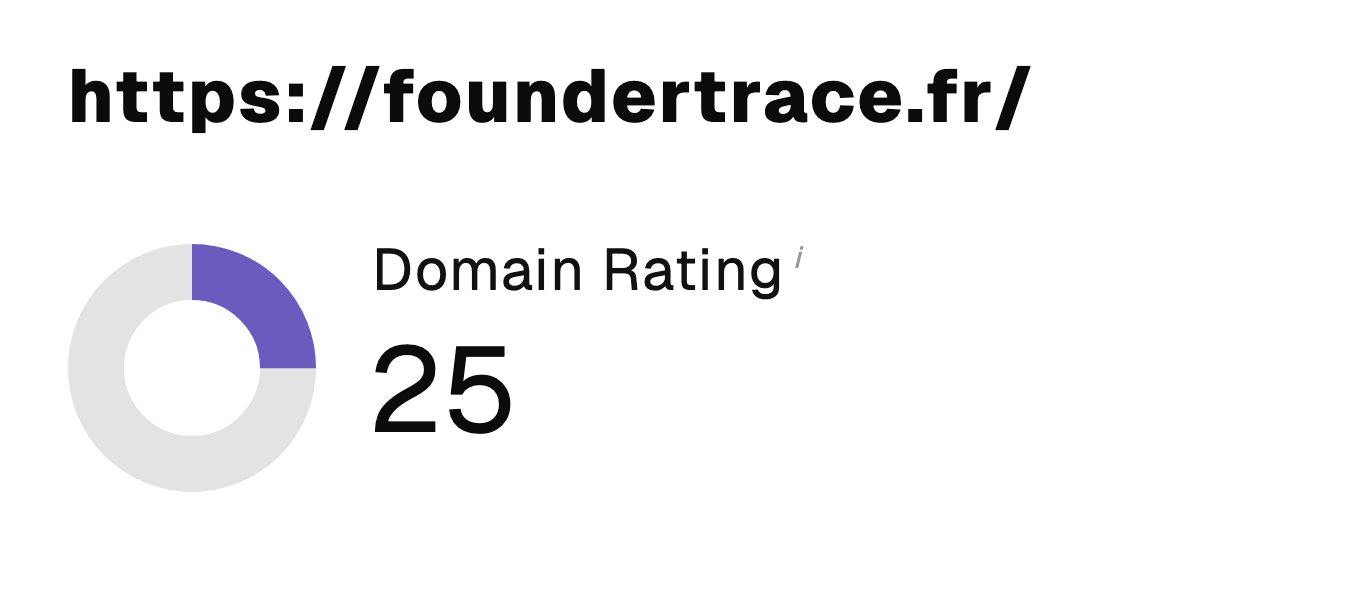 “I just let the Sorank software do its thing, and now my DR is 25 and my page is ranking higher.”
 Lucas Flandrefoundertrace.fr“I specialized in GEO thanks to Sorank. The GEO Leaderboard allows me to show my clients their position vs competitors on ChatGPT. It’s a real commercial differentiator.”
 MélanieSEO Freelance“Great service, works well for our website and helps us understand how to improve it to rank better on Google and elsewhere. Congrats, keep going, I recommend it.”
 Hugo T.E-commerce merchant