Preferences
Privacy is important to us, so you have the option of disabling certain types of storage that may not be necessary for the basic functioning of the website. Blocking categories may impact your experience on the website. More information

Privacy is important to us, so you have the option of disabling certain types of storage that may not be necessary for the basic functioning of the website. Blocking categories may impact your experience on the website. More information

Optimize your Bigcommerce website to be GEO friendly and visible in AI tools like ChatGPT or Perplexity. Learn how to boost your online reach with GEO tips.










































Tools


Want your store to appear inside AI answers, not just search results? Optimize your Bigcommerce website to be GEO friendly and visible in AI tools like ChatGPT or Perplexity. Learn how to boost your online reach with GEO tips.. That's the new growth lever for ecommerce. Check our agency guide for SEO and GEO for comprehensive strategies. the brands AI can understand and cite will win. Below, you'll learn how to make BigCommerce content machine-readable, referenceable, and worthy of citations.
Generative Engine Optimization (GEO), distinct from traditional SEO vs GEO practices, is the practice of shaping your site so AI systems can parse, trust, and reference your information. Traditional SEO chased blue links; GEO earns inclusion inside model-generated answers where sources are increasingly shown. For a BigCommerce storefront, GEO means expressing products, policies, and expertise as clean entities with explicit context, so engines like ChatGPT, Perplexity, and Gemini can extract and reuse your facts. The reward is presence where shoppers ask questions, from comparisons to compatibility and returns, driving qualified, high-intent traffic and revenue.
GEO rests on five pillars that fit naturally into a BigCommerce stack. First, entity clarity: describe your brand, products, categories, and people with disambiguated names, IDs, and relationships. Second, structured representation: publish robust schema markup in JSON-LD for Organization, WebSite, Product, Review, Offer, and FAQPage. Third, answer-first content: concise definitions, specs, pros and cons, and comparison language AI can quote. Fourth, distribution and authority: credible third-party mentions and links that reinforce your knowledge graph footprint. Fifth, measurement: track citations, referral volume from AI tools, and the share of AI answers that include your source, ideally in a consolidated geo seo dashboard.
Start with brand identity. Create a canonical About page that states your official name, HQ, founding year, and leadership. Add Organization schema with sameAs links to LinkedIn, Crunchbase, X, YouTube, and your Google Business Profile. This creates the entity that owns your store so AI systems can connect the dots. Include a clear contact page and a newsroom or press archive for launches and milestones; this improves E-E-A-T and model confidence.
Harden product data. In BigCommerce, complete brand, SKU, MPN, and GTIN. Mirror those in JSON-LD Product markup on every PDP with identifiers, dimensions, materials, and compatibility attributes. Include Offers with price, priceValidUntil, availability, and shippingDetails. Add aggregateRating and Review where applicable. Write a succinct, quotable summary explaining what the item is, who it's for, and how it differs, supporting ChatGPT citations and Perplexity visibility.
Make answer-friendly blocks. Above the fold on PDPs, include a two-sentence overview and a bullet list rendered as HTML, followed by a structured specifications table that maps to schema properties. Add pros-and-cons and a "Key facts" paragraph that repeats core attributes in natural language. On category pages, provide a short definition, audience fit, and selection criteria so engines can lift guidance when users request recommendations.
BigCommerce's Stencil themes let you inject JSON-LD via head partials; headless builds can emit structured data from your rendering layer with the Storefront GraphQL API. Generate one Product node per SKU or variant, and ensure brand is an entity with its own URL. Include isSimilarTo for nearest alternatives within your catalog, and isAccessoryOrSparePartFor where relevant. Publish size guides, care instructions, warranty terms, and return windows as anchored sections; expose them with HowTo or FAQPage schema when they cover steps or common Q&A.
For GEO, precision beats prose. Keep specs atomic and machine-readable. Pair marketing copy with exact fields like "Battery life: 12 hours" and "Bluetooth version: 5.3." Publish canonical compatibility matrices for parts or integrations with simple sentences such as "Model A is compatible with Device X, Y, and Z." This format helps models extract facts without hallucination, increasing your odds of being cited as the source.
Organize categories around intents users voice in AI prompts, not only merchandising logic. Create curated "best for" collections such as "Best travel-friendly carry-ons under 55 cm" with transparent, criteria-based selection. Internally link from learn pages to categories and PDPs using descriptive anchors that restate the attribute, like "lightweight polycarbonate carry-on." Use breadcrumbs and stable URLs for categories and filters worth indexing, and add rel=canonical on thin combinations you do not want crawled. This consistency teaches models how your entities relate and strengthens entity SEO within your domain.
Maximize discoverability. Provide an XML sitemap index for products, categories, blog posts, and help docs, updated daily with lastmod. Serve a clean robots.txt that allows major AI user agents, GPTBot, Google-Extended, PerplexityBot, CCBot, and ClaudeBot, unless your policy says otherwise. If you permit AI training or citation, state it explicitly in robots while disallowing checkout, account, and faceted paths. Ensure fast TTFB with BigCommerce's CDN, compress imagery to AVIF or WebP, and ship lean HTML where JSON-LD loads server-side to avoid rendering dependencies.
Strengthen canonicalization and hreflang if you run multiple storefronts. Each localized PDP should self-canonicalize and reference alternates so models understand language variants. Return 410 for retired products, keep 301 chains under two hops, and expose structured "successor product" pointers when you replace items. Validate JSON-LD with linters and test crawling with headless fetches that impersonate AI bots, ensuring schema and key content render without client-side blockers.
Publish concise "answer cards" that target high-value prompts like "how to choose a trail running shoe" or "what's the difference between 700c and 29-inch wheels." Lead with the definition, include numbered criteria or steps, and close with a short recommendation segment that names your products transparently. Add comparison pages with an intro summary, a features table, and verdicts per use case. Include safety warnings, compliance standards, and certifications; these practical details often appear in AI shopping assistant replies. To scale production responsibly, accelerate outlines with tools such as blog article generator while keeping expert oversight.
Create evergreen factsheets about materials, technologies, and sizing that contain unambiguous statements and cite authoritative sources where relevant. Models prefer structured, non-hyped explanations. Host policy pages for shipping, returns, warranties, and financing with precise thresholds, geographies, timelines, and exceptions in short sentences. These are frequent extraction targets inside generative answers and will earn you more GEO visibility.
Establish consistent entity signals off-site. Maintain aligned NAP data and brand descriptions across LinkedIn, Crunchbase, G2, Reddit flairs, and manufacturer listings. For product credibility, submit structured product feeds to Google Merchant Center and Microsoft Merchant Center with GTINs that match your site. Engage on Reddit and pitch relevant buying guides and product roundups to respected publishers; even one strong comparison citing your specs can propagate across AI answers when the same fact appears on your PDP. Monitor external strength with a focused domain authority tracker while you expand coverage through PR and claim a Wikidata item if notability criteria are met.
Repurpose content to channels models crawl. Post distilled versions of your answer cards on LinkedIn Articles and Medium with a canonical link back to your site. Publish a public JSON endpoint that mirrors your product specs for developers and AI crawlers, versioned and documented, and link to it from a resources page. This makes your facts easier to ingest accurately across ecosystems.
Collect exact questions from chat, support, social DMs, and on-site search. Cluster them into intents like sizing, compatibility, care, accessories, and comparisons. Build a page for each high-volume cluster with a crisp title that echoes the prompt and a two-sentence intro answer, then elaborate. Link these pages from relevant PDPs and category hubs to create a dense "answers network." To scale discovery, ideate with keyword research and expand variations using keyword query fan out ia, then structure hubs with topical cluster generator.
Pursue links that corroborate your claims rather than generic homepage mentions. If your PDP asserts compliance with a specific standard, seek a link from the standard's registry listing. If you publish performance data, obtain a citation from a lab or reviewer. Anchor text should mirror the property you want associated, like "EN ISO 20345 S3 safety rating" or "compatible with Shimano 11-speed." Use ai cited backlinks to identify factual citations that strengthen the external evidence graph models trust.
Track the share of AI answers that cite you for target prompts. Set up ai mention tracking to query ChatGPT, Perplexity, and Gemini on schedules, store the answers, and parse source links. Monitor "AI referral sessions" by tagging Perplexity and ChatGPT browsing referrals, then segment revenue and AOV from those sessions. Publish transcribed versions of your best content on YouTube to expand reach. Maintain a citation ledger mapping each page to the prompts where it appears, noting whether you're a primary or supporting source. Benchmark competitors with geo leaderboard and uncover gaps with seo competitor spy as you trend entity health.
BigCommerce provides the plumbing to ship GEO at scale. Use Page Builder for answer hubs and educational blocks without breaking your theme. Leverage custom fields and metafields to store atomic attributes that sync into JSON-LD templates. With Storefront GraphQL and headless frameworks, you can render server-side structured data and expose fast, minimal pages ideal for AI crawlers. Multi-Storefront lets you segment intents by region or language while maintaining canonical product entities. Script Manager and theme partials let you add measurement beacons for AI-driven traffic without heavy client payloads.
If you also manage complementary sites or landing pages, apply the same GEO standards across platforms like shopify, magento, woocommerce, wordpress, webflow, wix, squarespace, prestashop, joomla, clickfunnels, kajabi, kartra, podia, systeme-io, and lovable to keep your entity graph consistent across your ecosystem.
Operational controls matter too. Maintain environment-specific robots and sitemaps to avoid leaking staging content. Version content schemas so teams can add new attributes without rework. Keep a changelog on pages models often cite; stable phrasing prevents conflicting extractions. Establish governance that pairs merchandising with a content owner who writes the first, quotable sentence for every high-value page; that line often appears in generative answers.
Define a clear AI crawling policy. If you want to be referenced by AI systems, explicitly allow major AI user agents in robots.txt and publish a human-readable policy clarifying permissible use, attribution expectations, and a contact for data corrections. If your catalog includes sensitive or regulated items, scope blocks carefully to avoid exposing restricted content. Use content security headers that do not interfere with crawler access to structured data, and test with each bot's fetcher to confirm parity between human and crawler responses.
Begin with a comprehensive GEO audit that tests hundreds of prompts across ChatGPT, Perplexity, and Gemini to learn where your brand should appear, and whether it does. Map gaps by aligning those prompts to your BigCommerce pages. Restructure headings, tighten first sentences, and inject missing schema. Publish canonical answer cards and factsheets, then distribute them to platforms models frequent. Acquire corroborating mentions that match your product facts. Monitor citation rates, referral sessions, and assisted revenue, and iterate weekly. A focused geo seo audit makes your brand understandable, credible, and referenceable by generative AI.
Avoid duplicating thin faceted pages that fragment authority and confuse models; keep only valuable combinations with unique summaries. Don't bloat PDPs with fluffy superlatives; use concise, verifiable statements. Don't bury specs in images or PDFs that crawlers may not parse reliably. Avoid client-side-only JSON-LD that depends on slow hydration. Keep identifiers consistent across feeds and pages; GTINs and SKUs must match. And don't chase generic links; pursue citations that validate the specific facts you want models to repeat.
Month 1: audit prompts, instrument crawler access, and fix critical technical blockers like sitemaps, robots, and canonicalization. Generate brand and Organization schema, and standardize PDP structured data with complete identifiers and offers. Month 2: produce your top ten answer cards, three comparison pages, and upgrade five highest-revenue categories with definition-led intros. Secure five corroborating mentions tied to key facts. Month 3: expand internal linking with intent-driven anchors, launch compatibility matrices, and start a monitoring cadence for citations and AI referrals. Expect early inclusion in Perplexity sources, then pursue persistent ChatGPT citations as content stabilizes.
The winners in 2026 won't just rank, they'll be quoted. Treat your BigCommerce site as a facts engine, not a brochure. Express entities cleanly with structured data, answer real prompts with precision, and build corroboration around the claims you care about. Do this consistently and you'll Optimize your Bigcommerce website to be GEO friendly and visible in AI tools like ChatGPT or Perplexity. Learn how to boost your online reach with GEO tips.. The result is durable visibility inside AI answers, higher-intent traffic, and compounding trust in your brand.

BigCommerce offers strong GEO capabilities, including its partnership with Perplexity for AI-powered product discovery. Write comprehensive product descriptions with specific attributes, benefits, and use cases. Implement structured data using built-in schema support and apps like JSON-LD for SEO. Create a blog with buying guides and FAQ content. Ensure your product data feed is complete, as BigCommerce can send structured data directly to AI through its Perplexity Shop integration.
BigCommerce stands out with its native Perplexity partnership, allowing structured product data to be directly surfaced in AI-powered shopping. The platform offers robust built-in SEO features including automatic schema markup, customizable URLs, and optimized page structure. Its headless commerce capabilities let you use any frontend framework optimized for AI crawling. The focus on structured product data and API-first architecture makes it naturally suited for machine-readable content the AIs prefer.
Structure product content with complete descriptions covering specifications, benefits, ideal use cases, and comparisons. Add FAQ sections using custom fields or content blocks. Include customer reviews and ratings, as the AIs heavily cite products with social proof. Use the category structure to build topical authority. Write blog content targeting questions like "best [product] for [need]" that AI assistants commonly answer. Fill in all product attributes accurately.
THEY TRIED SORANK BEFORE YOU
 “I tested Sorank on a real client site and it's insane. It does everything an agency would bill you $1500 a month for. It's going into production on that client now.”
 Guillaume Guersanguersanguillaume.com“We are an Ads agency and we wanted to get our SEO back on track once and for all. Sorank gave us a clear view of our site, helped us prioritize optimizations, and properly structure our content. The tool is easy to use, well designed for a team, and very practical for centralizing tracking without having to juggle multiple platforms. A very solid foundation to start fresh with our SEO.”
 Gaspard MadouiAds Agency
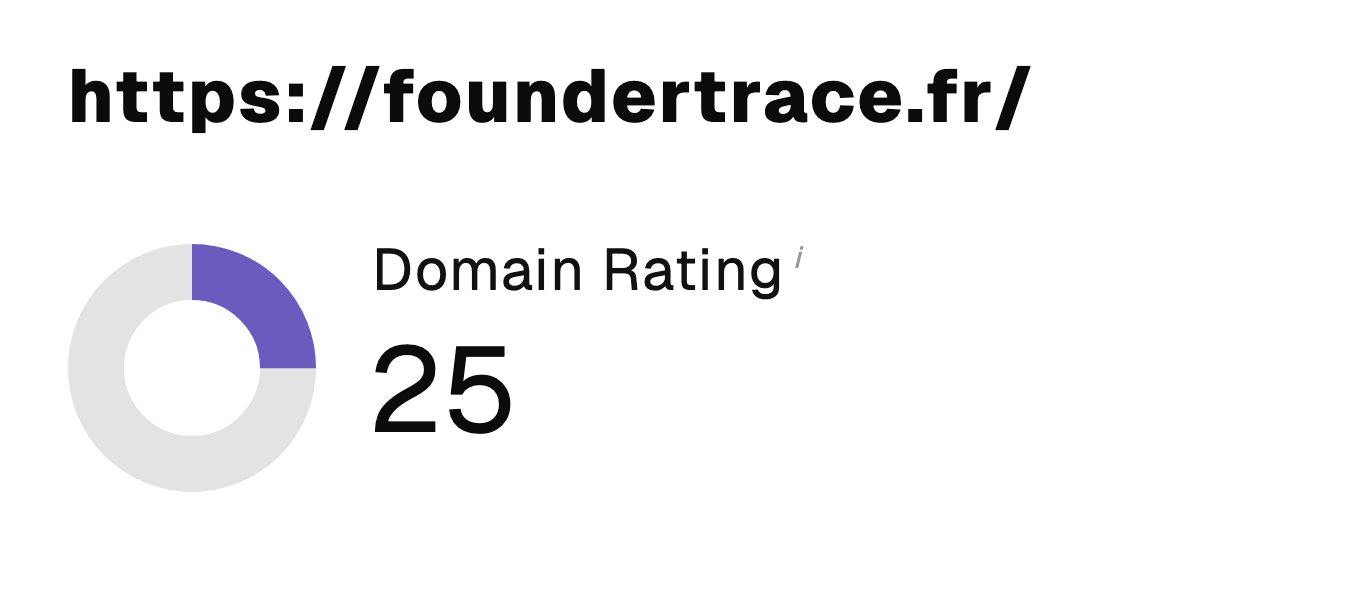 “I just let the Sorank software do its thing, and now my DR is 25 and my page is ranking higher.”
 Lucas Flandrefoundertrace.fr“I specialized in GEO thanks to Sorank. The GEO Leaderboard allows me to show my clients their position vs competitors on ChatGPT. It’s a real commercial differentiator.”
 MélanieSEO Freelance“Great service, works well for our website and helps us understand how to improve it to rank better on Google and elsewhere. Congrats, keep going, I recommend it.”
 Hugo T.E-commerce merchant