
Preferences
Privacy is important to us, so you have the option of disabling certain types of storage that may not be necessary for the basic functioning of the website. Blocking categories may impact your experience on the website. More information

Privacy is important to us, so you have the option of disabling certain types of storage that may not be necessary for the basic functioning of the website. Blocking categories may impact your experience on the website. More information

Turn your Joomla website into a GEO friendly platform that AI can find and cite. Follow key steps to boost visibility across smart search tools for AI growth.










































Tools


Want AIs to cite your Joomla site as the source people trust? Turn your Joomla website into a GEO-friendly platform that models can discover, parse, and credit. With the right architecture, signals, and authority you can earn ai cited backlinks consistently. In this guide, you'll learn how to make Joomla AI-ready so systems can understand, trust, and attribute your brand.
The AIs now mediate discovery by compressing the web into a single answer and referencing only a few sources. Traditional rankings help, but they're not enough; what wins are clear entities, machine-readable proof, and trustworthy context. A GEO program aligns your Joomla site with how models parse, ground, and attribute information, so you earn citations at the moment of decision, validated by a disciplined geo seo audit of your current setup. As part of a broader agency guide for SEO and GEO, this Joomla playbook fits into a comprehensive optimization strategy.
Compared with classic SEO, GEO favors unambiguous facts, consistent entity naming, structured context, and distribution across surfaces models crawl. Your aim shifts from "rank for a keyword" to "be the canonical source for an entity, claim, or process." Joomla fits this well because it supports clean URLs, custom fields, and component-based content, ideal for scalable structured data.
Start by gathering the questions your audience actually asks inside assistants and smart search. Aggregate prompts from support tickets, onsite search, sales calls, Reddit, YouTube comments, and competitor Q&A. Cluster them into intents, informational, how-to, comparative, troubleshooting, and bind each cluster to a clearly defined entity with synonyms and aliases that mirror user language. Expand coverage with systematic keyword research and prompt expansion using keyword query an out ia; validate gaps against competitor surfaces with seo competitor spy. Understanding the distinction between SEO vs GEO helps clarify which strategies apply to each intent.
Create an entity dictionary for your brand, products, services, and topics. For each entity, define preferred name, alternate names, definitions, core facts, related entities, and authoritative sources. Use a cluster-first publishing strategy, assisted by a topical cluster generator, to drive consistent wording, schema properties, URL slugs, and internal links so models can resolve references and situate your pages inside the broader knowledge graph.
Design a hub-and-spoke model with one canonical hub per entity and focused spokes for subtopics. Keep URLs concise and stable. Enable Joomla's modern router with shallow paths. Use categories to reflect topic clusters (not departments) and expose indexable category pages with summaries, FAQs, and links that disambiguate related terms.
Enforce one-to-one canonicalization across variants and parameterized URLs. Use descriptive internal anchors that state the action or fact, not "click here." Add breadcrumbs and BreadcrumbList schema to clarify hierarchy. With Joomla custom fields, attach fact panels (dates, versions, SKUs, specs) to articles so you can render consistent, machine-readable snippets across the site.
The AIs lean on schema to extract entities, claims, and provenance. Implement Organization, WebSite, and WebPage on every page with stable @id IRIs. For content types, apply Article, TechArticle, HowTo, FAQPage, Product, Service, SoftwareApplication, Dataset, VideoObject, and BreadcrumbList as appropriate. Populate Organization with logo, sameAs profiles, contact points, and authoritative URLs to strengthen entity reconciliation.
Where you publish definitive statements, use ClaimReview to express a claim and your verdict with links to sources. For tutorials, enrich HowTo with steps, tools, durations, and materials. For prompt-derived questions, render a Q&A section and mark it up as FAQPage. Ensure a sitelinks searchbox with WebSite schema and a working internal search endpoint. Use extensions (e.g., 4SEO or Google Structured Data by Tassos) to inject JSON-LD centrally, and leverage custom fields to avoid per-article manual work.
Write for precision and citability. Open with a two-sentence TL;DR that is dense, factual, and timestamped. Follow with a scannable rationale, then methods, then references. Pair each important claim with a short evidence line and an outbound citation to a reputable source. Keep definitions atomic and reusable, ideally one per paragraph. Scale drafting with a blog article generator, then human-edit for clarity and evidence quality.
On each entity hub, include a facts panel with publication and revision dates, authors and credentials, verifiable metrics, and links to primary data. Add a compact Q&A block reflecting real prompts and mark it up as FAQPage. In long guides, include section-level summaries that a model could quote verbatim. This packaging raises the odds your page is chosen when engines need concise, attributable statements. Content distribution across YouTube and LinkedIn amplifies reach and citation potential.
Name images descriptively and add captions and alt text that include entity and claim context. Provide ImageObject schema with license and creator. For videos, include transcripts, chapter timestamps, and VideoObject schema (with contentUrl when appropriate). For research or benchmarks, publish CSV/JSON downloads and mark them up as Dataset with variablesMeasured and measurementTechnique to encourage data-grounded citations.
Ensure documents (PDFs, whitepapers) carry proper titles, authors, and metadata; host HTML equivalents for easier extraction. Offer RSS/Atom feeds for categories and tags so assistants and discovery crawlers can subscribe. If you run a podcast, expose a podcast RSS and link it from Organization.sameAs. These additions make your assets more visible to ingestion pipelines beyond standard crawling.
Fast, stable pages improve crawl efficiency and extraction. Optimize TTFB with PHP 8.x on OPcache, HTTP/3, and a CDN. Use Joomla's page cache and module-level caching; minify with JCH Optimize; compress images to AVIF/WebP; preconnect to critical domains. Aim for strong LCP and INP, but also prioritize clean HTML and minimal client-side rendering for factual blocks; models parse source HTML more reliably than dynamic fragments.
Maintain robust accessibility: semantic headings, ARIA where needed, descriptive links, and proper language attributes. Accessibility clarifies structure for machines and users. In robots.txt, allow core search bots and declare policies for AI crawlers explicitly. Consider granting access to GPTBot, Google-Extended, CCBot, PerplexityBot, ClaudeBot, Bingbot, Applebot-Extended, and BraveBot where you want citations, while excluding private or thin areas. Keep sitemaps clean, submit an index sitemap, and add news, video, and dataset sitemaps if applicable.
Models triangulate trust from off-site references. Build and maintain authoritative profiles aligned with your Organization schema: Crunchbase, G2/Capterra, GitHub, Product Hunt, relevant directories, charity partners, conference bios, and professional associations. If appropriate, contribute neutral, sourced statements to Wikidata and ensure consistent identifiers and names across profiles. Track improvements with a domain authority tracker and mirror your best references on an on-site mentions page.
Pursue digital PR with data-led stories, publish methodologies, and provide raw datasets. Seek citations from universities, standards bodies, and high-quality trade publications. Anchor each campaign to an entity hub on your Joomla site so link equity and entity association flow back into your knowledge graph.
Repurpose cornerstone content to channels that AIs routinely crawl. Publish canonical-backed versions on LinkedIn Articles and Medium; syndicate summaries to Substack; produce companion videos on YouTube with chapter markers; upload slide decks to SlideShare. Always include rel=canonical to your Joomla original and consistent author profiles. Publish code samples or datasets to GitHub with clear READMEs pointing back to entity hubs.
Use category RSS feeds and WebSub hubs to push updates. Share structured snippets on social platforms where public pages are indexed. The goal is discoverability: surface your facts in multiple reputable contexts so retrieval and attribution engines repeatedly encounter, and credit, your brand.
Measure AI discoverability directly from server logs. Identify and segment AI user agents, track crawl frequency, status codes, and bytes served. Watch for blocked sections, excessive 404s, and slow bot responses. Complement logs with brand mentions and explicit citation disclosures, operationalized via ai mention tracking. Record when visitors arrive after engaging with AI answers using referrer analysis, on-page surveys, and vanity URLs seeded in AI-oriented content.
Define GEO KPIs: assistant citation count, unique citing engines, entity hub coverage, claim-level citation wins, evidence-block reuse, off-site authoritative mentions, and assisted conversions from AI-influenced sessions. Centralize reporting in a geo seo dashboard and benchmark progress against a public or internal geo leaderboard to prioritize next actions.
Upgrade to Joomla 5.x for performance, modern routing, and Web Services; enable SEF URLs and gzip compression; configure canonical tags globally via your SEO extension; implement Organization, WebSite, and page-level schema via 4SEO or Google Structured Data by Tassos; create separate XML sitemaps for articles, categories, media, video, and datasets using JSitemap or core plugins; enable category and tag RSS feeds; add Open Graph and Twitter meta; configure hreflang for multilingual sites; enable HTTP/3 and TLS 1.3; use JCH Optimize for minification and critical CSS; activate Joomla's cache and, if compatible, Redis or OPcache; set a robust robots.txt with explicit allowances for reputable AI crawlers; instrument server logs and analytics to segment AI user agents; create author pages with credentials and sameAs; and publish a site-wide facts page that mirrors your Organization schema and links to key hubs.
Adopt consistent templates so teams produce machine-friendly content by default. For entity hubs: TL;DR, definition, facts panel, FAQ, references, related entities, and last updated date. For how-to guides: prerequisites, materials, time, steps with checksums or verifiable outputs, pitfalls, and a downloadable checklist. For comparisons: evaluation criteria, test conditions, and tabular results with clear winners and use-cases. For research: methodology, sample size, confidence, raw data files, and Dataset schema.
Reinforce author credibility with bios, credentials, affiliations, and conflict-of-interest statements. Use one citation style across pages. Embed short, quotable sentences and avoid burying key facts. These patterns make it easier for generative AI to extract, ground, and attribute your content accurately.
Trust is now a prerequisite. Serve everything over HTTPS with HSTS. Add Content-Security-Policy and Subresource Integrity for critical scripts. Publish transparent editorial guidelines and correction policies. Watermark proprietary images and declare licenses in metadata. Maintain a public changelog for important pages so models and users can see revision cadence. These measures support factual reliability and reduce misattribution risk.
Align names and IDs across your ecosystem. Use a consistent Organization @id in schema and internal links. Link sameAs only to verifiable profiles. Standardize product SKUs and versioning across docs, downloads, and support. Stable identifiers help models bind facts to the right entities, boosting your chances of being cited across competitive topics.
Sorank operationalizes the workflow end to end. It audits your current AI visibility and citations, surfaces the prompts your audience actually uses, and maps them to entities. It then generates content briefs and entity hubs tailored for Joomla templates, injects the right structured data, and runs targeted authority building. Distribution workflows publish summaries to the channels models crawl most.
Post-launch, Sorank monitors assistant citations, bot behavior, topic coverage, and conversions. It identifies which claims get quoted, where attribution breaks, and what to adjust next. The result is a Joomla site engineered for Generative Engine Optimization with systematic improvements instead of ad-hoc tweaks, keeping your brand visible inside answers, not just on link lists.
If your team also manages other sites, the same GEO playbooks apply. See platform-specific guidance for wordpress, shopify, webflow, wix, woocommerce, magento, prestashop, bigcommerce, squarespace, clickfunnels, kajabi, kartra, lovable, podia, and systeme-io.
Treat GEO as a living system. Update entity hubs when facts change. Expand FAQs as new prompts emerge. Refine schema as standards evolve and add properties that improve disambiguation (hasPart, about, mentions, identifier). Enrich content with fresh datasets, new tests, and third-party validations. Track how different engines cite you and adapt packaging to the evidence formats they prefer.
Revisit crawl policies quarterly to balance openness and control. Scale syndication to channels that show measurable impact on citations. Retire obsolete pages with redirects to preserve context and equity. By iterating against real assistant behavior and citation data, you compound gains in visibility and trust.
Turning Joomla into a GEO-ready platform is a strategic build, not a single plugin switch. Define entities and prompts, engineer information architecture, implement rich schema, package quotable evidence, open the right crawl doors, and earn authority where models look for proof. With these steps, and a disciplined loop of monitoring and iteration, you give AIs every reason to find, understand, and cite your brand for sustained, compounding growth.

Joomla offers solid GEO capabilities through its flexible extension ecosystem. Install structured data extensions to add JSON-LD schemas (Article, FAQPage, Organization, HowTo) to your pages. Use Joomla's content structure with categories and tags to build topical authority. Write content that directly answers questions users would ask AI assistants, with clear headings and concise answers. Ensure your template outputs clean semantic HTML and your site loads fast.
Key extensions for GEO include sh404SEF (for advanced URL management and schema markup), JoomSEF (for SEO-friendly URLs), and structured data extensions for JSON-LD implementation. Use content management extensions supporting FAQ and Q&A formats. JoomlArt provides specific GEO resources for Joomla users. For content optimization, use extensions analyzing readability and structure. Combine these with a solid content strategy to maximize AI discoverability.
GEO and SEO work together, enhance your existing SEO strategy with Joomla by conducting a technical GEO audit. Start by identifying your top-ranking Joomla pages, then audit their entity clarity, internal link topology, and source attribution. For each page, list the entity it targets (e.g., "Joomla scaling"), count inbound internal links from related pages, and verify that every claim links to a primary source. This reveals quick wins: pages that rank but are under-linked or under-sourced are GEO opportunities. Then, enhance them: add more internal links from satellites, add more citations, and lock down entity naming. Republish, and monitor cite count for 4 weeks. A 20%+ lift validates the signal. Repeat across your top 10 pages. Within a quarter, a disciplined GEO program on Joomla can drive 10 to 50 cites per month, turning your site into a canonical reference for your niche.
THEY TRIED SORANK BEFORE YOU
 “I tested Sorank on a real client site and it's insane. It does everything an agency would bill you $1500 a month for. It's going into production on that client now.”
 Guillaume Guersanguersanguillaume.com“We are an Ads agency and we wanted to get our SEO back on track once and for all. Sorank gave us a clear view of our site, helped us prioritize optimizations, and properly structure our content. The tool is easy to use, well designed for a team, and very practical for centralizing tracking without having to juggle multiple platforms. A very solid foundation to start fresh with our SEO.”
 Gaspard MadouiAds Agency
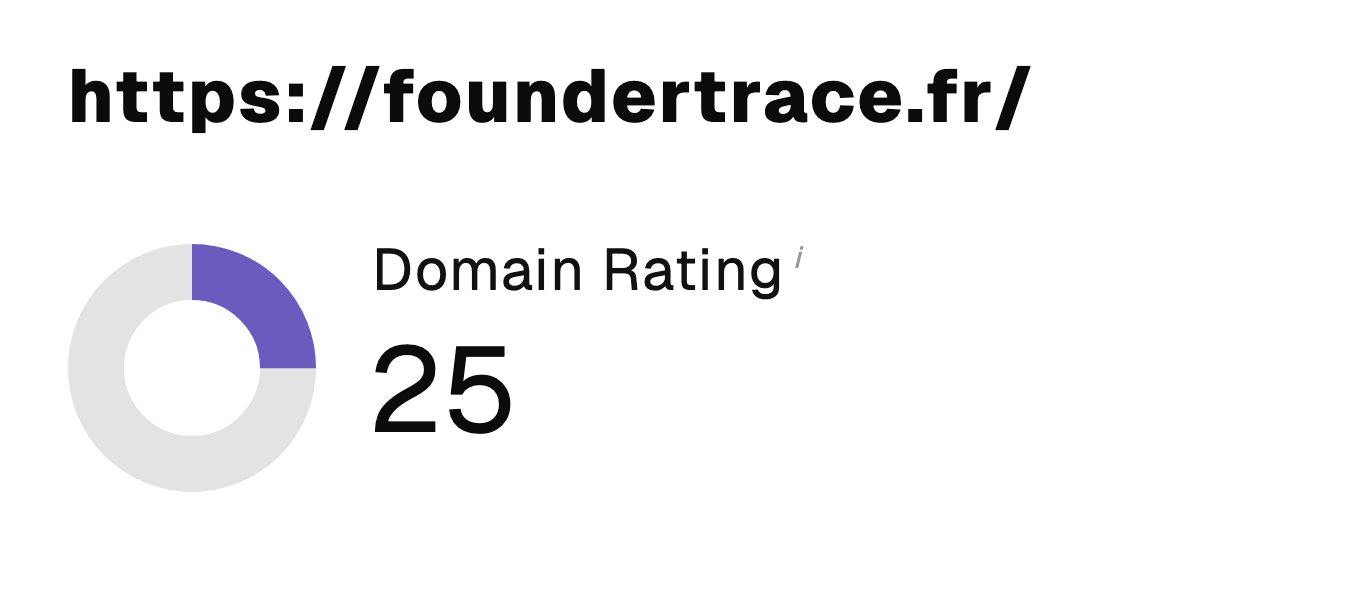 “I just let the Sorank software do its thing, and now my DR is 25 and my page is ranking higher.”
 Lucas Flandrefoundertrace.fr“I specialized in GEO thanks to Sorank. The GEO Leaderboard allows me to show my clients their position vs competitors on ChatGPT. It’s a real commercial differentiator.”
 MélanieSEO Freelance“Great service, works well for our website and helps us understand how to improve it to rank better on Google and elsewhere. Congrats, keep going, I recommend it.”
 Hugo T.E-commerce merchant