Preferences
Privacy is important to us, so you have the option of disabling certain types of storage that may not be necessary for the basic functioning of the website. Blocking categories may impact your experience on the website. More information

Privacy is important to us, so you have the option of disabling certain types of storage that may not be necessary for the basic functioning of the website. Blocking categories may impact your experience on the website. More information

Make your Wix website SEO and GEO optimized. With 45% website builder market share and native AI Visibility Overview, learn to configure structured data, llms.txt, and AI crawler settings so Google, ChatGPT, Perplexity, and Claude can find and cite your content.










































Tools


Want AI assistants to name-drop your brand, not just show your link? Wix is the world's most popular website builder with 45% market share, powering 4.3% of all websites and over 272 million sites built to date. Make your Wix website SEO-optimized and explicitly referenced by AI systems. Improve metadata, content, and GEO structure to gain more visibility with AI help. The rules of discovery have shifted from blue links to ai mention tracking. In this article, you'll learn how to turn your Wix site into an AI citation magnet.
Search is now answer-first. Large language models summarize the web, cite a few trusted sources, and move users forward without a SERP. With ChatGPT surpassing 1 billion monthly searches and Perplexity reaching over 100 million monthly active users, AI-driven discovery is no longer a niche concern. To earn those AI citations, your Wix site must be machine-readable, authoritative, and unambiguous about entities and expertise. That is the promise of GEO, Generative Engine Optimization: aligning content, structure, and signals so AI systems can understand, trust, and reference you.
Wix is the first website builder to offer native AI search visibility tools. Its AI Visibility Overview, accessible through the Wix Analytics dashboard, goes beyond traditional SEO by letting you understand, monitor, and actively improve how your brand appears in LLM-based search engines like ChatGPT, Gemini, Perplexity, and Claude.
Key capabilities include: tracking how often your website is cited by AI platforms in response to relevant queries, analyzing brand sentiment, perception, and positioning in AI-generated content, measuring how much traffic AI platforms drive to your site, and letting you add or remove tracked questions to better reflect your business. This makes Wix unique among website builders, as no other platform offers this level of native GEO monitoring.
For premium eCommerce users, Wix generates an llms.txt file automatically at your domain root. The llms.txt standard is like robots.txt but designed for AI models, providing a concise, markdown-formatted overview of your site that LLMs can quickly parse. With platforms like ChatGPT and Gemini expanding tools for product listings, llms.txt works alongside dynamic shopping feeds to give LLMs richer data on sellers and products.
Wix also lets you manage AI crawler access through your robots.txt settings. You can block or allow specific AI crawlers individually, including GPTBot (OpenAI), ClaudeBot (Anthropic), and PerplexityBot. Remember that Anthropic operates three separate bots: ClaudeBot for training data, Claude-User for real-time content fetching, and Claude-SearchBot for search indexing. You can manage access to each category independently. Important: blocking AI crawlers in your robots.txt may limit NLWeb functionality, as AI agents need access to view your structured content.
Wix delivers strong technical performance out of the box. According to Search Engine Journal's CWV analysis, Wix achieves a 71-75% Core Web Vitals pass rate, trailing only Shopify (75-78%) and Duda among major platforms. By comparison, WordPress averages only 33-40%. Wix's Lighthouse performance score of 64 also leads WordPress (35) significantly.
This performance advantage comes from Wix controlling the entire hosting stack and its transition to server-side rendering (SSR) with a React-based architecture. Since Google's March 2026 Core Update now evaluates Core Web Vitals at the site level rather than per page, Wix's consistent platform-wide performance gives your pages a built-in advantage for both search rankings and AI crawler efficiency.
Start with intent mapping. List the real prompts your audience uses, then cluster them into themes your business should own. Use tools and workflows like keyword research to capture demand, topical cluster generator to organize coverage, and seo competitor spy to spot gaps against rivals. Build a clear hierarchy for those themes in Wix: top-level hub pages that define each topic; supporting articles that go deep on sub-intents; and utility pages (comparison, pricing, how-to) that satisfy decision prompts. Keep URLs short and descriptive, and ensure internal linking connects every cluster: hubs link down to spokes; spokes link laterally; and each spoke links back to its hub with consistent anchor text. Use Wix collections and dynamic pages when you need scale with consistent templates and SEO Patterns. Breadcrumbs, clean pagination, and an always-fresh XML sitemap help both crawlers and models map your coverage.
Wix uses JSON-LD as the only accepted format for structured data, which is also Google's recommended format. You can add up to 5 markups per page, with a 7,000-character limit per markup and 8,000 characters total per page.
Wix automatically adds preset structured data to several page types: Wix Stores product pages, Wix Bookings services pages, Wix Blog posts, Wix Forum posts, and Wix Events pages. For blog posts, Wix offers AI-generated structured data that scans your content and creates relevant schema markup automatically.
For custom pages, manually add Organization schema with logo, sameAs links to authoritative profiles, and contact info on the homepage. Use LocalBusiness schema for local businesses with address, geo coordinates, and service areas. On articles, add Article/BlogPosting with author, datePublished, and dateModified. Product pages should carry Product, Offer, and AggregateRating when genuine. Implement FAQPage schema for Q&A content and BreadcrumbList everywhere. Use the Schema app from the Wix App Market for additional markup needs. Validate with Google's Rich Results Test.
Write intent-aligned titles that include the core entity and outcome, then craft meta descriptions that summarize value in one sentence. In Wix, set page-level titles and descriptions via the SEO Panel and propagate consistent patterns with Wix SEO Patterns for blog posts, products, and dynamic pages. Add canonical tags wherever duplication is possible, category archives, filtered views, and translated variants. Implement hreflang via Wix Multilingual so the correct locale surfaces. Complete Open Graph and Twitter Card tags to control previews used by chat interfaces and link-expanding UIs. Keep robots directives simple (index, follow) except on thin or duplicate pages; maintain a clean robots.txt; and register your sitemap in Google Search Console and Bing Webmaster Tools.
AI models prioritize clarity, coverage, and credibility. Lead with a concise executive summary answering the target prompt in 2-3 sentences; follow with structured sections that deepen context, steps, and trade-offs. Explicitly define entities and terms on first mention, link to primary sources, and include verifiable stats with dates. Use headings that mirror the prompts you want to match, and add concise tables or step sequences that models can easily compress. Maintain visible authorship, expert bios, and revision history to strengthen E-E-A-T. Publish supporting assets, checklists, glossaries, and comparisons, and interlink them to reinforce topical authority. To scale outlines and drafts while preserving quality, leverage assistants like blog article generator, then add expert review and citations. Close articles with related reading paths so both users and models discover breadth.
Collect prompts from sales calls, support tickets, live chat, and community threads. Cluster them into intent bundles and map each bundle to a hub page with spokes that answer variants ("how," "vs," "alternatives," "cost," "implementation"). Use prompt expansion methods such as keyword query fan out ia to uncover adjacent intents. In Wix, create reusable page templates with fields for: problem summary; decision criteria; steps; risks; metrics; sources. Use this template for consistency; it helps LLMs predict your structure and extract answers reliably. Add "In brief" segments at the top and "Key sources" near the end; models frequently lift these verbatim with attribution.
Models resolve entities by triangulating evidence. Unify your brand's name, address, and identifiers across your site and major profiles. Add Organization schema with sameAs links to LinkedIn, Crunchbase, GitHub (if relevant), YouTube, and high-authority directories. Pursue brand mentions and contextual links from reputable publications within your niche; prioritize expert roundups, standards bodies, and university resources over paid link lists. Publish original research and cite your own data with downloadable CSVs; this creates referenceable assets that AI tools prefer. Track authority trends with domain authority tracker, keep a media page listing press mentions and speaking engagements, and link it from your Organization schema. This is classic entity SEO, updated for the citation economy.
If you serve locations, create one page per location/service using Wix dynamic pages and collections, not a single catch-all. Implement LocalBusiness schema per page with precise geo coordinates and service offerings. Embed Google Business Profile links and include unique photos and testimonials per location. For multilingual sites, use Wix Multilingual to generate language-specific URLs with hreflang and localized metadata. Maintain depth parity: each language should have equivalent coverage to avoid models treating translations as thinner.
Give every image descriptive alt text that names the entity and action, not just keywords. Provide captions and transcripts for videos and podcasts, and mark them up with VideoObject or AudioObject where appropriate. Compress images, serve WebP/AVIF, and lazy-load below-the-fold assets. Use meaningful link text instead of "click here" so models can learn context from anchors. Clear, readable typography and proper heading order (H2 > H3) reduce ambiguity for parsers.
Fast pages get crawled more deeply and read more reliably by LLM retrievers. In Wix, minimize third-party apps and scripts; consolidate pixels via a tag manager; preload critical fonts; and avoid heavy sliders. Audit with Lighthouse and PageSpeed Insights; prioritize Core Web Vitals targets: LCP under 2.5s, CLS under 0.1, INP under 200ms. Use Wix's built-in image optimization, cache policies, and CDN. Keep template bloat low; repeated ornamentation across dynamic pages can slow large sections of your site and reduce recrawl frequency.
Use the Wix Blog for updates, breakdowns of new standards, and prompt-focused posts that answer emergent questions. For repeatable formats, glossaries, tool comparisons, templates, use dynamic pages backed by a collection so you can scale consistently with SEO Patterns and embedded JSON-LD. Each item should have its own canonical URL, meta, and internal links to hubs. Schedule content refreshes quarterly to keep facts and examples current; AI models favor fresh, well-maintained sources.
Traditional analytics won't show when an AI cited you. Use Wix's built-in AI Visibility Overview as your primary GEO monitoring tool. It tracks citations in AI responses, brand sentiment, and AI-driven traffic directly from your Wix dashboard. Complement this with external tools: monitor referral spikes from chat interfaces; log mentions in Perplexity's Sources, Bing Copilot citations, and links surfaced by Gemini and ChatGPT browsing. Track AI mentions over time with ai mention tracking, benchmark intent share with geo leaderboard, and consolidate KPIs in a geo seo dashboard. Check brand + topic queries in Search Console for rising impressions of long natural language strings. Iterate: when a page gets visibility but not citations, add clearer definitions, better sources, or tighter structured data.
Complete the Wix SEO Setup for every site variant (main, blog, dynamic pages). Standardize titles and descriptions with Wix SEO Patterns. Add Organization and sitewide LocalBusiness schema where applicable. Implement page-type schema for BlogPosting, Product, SoftwareApplication, and VideoObject. Define canonicals and hreflang for each locale. Configure OG/Twitter tags globally. Build hub-and-spoke internal linking with descriptive anchors. Compress media and target Core Web Vitals thresholds. Publish author bios and editorial standards. Create research-driven assets worth citing. Register sitemaps and monitor crawl/index coverage. Enable AI Visibility Overview in your Analytics dashboard. Configure your robots.txt to allow AI search crawlers while optionally blocking training-only crawlers. Run a periodic geo seo audit and document updates in changelogs shown on-page.
If you ever expand beyond Wix, reference our agency guide for cross-platform GEO implementation if you ever expand beyond Wix, the same GEO playbook applies across platforms like shopify, wordpress, webflow, squarespace, woocommerce, magento, prestashop, joomla, clickfunnels, kajabi, kartra, podia, bigcommerce, systeme-io, and lovable.
Winning AI visibility is systematic: clarify entities, structure content for extraction, and earn trust with verifiable signals. With 45% website builder market share, a 71-75% Core Web Vitals pass rate, native AI Visibility Overview, llms.txt support, and built-in structured data, Wix gives you one of the strongest GEO foundations available today. When you align metadata, schema markup, and content depth with a strong link graph and performance, you maximize your chance of being quoted inside AI answers. Use a GEO workflow to audit gaps, deploy at scale on Wix, and measure citations, not just clicks, so your brand stays seen and referenced across the AI ecosystem.
Sources

Wix is the first website builder to offer native AI search visibility tools. Its AI Visibility Overview, accessible through the Wix Analytics dashboard, tracks how often your website is cited by AI platforms like ChatGPT, Gemini, Perplexity, and Claude. It also monitors brand sentiment across LLMs and shows how much traffic AI platforms drive to your site. For premium eCommerce users, Wix supports llms.txt management, helping your site communicate directly with large language models. Combined with 71-75% Core Web Vitals pass rates (compared to 33-40% for WordPress), built-in JSON-LD structured data, and AI-generated schema markup for blog posts, Wix provides one of the most comprehensive GEO foundations available in any website builder.
First, ensure AI crawlers can access your site by checking your robots.txt settings under SEO Settings. Wix allows you to block or allow specific AI crawlers like GPTBot, ClaudeBot, and PerplexityBot individually. Then use the Wix SEO panel to add structured data (FAQ, Article, Product schemas) with up to 5 markups per page in JSON-LD format. Activate the AI Visibility Overview in your Analytics dashboard to monitor your brand's presence in AI-generated answers. For eCommerce sites, enable llms.txt to give LLMs richer data about your products and sellers. Use Wix SEO Patterns to propagate consistent metadata across dynamic pages, blog posts, and product pages. Write content with clear headings, direct answers, and conversational language. Create blog posts and FAQ pages targeting questions people ask AI assistants.
Yes, Wix is the first CMS to offer a built-in AI Visibility Overview that tracks how AI platforms like ChatGPT, Gemini, Perplexity, and Claude reference your website. It shows how often your site is cited in AI responses, analyzes brand sentiment and perception in AI-generated content, measures traffic driven from AI platforms, and identifies opportunities to improve AI visibility. You can add or remove tracked questions to better reflect your business focus. This is integrated directly into Wix's Analytics dashboard, making Wix unique among website builders for measuring and optimizing GEO performance without third-party tools. Combined with domain authority tracking via tools like Sorank's ai mention tracking, you get a complete picture of your AI search presence.
THEY TRIED SORANK BEFORE YOU
 “I tested Sorank on a real client site and it's insane. It does everything an agency would bill you $1500 a month for. It's going into production on that client now.”
 Guillaume Guersanguersanguillaume.com“We are an Ads agency and we wanted to get our SEO back on track once and for all. Sorank gave us a clear view of our site, helped us prioritize optimizations, and properly structure our content. The tool is easy to use, well designed for a team, and very practical for centralizing tracking without having to juggle multiple platforms. A very solid foundation to start fresh with our SEO.”
 Gaspard MadouiAds Agency
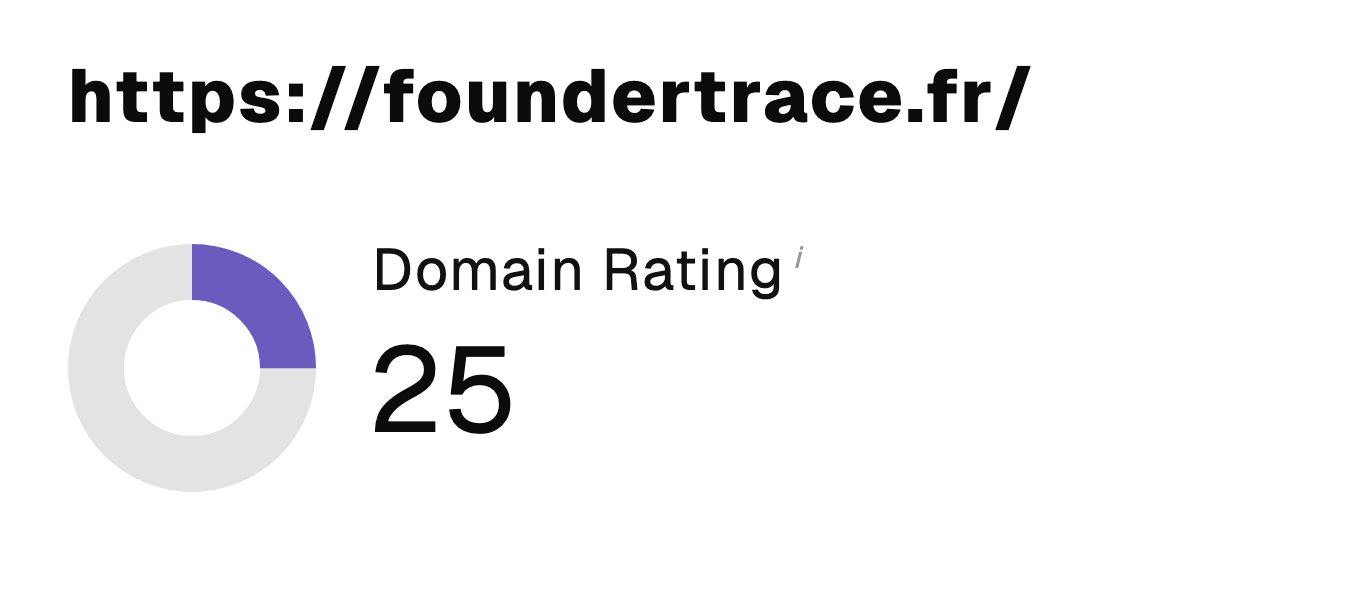 “I just let the Sorank software do its thing, and now my DR is 25 and my page is ranking higher.”
 Lucas Flandrefoundertrace.fr“I specialized in GEO thanks to Sorank. The GEO Leaderboard allows me to show my clients their position vs competitors on ChatGPT. It’s a real commercial differentiator.”
 MélanieSEO Freelance“Great service, works well for our website and helps us understand how to improve it to rank better on Google and elsewhere. Congrats, keep going, I recommend it.”
 Hugo T.E-commerce merchant