Preferences
Privacy is important to us, so you have the option of disabling certain types of storage that may not be necessary for the basic functioning of the website. Blocking categories may impact your experience on the website. More information

Privacy is important to us, so you have the option of disabling certain types of storage that may not be necessary for the basic functioning of the website. Blocking categories may impact your experience on the website. More information

Complete on-page SEO checklist. Title tags, meta descriptions, headers, content depth, internal links, and optimization best practices.





Tools


Summary
On-page SEO is optimizing the content, structure, and HTML elements of your web pages to rank higher in search results and improve click-through rates.
Want to go further? Ask
On-page SEO is the most direct lever you have in your control. Unlike backlinks (off-page) or brand mentions (also off-page), you can optimize your title tags, headers, keyword usage, and content depth right now. These elements tell search engines what your page is about and help users decide whether to click. Getting on-page SEO right is the foundation before you even worry about building backlinks.
In 2026, on-page optimization has shifted focus. Keywords still matter, but keyword stuffing kills you. Content depth matters more than keyword density. User experience signals like page speed and mobile responsiveness are now ranking factors. E-E-A-T (expertise, experience, authoritativeness, trustworthiness) requires author information and credentials. This guide covers the modern checklist for on-page SEO so you rank while building trust with readers.
The title tag is the first thing users see in search results and appears in the browser tab. Google's guidance recommends including your main keyword early in the title and keeping it under 60 characters so it displays fully in search results. A good title answers the query, includes your keyword, and makes searchers want to click.
Weak title: "Home Page". Strong title: "On-Page SEO: Complete 2026 Checklist for Ranking #1". The strong version includes the main keyword, adds specificity (2026, #1), and creates curiosity. Avoid clickbait ("Doctors HATE This One Weird SEO Trick") because high bounce rates hurt your rankings. The title should match searcher expectations and deliver what the content promises.
Meta descriptions are the 160-character snippet shown below your title in search results. They don't directly impact rankings, but they impact click-through rate (CTR), which is a ranking signal. A compelling description makes searchers click your result instead of the competitor's result below you. Google recommends unique descriptions for each page that accurately summarize the content.
Write your meta description for humans, not search engines. Include a call to action when appropriate ("Learn how to..." or "Get a free checklist..."). Mention the main benefit or takeaway. If your description is vague, searchers will click a competitor instead, even if your content is better. Test different descriptions and monitor CTR improvements in Google Search Console.
Header tags (H1, H2, H3) structure your content and signal topic importance to search engines. Use exactly one H1 per page, matching your target keyword. That H1 becomes your page title in search results. Use H2s to break the page into sections, and H3s within sections for sub-points. This hierarchy helps both humans and search engines understand your content structure.
Avoid header stuffing (putting keywords in every H2). Use headers to organize information logically. Web.dev explains that proper heading structure improves both accessibility and SEO. Readers scan headers to find information. Search engines use headers to determine topic relevance. Headers should be descriptive enough that readers can understand the page structure from headers alone.
Write comprehensive content that thoroughly answers the searcher's question. Google's guidance emphasizes that the quality of your content matters far more than keyword density. Pages that rank well tend to be longer (1,500-2,500 words) because that length allows for depth, examples, and related subtopics.
Keyword placement still matters, but naturally. Include your target keyword in your H1, first paragraph, and 1-2 times in the body. Include related keywords and semantic variations (synonyms and related phrases) throughout. Use bold text for important phrases and keywords, which helps both readers and search engines prioritize information. But don't force keywords into sentences where they don't fit.
Modern search algorithms understand topics, not just keywords. When you write about "on-page SEO," Google understands that related terms like "meta description," "title tag," "heading structure," and "keyword density" are topically related. This is called semantic understanding. Your page doesn't need to use the exact keyword repeatedly; using related terms and synonyms actually signals topical mastery.
Create content clusters: write one comprehensive pillar page that covers a broad topic deeply, then write supporting pages that dive into specific subtopics. Link them together with descriptive anchor text. This structure shows Google that you have topical authority. AI systems also prefer this approach because it demonstrates you understand the full landscape of a topic, making your content more valuable to cite.
Internal links are links from one page on your site to another page on your site. They serve two purposes: they help search engines crawl and understand your site structure, and they distribute link equity (authority) from high-authority pages to important target pages. Internal links also help readers navigate and find related content.
Link to related glossary terms when you first mention them. Link to more detailed guides from your pillar pages. Use descriptive anchor text (the clickable text of the link) that describes what the linked page is about. "Learn more about on-page SEO" is better anchor text than "click here." Google recommends using text links rather than image links when possible because anchor text provides context about the linked page.
Include relevant images, diagrams, and videos to break up text and illustrate concepts. Alt text is a short description of what the image shows. It helps search engines understand images and helps visually impaired readers access your content. Web.dev recommends writing alt text that describes the content and function of the image in 125 characters or less.
Compress images to reduce file size and improve page speed. Lazy load images (load them only when users scroll near them) to improve initial page load time. Use modern image formats like WebP when possible. Include captions below important images. Videos can increase time-on-page and reduce bounce rate, signaling to Google that your content is valuable.
Page speed is a ranking factor and a user experience factor. Core Web Vitals measure loading speed, interactivity, and visual stability. Pages that load in under 2.5 seconds and respond quickly to user input rank better and see lower bounce rates. Aim for pages that load in under 3 seconds on mobile.
Optimize by minimizing JavaScript, deferring non-critical CSS, optimizing server response time, and using a content delivery network (CDN) to serve content from servers near your users. Google's PageSpeed Insights tool analyzes your page and recommends specific improvements. Test your pages regularly to ensure they meet Core Web Vitals thresholds. Focus on fixing the largest contentful paint (the time the main content becomes visible) and cumulative layout shift (unwanted page movement) first, as these have the biggest impact on both rankings and user satisfaction.
Google's mobile-first indexing means Google primarily crawls and ranks the mobile version of your site. Your design must be responsive (look good on all screen sizes) and optimized for touch interaction. Buttons should be large enough to tap easily. Text should be readable without zooming. Navigation should be simple.
Avoid intrusive interstitials (pop-ups that block content). They hurt user experience and can lower rankings. Your mobile page should deliver the same content experience as the desktop version, just adapted for smaller screens. Test your site on actual mobile devices to ensure everything works correctly. A page that works perfectly on desktop but is slow or cramped on mobile will rank lower on mobile searches, which represent over 60% of all searches.
E-E-A-T (Experience, Expertise, Authoritativeness, Trustworthiness) is increasingly important for rankings, especially for YMYL content (Your Money, Your Life). Show your expertise by including author credentials and biography. Link to your social profiles. Display customer testimonials and reviews. Cite sources for claims. Show that your site is trustworthy through transparent privacy policies and clear contact information.
For expert content, include the author's name, credentials, and publication date. Explain why the author is qualified to write on this topic. Provide citations and references to support major claims. Link to authoritative sources that backup your assertions. This signals to Google and AI systems that your content is trustworthy and expert-level. Pages with strong E-E-A-T signals rank faster and attract more citations from AI systems, multiplying your visibility across search channels.
On-page SEO covers everything you control on the page itself: content, title, headings, images, internal links and structured data. It works together with two other layers:
| Layer | What it covers | Who controls it |
|---|---|---|
| On-page SEO | Content, title tag, meta description, headings, images, internal links | You, page by page |
| Off-page SEO | Backlinks, brand mentions, reviews, citations on other sites | Other websites, influenced by you |
| Technical SEO | Crawling, indexing, speed, mobile, HTTPS, sitemaps | You, at site level |
A page needs all three: technical SEO lets Google and AI crawlers read it, on-page SEO tells them what it answers, and off-page signals tell them whether to trust it.
Run this on-page SEO checklist on every new page:
Generate titles and descriptions with the free meta tags generator.
An on-page SEO checker analyzes a single URL against on-page best practices, so you can fix one page in minutes instead of auditing the whole site. A good checker tests the measurable points of the checklist above (title and meta description length, headings, alt text and image file weight, internal links, structured data) and also reports:
A checker gives a diagnosis. It cannot tell whether your page answers the search intent better than the pages ranking above it, so compare with the results page before rewriting. Test any URL with the free on-page SEO audit, or check pages as you browse with the free Sorank Chrome extension.
SEO for landing pages starts with one choice: target a keyword with commercial intent, such as "invoicing software for freelancers", not an informational question. A landing page that ranks usually combines the conversion elements (offer, proof, call to action) with enough text to answer the searcher's questions.
Paid-traffic landing pages with no text and no internal links rarely rank: keep those separate and noindexed if needed.
On-page SEO optimization is about structuring your content, using keywords naturally, improving page speed, and building trust signals. Every element counts: title tags for clicks, meta descriptions for CTR, headers for structure, content for depth and relevance, internal links for crawlability and authority distribution, and page speed for user experience. Start with a strong H1 and outline, then fill in comprehensive content that answers the searcher's question completely.
The best on-page SEO is invisible to readers. Keywords feel natural. The structure is logical. The page loads fast. The information is trustworthy. When users land on your page, they immediately understand they're in the right place. To audit your site's on-page performance and identify optimization opportunities, try Sorank's free SEO audit tool.
Sources

On-page SEO refers to all the optimization tactics you can control directly on your website. This includes title tags, meta descriptions, heading structure, keyword usage, content length, and internal linking. Page speed also matters, but it is handled with technical SEO, at site level. Off-page SEO involves external factors like backlinks and brand mentions. On-page factors are your responsibility and should be optimized first because they're 100% in your control.
Title tags and meta descriptions don't directly impact rankings much anymore, but they heavily impact click-through rates (CTR). A compelling title and description make searchers click your result instead of competitors. CTR is a ranking signal, so better titles and descriptions lead to more clicks, which signals relevance to Google, which improves rankings. They're also crucial for AI systems that cite sources.
There's no magic number, but comprehensive content ranks better than thin content. Most ranking pages are 1,500 to 2,500 words because that length allows for depth. However, a 500-word article can rank if it perfectly answers the query and has strong topical authority. Quality and relevance matter more than word count. Write as much as needed to thoroughly answer the searcher's question, then stop.
THEY TRIED SORANK BEFORE YOU
 “I tested Sorank on a real client site and it's insane. It does everything an agency would bill you $1500 a month for. It's going into production on that client now.”
 Guillaume Guersanguersanguillaume.com“We are an Ads agency and we wanted to get our SEO back on track once and for all. Sorank gave us a clear view of our site, helped us prioritize optimizations, and properly structure our content. The tool is easy to use, well designed for a team, and very practical for centralizing tracking without having to juggle multiple platforms. A very solid foundation to start fresh with our SEO.”
 Gaspard MadouiAds Agency
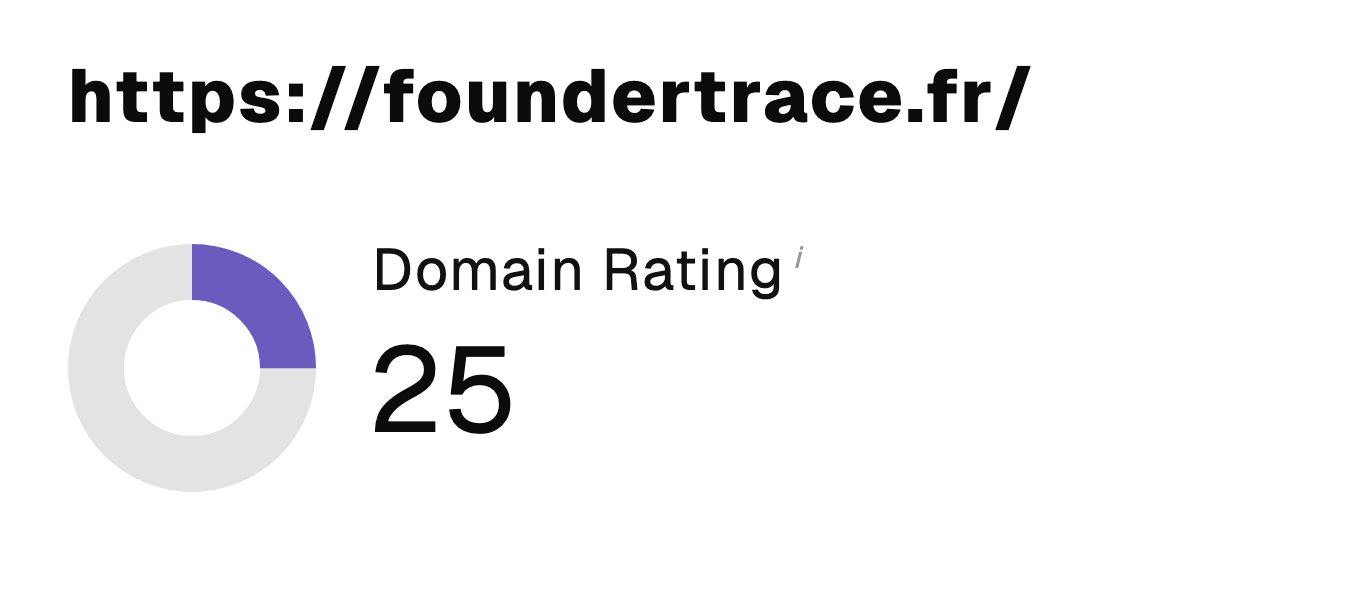 “I just let the Sorank software do its thing, and now my DR is 25 and my page is ranking higher.”
 Lucas Flandrefoundertrace.fr“I specialized in GEO thanks to Sorank. The GEO Leaderboard allows me to show my clients their position vs competitors on ChatGPT. It’s a real commercial differentiator.”
 MélanieSEO Freelance“Great service, works well for our website and helps us understand how to improve it to rank better on Google and elsewhere. Congrats, keep going, I recommend it.”
 Hugo T.E-commerce merchant