
Preferences
Privacy is important to us, so you have the option of disabling certain types of storage that may not be necessary for the basic functioning of the website. Blocking categories may impact your experience on the website. More information

Privacy is important to us, so you have the option of disabling certain types of storage that may not be necessary for the basic functioning of the website. Blocking categories may impact your experience on the website. More information
Learn what page authority is, how it works, and proven strategies to raise your score. A complete guide to boosting rankings with higher page authority.
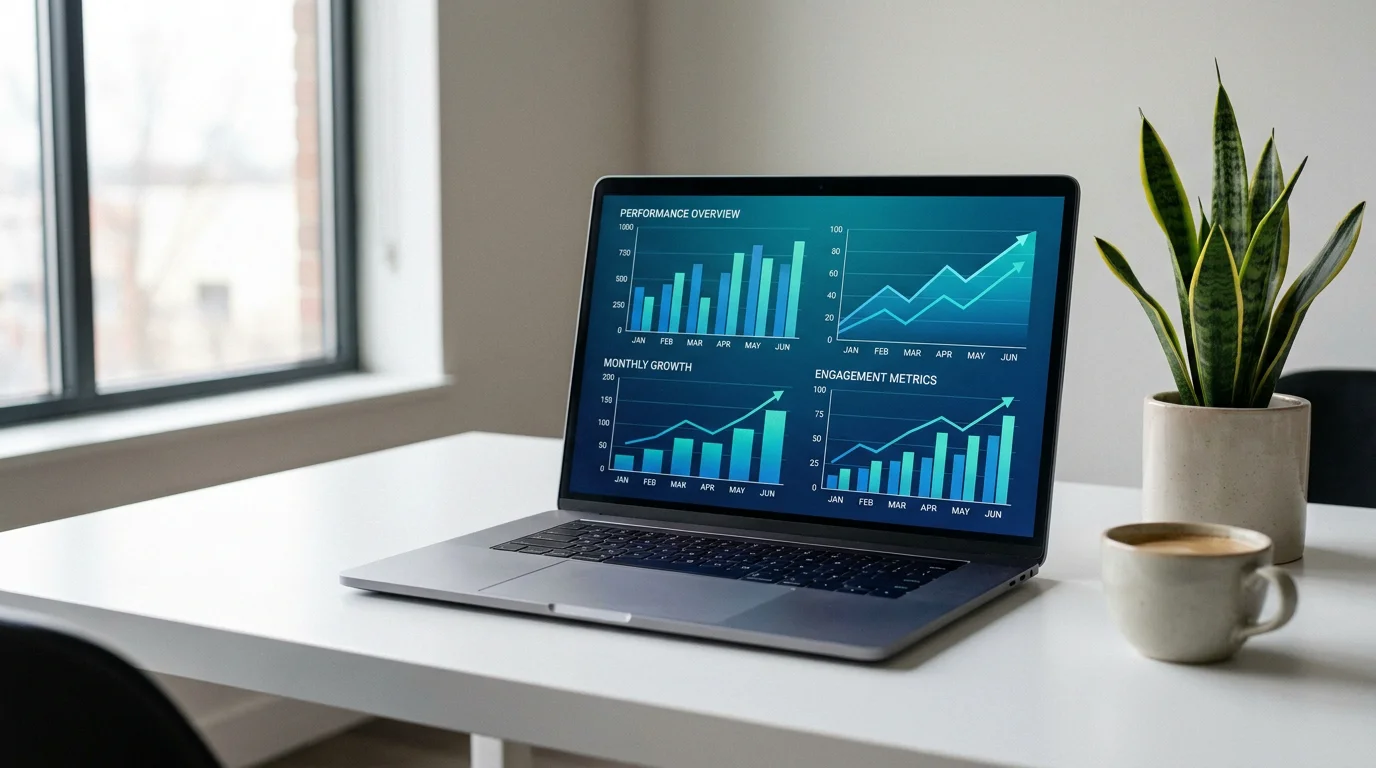

According to data compiled by Instant Press, the number of referring domains pointing to a page remains the strongest measured correlation with rankings in 2026. Yet the vast majority of web pages never earn enough links to compete: 96.55% of all pages get zero search traffic from Google. The concept of page authority exists precisely to quantify this gap, giving SEO professionals a predictive score that separates pages likely to rank from those destined for obscurity.
Whether you manage a single website or oversee campaigns for dozens of clients, understanding the authority of a page is essential for prioritizing link building, evaluating competitors, and demonstrating measurable progress. In the sections that follow, you will learn exactly how this metric works, why it matters more than ever in an era of AI search, and which actions produce the most meaningful gains.
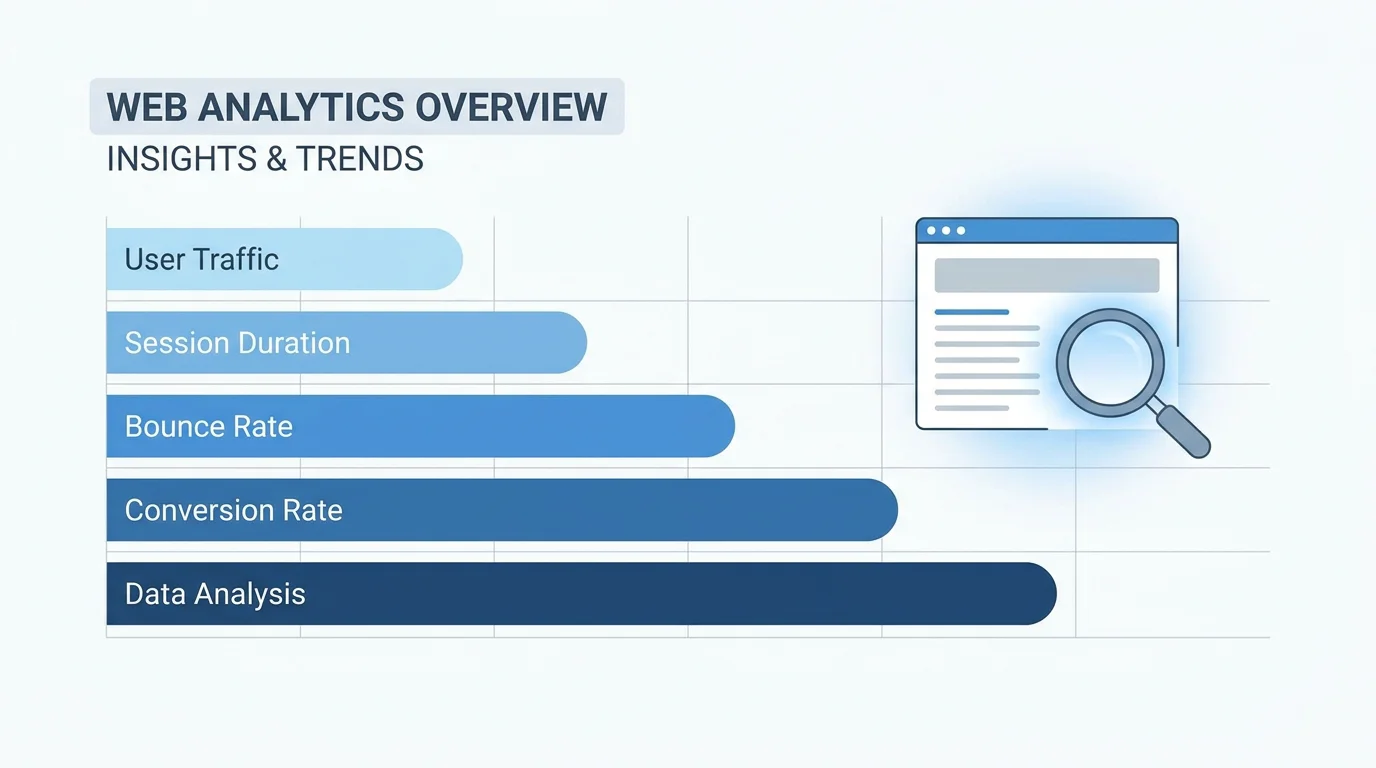
Page authority (PA) is a metric developed by Moz that predicts how well a specific web page will rank on search engine result pages. The score ranges from 1 to 100, with higher scores corresponding to a greater ability to rank. It is not a metric created or acknowledged by Google; it is a third-party approximation built on machine learning models that correlate link data with observed rankings.
The calculation relies on a 100-point logarithmic scale. In practical terms, that means moving from a score of 20 to 30 is significantly easier than climbing from 70 to 80. Every additional point at the upper end of the scale demands exponentially more link equity and domain trust.
Moz feeds more than 40 factors into the model. These include the number of linking URLs, the count of linking root domains, MozRank, MozTrust, the distribution of link anchor text, follow versus nofollow attributes, and status codes such as 301 and 302 redirects. Notably, the algorithm does not consider on-page elements like keyword usage or content optimization. It is, at its core, a link-centric metric.
Because the underlying machine learning model is regularly updated, scores may fluctuate even when a page's actual backlink profile has not changed. This is normal and expected. The metric is most valuable when used as a relative comparison tool rather than an absolute benchmark.
Search in 2026 looks fundamentally different from the landscape of just two years ago. When a Google AI Overview appears, the click-through rate for the top organic result drops by about 58%. With AI Overviews now surfacing on a large share of informational queries, every organic click has become more valuable, and pages with stronger authority are better positioned to capture those remaining clicks.
The math is straightforward. The top result has on average 3.8 times more backlinks than positions two through ten. Link authority continues to be one of the clearest differentiators between pages that appear on the first page and those that do not. While Google representatives have never confirmed Moz's PA as a ranking factor, the underlying signals it measures (links, trust, domain strength) are widely recognized components of Google's own algorithms.
For agencies and freelance SEO professionals, the authority of a page also serves as a communication tool. Showing a client that a target page moved from a PA of 22 to 35 over six months provides a tangible, easy-to-understand proof of progress, even before rankings shift visibly. Businesses weighing whether to bring in outside expertise can compare providers in our review of the 10 best seo agencies in France, several of which report page authority gains as a standard client metric.
A common source of confusion is the relationship between page-level authority and domain-level authority. Both metrics are calculated by Moz using the same machine learning methodology, but they measure different things.
| Criterion | Page Authority (PA) | Domain Authority (DA) |
|---|---|---|
| Scope | Single URL | Entire domain or subdomain |
| Primary input | Links pointing to that specific page | Links pointing to the domain as a whole |
| Best use case | Comparing competing pages for a keyword | Evaluating overall site strength |
| Scale | 1 to 100 (logarithmic) | 1 to 100 (logarithmic) |
A website can have a high domain authority while individual pages remain weak. This often happens on large sites where link equity is diluted across thousands of URLs. Conversely, a relatively modest domain can house a single page with exceptional authority if that page has earned high-quality backlinks from authoritative sources. Both metrics are useful, but they answer different questions.
Several tools allow you to retrieve a page's authority score quickly. The most direct method is Moz's own Link Explorer, which is free for basic lookups after creating a community account. The MozBar browser extension also displays PA and DA scores inline as you browse search results.
Ahrefs offers a comparable metric called URL Rating (UR), which uses a similar 0 to 100 scale but applies a different calculation methodology. Ahrefs also provides Domain Rating (DR) at the site level. Other platforms, including SEMrush and Majestic, have their own authority indicators.
When comparing scores across tools, keep in mind that each vendor uses a proprietary index and algorithm. A PA of 45 in Moz does not equal a UR of 45 in Ahrefs. The most reliable approach is to pick one tool and use it consistently so that your comparisons remain valid over time. If you are already using our SEO and GEO audit platform, you can complement it with any of these authority checkers to get a complete picture of your pages' competitive standing.
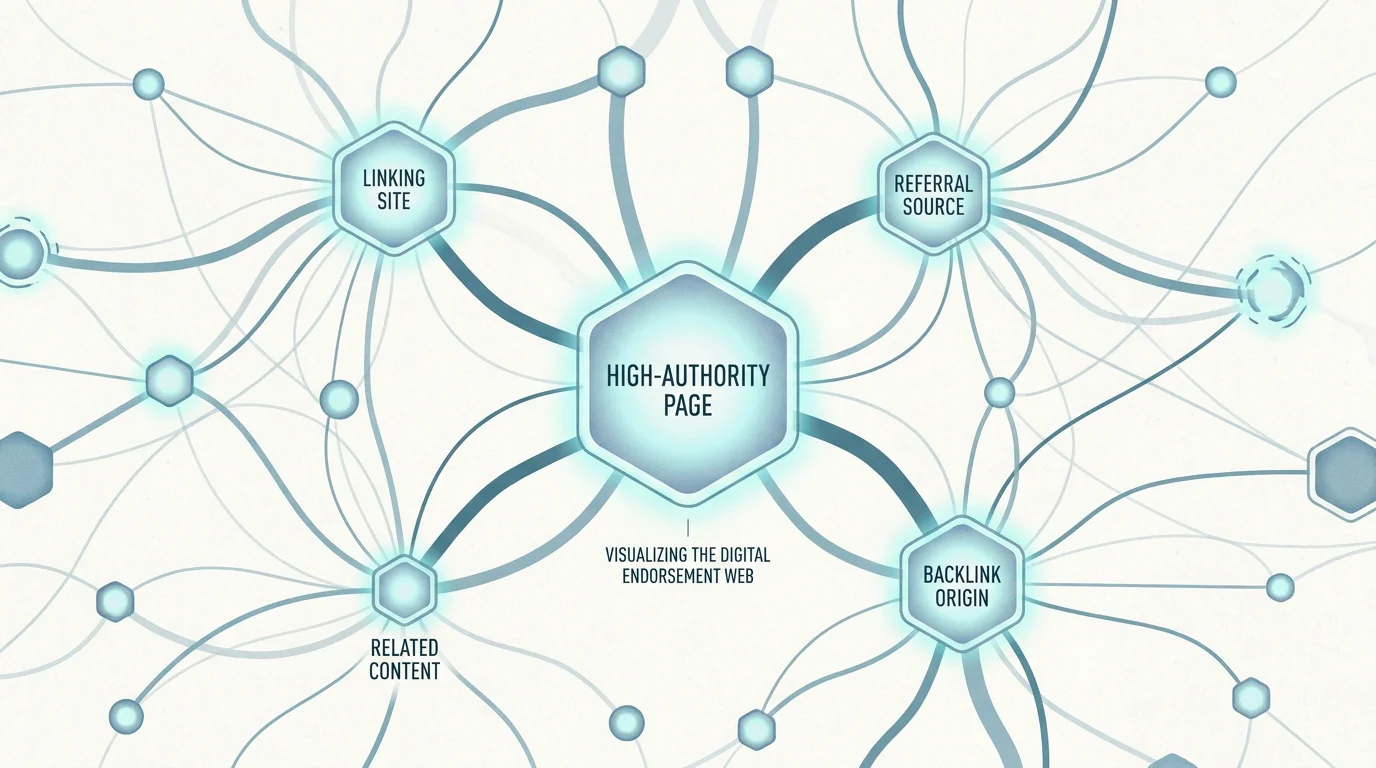
While Moz's full formula is proprietary, the publicly known factors fall into several categories. Understanding them will help you prioritize the actions that matter most.
The single most impactful lever is the number and quality of external links pointing to the page. Links from pages that themselves have high authority pass more equity than links from weak or spammy sources. According to SQ Magazine's compilation of SEO data, the top-ranking pages in Google consistently have significantly more referring domains than lower-ranking competitors. The number one pages average 3.8 times more backlinks than positions 2 through 10.
Internal links redistribute authority within your own site. Linking from a high-PA page to a new or weaker page transfers some of that equity. Strategic internal linking is one of the few factors entirely within your control, making it a high-leverage, low-cost optimization.
A natural backlink profile features links from a variety of domains with diverse anchor text distributions. An over-concentration of exact-match anchor text can signal manipulation and may even trigger algorithmic filters. Aim for a mix of branded, generic, and topically relevant anchors.
Moz's algorithm penalizes pages associated with spammy link patterns. If a significant portion of your backlinks comes from low-quality directories, link farms, or irrelevant sites, your PA will suffer. Regularly auditing your backlink profile helps you identify and disavow toxic links before they drag down your score.
Improving a page's authority is not a quick fix. It requires sustained effort across multiple fronts. The strategies below are ordered by impact and feasibility for solo practitioners, small businesses, and mid-market teams alike.
Publishing original data, proprietary surveys, or industry benchmarks creates "linkable assets" that other sites reference naturally. According to a 2026 GoodFirms survey, 43% of marketers are actively implementing GEO strategies, which means there is enormous appetite for fresh data on emerging topics. If you can be the source of a stat that others cite, your page's authority will grow organically.
Guest posts and collaborative content remain effective when the linking sites are topically relevant and editorially rigorous. The key is relevance: a backlink from a respected site in your niche carries far more weight than a link from an unrelated domain, regardless of that domain's overall authority. Our automated backlink exchange network connects you with over 2,000 real websites for contextual link placements, removing much of the manual outreach burden. Teams that prefer a fully managed outreach process instead can consult our comparison of the 10 best netlinking agencies in France, which lists specialists handling contextual placements end to end.
Identify the pages on your site with the highest existing PA, then add contextual internal links from those pages to the URLs you want to boost. This approach leverages equity you have already earned rather than relying entirely on external link acquisition.
Over time, pages that once linked to your content may remove the link or the linking page itself may go offline. Monitoring your backlink profile for lost links and reaching out to request reinstatement can recover authority that would otherwise vanish.
If you have multiple weak pages targeting similar topics, consider merging them into a single, comprehensive resource. Consolidation channels all existing backlinks to one URL, concentrating link equity and frequently resulting in a measurable PA increase.
Even experienced SEO professionals sometimes misinterpret what a page's authority score represents. Clearing up a few persistent myths will help you use the metric more effectively.
Myth: PA is a Google ranking factor. It is not. PA is a Moz invention that attempts to predict rankings. Google has its own internal signals, and while many overlap with what PA measures, the two are not equivalent.
Myth: A higher PA guarantees higher rankings. PA correlates with rankings, but correlation is not causation. On-page relevance, content quality, user intent match, and hundreds of other factors also influence where a page appears. A page with a PA of 40 can outrank a page with a PA of 60 if it better satisfies the query.
Myth: You should aim for a specific PA number. Because PA is logarithmic and relative, there is no universally "good" score. A PA of 25 might be exceptional in a low-competition niche and entirely insufficient in a highly competitive one. Always benchmark against the pages you are actually competing with.
The rise of AI-powered search engines has added a new dimension to how authority influences visibility. Research from SE Ranking published in November 2025 found that sites with over 32,000 referring domains are 3.5 times more likely to be cited by ChatGPT than those with up to 200 referring domains. In other words, the same link authority that drives Google rankings is now influencing whether AI engines reference your content.
Domains with profiles on platforms like Trustpilot, G2, Capterra, and Yelp have three times higher chances of being chosen by ChatGPT as a source compared to sites without such a presence, according to the same Position Digital analysis of AI SEO statistics. This means that traditional authority signals and newer trust signals are converging.
For website owners and marketing teams, the implication is clear: investing in the authority of your pages pays dividends across both traditional and generative search. Monitoring your visibility in AI engines alongside your PA scores gives you a more complete picture of your competitive position. Our AI mention tracking tool monitors citations across ChatGPT, Perplexity, Claude, Gemini, and Grok, so you can see exactly how your authority translates into AI visibility.
Measuring PA at a single point in time offers limited insight. The real value emerges when you track scores consistently over weeks and months. Here is a practical reporting framework:
When presenting results to stakeholders, frame PA as one signal among several. Combine it with organic traffic data, keyword rankings, and referring domain counts for a well-rounded narrative. If PA is rising while traffic remains flat, it may indicate that improvements have not yet translated into rankings, or that external factors (such as increased AI Overview coverage) are suppressing click-through rates.
In conclusion, the authority of your pages remains one of the most reliable indicators of ranking potential in both traditional and AI-driven search. The correlation between referring domains and rankings is the strongest measured backlink factor, and that relationship shows no signs of weakening. The most effective path forward is a disciplined combination of earning high-quality backlinks, optimizing internal link structures, and consistently tracking your progress against competitors. Sorank streamlines this entire workflow by combining automated backlink exchanges, technical SEO fixes, and AI mention tracking into a single platform. Start your free trial with our all-in-one SEO and GEO platform and see how much faster your pages can climb.
There is no universal benchmark. A "good" score depends entirely on your competitive landscape. Compare your page's PA against the pages currently ranking for your target keyword. If your score is comparable to or higher than theirs, you are in a strong position.
Most meaningful improvements take three to six months of consistent link building and content optimization. The logarithmic scale means early gains come faster, while pushing into higher ranges requires progressively more effort and higher-quality backlinks.
Yes. Platforms that automate backlink acquisition, technical fixes, and content creation can significantly reduce the time required. Our automated backlink exchange network at Sorank, for example, connects you with over 2,000 real sites for contextual link placements, accelerating the process that would otherwise take months of manual outreach.
THEY WIN WITH SORANK







.webp)




.webp)
.webp)







.svg)
.svg)