Summary
The real cost of a backlink is the placement fee, plus the writing, plus the outreach time spent on all the sites that said no. The calculator works it out: prospects to contact = links wanted ÷ acceptance rate; hours = prospects × hours per prospect; total = links × (placement + writing) + hours × hourly rate. For 24 links at 200 placement and 60 writing, 1.5 hours per prospect at 45 an hour and a 20% acceptance rate, you contact 120 sites, work 180 hours and pay 14,340 in total: about 598 per link, not 260.
Want to go further? Ask


A link building cost calculator is useful because the price on a quote is never the full price of a link. Every link you land hides the sites you approached without success, and that prospecting time is paid, whether by you, a freelancer or an agency. Links still matter: Google's ranking has relied on the link graph of the web since its original PageRank paper (Brin and Page, Stanford, 1998). Budgeting them honestly is what keeps a campaign alive past the second month.

How does the calculator work out the real cost per link?
Enter six figures: the links you want, the placement cost, the writing cost per piece, the hours spent per prospect (finding, qualifying, pitching and following up), your hourly rate and the share of prospects who accept. The calculator returns five results.
| Result | Formula | Example (24 links, 200 + 60, 1.5 h, 45/h, 20%) |
|---|---|---|
| Prospects to contact | Links ÷ acceptance rate | 120 |
| Hours of work | Prospects × hours per prospect | 180 |
| Cost of time | Hours × hourly rate | 8,100 |
| Total cost | Links × (placement + writing) + cost of time | 14,340 |
| Real cost per link | Total cost ÷ links | 597.50 |
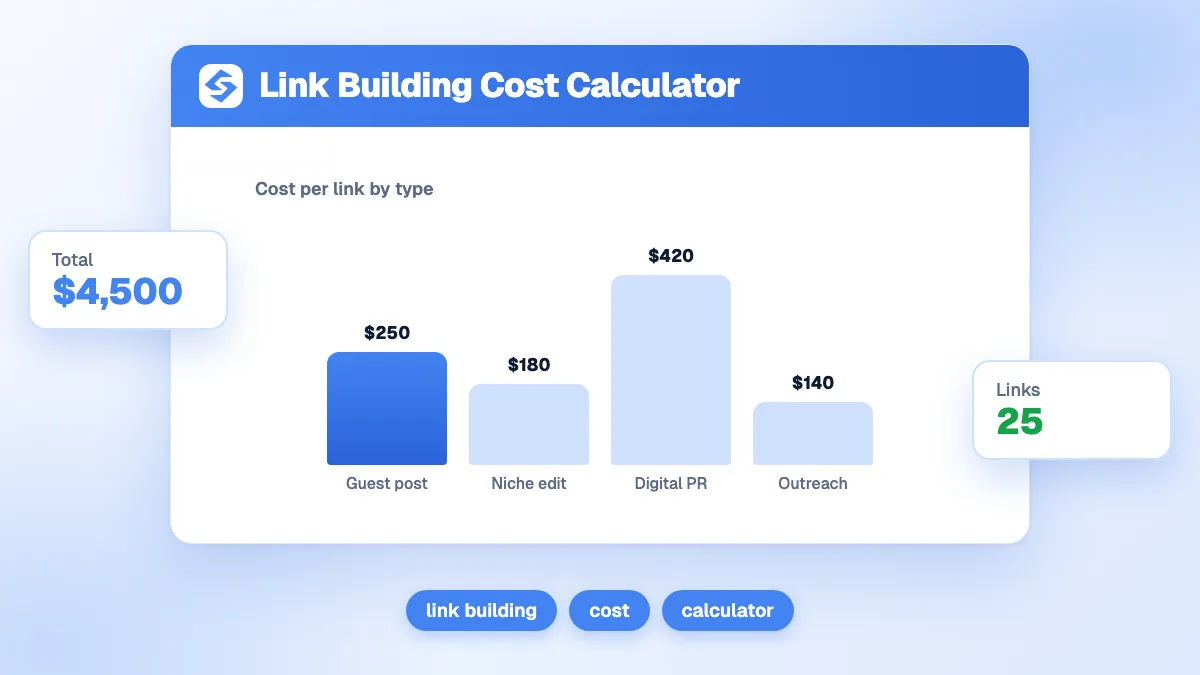
A chart splits the total between placements, writing and time. In the example, time is 56% of the bill: more than the placements and the writing together. That is the cost link platforms never display.
Why does the acceptance rate change everything?
Because every refusal still costs prospecting time. The table keeps the example above and only changes the acceptance rate.
| Acceptance rate | Prospects to contact | Hours of work | Total cost | Real cost per link |
|---|---|---|---|---|
| 5% | 480 | 720 | 38,640 | 1,610 |
| 10% | 240 | 360 | 22,440 | 935 |
| 20% | 120 | 180 | 14,340 | 598 |
| 30% | 80 | 120 | 11,640 | 485 |
| 50% | 48 | 72 | 9,480 | 395 |
| 100% (no outreach refused) | 24 | 36 | 7,860 | 328 |
Going from 10% to 20% acceptance cuts the cost per link by more than a third without touching the budget. A better-targeted list and a more specific pitch are the cheapest savings available.
Which hourly rate should you use?
Your own rate if you do the outreach yourself, the rate of your freelancer or agency otherwise, and the loaded cost of an employee if it is done in-house. For a reference point, the US Bureau of Labor Statistics reports a median pay of $35.94 per hour for public relations specialists in May 2025 (BLS Occupational Outlook Handbook). With that rate, the example falls from 598 to about 530 per link: the outreach hours remain the largest line.
- Count the follow-ups. One prospect often takes several emails before an answer.
- Count the qualification. Checking a site's traffic, topic and authority takes time even when you never contact it.
- Count the management. Tracking published links and chasing the ones that disappear is part of the job.

Are paid links allowed by Google?
Only if they do not pass ranking credit. Google's spam policies list buying or selling links for ranking purposes as link spam, including exchanging money, goods or services for links, and paid articles or guest posts with links that pass ranking credit. The same policy states that paid links for advertising are fine when they carry rel="nofollow" or rel="sponsored" (Google Search Central, spam policies).
That has a budget consequence. A placement sold as "dofollow" is a risk you pay for, and a sponsored link is a visibility purchase, not an SEO one. The links that are safe and durable are the ones a site chooses to give: editorial mentions, resources, data, tools. They cost time rather than placement fees, which is exactly what this calculator measures. Learn the patterns to avoid in our glossary entry on black hat SEO.
Which link building methods cost what?
Each method moves a different input of the calculator. Use the table to choose the figures you enter, then compare methods on the real cost per link rather than on the quoted price.
| Method | Placement cost | Writing cost | Acceptance rate | Main risk |
|---|---|---|---|---|
| Guest articles on niche sites | Often zero, sometimes a fee | A full article per link | Low to medium | Paid guest posts with followed links break Google's policies |
| Resource and tool pages | Zero | Low: a short pitch | Medium when the resource is genuinely useful | Needs an asset worth listing |
| Broken link replacement | Zero | Low, if the replacement page exists | Medium to high: you fix a problem for the site | Time spent finding dead links |
| Digital PR with original data | Zero | High: the study itself | Variable, several links per success | Results are uneven from one story to the next |
| Marketplace placements | The listed price | Often included | Close to 100% | Followed paid links, and sites that sell to anyone |
Digital PR is a good example of why the calculator matters: one study can cost more than ten placements, yet earn dozens of editorial links, which brings the real cost per link far below a marketplace price.
What does the calculator leave out?
- Lost links. Some links disappear after a few months when pages are edited or deleted. If you replace them, add the replacements to the links wanted.
- Tools. Prospecting databases and email software are a fixed monthly cost; divide them by the links you land and add the result to the placement cost.
- Value. Two links with the same cost can have very different effects. A relevant site that sends visitors is worth more than a generic one with a higher score.
How do you plan a link building budget?
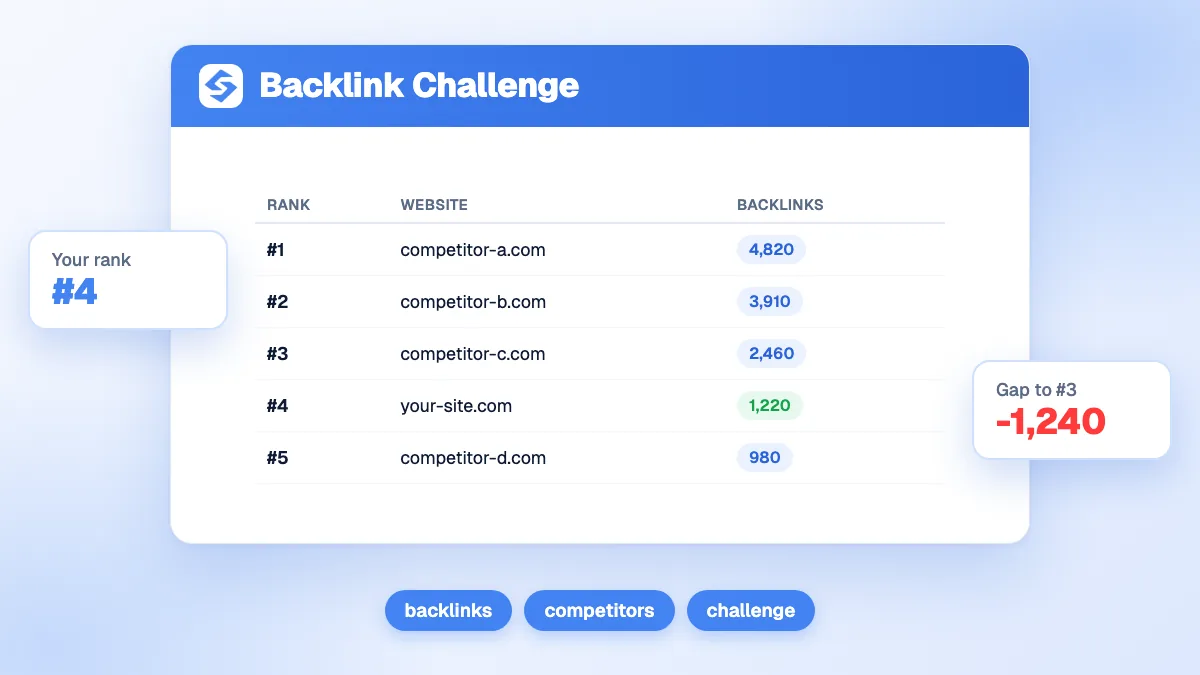
- Set the target. Compare your referring domains with those of the pages ranking above you, using the backlink checker and the domain authority checker.
- Run the calculator per quality tier. Niche editorial sites, local press and resource pages have different placement costs and acceptance rates. Add the totals.
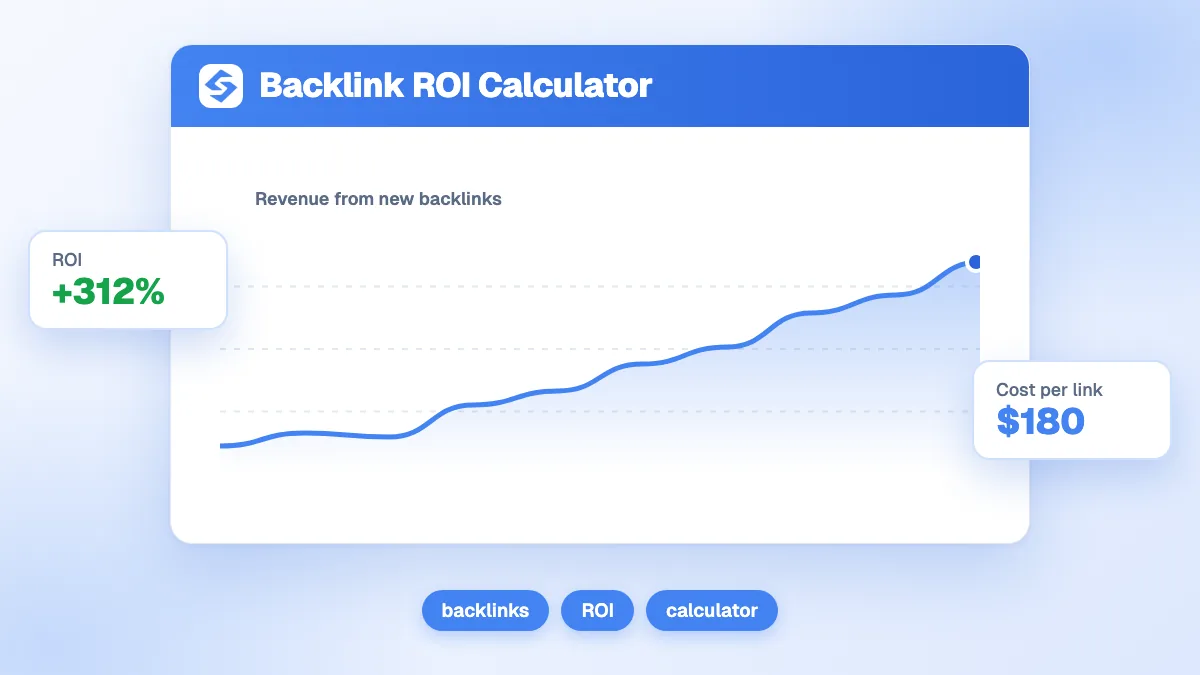
- Check the return with the backlink ROI calculator, and fit the result in your overall plan with the SEO budget calculator.
- Spread the links over months. Steady growth looks natural and lets you measure what each batch changes.
How can you lower the cost per link?
- Raise the acceptance rate with a short list of relevant sites rather than a long list of random ones.
- Offer something worth linking to: original data, a calculator or a guide that fills a gap on the target site.
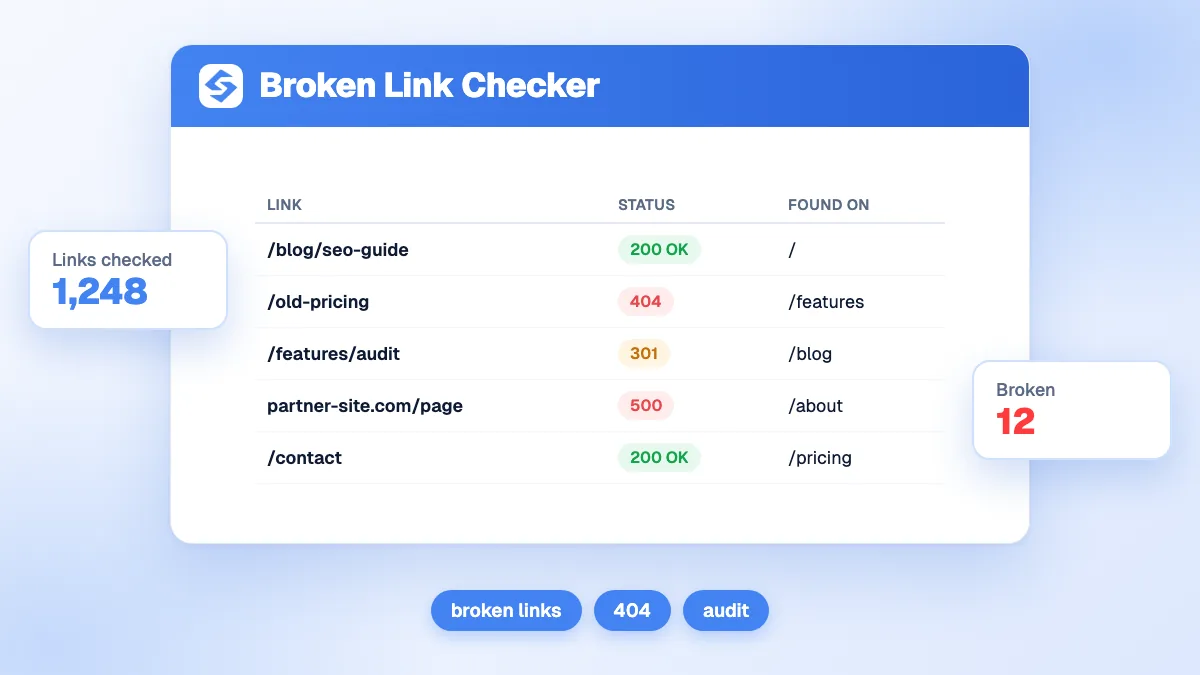
- Recover lost links first. Pages that already link to a dead URL on your site are the cheapest wins; find them with the broken link checker.
- Remove outreach altogether. In the Sorank Backlink Network, your published articles host links for other members and earn credits, which you spend to receive contextual links from sites in your niche, never from a direct competitor, with a minimum Domain Rating you set (depending on your plan). Follow the effect with the domain authority tracker.
Compare providers in our directory of link building platforms, and read the basics in the link building glossary entry.
The real cost of a link is placement plus writing plus every hour spent on the sites that said no. Run the calculator with your own acceptance rate, then see the Sorank plans to earn niche backlinks without outreach.