Preferences
Privacy is important to us, so you have the option of disabling certain types of storage that may not be necessary for the basic functioning of the website. Blocking categories may impact your experience on the website. More information

Privacy is important to us, so you have the option of disabling certain types of storage that may not be necessary for the basic functioning of the website. Blocking categories may impact your experience on the website. More information

The best AI SEO tools in 2027 by use case: autopilot writing, analytics suites, content optimisation, WordPress plugins and AI assistants, with verified prices.
Tools


In short
the best AI SEO tools in 2027 depend on the job you hand them. Sorank fits teams that want articles researched, written and published on autopilot with weekly tracking in ChatGPT, Claude and Gemini. Semrush and Ahrefs remain the reference suites for search data and backlinks, now with AI visibility modules, and SE Ranking covers the same ground at a lower entry price. Surfer, Frase and Clearscope optimise content written by humans, Yoast and Rank Math add AI inside WordPress, and ChatGPT or Claude are excellent assistants that have no search data of their own unless you connect them to a tool.
Want to go further? Ask
Transparency: Sorank is our own software. I ranked these tools by use case rather than by a single score, using the features and prices each company publishes on its own website, checked in October 2026. Sorank is placed first only for the use case it was built for, and the sections below name the places where other tools are stronger.
The search landscape that AI SEO tools must handle has changed. In a Pew Research Center study of 68,879 Google searches, 18% of searches showed an AI summary, and users clicked a traditional result in 8% of those visits against 15% when no summary appeared. A useful AI SEO tool in 2026 therefore does two things: it helps you rank in Google, and it shows whether AI assistants mention your brand at all.
An AI SEO tool is software that uses language models to automate part of search optimisation: keyword research, content briefs, writing, metadata, internal links or the measurement of brand mentions in AI answers. The category covers very different products, from a WordPress plugin that suggests a meta description to a platform that publishes complete articles on its own.
The useful question is therefore which part of the workflow the AI takes over. I sorted the tools below into five families:
I scored each tool on six criteria chosen before looking at who wins them: what the AI does, whether the tool has its own search data, whether it publishes content, whether it measures visibility in AI assistants, how much manual work remains, and the entry price. Every feature and price comes from the vendor's own pricing or product pages, checked in October 2026. When a vendor shows prices in euros only, I give them in euros rather than converting. Prices move often, so check them on the day you buy.
What the AI does. Sorank reads your site (offers, audiences, products), creates the questions your customers ask AI assistants and asks them every week to ChatGPT, Claude and Gemini, plus Perplexity and Grok on the Pro and Business plans, to measure whether your brand is mentioned and who is cited instead. It then identifies your competitors on Google and in AI answers, extracts their keywords, sorts them by priority and fills an editorial calendar. Each article is written from the elements of the Google top 10, your site content, internal links to your product pages, external sources, images, YouTube videos, an FAQ, meta tags and JSON-LD schema, with an anti-cannibalisation check and fact verification. Articles are published automatically on more than 10 CMS, including Shopify, WordPress, Webflow and Wix.
Data. Keywords extracted from your competitors on Google and in AI answers, and weekly prompt results from the AI assistants. The Sorank MCP server also connects Claude, ChatGPT or Cursor to your Search Console, AI traffic and AI visibility data.
Pricing. Essential $99 per month, or $49 per month billed annually, for 20 articles and 25 tracked AI prompts per month. Pro is $249 or $129 annually (60 articles, 50 prompts), Business $499 or $249 annually (120 articles, 150 prompts). 3-day free trial and a 90-day money-back guarantee.
Where it falls short. Sorank has no technical site audit inside the application and no historical backlink index of the size Ahrefs or Majestic maintain. On-page checks run in the free Sorank SEO Chrome extension, which shows recommendations on any page.
Verdict. I would choose it when the bottleneck is producing and publishing content every week, and measuring the effect in AI answers, without a writing team.
What the AI does. Semrush has folded AI visibility into its main offer: its pricing page lists AI search tracking, AI sentiment monitoring, AI visibility reports for any domain and custom prompt monitoring in the SEO plan. Its knowledge base describes an AI Visibility Toolkit that benchmarks brand mentions, compares sentiment with competitors, suggests prompts and tracks daily visibility in ChatGPT and Google AI Mode.
Data. One of the largest keyword, backlink and competitor databases on the market, plus a site audit.
Pricing. The SEO plan is listed at $139 per month ($117.33 per month billed annually). The standalone AI Visibility Toolkit is listed at $99 per month, with no free trial.
Verdict. I would choose it for an in-house team that needs research, audit and AI visibility in one interface. Writing and publishing remain manual.
What the AI does. Ahrefs Brand Radar tracks a brand's visibility in AI answers, YouTube and Reddit. It works with custom prompts refreshed daily, weekly or monthly, and with an AI Visibility Index built on more than 470 million monthly prompts across AI Overviews, AI Mode, ChatGPT, Gemini, Perplexity and Copilot, with Claude also available.
Data. Ahrefs maintains one of the reference backlink indexes, which is the dimension where it beats every other tool in this list.
Pricing. Starter $29 per month, Lite $129, Standard $249, Advanced $449. Custom prompts in Brand Radar are included from Lite (5 prompts), and the full Brand Radar AI index starts at $199 per month.
Verdict. I would choose it when backlinks and competitive link analysis drive your strategy, and you want to see which brands AI assistants cite across a very large prompt sample.
What the AI does. SE Ranking sells an AI Search add-on that tracks AI Overviews, AI Mode, Perplexity and ChatGPT, and includes AI-written articles in its plans (25 per month on Core, 50 on Growth).
Data. Rank tracking, keyword research, backlinks and site audit in one suite.
Pricing. Its European pricing page lists Core at €109 per month (€87.20 billed annually) and the AI Search add-on from €79 per month (€63.20 annually). Prices are localised by region.
Verdict. I would choose it for an agency or a small team that wants a full suite and AI tracking for less than the two market leaders.
What the AI does. Surfer combines a content editor that scores a draft against the pages ranking for the keyword, an AI assistant called Surfy, an AI detector and humaniser, and AI visibility tracking from the Standard plan (25 prompts refreshed weekly in ChatGPT, more prompts refreshed daily on higher plans).
Publishing. WordPress and Google Docs integrations from Standard.
Pricing. Shown in euros on its European pricing page: Discovery €49 per month, Standard €99, Pro €182, all billed yearly.
Verdict. I would choose it when people write the articles and want a live score that tells them what is missing.
What the AI does. Frase includes AI research, drafting and image generation on every plan, an agent that can draft and publish, and AI visibility monitoring (ChatGPT and Google AI on Starter, Perplexity from Professional, Claude and Gemini on Scale). It is also accessible through MCP, a CLI and an API.
Publishing. WordPress, Webflow, Sanity, Wix and its own hosted CMS.
Pricing. Starter $49 per month or $39 billed annually (10 articles), Professional $129 or $103 (40 articles), Scale $299 or $239 (100 articles).
Verdict. I would choose it for a solo marketer who wants research and writing help with publishing in the same tool, at the lowest entry price of the content family.
What the AI does. Clearscope grades content for topic coverage, generates drafts (20 per month on Essentials), runs topic explorations and tracks query visibility in ChatGPT and Gemini on every plan.
Pricing. Essentials $129 per month, Business $399 per month, Enterprise on quote.
Verdict. I would choose it for an editorial team that publishes fewer, longer articles and wants a clean grading workflow.
What the AI does. Yoast SEO Premium drafts SEO titles and meta descriptions page by page or in bulk, writes social sharing titles, suggests post ideas with a starter draft, and turns a long post into a meta description, with a review step before anything is saved.
Pricing. Free plugin; Premium $118.80 per year excluding VAT.
Verdict. I would choose it on a WordPress site that already has content and needs clean metadata at scale.
What the AI does. Rank Math is a WordPress SEO plugin with a separate Content AI subscription for writing optimised content, building internal links and tracking AI visibility; each paid plan includes a 15-day trial of it.
Pricing. Free plugin; PRO from €7.99 per month billed annually, Business €24.99. Content AI is billed separately after the trial.
Verdict. I would choose it for a WordPress site on a tight budget that wants rank tracking and AI writing help in the admin.
What the AI does. Both write, summarise, restructure content, draft schema and analyse exports you paste in. Both offer a free plan; ChatGPT Plus costs $20 per month and Claude Pro $20 per month ($17 billed annually).
Limits. Neither has its own keyword volume data, backlink index or rank tracking, neither publishes to your CMS by itself, and asking one of them whether your brand appears in its answers gives a single, unrepeatable response, not a measurement. The gap closes through connectors: Claude lists connectors on every plan, and the Model Context Protocol lets an assistant query a tool's data and act on it.
Verdict. I would use them as a writing and analysis layer on top of a tool that holds the data.
Every cell reflects what each vendor publishes on its own site in October 2026.
| Tool | What the AI does | Own data | Publishing | AI visibility tracking | Entry price |
|---|---|---|---|---|---|
| Sorank | Topics, writing, linking, publishing | Competitor keywords, weekly AI prompts | Yes, 10+ CMS | ChatGPT, Claude, Gemini (+ Perplexity, Grok on Pro) | $99/month, $49 annually |
| Semrush | AI visibility, sentiment, prompt tracking | Keywords, backlinks, audit | No | ChatGPT, Google AI Mode | $139/month (SEO plan) |
| Ahrefs | Brand Radar AI mentions | Reference backlink index, keywords | No | AI Overviews, AI Mode, ChatGPT, Gemini, Perplexity, Copilot, Claude | $29/month (Starter), prompts from Lite $129 |
| SE Ranking | AI articles, AI Search add-on | Keywords, backlinks, audit | Not published | AI Overviews, AI Mode, ChatGPT, Perplexity | €109/month (Core) |
| Surfer | Content score, Surfy assistant, humaniser | SERP analysis | WordPress, Google Docs | ChatGPT from Standard | €49/month billed yearly |
| Frase | Research, drafting, agent | SERP analysis | WordPress, Webflow, Wix, Sanity | ChatGPT, Google AI (more on higher plans) | $49/month, $39 annually |
| Clearscope | Content grading, drafts | SERP analysis | Not published | ChatGPT, Gemini | $129/month |
| Yoast SEO | Titles, meta descriptions, post ideas | No | Inside WordPress | No | Free, Premium $118.80/year |
| Rank Math | Content AI (separate plan) | Rank tracking | Inside WordPress | Through Content AI | Free, PRO €7.99/month |
| ChatGPT, Claude | Writing, analysis | No | Only through connectors | No measurement | Free, $20/month |
Read by column, the table explains the ranking. Semrush and Ahrefs win on proprietary data, and nobody else in this list matches their backlink depth. Sorank and Frase are the two tools that go all the way to publishing while also tracking visibility in AI assistants. The WordPress plugins are the cheapest way to add AI to an existing site.
A language model generates text; it does not hold search data. Three things still require a dedicated tool, whatever assistant you use.
Quality is the fourth limit. Google's guidance on AI content is explicit: "Appropriate use of AI or automation is not against our guidelines," as long as the content is helpful, according to Google Search Central. Mass-producing pages that add nothing falls under the scaled content abuse described in Google's spam policies. A good AI SEO tool grounds each article in real search data, sources and your own site, which is the difference between automation and filler.
Getting cited by AI assistants rests on the same foundation as SEO, indexed and well-structured pages, plus content that is easy to quote. Google states that its AI features draw on the regular search index, with no special optimisation required beyond existing best practices, in its documentation on AI features. The GEO study by Princeton researchers (KDD 2024) measured visibility gains of up to 40% in generative answers when content adds sources, statistics and quotations.
In practice, the tools in this ranking split the work. Semrush, Ahrefs, SE Ranking, Surfer, Frase and Clearscope all measure visibility in at least one AI assistant. Sorank measures it in ChatGPT, Claude and Gemini every week and then publishes the articles meant to close the gaps it finds, which is the logic of a GEO software. For a broader view of the category, see our comparison of SEO software, and for the writing step alone, our ranking of SEO writing tools.
Many teams combine two: a data suite for research and backlinks, and a production tool for the articles. SEO results generally take two to four months to show, so judge any tool over a full quarter.
The best AI SEO tool is the one that removes your bottleneck. If your bottleneck is data, choose Semrush or Ahrefs; if it is producing and publishing content that ranks in Google and gets mentioned by AI assistants, choose a tool that does the writing, the publishing and the tracking for you. That is what Sorank was built for: compare the plans and start the 3-day free trial on the Sorank pricing page.

It depends on the task. Semrush and Ahrefs are the strongest for search data and backlinks, Surfer and Clearscope for optimising content written by people, and Sorank for writing and publishing articles on autopilot while tracking brand mentions in ChatGPT, Claude and Gemini. Most teams pair a data suite with a content production tool.
No for data, yes for part of the writing. ChatGPT has no keyword volume database, no backlink index and no rank tracking of its own, and a single answer does not measure your visibility. It becomes much more useful when connected to an SEO tool through a connector or an MCP server, which gives it real data to work from.
Google does not penalise content because AI wrote it. Its guidance states that appropriate use of AI or automation is not against its guidelines, provided the content is helpful to readers. What its spam policies target is scaled content abuse: many pages produced mainly to manipulate rankings without adding value.
 Backlink Challenge
 AI Meta Description GeneratorAI Blog Title Generator
 Google Indexability CheckerAI Blog Outline GeneratorUTM Link Builder
 Keyword Clustering ToolCanonical Tag Checker
 XML Sitemap GeneratorBroken Link CheckerAI SEO Title GeneratorHeadline AnalyzerSERP Preview ToolRedirect Checker
 Hreflang Tag GeneratorHeading Structure AnalyzerHTTP Headers CheckerFavicon Extractor
 SERP CTR Calculator
 SEO vs Paid Search Savings Calculator
 SEO Share of Voice Calculator
 SEO ROI Calculator
 SEO Traffic and Revenue Forecast Calculator
 SEO Budget Calculator
 SEO Break-Even Calculator
 SaaS SEO ROI Calculator
 ROAS Calculator
 Reading Time Calculator
 Ranking Gain Simulator
 Organic Traffic Value Calculator
 Organic Traffic Estimator
 LTV to CAC Ratio Calculator
 Local SEO ROI Calculator
 Link Building Cost Calculator
 Keyword Value Calculator
 Keyword Opportunity Score Calculator
 Keyword Density Calculator
 GEO ROI Calculator
 GEO Content Investment Calculator
 Ecommerce SEO ROI Calculator
 Customer Lifetime Value Calculator
 Customer Acquisition Cost Calculator
 CTR Calculator
 Cost Per Article Calculator
 Conversion Rate Calculator
 Content Marketing ROI Calculator
 ChatGPT Referral Traffic Estimator
 Bounce Rate Calculator
 Backlink ROI Calculator
 AI Visibility Score Calculator
 AI Traffic Value Calculator
 AI Share of Voice Calculator
 Cost of AI Invisibility Calculator
 AI Citation Rate Calculatorllms.txt ValidatorAI Overview CheckerRobots.txt Checker
 AI SEO AuditLLM Readability CheckerSearchGPT Readiness Checker
 Structured Data LLM AuditWebsite Crawlability AI AuditWhy ChatGPT Is Not Recommending My Website
 Gemini Ranking ToolPerplexity Ranking CheckerLLM Citation CheckerAnswer Engine Optimization AuditGEO AuditAI Search Visibility TestChatGPT Visibility Checkerllms.txt Generator
 URL ExtractorWebpage to MarkdownSitemap CheckerSERP Volatility SensorPage Size Checker
 Word Counter
 Slug GeneratorSchema GeneratorRobots Generator
 OG PreviewMeta Tags Generator
 Image CompressorFavicon Generator
 On-Page SEO Audit
 Backlink Analysis Tool
 Keyword Research Tool
 Domain Authority Checker
THEY TRIED SORANK BEFORE YOU
 “I tested Sorank on a real client site and it's insane. It does everything an agency would bill you $1500 a month for. It's going into production on that client now.”
 Guillaume Guersanguersanguillaume.com“We are an Ads agency and we wanted to get our SEO back on track once and for all. Sorank gave us a clear view of our site, helped us prioritize optimizations, and properly structure our content. The tool is easy to use, well designed for a team, and very practical for centralizing tracking without having to juggle multiple platforms. A very solid foundation to start fresh with our SEO.”
 Gaspard MadouiAds Agency
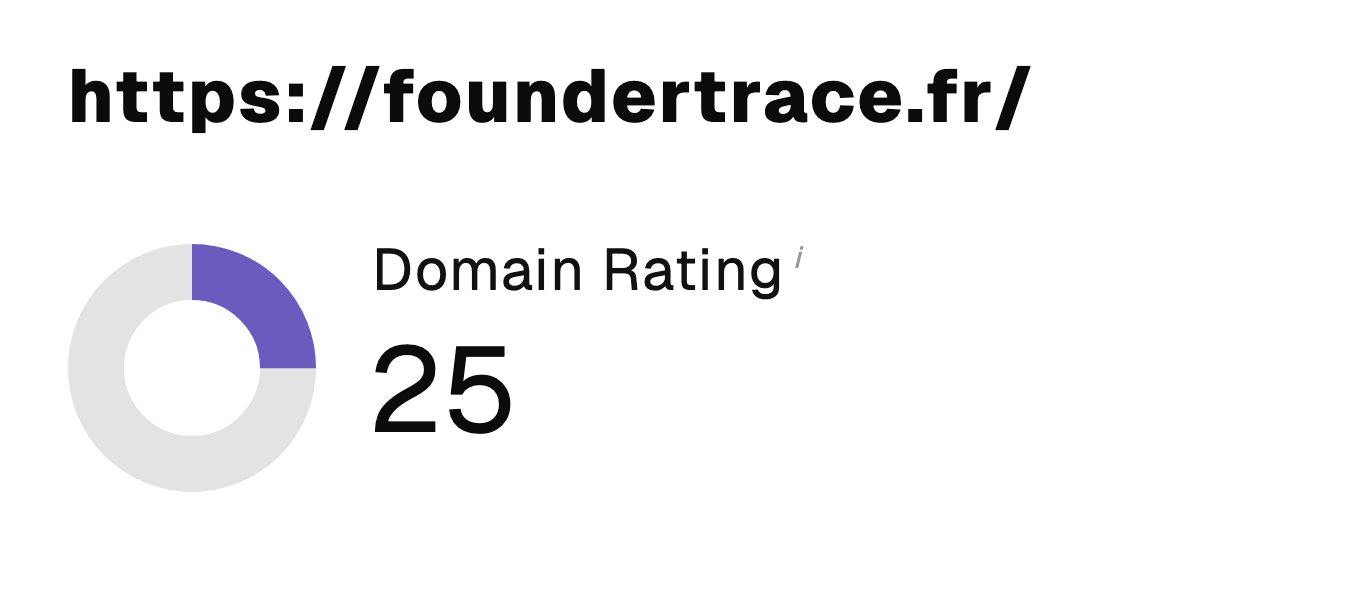 “I just let the Sorank software do its thing, and now my DR is 25 and my page is ranking higher.”
 Lucas Flandrefoundertrace.fr“I specialized in GEO thanks to Sorank. The GEO Leaderboard allows me to show my clients their position vs competitors on ChatGPT. It’s a real commercial differentiator.”
 MélanieSEO Freelance“Great service, works well for our website and helps us understand how to improve it to rank better on Google and elsewhere. Congrats, keep going, I recommend it.”
 Hugo T.E-commerce merchant