Preferences
Privacy is important to us, so you have the option of disabling certain types of storage that may not be necessary for the basic functioning of the website. Blocking categories may impact your experience on the website. More information
Privacy is important to us, so you have the option of disabling certain types of storage that may not be necessary for the basic functioning of the website. Blocking categories may impact your experience on the website. More information

Our ranking of the 10 best PR agencies in France in 2026, built on public data only, with the market figures, the method and the limits stated.
In short
Agence Profile is the strongest all-round choice among the best PR agencies in France, because it treats media relations, public relations and digital influence as one practice rather than three separate suppliers. JIN is the better fit if coverage decisions need to be argued from measurement rather than instinct, Hello la Com if your brand sits in travel, hospitality or gastronomy, and Coriolink if the subject is sensitive enough that a misstep costs more than the coverage is worth. The deciding criterion is whether the agency can name a sector specialisation you can actually verify, because access to journalists in this trade does not transfer between industries.
Want to go further? Ask
Quick quiz
Agency, freelancer or in-house: who should run this for you?
Our advice for you
Agence Profile is the right solution for you
Number 1 in this ranking, the best match for your answers.
Our advice for you
JIN is the right solution for you
Number 2 in this ranking, the best match for your answers.
Our advice for you
KINGCOM is the right solution for you
Number 3 in this ranking, the best match for your answers.
Choosing among the best PR agencies in France means choosing a discipline that has quietly stopped being about relationships and a well timed press release alone. The Ministry of Culture's Chiffres clés 2025, published 16 June 2026, put written press at 8% of the value added generated by the cultural branches in 2023, down from 18% in 2000, a channel under structural pressure that still received 175.2 million euros in direct state aid in 2024. A shrinking share of value added is not the same as a shrinking audience, and that gap is exactly why press relations still matters.
Written press has lost more than half its share of cultural value added in 25 years, yet the audience it reaches has not collapsed the way that figure suggests. The ACPM's 36th Observatoire de la presse et des médias, published 28 April 2026, measured that 94% of French people aged 15 and over consult at least one media brand every month, across 2.6 billion copies distributed and 86 billion visits to media brands' digital platforms over the year.
Two consequences follow for a buyer. The first is that a placement still reaches an audience of that size, which is why press relations remains worth budgeting even as advertising spend migrates elsewhere. The second is that trust in that audience is not uniform: the 39th La Croix-Verian barometer, surveying 1500 people from 24 to 30 November 2025, found that regional press is trusted by 63% of French people and national press by 58%, both ahead of the 61% who say they distrust media in general. Placement in the right outlet still means something specific to the person reading it.
Display advertising elsewhere in the market has kept growing regardless, reaching 1.25 billion euros in the first half of 2026, 19% of the digital advertising market, up 10% year on year, according to the 36th Observatoire de l'e-Pub, published in July 2026 by SRI, UDECAM and Oliver Wyman. Earned coverage is the part of that attention you do not rent: unlike a display buy, an article does not stop existing when the budget stops. Press relations is one channel among many worth weighing against the rest of the budget, and our list of 50 best channels for customer acquisition in 2026 covers how it compares.
Four fears come up again and again in this trade, and a good agency answers all four before you ask.
1. Buying a contact list instead of a specialisation. Access to a named journalist in your sector is worth more than a database of five hundred generic addresses. Ask which specific outlets and reporters the agency has placed a client with in the last quarter.
2. Paying for coverage nobody in your buying audience reads. A large outlet with no relevance to your category produces a good clipping and no business result. Agree in advance which outlets actually move your buyers.
3. A campaign that leaves nothing behind once the news cycle moves on. If the only deliverable is a spike in mentions during launch week, ask what remains once attention moves on and whether that residue is tracked at all.
4. No plan for the day something goes wrong. Crisis communication is a named, budgeted capability, or it does not exist. Ask before you need it, not during.
Four criteria, in this order, applied only to what each agency publishes about itself. Every homepage in this list was reviewed in August 2026, and this page is scheduled for review every 90 days because agency positioning and ownership change fast in this market.
1. Named sector or discipline specialisation. Access and credibility in press relations are specific, not general, so an agency naming its sector is describing a real capability rather than a slogan.
2. Measurement named as a practice. Agencies that describe how they analyse coverage, rather than only producing it, are committing to something a client can actually check.
3. Range beyond press alone. Influence, social, public affairs and crisis work now sit inside most real briefs, so we recorded whether an agency covers them rather than treating press as an isolated line.
4. Whether the site is alive and clear. Several agencies in this sector publish sites too sparse to read an offer from at all, which for a communication agency is its own kind of answer.
What we deliberately did not do: we did not repeat the client logos displayed on these homepages. In this trade a logo wall proves a relationship existed, not that it produced a result, and none of it can be verified from outside.
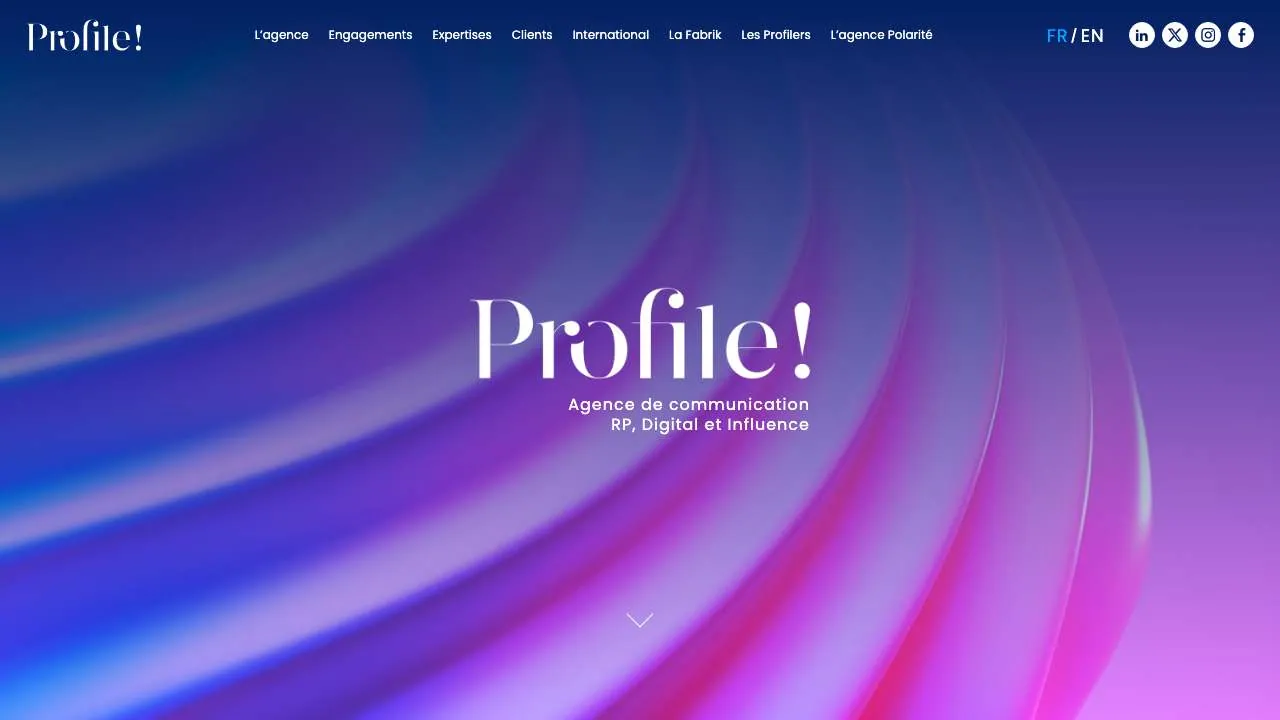
 Agence Profile
 describes itself as an influence agency covering media relations, press relations, public relations and digital communication for brands and companies. Treating those four as one practice rather than four suppliers is the structural argument for ranking it first: the journalist, the creator and the search result now tell the same story about a brand, and splitting that story across separate agencies is how the message drifts.
Best for: companies that need press, influence and digital communication saying the same thing at the same time. The breadth that makes it strong on a coordinated launch is also why a narrow press-only brief may run cheaper with a specialist instead.
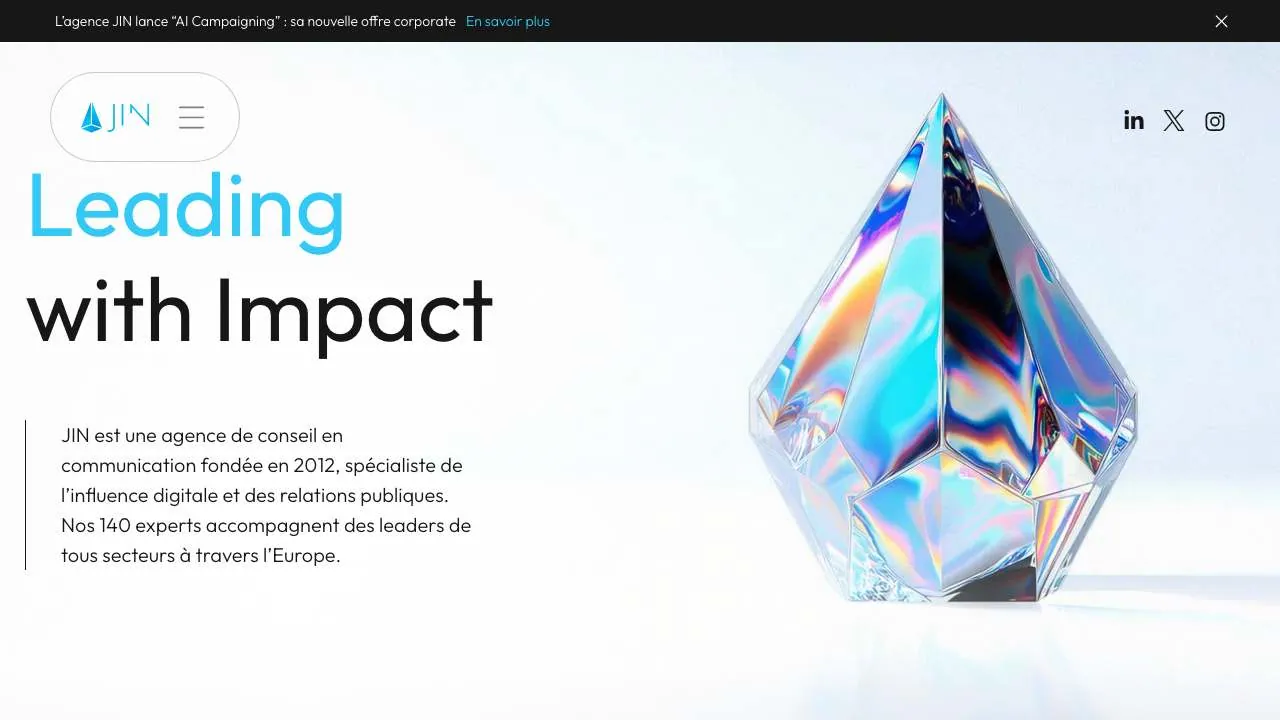
 JIN
JIN is a Paris based communication consultancy specialising in digital influence and public relations, describing its method as driven by data and artificial intelligence, with a stated European presence.
Best for: organisations that want communication decisions argued from evidence rather than instinct. Naming data as a method is a real differentiator here, though it is worth asking exactly which data the agency tracks before assuming it means what you expect.
 KINGCOM
 covers influence, public relations, press relations, social media, brand content, events and executive positioning under one offer, and has launched a lifestyle brand of its own alongside its client work.
Best for: consumer brands whose visibility depends on personalities as much as products. Executive positioning is the line worth asking about specifically: for many companies the fastest route into coverage is making the founder worth interviewing, not the product itself.
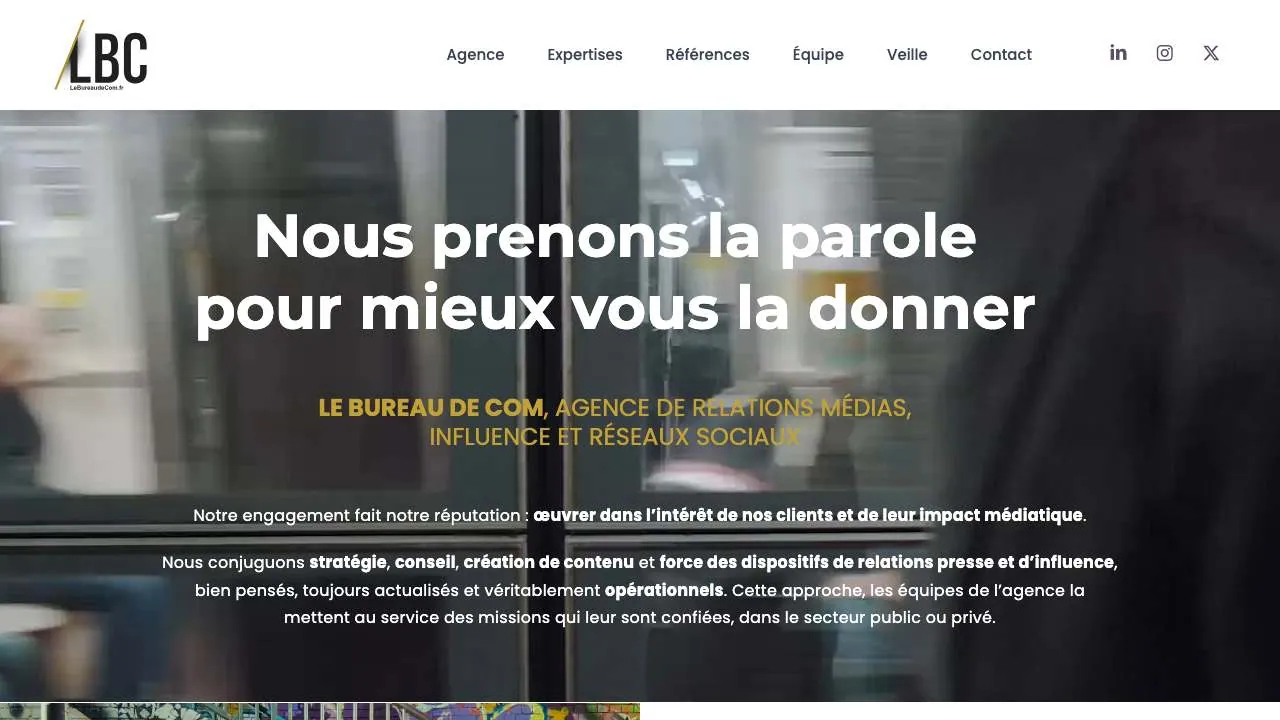
 Le Bureau de Com
 is an agency specialised in media relations, influence and social networks, describing bespoke strategies built to increase a client's visibility.
Best for: companies that want a visibility plan rather than a manifesto. The positioning is plain rather than abstract, which in a trade fond of grand statements is worth noticing, though plain is not the same as proven, so ask for the actual plan before signing.
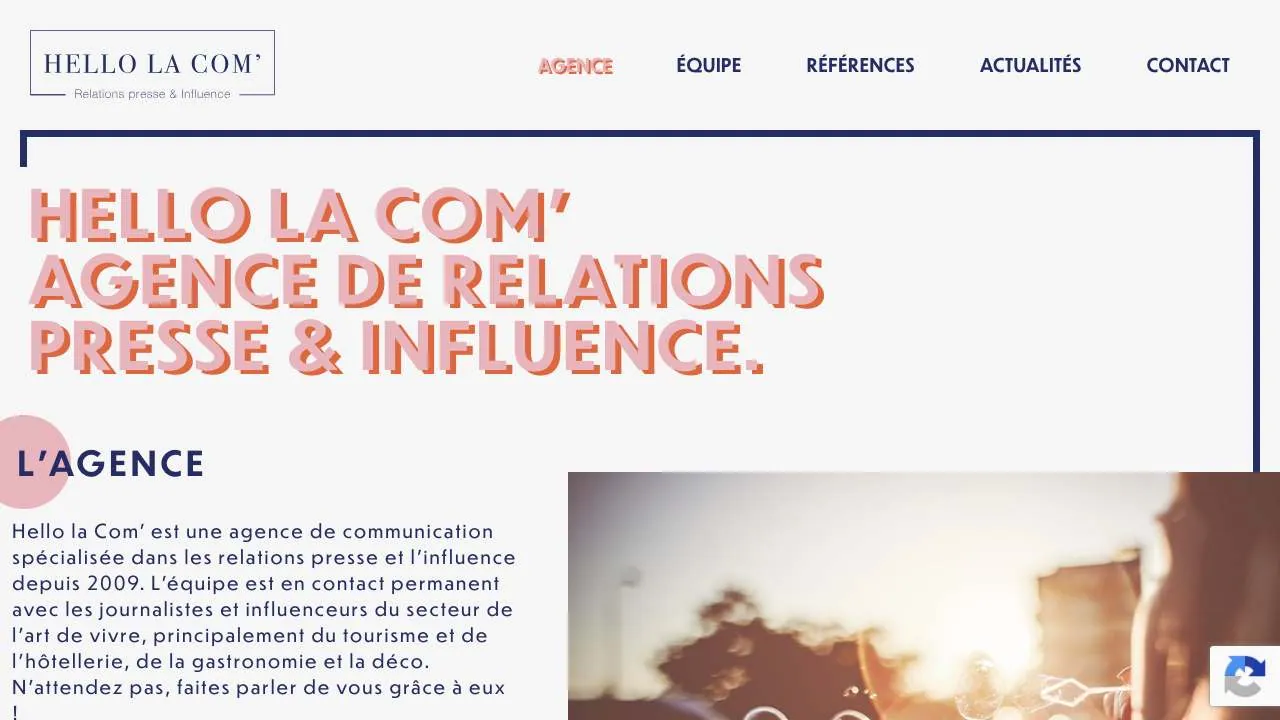
 Hello la Com
 has worked since 2009 as a press relations and influence agency dedicated to tourism, hospitality and gastronomy.
Best for: hotels, restaurants, destinations and lifestyle brands. Sector specialisation is worth more here than almost anywhere else, because it rests on knowing which journalist covers what, and that knowledge does not transfer between industries. It also means the agency is a poor fit outside its sector.
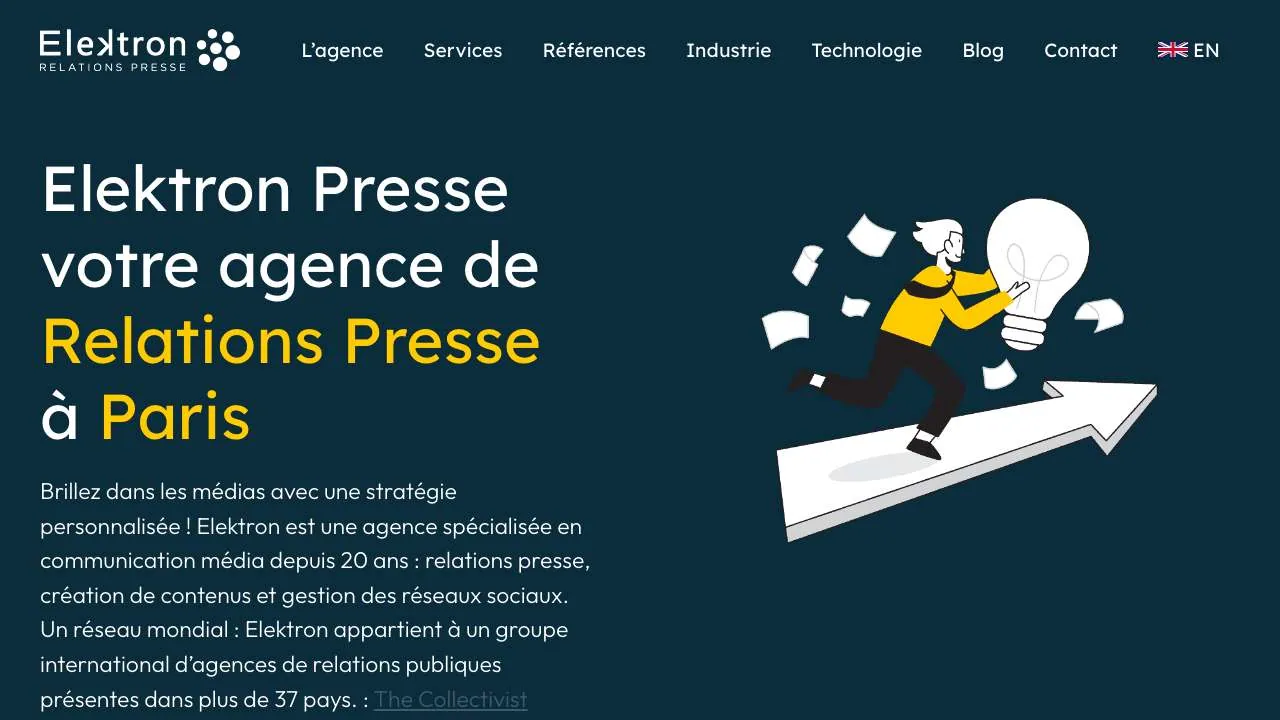
 Elektron Presse
 is a media communication agency founded in 2005, with more than 20 years of experience bringing press relations, content creation and social media management together. It belongs to an international group of public relations agencies present in more than 37 countries, and works with partners in video, social media, copywriting and influence.
Best for: companies that want press relations, content and social media handled by a single agency, including when the message has to travel beyond France. The agency starts from a view it states openly: journalists have become influencers, and it regularly publishes influencer content on LinkedIn. For an international campaign, ask which agencies in the group would work on your markets and who coordinates them, because a network present in more than 37 countries does not yet tell you who will work on your account.

 Angie
Angie describes itself as a collection of talents covering corporate communication, influence, engagement and B2B communication, with published case studies.
Best for: corporate and B2B organisations with employees, investors and institutions to satisfy alongside customers. Corporate communication tolerates less enthusiasm than consumer press relations, and an agency built for that register can feel restrained for a consumer launch that needs excitement instead.
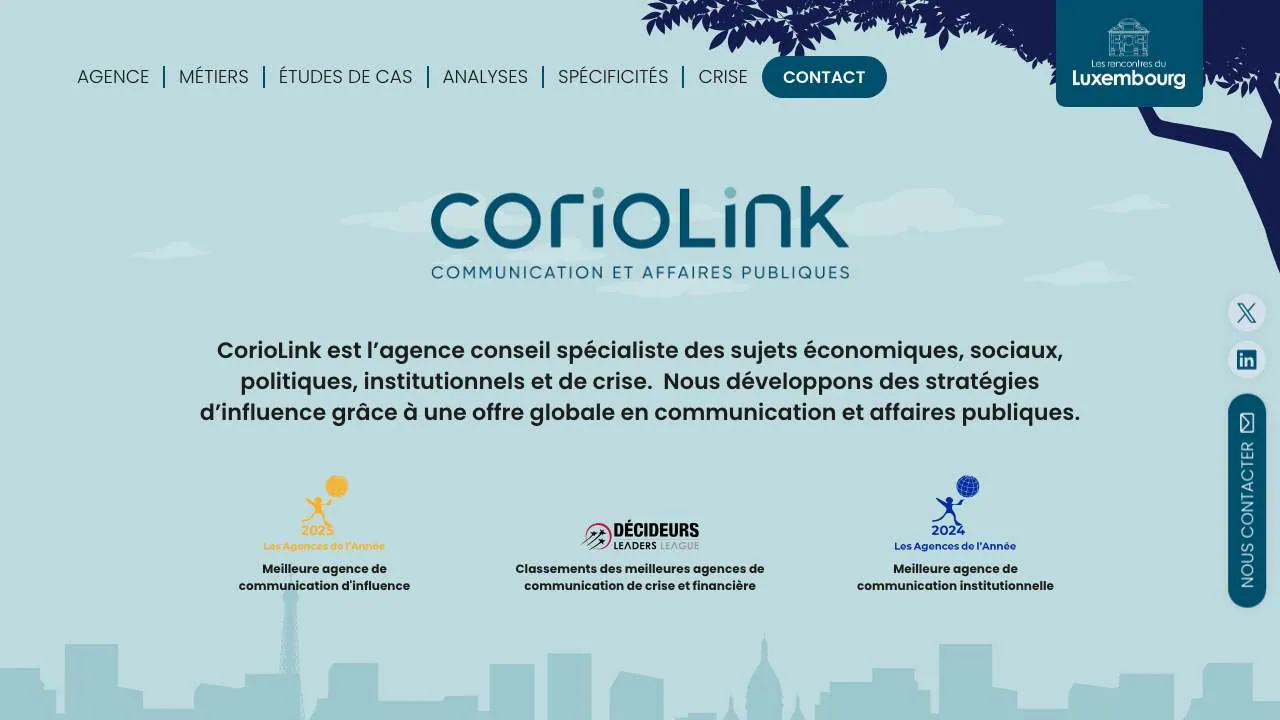
 Coriolink
 is a communication and public relations consultancy working on corporate, B2B, institutional and political communication, with crisis communication named as a distinct service.
Best for: organisations operating in scrutinised or sensitive sectors. Crisis capability is not something to procure during a crisis, which is the argument for choosing an agency that already has it, though a broad institutional remit can mean less bandwidth for a straightforward consumer product launch.

 Cap et Cime PR
 is an independent international public relations consultancy managing the reputation of companies and institutions of every size, across technology, corporate, lifestyle and content.
Best for: companies needing reputation work across several countries at once. Independence is worth checking specifically: an agency that does not answer to a holding group can decline work that conflicts with yours, but independence alone does not guarantee the local relationships a single-market campaign still needs.
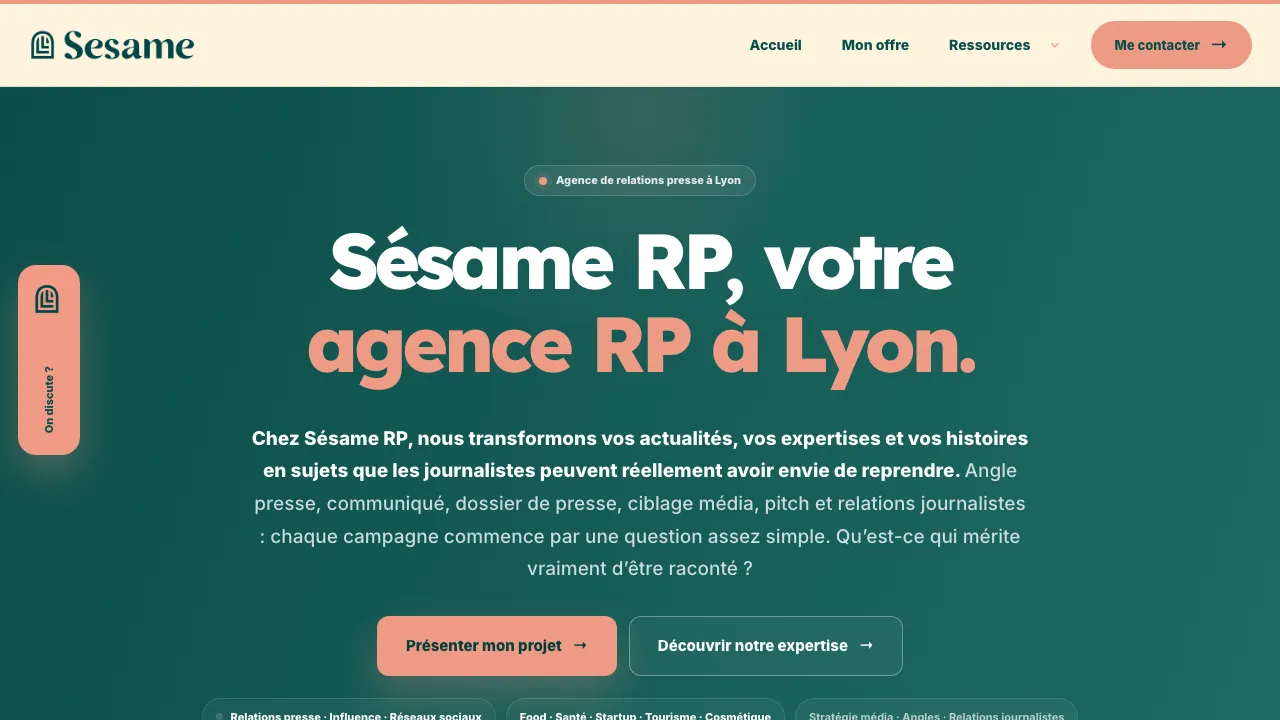
 Sésame RP
 is a Lyon press relations agency founded by Morgane Plantrou that turns a company's news, expertise and stories into subjects journalists actually want to pick up: press angle, press release, press kit, media targeting, pitching and follow up with journalists. It also covers influence and social media, and offers an AI visibility service that links GEO with press relations: testing how ChatGPT, Gemini and Perplexity answer a set of queries, then turning reference content into press angles to earn mentions in third party sources. Morgane Plantrou also applies this approach with Alexandre Montenon at Kontenu, a Lyon GEO agency they co-founded.
Best for: food, health, beauty and tourism brands, as well as start-ups, that want to be quoted by journalists and, through them, in AI answers. The agency states its prices before starting and does not promise coverage, since the decision belongs to the newsrooms, which is the right stance in this trade. A small team built around its founder also means you know who works on your account, but ask how much capacity remains when your launch lands at the same time as other clients'.
The criteria below were chosen before checking who wins them, and every cell reflects what the agency publishes on its own site as of August 2026. Where an agency does not publish something, the cell says so rather than guessing.
| Agency | Scope | Named sector specialisation | Measurement named as a method | Crisis communication named |
|---|---|---|---|---|
| Agence Profile | Media relations, public relations, digital influence | Not published | Not published | Not published |
| JIN | Digital influence, public relations | Not published | Yes, data and AI driven | Not published |
| KINGCOM | Influence, PR, press, social, brand content, events | Yes, consumer and lifestyle | Not published | Not published |
| Le Bureau de Com | Media relations, influence, social networks | Not published | Not published | Not published |
| Hello la Com | Press relations, influence | Yes, tourism, hospitality, gastronomy | Not published | Not published |
| Elektron Presse | Press relations, content creation, social media | Not published | Not published | Not published |
| Angie | Corporate communication, influence, engagement, B2B | Yes, corporate and B2B | Not published | Not published |
| Coriolink | Corporate, institutional, political communication | Yes, institutional and political | Not published | Yes |
| Cap et Cime PR | International PR, reputation management | Yes, technology, corporate, lifestyle | Not published | Not published |
| Sésame RP | Press relations, influence, social media, AI visibility (PR and GEO) | Yes, food, health, start-ups, tourism, beauty | Yes, tracking of mentions and AI visibility | Not published |
Read the "not published" cells as a gap in public information, not as a gap in capability. Several of these agencies certainly measure their coverage without saying so on the homepage, and the honest way to find out is to ask them.
Three questions sort a shortlist faster than any proposal, and each maps to one of the fears above.
1. Who is actually assigned to your account, and how many other clients do they run? Press relations is delivered by individuals with real relationships, not by the agency as a brand. Meet that person before you sign, not after.
2. What counts as a result, defined before the campaign starts? Name the outlets that matter to your buyers, the message that has to appear, and the frequency you expect. Coverage in an outlet your buyers never read is activity, not a result.
3. What happens the day something goes wrong? Ask for the arrangement in writing, not a reassurance during the pitch.
Three limits, stated plainly, because a ranking that claims to settle everything is not usable.
It is built on public information only. We read what each agency publishes and checked that the sites were live in August 2026. We did not audit a single campaign, interview a client or verify a placement count.
It cannot know your sector. A tourism brand and a fintech scale-up need entirely different journalist relationships, and the Best for lines above matter more than the rank number.
It ages. Ownership, positioning and account teams change fast in this market. This page is reviewed every 90 days, and the review date is stated in the methodology.
This is the honest part, on a page published by a software company. An agency beats software on everything that requires a relationship, judgement about a specific journalist, or presence in a room during a crisis. Placing an exclusive with a named reporter, managing a founder through a hostile interview, negotiating an embargo: none of that is automatable today, and anyone claiming otherwise is selling you something.
What software does better is the part that is repetitive and never stops. A press placement produces a spike of attention and then the news cycle moves on, but the article itself stays online, and that residue is what search engines index and what AI assistants draw on when someone asks which company to trust in a category. A study of over 366000 citations across 24069 conversations on OpenAI, Google and Perplexity models, published in 2025, found that 9.0% of citations referenced a news source, concentrated on a small number of outlets rather than spread evenly across the press. Once published, a press mention becomes one of the data points an assistant reuses when it decides which brand to name.
Turning that mention into a citation still depends on the rest of the site behind it: whether the pages a journalist links to actually answer the question a buyer is asking, and whether there is enough of that content published to matter. If you are unsure whether your own articles are long enough to do that work, see how long an article should actually be.
That is what Sorank automates. It is software, not an agency: keyword research, article writing, internal linking, publishing to your site and tracking how often you appear in the answers AI assistants give. A controlled study presented at KDD 2024 on 10000 queries measured that citing sources raised visibility in generative AI by roughly 30%, adding statistics by roughly 32%, and adding expert quotes by roughly 41%, the same mechanics that make a press placement worth having in the first place: it is a citation, a statistic and often a quote, published on a site with more authority than your own. Pricing starts at $49 per month on the annual plan, with 3 days offered and a card required at sign up. If you would rather talk it through first, book a call.
If you want one recommendation: Agence Profile when press, influence and digital need to move together, JIN if you want the account argued from data rather than instinct, Hello la Com if you are in hospitality or gastronomy, and Coriolink when the subject is sensitive enough that a misstep costs more than the coverage is worth.
And bring a story, not a product list. Every agency on this page can place a well built story with the right journalist. None of them can invent one for a company with nothing to say. For the full picture of how earned coverage and organic visibility now build the same asset, see our guide to leading on search and GEO.
France has a deep public relations market, including several strong specialists worth a call if the ten above do not fit.
| Agency | Website | What they publish about themselves |
|---|---|---|
| Oxygen RP | oxygen-rp.fr | Press relations agency working across consumer and corporate accounts |
| Open2Europe | open2europe.com | Press and media relations agency working across European markets |
| Kablé Communication | kable-communication.com | Financial communication specialist, regularly ranked among financial public relations advisors |
| Axicom | axicom.com | Global technology communications agency for technology brands and brands with a technology story |
| Aromates | aromates.fr | Independent public relations house founded in 1987, still led by its founder |
| Babylone | babylone.fr | Agency helping companies and their leaders build and defend thought leadership |
| Linker Agency | linker-agency.com | Press relations and professional network agency for technology startups and scale-ups |
| Commstrat | commstrat.fr | Communication and public affairs, with crisis, influence and media relations |
| aiRPur | agence-airpur.fr | Independent PR and influencer agency specialising in tourism, terroir, culture and the art of living |
| ABO Communications | a-bo.fr | Public relations and influencer marketing agency, with an offer for visibility in broadcast media |
Two adjacent markets have their own rankings on this blog: the 10 best netlinking agencies in France and the 10 best branding agencies in France.
This ranking reflects my own experience and opinion as an SEO expert with more than 7 years in the field. It is based on verified facts, but the order itself is my personal view.

Almost always a monthly retainer covering a team and a scope, with campaign or crisis work quoted separately. What varies is the seniority of the people actually working on your account and how many other clients they carry. Ask how many accounts your consultant handles: that number tells you more about what you will receive than the fee does.
Coverage volume is the easy metric and the least useful one. More meaningful measures are the quality of the outlets, whether the message you wanted actually appeared, the share of voice against your competitors, and the branded search and direct traffic that follow a wave of coverage. Agree the measurement before the campaign, because after it everything can be made to look like a success.
It matters differently. Fewer people read any single article, but the articles themselves have become the raw material that search engines and AI assistants draw on when someone asks about a company or a category. Coverage in a credible outlet is now a durable asset that keeps being referenced, which is close to the opposite of the old assumption that PR is ephemeral.
We analyse your competitors, your website and your AI visibility to create a tailored content plan for free.
 AI Content Brief Generator
 FAQ Schema Generator
 AI Blog Post Ideas Generator
 Structured Data Validator (Schema Validator)
 Alt Text Checker
 Internal Link Analyzer
 Backlink Challenge
 AI Meta Description Generator
 AI Blog Title Generator
 Google Indexability Checker
 AI Blog Outline Generator
 UTM Link Builder
 Keyword Clustering Tool
 Canonical Tag Checker
 XML Sitemap Generator
 Broken Link Checker
 AI SEO Title Generator
 Headline Analyzer
 SERP Preview Tool
 Redirect Checker
 Hreflang Tag Generator
 Heading Structure Analyzer
 HTTP Headers Checker
 Favicon Extractor
 SERP CTR Calculator
 SEO vs Paid Search Savings Calculator
 SEO Share of Voice Calculator
 SEO ROI Calculator
 SEO Traffic and Revenue Forecast Calculator
 SEO Budget Calculator
 SEO Break-Even Calculator
 SaaS SEO ROI Calculator
 ROAS Calculator
 Reading Time Calculator
 Ranking Gain Simulator
 Organic Traffic Value Calculator
 Organic Traffic Estimator and Website Traffic Checker
 LTV to CAC Ratio Calculator
 Local SEO ROI Calculator
 Link Building Cost Calculator
 Keyword Value Calculator
 Keyword Opportunity Score Calculator
 Keyword Density Calculator
 GEO ROI Calculator
 GEO Content Investment Calculator
 Ecommerce SEO ROI Calculator
 Customer Lifetime Value Calculator
 Customer Acquisition Cost Calculator
 CTR Calculator
 Cost Per Article Calculator
 Conversion Rate Calculator
 Content Marketing ROI Calculator
 ChatGPT Referral Traffic Estimator
 Bounce Rate Calculator
 Backlink ROI Calculator
 AI Visibility Score Calculator
 AI Traffic Value Calculator
 AI Share of Voice Calculator
 Cost of AI Invisibility Calculator
 AI Citation Rate Calculator
 llms.txt Validator
 AI Overview Checker and AI Overviews Rank Checker
 Robots.txt Checker
 AI SEO Audit
 LLM Readability Checker
 SearchGPT Readiness Checker
 Structured Data LLM Audit
 Website Crawlability AI Audit
 Why ChatGPT Is Not Recommending My Website
 Gemini Ranking Tool
 Perplexity Ranking Checker
 LLM Citation Checker
 Answer Engine Optimization Audit
 GEO Audit
 AI Search Visibility Test
 ChatGPT Visibility Checker
 llms.txt Generator
 URL Extractor
 Webpage to Markdown
 Sitemap Checker
 SERP Volatility Sensor
 Page Size Checker
 Word Counter
 Slug Generator
 Schema Generator
 Robots Generator
 OG Preview
 Meta Tags Generator
 Image Compressor
 Favicon Generator
 On-Page SEO Audit: SEO Checker and SEO Analyzer
 Backlink Analysis Tool
 Keyword Research Tool
 Domain Authority Checker
 “I tested Sorank on a real client site and it's insane. It does everything an agency would bill you $1500 a month for. It's going into production on that client now.”

 Guillaume Guersanguersanguillaume.com“We are an Ads agency and we wanted to get our SEO back on track once and for all. Sorank gave us a clear view of our site, helped us prioritize optimizations, and properly structure our content. The tool is easy to use, well designed for a team, and very practical for centralizing tracking without having to juggle multiple platforms. A very solid foundation to start fresh with our SEO.”
 Gaspard MadouiAds Agency
 “I just let the Sorank software do its thing, and now my DR is 25 and my page is ranking higher.”
 Lucas Flandrefoundertrace.fr“I specialized in GEO thanks to Sorank. The GEO Leaderboard allows me to show my clients their position vs competitors on ChatGPT. It’s a real commercial differentiator.”
 MélanieSEO Freelance“Great service, works well for our website and helps us understand how to improve it to rank better on Google and elsewhere. Congrats, keep going, I recommend it.”
 Hugo T.E-commerce merchant