
Preferences
Privacy is important to us, so you have the option of disabling certain types of storage that may not be necessary for the basic functioning of the website. Blocking categories may impact your experience on the website. More information

Privacy is important to us, so you have the option of disabling certain types of storage that may not be necessary for the basic functioning of the website. Blocking categories may impact your experience on the website. More information

Digital PR explained: definition, data-led campaigns, newsjacking, expert commentary, examples, how it earns backlinks and AI mentions, and how to measure it.

Tools


In short
digital PR is the practice of getting your brand covered by online media, blogs and industry sites through stories journalists want to publish: original data, timely reactions to the news, expert commentary or creative campaigns. Its value for search is twofold: editorial backlinks from authoritative sites, and brand mentions that shape how Google and the AIs understand your company. A good program combines a few large campaigns with a steady flow of reactive pitches, and measures links, mentions and referral traffic rather than raw coverage.
Want to go further? Ask
Digital PR sits at the crossroads of public relations and SEO. Where traditional PR measured success in column inches and audience reach, digital PR asks a narrower question: did this story earn a link, a mention and a place in the sources that search engines and AI assistants trust? This guide covers the definition, the main tactics with examples, how digital PR earns links and AI mentions, and how to measure it.
Digital PR is a set of techniques for earning coverage, links and mentions from online media by offering them stories, data or expertise worth publishing. The target is editorial: a journalist or editor decides to cite you because your material improves their article.
It differs from neighboring practices in a few clear ways:
| Practice | Main goal | Who decides to publish | Typical output |
|---|---|---|---|
| Traditional PR | Awareness, reputation | Journalists | Press, radio, TV coverage |
| Digital PR | Links, mentions, search and AI visibility | Journalists and online editors | Articles on news and industry sites with links |
| Guest posting | Links and exposure | Site owners, on content you write | Bylined articles on third-party blogs |
| Influencer marketing | Reach and conversions | Creators, usually paid | Social posts, videos |
Because the coverage is earned and not bought, digital PR produces the kind of links that fit Google's guidelines: its spam policies target links that are bought or exchanged to manipulate rankings, while a link a journalist chose to give remains legitimate.
Four tactics produce most digital PR results: data-led campaigns, newsjacking, expert commentary and creative campaigns. They differ in cost, speed and the number of links they can earn.
| Tactic | Principle | Effort | Speed |
|---|---|---|---|
| Data-led campaign | Publish original data (survey, study, index) that answers a question journalists care about | High | Weeks to prepare, coverage in days once launched |
| Newsjacking | React fast to a news story with a relevant angle, figure or comment | Low to medium | Hours to a few days |
| Expert commentary | Answer journalists' requests or offer a recognized expert's view on a topic | Low per pitch | Continuous |
| Creative campaign | A tool, map, ranking or visual story designed to be shared | High | Unpredictable |
Journalists need numbers to build stories, and few have the time to produce them. A survey of your users, an analysis of your own anonymized data or a ranking built from public sources gives them a ready-made headline. The study must answer a question the media already ask ("which cities are the most expensive for X", "how much time do employees spend on Y") and come with a clear methodology.
When a topic hits the news, outlets look for angles, figures and voices within hours. A brand that reacts quickly with a relevant comment or a data point can be quoted in several articles in a day. Speed and relevance matter more than polish; an off-topic reaction is ignored.
Journalists regularly publish requests for expert sources, through dedicated platforms or social networks. Answering them with a short, quotable, specific comment from a named expert is the lowest-cost digital PR tactic and builds a steady stream of mentions over time.
The campaigns that work share one trait: a single finding that fits in a headline. The formats below are classic patterns you can adapt to almost any sector.
Whatever the format, the page that hosts the campaign on your site must be strong enough to deserve the link: methodology, full results, charts or tables, and a clear author.
By giving journalists a reason to cite a source, and making your page that source. A link appears when the article refers to your data, your tool or your expert, and the journalist links to the page where readers can check it.
Several practices raise the share of coverage that includes a link:
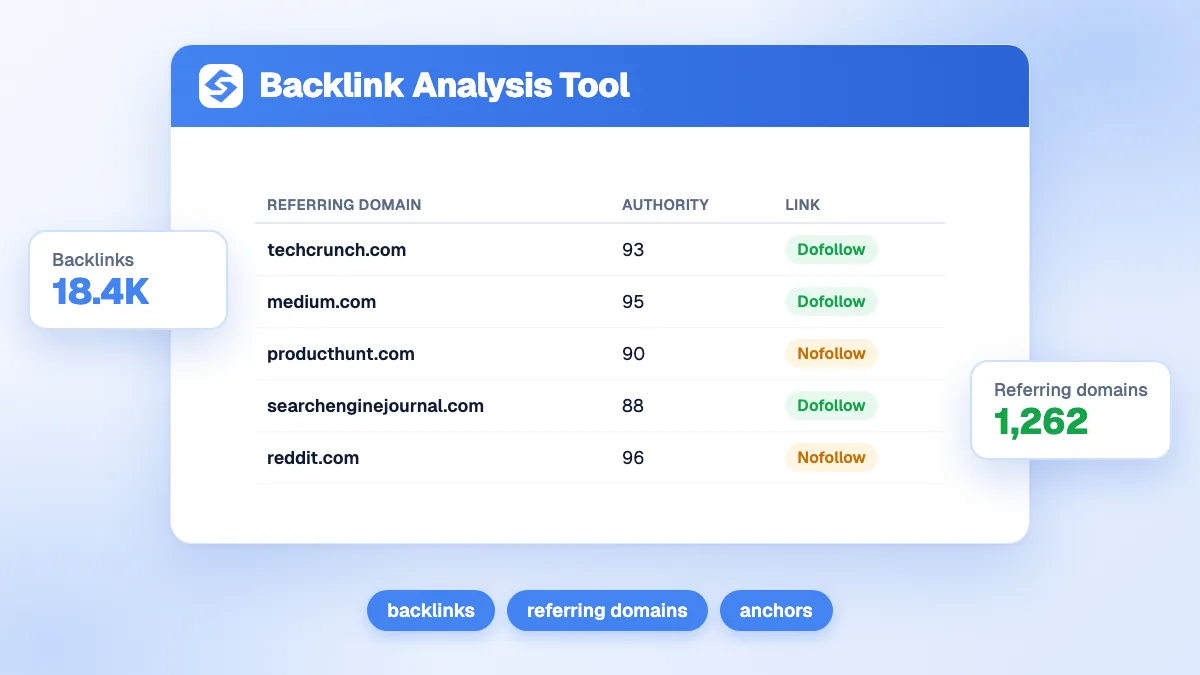
Digital PR fits within a wider link building strategy. To check which links a campaign actually earned, run your domain through our free backlink analysis tool before and after.
Media coverage is one of the sources ChatGPT, Gemini, Perplexity and Claude rely on to decide which brands to mention. When several independent articles describe your company in the same way, the models learn that association, and the articles themselves can be retrieved and cited when the AIs search the web.
That makes digital PR a direct lever for AI brand mentions, with three practical consequences:
Measure what the coverage does for search, not only how much coverage you got. A campaign with ten articles from relevant sites with links beats a hundred syndicated copies with none.
| Metric | What it shows | How to track it |
|---|---|---|
| Linking domains earned | New authoritative sites linking to you | Backlink tool, before and after the campaign |
| Relevance of the linking sites | Whether links come from your topic | Manual review of each link |
| Brand mentions | Coverage with or without links | Media monitoring, alerts |
| Referral traffic | Visitors coming from the articles | Web analytics |
| Rankings of target pages | The effect of authority on search | Rank tracking, Search Console |
| AI mentions | Whether the AIs name your brand more often | Prompt tracking over time |
To manage pitches, media lists and monitoring, specialized platforms help; our comparison of the best PR software reviews the main options.
Digital PR earns the links and mentions that are hardest to get any other way, because a journalist chose to cite you. Build it as a program: one or two data-led campaigns a year, regular reactive pitches and expert commentary, consistent messaging, and measurement focused on links, mentions and AI visibility.
Digital PR works best on top of a site with content worth citing. Sorank publishes that content in autopilot, tracks whether the AIs mention your brand, and lets you get natural backlinks automatically, placed in real articles on sites in your topic, one way only. You can see how the backlinks work and start with the 3-day free trial.

Traditional PR aims at awareness and reputation through press, radio and TV, often measured in coverage volume. Digital PR targets online media and measures what that coverage does for search: links from authoritative sites, brand mentions, referral traffic and visibility in the AIs. The techniques overlap, but digital PR builds campaigns around stories that journalists will link to.
Coverage can arrive within days of a pitch when a story lands, but the effect on rankings usually takes weeks to months, because search engines need to crawl the new links and authority builds up over several campaigns. Plan digital PR as a recurring program over at least two or three quarters rather than a single campaign.
Yes, when it earns editorial links and mentions from relevant, authoritative media. Those links are the kind search engines value, because a journalist chose to cite you. Digital PR also strengthens your brand as an entity across the web, which helps the AIs recognize and recommend it. It works best combined with solid on-site content worth linking to.
 AI Content Brief Generator
 FAQ Schema GeneratorAI Blog Post Ideas GeneratorStructured Data Validator
 Alt Text Checker
 Internal Link AnalyzerBacklink ChallengeAI Meta Description GeneratorAI Blog Title Generator
 Google Indexability CheckerAI Blog Outline GeneratorUTM Link BuilderKeyword Clustering ToolCanonical Tag Checker
 XML Sitemap GeneratorBroken Link CheckerAI SEO Title GeneratorHeadline AnalyzerSERP Preview ToolRedirect Checker
 Hreflang Tag GeneratorHeading Structure AnalyzerHTTP Headers CheckerFavicon Extractor
 SERP CTR Calculator
 SEO vs Paid Search Savings Calculator
 SEO Share of Voice Calculator
 SEO ROI Calculator
 SEO Traffic and Revenue Forecast Calculator
 SEO Budget Calculator
 SEO Break-Even Calculator
 SaaS SEO ROI Calculator
 ROAS Calculator
 Reading Time Calculator
 Ranking Gain Simulator
 Organic Traffic Value Calculator
 Organic Traffic Estimator
 LTV to CAC Ratio Calculator
 Local SEO ROI Calculator
 Link Building Cost Calculator
 Keyword Value Calculator
 Keyword Opportunity Score Calculator
 Keyword Density Calculator
 GEO ROI Calculator
 GEO Content Investment Calculator
 Ecommerce SEO ROI Calculator
 Customer Lifetime Value Calculator
 Customer Acquisition Cost Calculator
 CTR Calculator
 Cost Per Article Calculator
 Conversion Rate Calculator
 Content Marketing ROI Calculator
 ChatGPT Referral Traffic Estimator
 Bounce Rate Calculator
 Backlink ROI Calculator
 AI Visibility Score Calculator
 AI Traffic Value Calculator
 AI Share of Voice Calculator
 Cost of AI Invisibility Calculator
 AI Citation Rate Calculatorllms.txt ValidatorAI Overview CheckerRobots.txt CheckerAI SEO AuditLLM Readability CheckerSearchGPT Readiness Checker
 Structured Data LLM AuditWebsite Crawlability AI AuditWhy ChatGPT Is Not Recommending My Website
 Gemini Ranking ToolPerplexity Ranking CheckerLLM Citation CheckerAnswer Engine Optimization AuditGEO AuditAI Search Visibility TestChatGPT Visibility Checkerllms.txt Generator
 URL ExtractorWebpage to MarkdownSitemap CheckerSERP Volatility SensorPage Size Checker
 Word Counter
 Slug GeneratorSchema GeneratorRobots Generator
 OG PreviewMeta Tags Generator
 Image CompressorFavicon Generator
 On-Page SEO Audit
 Backlink Analysis Tool
 Keyword Research Tool
 Domain Authority Checker
THEY TRIED SORANK BEFORE YOU
 “I tested Sorank on a real client site and it's insane. It does everything an agency would bill you $1500 a month for. It's going into production on that client now.”

 Guillaume Guersanguersanguillaume.com“We are an Ads agency and we wanted to get our SEO back on track once and for all. Sorank gave us a clear view of our site, helped us prioritize optimizations, and properly structure our content. The tool is easy to use, well designed for a team, and very practical for centralizing tracking without having to juggle multiple platforms. A very solid foundation to start fresh with our SEO.”
 Gaspard MadouiAds Agency
 “I just let the Sorank software do its thing, and now my DR is 25 and my page is ranking higher.”
 Lucas Flandrefoundertrace.fr“I specialized in GEO thanks to Sorank. The GEO Leaderboard allows me to show my clients their position vs competitors on ChatGPT. It’s a real commercial differentiator.”
 MélanieSEO Freelance“Great service, works well for our website and helps us understand how to improve it to rank better on Google and elsewhere. Congrats, keep going, I recommend it.”
 Hugo T.E-commerce merchant























