Preferences
Privacy is important to us, so you have the option of disabling certain types of storage that may not be necessary for the basic functioning of the website. Blocking categories may impact your experience on the website. More information

Privacy is important to us, so you have the option of disabling certain types of storage that may not be necessary for the basic functioning of the website. Blocking categories may impact your experience on the website. More information

AI brand mentions are the times language models name your brand in their answers. Learn how to track, measure, and grow them across AI search.








AI brand mentions are the moments when an assistant like ChatGPT, Perplexity, or Gemini names your company while answering a user's question. Unlike a traditional ranking, a mention is not a position on a results page. It is whether and how the model weaves your brand into the synthesized reply it shows the user. A mention can appear with a link to your site, or it can appear as pure recognition where the model simply knows you exist.
This signal matters because discovery is moving inside AI answers. ChatGPT alone processes over 2.5 billion prompts per day, and up to 60 percent of searches now end without a click because the answer appears in the interface. When fewer buyers click links, being named by the model becomes the new shelf space. This article explains what counts as a mention, how it differs from a citation, and how to track and grow your presence in AI answers.
An AI brand mention is any instance where a model references your brand when composing a response. If traditional SEO told Google who you are, AI brand mentions tell the model what you mean and when to bring you up. The model may name you because it learned about you during training, because it retrieved a page about you in real time, or both. Either way, the user sees your name inside a trusted answer.
Mentions sit at the heart of generative AI search and the wider practice of generative engine optimization. The goal is no longer only to rank a page but to teach models that your brand is a relevant, credible answer to a class of questions. That makes mentions a core part of AI search visibility.
A mention and a citation are related but not the same. A mention is basic recognition: the model names your brand. A citation goes further by linking to or attributing information to a specific page you own. Citations are a stronger trust signal because they show the model trusts your content enough to source it, not just recall it as background knowledge.
Both matter, and they often appear together. A model might name three vendors in a comparison while linking to only one of them. Growing mentions builds awareness inside answers, while earning citations builds attributed authority. The deliberate work of turning recognition into sourced links is the focus of AI citation optimization.
Most teams track four measurable signals together. Mentions count how often your brand appears for the topics you care about. Citations check whether the answer links to your owned content or only describes you abstractly. Sentiment reads whether the surrounding context is positive, neutral, or critical. Share of voice measures how often you appear relative to competitors across a consistent set of prompts.
Read in isolation, any one of these can mislead. A brand can be mentioned often but framed negatively, or cited rarely despite strong recognition. Tracked together, the four signals describe both presence and quality of presence, which is why they anchor most AI search analytics dashboards.
Tracking works by sending a fixed set of prompts to each engine, then parsing the responses for your brand name, links, and source attributions. Because model output varies, each prompt is usually run several times, often five to ten samples, so a real pattern can be separated from random variation. Results are logged and centralized so trends become visible over weeks rather than single snapshots.
Tools in this space monitor ChatGPT, Google AI Overviews, Google AI Mode, Perplexity, Microsoft Copilot, and Gemini. They typically report an average brand position among cited sources and a coverage trend over time. In one tracked example, a brand received 3,181 mentions out of 410,785 total across competitors, with an average position of 2.05, which shows how share of voice and position combine into a single competitive picture.
One of the biggest shifts is that ranking position no longer guarantees inclusion. Analysis of AI Overviews found that 83.3 percent of citations came from pages beyond the traditional top ten results. Models reward structural clarity and direct answers, so a page that explains a concept cleanly can be pulled into an answer even if it does not rank first in classic search.
This rewards content built for extraction. Clear summaries, structured lists, tables, and explicit attribution make it easy for a model to lift and reuse a passage. The same discipline behind LLM-ready content directly increases the odds that a model names you.
Start with entity-based content clusters that consistently describe your products, frameworks, and methodologies, so models learn a stable narrative about your brand. Make pages source friendly with clear summaries, lists, and tables. Expand FAQs with three to five natural-language questions per topic so you match the conversational way people prompt assistants.
Off-site signals matter just as much. Earned mentions on reputable third-party sites and active participation in communities teach models that your brand exists across trusted channels. Community platforms carry real weight here, with Reddit showing a notably high citation frequency in ChatGPT responses. A coherent AI content strategy ties on-site and off-site presence together, and disciplined keyword research and content planning aligns it with the questions people actually ask.
Mentions matter because they precede traffic and conversions in an answer-first world. When buyers research a category inside an assistant, the brands named in the answer shape the shortlist before anyone visits a website. One local case study reported a 50 percent increase in AI answer mentions with no associated clicks, which shows visibility now happens earlier than the classic click.
For marketers this reframes the goal. Instead of optimizing only for a ranking, you optimize to be the answer a model reaches for. That means measuring share of voice against competitors, watching sentiment, and steadily converting recognition into cited authority through the same fundamentals that power answer engine optimization.
Mentions are noisy. The same prompt can name different brands on different runs, so a single check proves little and only repeated sampling reveals a trend. Sentiment adds another layer: appearing often is not enough if the framing is critical, because negative context can suppress action even when your name shows up.
Attribution is also harder than in classic analytics. A mention with no link drives no measurable click, so you may influence a buyer without ever seeing it in your traffic reports. Treat mention tracking as a directional signal of brand presence, not a precise traffic source, and pair it with broader visibility metrics.
AI brand mentions are the new shelf space inside AI answers, recording when and how models name your brand for the questions that matter. They are distinct from citations, they often come from pages outside the top results, and they are best understood alongside sentiment and share of voice. Growing them means publishing clear, extractable content and earning trusted presence across the web.
To act on this, connect mention tracking with AI citation optimization and a broader AI content strategy, and use Sorank's research and content planning tools to target the prompts that surface your brand. Reference sources: HubSpot and OtterlyAI.

A mention is when a model simply names your brand inside an answer, which signals recognition. A citation goes further by linking to or attributing information to a specific page you own, which signals trust in your content as a source. Both are valuable, but citations carry more weight because the model is sourcing you, not just recalling you.
You send a fixed set of prompts to each AI assistant, run each prompt several times to account for variability, then parse the responses for your brand name, links, and sources. Results are logged and tracked over time so you can separate real trends from random noise. Tools that monitor ChatGPT, Perplexity, Gemini, and AI Overviews automate this and report share of voice and sentiment.
Yes. Analysis of AI Overviews found that 83.3 percent of citations came from pages outside the traditional top ten results. Models reward clear, well-structured content that answers a question directly, so a page can be pulled into an answer based on clarity rather than its classic ranking position.
THEY TRIED SORANK BEFORE YOU
 “I tested Sorank on a real client site and it's insane. It does everything an agency would bill you $1500 a month for. It's going into production on that client now.”
 Guillaume Guersanguersanguillaume.com“We are an Ads agency and we wanted to get our SEO back on track once and for all. Sorank gave us a clear view of our site, helped us prioritize optimizations, and properly structure our content. The tool is easy to use, well designed for a team, and very practical for centralizing tracking without having to juggle multiple platforms. A very solid foundation to start fresh with our SEO.”
 Gaspard MadouiAds Agency
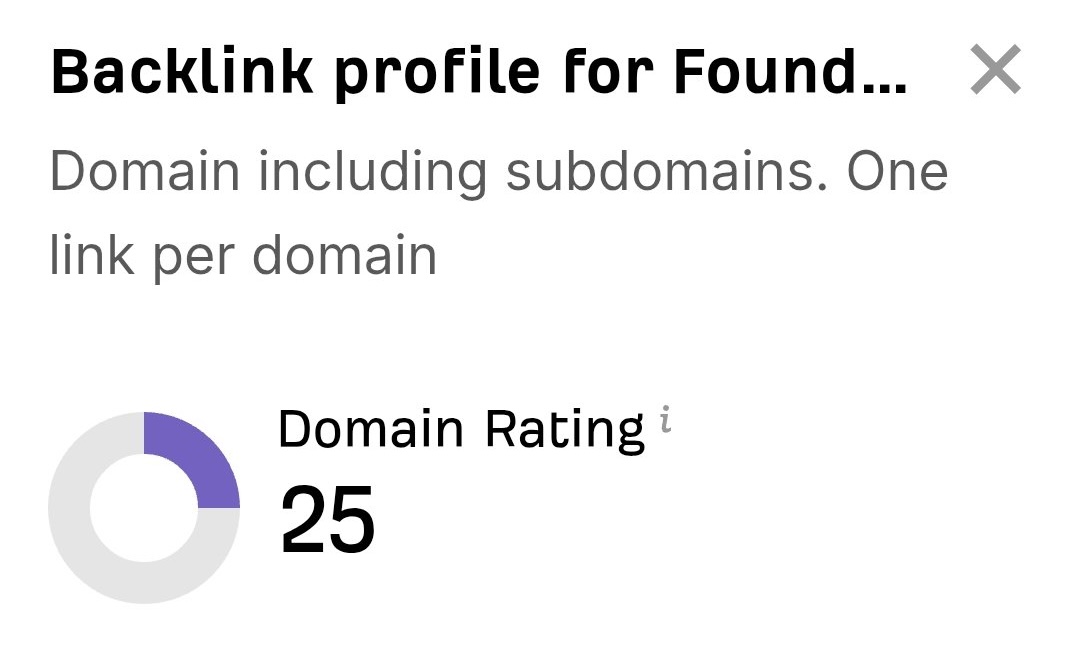 “I just let the Sorank software do its thing, and now my DR is 25 and my page is ranking higher.”
 Lucas FlandrePodcast Host“I specialized in GEO thanks to Sorank. The GEO Leaderboard allows me to show my clients their position vs competitors on ChatGPT. It’s a real commercial differentiator.”
 MélanieSEO Freelance“Great service, works well for our website and helps us understand how to improve it to rank better on Google and elsewhere. Congrats, keep going, I recommend it.”
 Hugo T.E-commerce merchant