Preferences
Privacy is important to us, so you have the option of disabling certain types of storage that may not be necessary for the basic functioning of the website. Blocking categories may impact your experience on the website. More information

Privacy is important to us, so you have the option of disabling certain types of storage that may not be necessary for the basic functioning of the website. Blocking categories may impact your experience on the website. More information

Answer engine optimization (AEO) structures content so the AIs cite it in answers. Learn how AEO works and the tactics that win citations.






Answer engine optimization, or AEO, is the discipline of making your content the answer that the AIs deliver. Instead of competing for a click on a results page, you optimize to be the cited source inside responses from ChatGPT, Perplexity, Google AI Overviews, and similar tools. The shift is from ranking pages to being chosen, fact by fact, in a generated answer.
This matters because answer engines now mediate enormous volumes of search. ChatGPT reaches around 883 million monthly users, and Google AI Overviews appear in roughly 55 percent of all Google searches. As more questions are resolved inside an answer, being the source that answer draws from becomes a primary growth channel.
Answer engine optimization is the work of structuring and enhancing content so AI platforms select it as a cited source when they generate answers. An answer engine is any system that responds with a direct answer rather than a list of links, from featured snippets and voice assistants to AI chat. The aim is to be the clear, trustworthy, machine-readable answer to a specific question.
The core principle is simple: write content that the AIs can easily understand, trust, and cite. That means clear answers, demonstrated expertise, resolved ambiguity, real entities, and a structure machines can parse without guessing. It is the practical expression of optimizing for AI search rather than classic results pages.
Most answer engines follow a retrieval pattern often described in five stages. They interpret the query semantically, retrieve conceptually relevant documents, rank and select sources by relevance, authority, and freshness, generate a synthesized answer, and attribute claims through citations. Understanding this flow shows where you can influence the outcome.
Freshness and structure clearly matter in that pipeline, with one analysis finding AI-surfaced URLs are about 25.7 percent fresher than traditional search results. This whole process rests on retrieval augmented generation, so optimizing for retrieval and for the RAG selection step is central to AEO.
The three disciplines are related but distinct. SEO targets rankings and clicks at the page level. AEO focuses on fact-level citation inside AI responses. Generative engine optimization is the broader umbrella covering visibility across all generative AI platforms, with AEO as the citation-focused piece within it.
They reinforce each other rather than compete. One finding shows about 38 percent of AI Overview citations come from pages already ranking in the top 10, so strong SEO fundamentals feed AEO performance. The smartest approach stays search-first in its foundations and answer-first in its formatting, which is also the heart of generative engine optimization.
The single most repeated tactic is to open every page or major section with a clean 40 to 60 word direct answer, placing the primary keyword in the first 100 words. The AIs find that block, extract it, and cite it. Burying the insight under background paragraphs lowers your odds of being chosen.
Pair that with semantic chunking: organize content into self-contained sections that each cover a single concept and make sense on their own. This makes passages easy to lift, which is the foundation of answer-ready content and effective content chunking.
Schema markup helps engines parse your content. Article, BreadcrumbList, and especially FAQPage schema are high-impact, because FAQ content maps directly to how people query the AIs and lets platforms extract question-and-answer pairs cleanly. Marking up your pages reduces the work an engine must do to understand them.
Credibility seals the deal. Adding specific statistics with source links every 150 to 200 words, citing authoritative domains, and demonstrating real expertise all raise citation odds. Strong experience, expertise, authoritativeness, and trust signals, the familiar E-A-T lens, increase the likelihood an engine treats you as a reliable source citation.
Adoption signals are hard to ignore. ChatGPT alone handles over 2 billion queries daily, AI-referred sessions grew about 527 percent year over year through mid-2025, and 72 percent of consumers say they plan to use AI for shopping more often. The audience is already inside the answer engines.
Yet most brands have not adapted. One survey found 70 percent of organizations believe AEO will significantly affect strategy within one to three years, but only about 20 percent have begun implementing it. That gap is an opening, and acting early compounds your AI search visibility before competitors catch up.
Track citation count across ChatGPT, Perplexity, and AI Overviews, your share of voice versus competitors, AI referral traffic filtered by source, and brand mention volume, supported by monthly manual testing of target queries. Tooling can automate much of this, which is the role of dedicated AI search analytics.
The main pitfall is treating AEO as a one-time formatting trick. Answers shift between runs and over time, so leading brands refresh content on a regular cadence, often quarterly. Build it into a durable AI content strategy rather than a single sprint, and use disciplined keyword research and content planning to target the questions that matter.
Answer engine optimization positions your content to be cited inside AI answers, fact by fact, through answer-first structure, semantic chunking, schema markup, and credible authority. It complements rather than replaces SEO, since strong fundamentals feed citations, and the brands that adopt it early gain an edge while most still hesitate. The winning recipe is search-first foundations with answer-first formatting.
To go further, connect this with broader generative engine optimization and a structured AI content strategy, and use Sorank's research and content planning tools to target the questions answer engines field. Reference sources: Frase and HubSpot.

SEO aims to rank a page and earn clicks on a search results page, operating at the page level. AEO aims to have your content cited as the answer inside AI responses, operating at the fact level. They are complementary: strong SEO fundamentals support AEO, since a large share of AI Overview citations come from pages already ranking in the top 10. SEO helps you get found, AEO helps you get chosen.
Answer-first structure is the highest-leverage move: open each page or section with a clean 40 to 60 word direct answer and place the primary keyword in the first 100 words. Engines extract that block and cite it. Pair it with self-contained sections, FAQPage schema, and specific sourced statistics, which together make your content easy to parse, trust, and quote.
Track how often the AIs cite you across ChatGPT, Perplexity, and Google AI Overviews, your share of voice against competitors, AI referral traffic filtered by source, and brand mention volume. Run manual tests of your target questions monthly. Because answers change over time, treat measurement as ongoing and refresh content on a regular cadence rather than checking once.
THEY TRIED SORANK BEFORE YOU
 “I tested Sorank on a real client site and it's insane. It does everything an agency would bill you $1500 a month for. It's going into production on that client now.”
 Guillaume Guersanguersanguillaume.com“We are an Ads agency and we wanted to get our SEO back on track once and for all. Sorank gave us a clear view of our site, helped us prioritize optimizations, and properly structure our content. The tool is easy to use, well designed for a team, and very practical for centralizing tracking without having to juggle multiple platforms. A very solid foundation to start fresh with our SEO.”
 Gaspard MadouiAds Agency
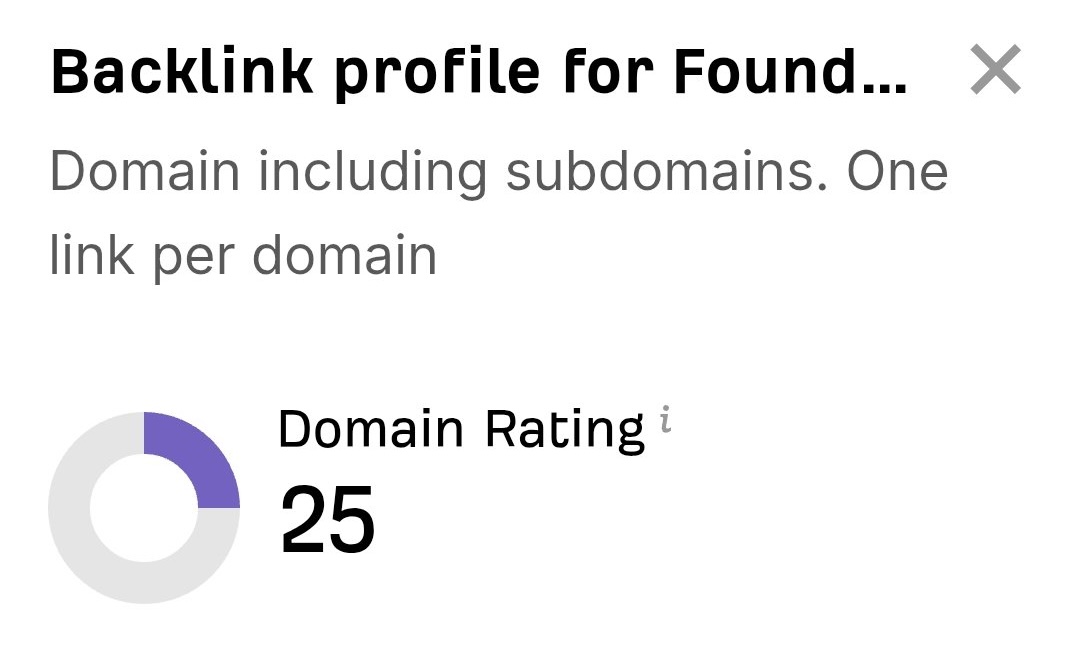 “I just let the Sorank software do its thing, and now my DR is 25 and my page is ranking higher.”
 Lucas FlandrePodcast Host“I specialized in GEO thanks to Sorank. The GEO Leaderboard allows me to show my clients their position vs competitors on ChatGPT. It’s a real commercial differentiator.”
 MélanieSEO Freelance“Great service, works well for our website and helps us understand how to improve it to rank better on Google and elsewhere. Congrats, keep going, I recommend it.”
 Hugo T.E-commerce merchant