Preferences
Privacy is important to us, so you have the option of disabling certain types of storage that may not be necessary for the basic functioning of the website. Blocking categories may impact your experience on the website. More information

Privacy is important to us, so you have the option of disabling certain types of storage that may not be necessary for the basic functioning of the website. Blocking categories may impact your experience on the website. More information

Retrieval Augmented Generation (RAG) grounds LLM answers in retrieved data. Learn the architecture, chunking, embeddings, and retrieval pipeline.








Sources
Retrieval Augmented Generation (RAG) is a framework that connects a large language model to an external knowledge base so its answers are grounded in retrieved, up to date information instead of only its training data. Rather than asking the model to recall facts from its weights, a RAG system first searches a document store, finds the passages most relevant to the question, and feeds them into the prompt as context. The model then composes an answer from that evidence, often with citations a human can verify.
This article is the deep dive into how RAG is actually built. For a shorter, plain language overview of the concept, see the companion RAG entry. Here the focus is the architecture: the indexing pipeline, chunking, embeddings, the vector store, retrieval and reranking, and what each design choice means for accuracy and for visibility in AI search.
RAG is a system design in which the generation step of an LLM is preceded by a retrieval step that fetches relevant documents from an external knowledge base and injects them into the prompt. According to Weka, researchers at Meta introduced RAG in a 2020 paper to address the limits of models relying solely on static training data, combining retrieval precision with generative fluency. The result is a hybrid system that reasons over evidence it just looked up.
The motivation is simple. A model's parametric knowledge is frozen at training time and cannot cover an organization's private data or yesterday's news. RAG closes that gap without retraining. Databricks reports that over 60 percent of organizations are building RAG tools precisely because they need reliable answers grounded in proprietary or current information rather than fabricated guesses.
At a high level a RAG system runs in two phases. First, retrieval: the user's question is encoded, the system searches an external knowledge base for semantically similar content, and it returns the most relevant passages. Second, generation: those passages are merged with the original query and sent to the language model, which synthesizes a grounded answer. This pattern is what separates RAG from a bare model that simply predicts from memory.
In production this splits into two distinct flows. An offline indexing pipeline ingests documents into a vector database ahead of time, and an online query pipeline retrieves and composes context at the moment a question arrives. Keeping the heavy work offline is what lets retrieval happen in milliseconds when a user actually asks something.
The offline pipeline prepares your knowledge for fast search. According to BigData Boutique it has three stages. Documents are chunked into segments, typically 256 to 1024 tokens. Each chunk is converted into a dense vector using an embedding model such as a modern OpenAI or Cohere embedding model. The vectors are then stored in a database like Pinecone, Weaviate, Qdrant, OpenSearch, or Elasticsearch, along with metadata such as the source page.
Doing this once, ahead of time, is the key efficiency. Instead of scanning entire documents at query time, the system has already broken everything into small, indexed pieces, so when a user asks a question it searches only the most relevant parts in milliseconds. The quality of this pipeline largely determines the quality of every answer that follows.
Chunking is the most underestimated lever in a production RAG pipeline. If chunk boundaries cut across meaning, even the best embedding model will struggle to retrieve the right context. The most common approach is pre-chunking, which splits documents into fixed pieces before embedding, requiring upfront decisions about chunk size and overlap but enabling fast retrieval since everything is pre-computed.
Fixed size chunks are only the starting point. BigData Boutique notes that semantic chunking, parent and child strategies, and sliding windows with overlap increasingly replace naive fixed splits to preserve document context and reduce retrieval errors. The right strategy depends on your content: long technical documents, short support articles, and tabular data each benefit from different boundaries. Good content chunking is where retrieval quality is won or lost.
Embeddings are the bridge between language and search. An embedding model transforms text into a high dimensional numerical representation that captures semantic meaning, so that passages about the same idea land near each other in vector space even when they use different words. Weka notes these vectors are often produced by transformer based models such as BERT or SBERT, the same family of techniques behind semantic search.
Those embeddings live in a vector database built for similarity lookups at scale. Systems like FAISS, Pinecone, and Elasticsearch index millions of vectors and return the closest matches quickly using approximate nearest neighbor search. This is the infrastructure that powers vector search, and it is what lets RAG find relevant context without relying on exact keyword matches.
At query time the flow mirrors ingestion. The user's text is normalized and embedded with the same model used for indexing, then approximate nearest neighbor search returns the top-k most similar chunks, often five to ten. Advanced systems add a reranking step, scoring those candidates with a cross-encoder to push the truly relevant passages to the top before anything reaches the model.
The refinements compound. BigData Boutique reports that hybrid search combining keyword based BM25 with dense vectors delivers a 15 to 30 percent recall improvement, lifting recall from roughly 0.72 to 0.91, while cross-encoder reranking adds a further 5 to 15 percent accuracy. The selected chunks are then injected into the prompt and the model generates a grounded response, ideally citing the sources it used.
RAG is often compared with fine-tuning, but they solve different problems. Fine-tuning changes the model's weights to teach style, format, or narrow skills, and it is expensive to repeat whenever facts change. RAG leaves the model untouched and swaps knowledge in at query time, which Weka highlights as more adaptable, more cost efficient, and better suited to evolving domains like news, science, and technology.
Long context windows are another alternative, since some models can now read very large documents directly. But stuffing everything into the prompt is costly and dilutes attention, while RAG retrieves only what is relevant. In practice many systems blend approaches, and modern designs even treat retrieval as a tool an agent can call, an evolution that connects RAG to agentic search.
RAG is the architecture behind most AI assistants, which makes it central to generative engine optimization. When an assistant answers a question, it is usually retrieving chunks from somewhere and grounding its response in them. The content that gets retrieved and cited is the content your audience actually sees, so being retrievable is the new being rankable.
This reframes content design around the chunk. To be the passage a RAG system pulls, your pages need clear, self-contained statements, accurate facts, and structure that survives chunking and embedding. Strong AI grounding favors sources that are easy to extract and verify, so pairing clean, atomic content with disciplined keyword research and content planning directly improves your odds of being the cited source.
RAG's headline benefit is grounding. By tying answers to retrieved, up to date content, it reduces the likelihood of AI hallucination, which matters most in high accuracy domains like healthcare, legal, and enterprise support. Because outputs can include citations, humans can verify claims rather than trusting the model blindly.
The use cases follow naturally. Databricks points to customer support chatbots that answer with company specific knowledge, internal engines for HR and compliance questions, and search augmentation that pairs AI answers with results. In each case RAG lets an organization put its own private, current data to work without the cost and lag of retraining a model.
RAG is powerful but not free. Retrieval adds latency, so the pipeline must be tuned to avoid slowing responses, and answer quality depends heavily on the currency and completeness of the knowledge base. Garbage in still means garbage out: if retrieval surfaces weak or irrelevant chunks, the model can still produce a confident but wrong answer.
There are subtler failure modes too. Ambiguous queries can retrieve the wrong context, sensitive data requires encryption and access controls, and chunk boundaries that split meaning quietly degrade results. RAG mitigates hallucination rather than eliminating it, so retrieval quality, evaluation, and human oversight remain essential parts of any serious deployment.
Retrieval Augmented Generation grounds language model output in retrieved evidence by pairing an offline indexing pipeline with an online retrieval and generation flow. Its quality rests on practical engineering: sensible chunking, strong embeddings, a fast vector store, and smart retrieval and reranking. Done well, it produces accurate, current, citable answers that a bare model cannot.
For a lighter overview, read the companion RAG entry, and connect this with embeddings and vector search to complete the picture. Use Sorank's research and content planning tools to write the extractable content these systems retrieve. Reference sources: BigData Boutique, Databricks, and WEKA.

Fine-tuning bakes new knowledge into a model's weights through additional training, which is costly and goes stale as facts change. RAG instead leaves the model alone and feeds it fresh, retrieved documents at query time, so you can update the knowledge base without retraining. Fine-tuning is best for teaching style or format, while RAG is best for current, factual, and proprietary knowledge.
No, it reduces them. By grounding answers in retrieved source text and enabling citations, RAG gives the model real evidence instead of forcing it to rely on memory. But the model can still misread a passage, blend sources incorrectly, or hallucinate when retrieval returns poor or irrelevant chunks. Retrieval quality, chunking, and human verification all remain important.
RAG is the architecture behind most AI assistants, so the content they retrieve and cite is the content your audience sees. To be the chunk a RAG system pulls, your pages need clear, self-contained passages, accurate facts, and clean structure that survives chunking and embedding. Writing extractable, well-organized content directly improves your odds of being retrieved and cited.
THEY TRIED SORANK BEFORE YOU
 “I tested Sorank on a real client site and it's insane. It does everything an agency would bill you $1500 a month for. It's going into production on that client now.”
 Guillaume Guersanguersanguillaume.com“We are an Ads agency and we wanted to get our SEO back on track once and for all. Sorank gave us a clear view of our site, helped us prioritize optimizations, and properly structure our content. The tool is easy to use, well designed for a team, and very practical for centralizing tracking without having to juggle multiple platforms. A very solid foundation to start fresh with our SEO.”
 Gaspard MadouiAds Agency
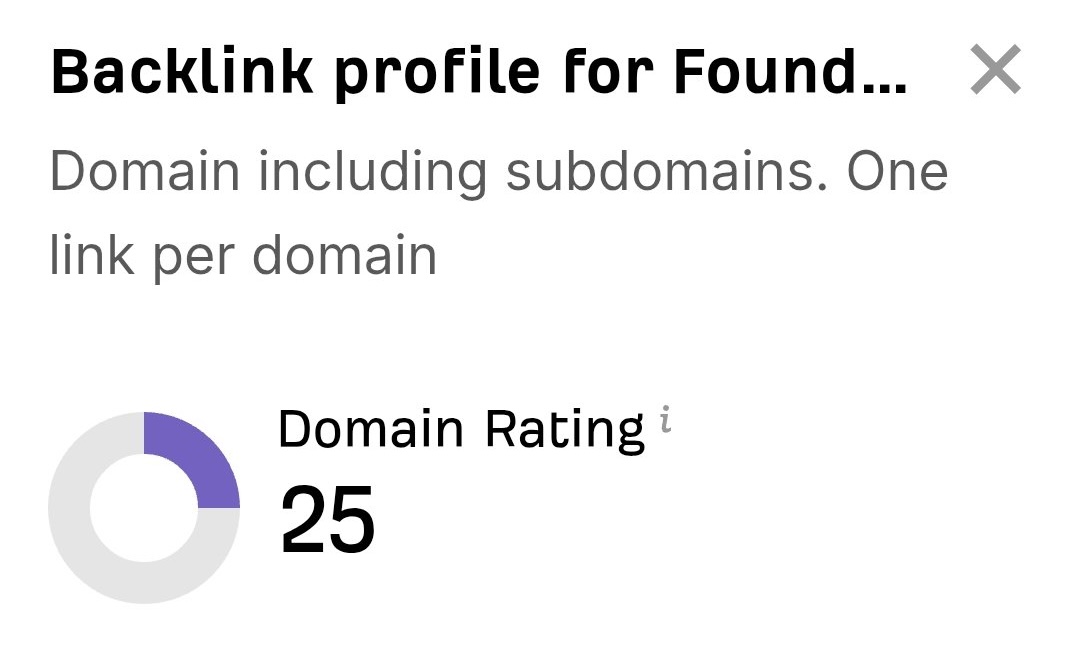 “I just let the Sorank software do its thing, and now my DR is 25 and my page is ranking higher.”
 Lucas FlandrePodcast Host“I specialized in GEO thanks to Sorank. The GEO Leaderboard allows me to show my clients their position vs competitors on ChatGPT. It’s a real commercial differentiator.”
 MélanieSEO Freelance“Great service, works well for our website and helps us understand how to improve it to rank better on Google and elsewhere. Congrats, keep going, I recommend it.”
 Hugo T.E-commerce merchant