Preferences
Privacy is important to us, so you have the option of disabling certain types of storage that may not be necessary for the basic functioning of the website. Blocking categories may impact your experience on the website. More information

Privacy is important to us, so you have the option of disabling certain types of storage that may not be necessary for the basic functioning of the website. Blocking categories may impact your experience on the website. More information

Vector search finds results by meaning, not keywords, using embeddings and similarity. Learn how it works and why it matters for SEO and GEO.








Vector search is a technique for finding similar items in large datasets by comparing numerical representations of their meaning rather than matching keywords. Each piece of content, a sentence, a document, an image, is converted into a vector: an array of numbers that captures its semantic content. The system then retrieves the items whose vectors sit closest to the query's vector, which means it can surface the right answer even when none of the exact words match.
This matters because the engines people now rely on, from Google's AI features to ChatGPT and Perplexity, lean on vector search to retrieve relevant passages before composing an answer. Understanding how it ranks content by meaning is the first step to making your pages retrievable by the systems that increasingly decide what gets cited.
Vector search leverages machine learning to capture the meaning and context of unstructured data, including text, images, and audio, and transform it into a numeric representation. Unlike traditional search that relies on exact matches, it looks for similarity based on meaning. A recipe titled nutritious meal prep for busy nights can match the query healthy dinner ideas, because their vectors share semantic traits even though the words differ.
The core principle is simple: similar data produces similar vectors. By placing every item as a point in a shared space, the system can measure how related two things are by how close their points are. This is what lets vector search find what a user means rather than only what they literally typed.
The process has three stages. First, an embedding model, usually built on a transformer, converts both the stored documents and the incoming query into vectors. The documents are encoded ahead of time and stored. Second, the system calculates similarity between the query vector and the document vectors using a distance metric such as cosine similarity, dot product, or Euclidean distance. Third, it returns the items whose vectors are nearest to the query.
Because meaning is baked into the numbers, concepts that are related naturally cluster together in the space. Words like king, queen, and prince fall near one another, while algorithm, function, and code group in a different region. These embeddings are produced by models grounded in transformer architecture, which is what gives them their grasp of context.
Comparing a query against millions of vectors one by one is too slow for real applications. Exact k-nearest-neighbor search is computationally expensive, so production systems use approximate nearest neighbor algorithms instead. These sacrifice a little accuracy for a large gain in speed, letting a system search across millions of items in milliseconds. Common approaches include HNSW (hierarchical navigable small world graphs), FAISS, and ANNOY.
These algorithms are housed in a vector database, a specialized system that stores and indexes embeddings for rapid retrieval and supports real-time updates and standard create, read, update, and delete operations. The database is what makes vector search practical at scale, turning a clever math idea into infrastructure that powers live products.
Traditional keyword search relies on lexical matching and word frequency. It is precise when the user knows the exact term, but it breaks down when wording differs or when the query is conceptual. Vector search finds meaning-based similarities without requiring exact keyword matches, so it handles synonyms, paraphrases, and intent far better.
The two are complementary rather than rivals. Keyword search excels at exact identifiers like product codes, while vector search excels at understanding intent and handling images, audio, and video. Many modern systems combine both in a hybrid setup, which is also how semantic search on major engines now operates.
Search engines and AI assistants increasingly use embeddings to match content to queries by meaning, not just by the keywords on the page. That shifts optimization away from stuffing exact phrases and toward covering a topic clearly and comprehensively, so your content lands near the relevant queries in vector space. A page that thoroughly answers the concept behind a query can be retrieved even if it never uses the searcher's exact words.
For generative engine optimization, vector search is the retrieval layer that decides which passages an AI model sees before it writes an answer. If your content is not retrieved, it cannot be cited. Writing clear, self-contained, semantically rich passages improves your odds of being pulled into that context, which directly supports AI search visibility.
Vector search is the engine behind most retrieval augmented generation pipelines. In retrieval augmented generation, a model does not rely only on what it memorized during training. It first runs a vector search to fetch relevant documents, then grounds its answer in that retrieved context, which reduces hallucination and lets it cite sources.
This is why the structure of your content matters so much for AI visibility. The cleaner and more focused each passage is, the more accurately it embeds and the more reliably it surfaces during retrieval. Optimizing for RAG retrieval is, in practice, optimizing your content to be a strong nearest neighbor for the questions your audience asks.
Beyond search itself, vector search powers recommendation engines that suggest similar products or articles, question-answering systems that pull direct answers from document collections, and image or audio search that browses unstructured media. Enterprises use it to navigate large internal knowledge bases where employees rarely phrase a query the same way twice.
The unifying theme is discovery without exact terminology. Users can search by concept rather than precise words, which is valuable whenever people do not know, or do not agree on, the right keyword. Pairing strong content with disciplined keyword research and content planning helps you cover the concepts these systems retrieve against.
Vector search is not free. Generating embeddings, storing high-dimensional vectors, and running similarity search at scale demands compute and memory, and approximate algorithms trade some accuracy for that speed. The quality of results also depends entirely on the embedding model: a model that poorly captures your domain will cluster the wrong things together.
There are also blind spots. Pure vector search can miss exact matches that keyword search would catch, such as a specific part number, which is why hybrid approaches exist. And because the space is opaque, debugging why a particular result ranked where it did is harder than inspecting a keyword match. Treating vector search as one tool in a broader retrieval stack, rather than a silver bullet, gives the best results.
Vector search retrieves information by meaning, converting content and queries into embeddings and ranking results by how close they sit in a shared space. It underpins semantic search, recommendations, and the retrieval step inside modern AI answers. For marketers and publishers, it reframes optimization around covering concepts clearly so your content lands near the queries that matter and gets pulled into AI responses.
To go further, connect this with embeddings and semantic search, and use Sorank's research and content planning tools to cover the concepts these systems retrieve against. Reference sources: Elastic and Weaviate.

Keyword search matches the exact words in a query against the words on a page, so it fails when wording differs. Vector search converts both the query and the content into numerical embeddings and ranks results by semantic closeness, so it finds relevant results even without shared keywords. Many systems combine both in a hybrid approach to get exact matches and meaning-based matches together.
Embeddings are the numerical representations that make vector search possible. An embedding model, usually based on a transformer, converts text, images, or audio into an array of numbers that captures meaning and context. Items with similar meaning end up with similar vectors, so the system can rank results by how close their embeddings sit in the shared space.
Vector search is the retrieval layer that AI assistants use to find relevant passages before they write an answer. If your content is not retrieved, it cannot be cited. Writing clear, self-contained, semantically rich passages helps your pages land near the right queries in vector space, improving the chance they are pulled into an AI response and referenced.
THEY TRIED SORANK BEFORE YOU
 “I tested Sorank on a real client site and it's insane. It does everything an agency would bill you $1500 a month for. It's going into production on that client now.”
 Guillaume Guersanguersanguillaume.com“We are an Ads agency and we wanted to get our SEO back on track once and for all. Sorank gave us a clear view of our site, helped us prioritize optimizations, and properly structure our content. The tool is easy to use, well designed for a team, and very practical for centralizing tracking without having to juggle multiple platforms. A very solid foundation to start fresh with our SEO.”
 Gaspard MadouiAds Agency
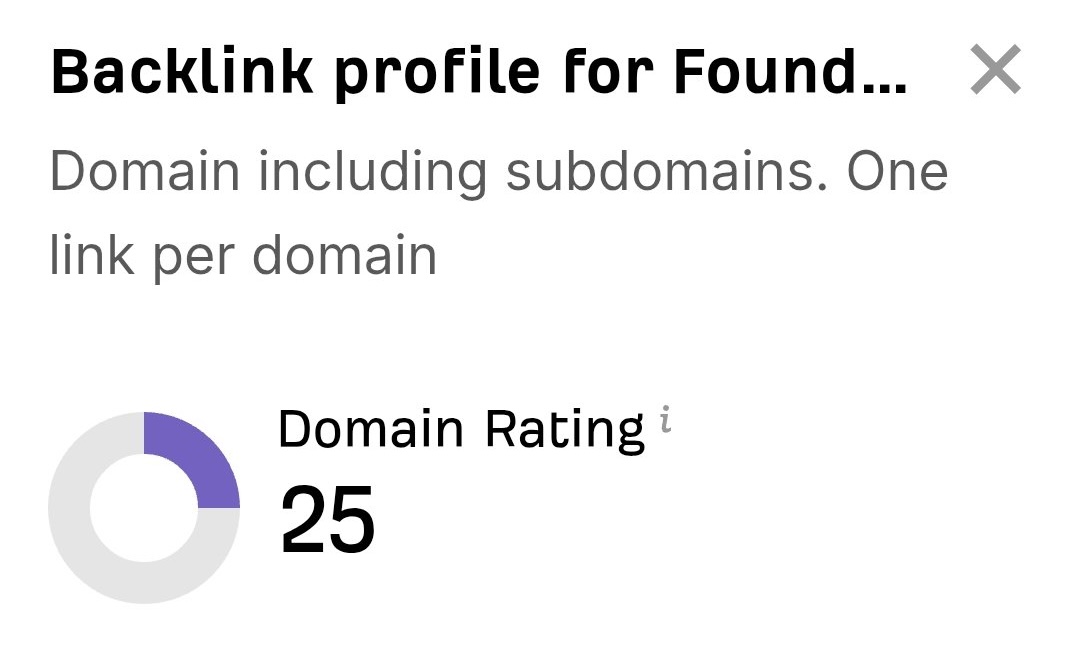 “I just let the Sorank software do its thing, and now my DR is 25 and my page is ranking higher.”
 Lucas FlandrePodcast Host“I specialized in GEO thanks to Sorank. The GEO Leaderboard allows me to show my clients their position vs competitors on ChatGPT. It’s a real commercial differentiator.”
 MélanieSEO Freelance“Great service, works well for our website and helps us understand how to improve it to rank better on Google and elsewhere. Congrats, keep going, I recommend it.”
 Hugo T.E-commerce merchant