Preferences
Privacy is important to us, so you have the option of disabling certain types of storage that may not be necessary for the basic functioning of the website. Blocking categories may impact your experience on the website. More information

Privacy is important to us, so you have the option of disabling certain types of storage that may not be necessary for the basic functioning of the website. Blocking categories may impact your experience on the website. More information

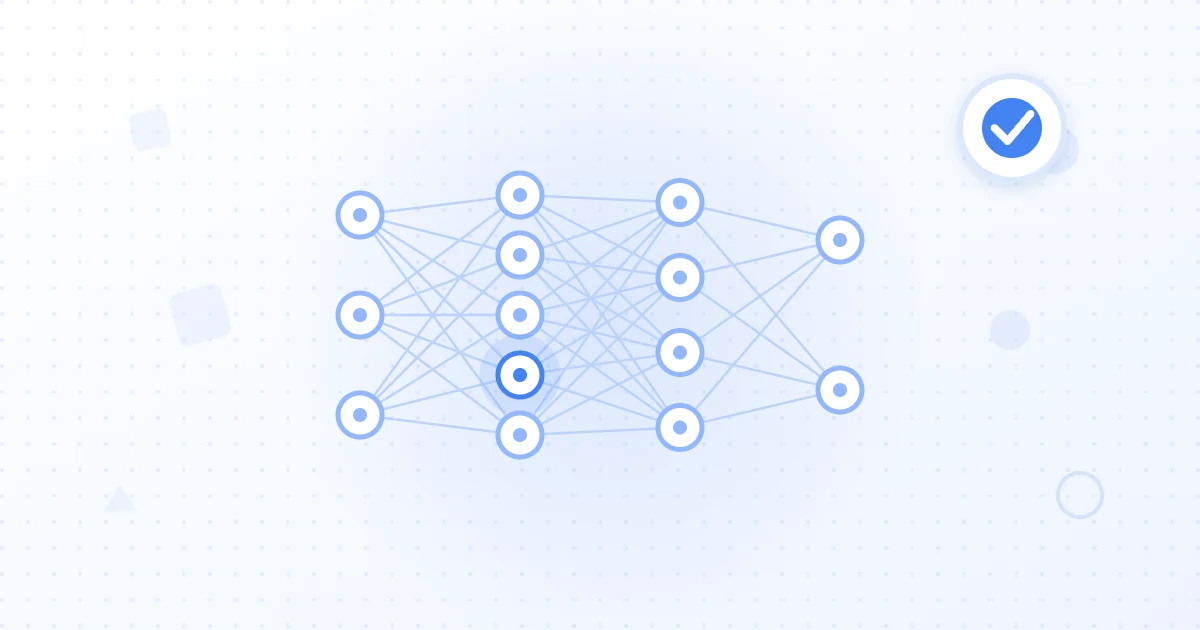
The transformer architecture uses self-attention to power LLMs like GPT and Gemini. Learn how attention, encoders, and decoders work.







Sources
Transformer architecture is the deep learning design that powers today's generative AI. Introduced by Google researchers in 2017, it replaced the older approach of reading text one word at a time with a mechanism that looks at an entire sequence at once and learns how each token relates to every other token. This single idea unlocked the large language models behind ChatGPT, Claude, and Gemini.
Understanding the transformer is useful well beyond engineering. It explains why modern AI is so good at context, why it processes language the way it does, and why scale matters so much. For anyone optimizing content for AI search, knowing how transformers read and generate text clarifies how these systems interpret, summarize, and cite what you publish.
A transformer is a deep learning model that uses self-attention mechanisms to process and generate sequences of data efficiently. It was proposed in the 2017 paper titled Attention Is All You Need, which showed that attention alone, without recurrence, was enough for tasks like machine translation. That was a direct challenge to the conventional wisdom of the time.
The breakthrough was dispensing with recurrent connections entirely. Earlier models processed tokens in sequence, which created a bottleneck, while the transformer processes all tokens together and relies on attention to capture their relationships. This shift is what makes the architecture both faster to train and better at long-range context, and it underlies every modern LLM.
Self-attention is the heart of the transformer. It is the mechanism a model uses to understand a token based on the other tokens around it. For each token, the model computes three vectors, called the query, the key, and the value, using learned weight matrices, then scores how much each token should attend to the others and combines the values accordingly.
The effect is that the model can amplify the signal from important tokens and diminish the rest, regardless of how far apart they sit in the text. A pronoun can attend directly to the noun it refers to, even many words away, without passing through every token in between. This direct connection across distance is why transformers handle context so well, and it is closely related to how embeddings represent meaning.
Transformers do not run attention just once. Multi-head attention applies the mechanism several times in parallel, with each head learning to focus on a different aspect of the relationships between tokens. The outputs are concatenated and combined, which lets the model capture many kinds of patterns at the same time without a proportional jump in cost.
Because the architecture processes tokens in parallel rather than in order, it needs another way to know their sequence. Positional encodings are added to the input embeddings to give the model a sense of token order, so it can tell the difference between the dog bit the man and the man bit the dog. Together, multi-head attention and positional encoding give the transformer both rich relational understanding and a sense of sequence, all built on top of tokens.
The original transformer uses an encoder-decoder structure, and both halves are built from stacked layers. The encoder extracts features from the input through layers that each combine multi-head attention with a feed-forward neural network, producing meaningful representations of the sequence. The decoder then generates the output, using masked self-attention so it cannot peek at future tokens, plus cross-attention that lets it focus on relevant parts of the encoder's output.
Two supporting techniques keep these deep stacks trainable. Residual connections add a layer's input back to its output to prevent gradients from vanishing, and layer normalization stabilizes training. These details are quiet but essential, since they are what allow transformers to be stacked dozens of layers deep and still learn effectively.
Before transformers, recurrent neural networks and long short-term memory models dominated sequence tasks. They processed tokens one after another, which made training slow and made it hard to connect distant tokens, even with gating tricks to fight vanishing gradients. The sequential nature was a fundamental constraint.
Transformers removed that constraint through parallelization. With no recurrent units, they compute all tokens at once and require far less training time than recurrent architectures. This parallelizable design is precisely what made it practical to train on enormous datasets, which in turn enabled the scaling that produced today's powerful models. The same property underpins efficient AI inference.
The original design spawned three families. Encoder-only models, such as BERT, are optimized for understanding through techniques like masked language modeling, which suits classification and analysis. Decoder-only models, such as the GPT series, are autoregressive and generate text one token at a time, which is why they power most chat assistants. Encoder-decoder models keep the full two-part structure for sequence-to-sequence tasks like translation.
This split matters in practice. The autoregressive large language models that revolutionized text generation are decoder-only, predicting the next token from everything before it. Understanding which variant a system uses helps explain its strengths, whether the goal is deep comprehension, fluent generation, or faithful transformation. The encoder-only line connects directly to the BERT algorithm that reshaped search.
Transformers are the reason modern search understands meaning rather than just keywords. Google's adoption of transformer models like BERT improved its grasp of context and intent, and the same architecture powers the AI assistants that now answer queries directly. When these systems read your content, they are running it through attention layers that weigh relevance across the whole passage.
The practical implication is that clarity and context win. Because attention connects related ideas across a page, content that is coherent, well-structured, and rich in clear relationships is easier for a transformer to interpret and cite. This is the technical foundation under semantic search and under any serious AI content strategy, and it pairs well with disciplined keyword research and content planning.
Transformers are no longer just for language. Vision transformers apply the same attention idea to images, and the architecture now spans audio, multimodal learning, reinforcement learning, and robotics. This versatility is part of why the design has reshaped the entire AI landscape rather than a single field.
The trajectory points toward larger, more multimodal, and more efficient transformers, along with research into reducing the cost of attention over very long sequences. For marketers, the stable takeaway is that the systems judging content are attention-based and context-hungry, which consistently rewards substance and clear structure over keyword tricks.
The transformer architecture is the self-attention-based neural network that processes sequences in parallel and learns how tokens relate, introduced in 2017 and now the engine behind nearly every large language model. Its core pieces, self-attention, multi-head attention, positional encoding, and the encoder-decoder stack, together explain why modern AI handles context so well and scales so effectively.
For visibility, the architecture rewards coherent, well-structured content that attention layers can interpret cleanly. Pair strong LLM ready content with a clear AI content strategy, and use Sorank's research and content planning tools to align your pages with how transformers read. Reference sources: GeeksforGeeks and Wikipedia.

The transformer is a type of neural network that processes a whole sequence of text at once and uses a mechanism called self-attention to weigh how much each word relates to every other word. Introduced by Google in 2017, it replaced older models that read text one step at a time. It is the foundation of modern large language models such as GPT, Claude, and Gemini.
Self-attention is how a transformer decides which other tokens are relevant when interpreting a given token. For each token it computes queries, keys, and values, then weighs the others by relevance, so the model can connect distant words directly. This lets transformers capture long-range context and process all tokens in parallel, which is the main reason they train faster and scale better than earlier recurrent networks.
Encoder-only models, such as BERT, are built to understand text and excel at classification and analysis. Decoder-only models, such as the GPT series, generate text one token at a time and power most chat assistants. Encoder-decoder models keep the original two-part design and suit sequence-to-sequence tasks like translation. The variant chosen depends on whether the goal is understanding, generation, or transformation.
THEY TRIED SORANK BEFORE YOU
 “I tested Sorank on a real client site and it's insane. It does everything an agency would bill you $1500 a month for. It's going into production on that client now.”
 Guillaume Guersanguersanguillaume.com“We are an Ads agency and we wanted to get our SEO back on track once and for all. Sorank gave us a clear view of our site, helped us prioritize optimizations, and properly structure our content. The tool is easy to use, well designed for a team, and very practical for centralizing tracking without having to juggle multiple platforms. A very solid foundation to start fresh with our SEO.”
 Gaspard MadouiAds Agency
 “I just let the Sorank software do its thing, and now my DR is 25 and my page is ranking higher.”
 Lucas FlandrePodcast Host“I specialized in GEO thanks to Sorank. The GEO Leaderboard allows me to show my clients their position vs competitors on ChatGPT. It’s a real commercial differentiator.”
 MélanieSEO Freelance“Great service, works well for our website and helps us understand how to improve it to rank better on Google and elsewhere. Congrats, keep going, I recommend it.”
 Hugo T.E-commerce merchant