Preferences
Privacy is important to us, so you have the option of disabling certain types of storage that may not be necessary for the basic functioning of the website. Blocking categories may impact your experience on the website. More information

Privacy is important to us, so you have the option of disabling certain types of storage that may not be necessary for the basic functioning of the website. Blocking categories may impact your experience on the website. More information

GEO, or Generative Engine Optimization, often called AI SEO, gets your brand cited by ChatGPT, Gemini and Perplexity alongside classic Google SEO.







Tools


Summary
GEO (Generative Engine Optimization) is SEO for AI. It gets you cited by ChatGPT, Perplexity, and Gemini, the new discovery layer competing with traditional Google rankings.
Want to go further? Ask
For two decades, search meant Google. Today, millions of users ask ChatGPT, Claude, or Perplexity instead of typing into a search box. These AIs read your website, extract facts, and cite you in their answers. That citation is a new form of traffic and authority. GEO (Generative Engine Optimization) is the discipline of optimizing your content to be discovered, read, and cited by AI. Unlike traditional SEO, which focuses on keyword density and backlinks, GEO prioritizes clarity, entity authority, and source quality signals that large language models actually use.
The shift is happening now. According to recent data, OpenAI's ChatGPT alone processes millions of queries daily, with ChatGPT Search directing qualified traffic to cited sources. Perplexity, Gemini, and Claude are similarly citing authoritative content. Organizations that do both SEO and GEO will capture traffic from both the traditional SERP and the emerging AI answer layer. Those who ignore GEO will miss half the discovery opportunity.
Traditional SEO (search engine optimization) optimizes for Google's ranked results. You target keywords, build backlinks, and compete for position one through ten. Google's algorithm evaluates hundreds of ranking factors, including link quality, content depth, engagement metrics, and core web vitals.
GEO optimizes for AI search results. ChatGPT, Gemini, and Perplexity don't rank pages in traditional SERPs. Instead, they answer user questions by synthesizing facts from multiple sources and citing the ones they draw from. Your goal in GEO is not position one on Google; it is to be cited as a credible source in an AI-generated answer. This distinction matters because the ranking mechanisms are fundamentally different. The AIs care less about link profiles and more about whether your content is factually accurate, clearly structured, and positioned as expert knowledge.
Google has been aware of this shift. In 2024, Google introduced AI Overviews, which display AI-generated summaries directly in Google's search results, often citing sources. This blurs the line between traditional SEO and GEO. Your Google rankings now feed into AI overviews, which means classic SEO optimization can amplify GEO gains.
ChatGPT Search (powered by OpenAI) launched search natively in 2024. It retrieves current information from the web, cites sources, and competes directly with Google. When search is on, ChatGPT queries the web in real time, and ChatGPT Search is available to all users, including free and logged-out users. For publishers, ChatGPT's citation mechanism is transparent: it displays the source name and often links back to the original article. This means quality content can drive referral traffic from ChatGPT users.
Perplexity AI is built explicitly as a search engine and research tool. It has raised significant funding and is growing faster than ChatGPT in some segments, especially among researchers and professionals. Perplexity displays sources prominently, often listing three to five cited domains per answer. Getting cited by Perplexity is a strong signal of authority in your vertical.
Gemini, Google's AI model, powers Google's AI Overviews and is integrated into the search results page. Since Gemini is Google's own AI, it has direct access to Google's index and ranking data, meaning your existing SEO work directly influences whether Gemini cites you. This creates a compound advantage: strong SEO rankings increase the likelihood of AI citation.
Claude, made by Anthropic, is available through Claude.ai and API integrations. Claude can also search the web (since 2025) and cites its sources, and many teams use it to synthesize research and generate insights. Positioning your content as a trusted resource that Claude cites and Claude-using teams discover is a growing channel, especially for technical and analytical content.
In traditional SEO, a backlink from a high-authority domain boosts your domain authority and rankings. In GEO, citation from an AI assistant serves a similar function: it signals credibility and drives referral traffic. However, citations work differently. When ChatGPT cites you, it does so because your content answered the user's question better than other sources. There's no algorithmic gaming: you can't bribe an AI assistant to cite you. You can only write content that is so clear, accurate, and authoritative that the AI assistant chooses to draw from it.
Citations also drive traffic. A user reading a ChatGPT or Perplexity answer sees your source link and often clicks through to your site. This referral traffic is high-intent: the user was already interested in your topic. Unlike social media referrals, which can be noisy, AI-driven citations tend to attract engaged visitors who convert.
Measuring citations is critical. Tools like Sorank's AI mention tracker monitor where your brand and content are cited across ChatGPT, Perplexity, Claude, and Gemini. This data reveals which topics, formats, and pages resonate most with AI indexing and helps you double down on what works.
Clarity and structure matter most. The AIs parse content to extract facts. If your writing is ambiguous, buried in jargon, or scattered across a thousand words, the AI may miss your point. Structure your content with clear headings, bullet points, and summary sections. Define key terms upfront. The AIs index and process semantic structure more effectively when you use heading hierarchies and lists.
Entity and topic authority is your new domain authority metric. Google's Knowledge Graph and structured data (schema.org) allow you to define what you are an expert in. By marking up your content with schema, you signal to AI systems that you have authoritative knowledge about specific entities (people, organizations, products, concepts). An AI assistant trusts sources that have consistent, verified entity authority more than sources with vague topic coverage.
Sourcing and linking increase your credibility. The AIs read the citations in your own articles. If you cite other reputable sources, you show that you've done your research and you position yourself as a synthesis point for knowledge. This also supports topic clustering: if you cite related topics and link to your own articles on those topics, you reinforce topical authority.
Freshness and accuracy are non-negotiable. The AIs are trained to detect outdated or false information. If your content conflicts with widely accepted facts, AI may deprioritize or avoid citing it. Regularly audit your content for accuracy, update figures, and add recency signals like publication dates and update timestamps.
Schema.org is a vocabulary of structured data that you embed in your HTML. When you mark up an article with schema, search engines and AI systems understand not just what the article says, but what kind of entity it's about. For GEO, schema markup is critical. Mark up author entities, organization details, claims, and facts. Use Article, NewsArticle, BlogPosting, FAQPage, and other schemas to clarify the type and structure of your content.
For example, a health article should use MedicalWebPage schema with the reviewedBy and citation properties, pointing to the evidence source. This signals to AI systems that you've verified your claims and you're not just speculating. Similarly, product pages should use Product schema with ratings, price, and availability. The more structured your content, the easier it is for AI systems to extract, verify, and cite your information accurately.
Topic clustering is organizing your content around a pillar topic and linking related subtopics together. For GEO, topic clusters are crucial. When you create a comprehensive guide on a topic (e.g., "Machine Learning") and link it to related subtopics ("Neural Networks," "Training Data," "Overfitting"), you create a web of interconnected expertise. AI systems recognize these clusters as signals of deep topical authority.
Internal linking also helps AI systems crawl and understand your content structure. When you link from a general topic to specific subtopics, you're providing a roadmap of your knowledge domain. This increases the likelihood that the AI will find, index, and cite multiple pages from your site on related queries.
Every industry has unique AI search behavior. B2B software buyers use Perplexity to research vendors. Researchers use Claude to synthesize papers. Shoppers use Gemini to compare products. Identify where your audience uses AI to research your topic. Then audit which sites are currently being cited and why. Are they citing definitions from Wikipedia? Are they pulling case studies from industry leaders? Are they synthesizing benchmarks from academic sources?
Once you understand the citation patterns, create content that fills the gap. If academic sources are cited more often but competitors lack original research, run a survey or study and publish the results. If industry benchmarks are missing, compile and publish them. The goal is to become so valuable as a source that AI systems naturally cite you.
Google's AI Overviews are AI-generated summaries displayed at the top of Google search results. They synthesize information from multiple sources and cite them. Being featured in an AI Overview is high-value: you're visible at the top of the SERP, and you're positioned as a credible source. To rank in AI Overviews, you need both strong traditional SEO (to be in Google's index) and clear, well-structured content that AI can parse and synthesize.
Track the following GEO metrics: AI citations (count of times your brand or content is cited across ChatGPT, Perplexity, Gemini, Claude), referral traffic from AI sources, share of voice (how often you're cited vs. competitors on the same queries), and citation quality (is the context positive, neutral, or negative). Tools like Sorank's platform automate these measurements, letting you see which content drives the most AI citations and where your biggest opportunities lie.
Unlike traditional SEO metrics (rankings, clicks, impressions), GEO metrics focus on authority and discovery. A single citation from ChatGPT may drive more qualified traffic than ranking number five on a keyword. This shift in metrics reflects the shift in how users discover content.
AI SEO and GEO are often used for the same goal: getting your brand mentioned and cited in AI answers. The difference is that "AI SEO" has a second meaning, doing SEO with AI tools, while GEO always means optimizing for generative engines such as ChatGPT, Gemini, Perplexity or Google's AI Overviews.
| Term | What it usually means | Goal | Main measure |
|---|---|---|---|
| SEO | Making pages crawlable, relevant and trusted by search engines | Rank in organic results | Positions, clicks, impressions |
| AI SEO (first meaning) | Using AI to research keywords, write and optimize content | Do SEO faster and at a larger scale | Output and quality of the pages produced |
| AI SEO (second meaning) | Optimizing to appear in AI answers, the same idea as GEO | Be named and cited by assistants | Mentions and citations per prompt |
| GEO | Generative Engine Optimization, a term popularized by a 2023 academic paper of the same name | Be named and cited by assistants | Mentions and citations per prompt |
Neighbouring terms follow the same logic: AEO (answer engine optimization) and LLMO (LLM optimization) describe the same work with a different emphasis. Read the context to know which meaning a vendor or a job offer has in mind.
In practice this gives one content plan with two scoreboards: Search Console for rankings and clicks, prompt tracking for AI answers. The step-by-step method is detailed in AI search optimization, and Sorank's AI mention tracking follows how often ChatGPT, Claude, Gemini, Perplexity and Grok name your brand.
GEO (Generative Engine Optimization) is the practice of optimizing your content to be discovered, read, and cited by AI. As ChatGPT, Perplexity, Gemini, and Claude capture an increasing share of search traffic, GEO is becoming as important as traditional SEO. The two strategies complement each other: strong SEO content often ranks well in AI, and content optimized for clarity and entity authority drives both AI citations and traditional rankings. Start by identifying where your audience uses AI to research your topic, then audit which sources are being cited and why. Build topic clusters, use schema markup, and focus on clarity and accuracy. Measure citations across the AIs and iterate on content that drives the most high-quality citations. The winners in 2026 will master both SEO and GEO, capturing traffic from every discovery channel. Learn how Sorank automates GEO and SEO for your site.
Sources

Traditional SEO optimizes for Google's ranked search results (SERPs). GEO, or Generative Engine Optimization, expands beyond that to include AI assistants like ChatGPT, Gemini, and Perplexity. While SEO focuses on link signals and keyword density, GEO prioritizes citation, entity authority, and natural language relevance. The two strategies overlap but serve different ranking algorithms.
Start with ChatGPT, Perplexity, and Gemini, they collectively capture millions of daily queries. ChatGPT Search, launched by OpenAI, now processes search traffic directly. Perplexity has become the fastest-growing AI research engine, especially among knowledge workers. Gemini (Google's AI) benefits from your existing Google rankings, so classic SEO gains compound into GEO. Focus measurement effort on tools that track citations in your niche.
Absolutely, and you should. High-quality content designed for traditional Google rankings often ranks well in AI search too, because both systems value authoritative, topical depth. However, GEO requires additional optimizations: clear entity definitions, structured data (schema.org markup), and citation-friendly content layout. The best approach is to view GEO as an evolution of your SEO strategy, not a replacement.
THEY TRIED SORANK BEFORE YOU
 “I tested Sorank on a real client site and it's insane. It does everything an agency would bill you $1500 a month for. It's going into production on that client now.”
 Guillaume Guersanguersanguillaume.com“We are an Ads agency and we wanted to get our SEO back on track once and for all. Sorank gave us a clear view of our site, helped us prioritize optimizations, and properly structure our content. The tool is easy to use, well designed for a team, and very practical for centralizing tracking without having to juggle multiple platforms. A very solid foundation to start fresh with our SEO.”
 Gaspard MadouiAds Agency
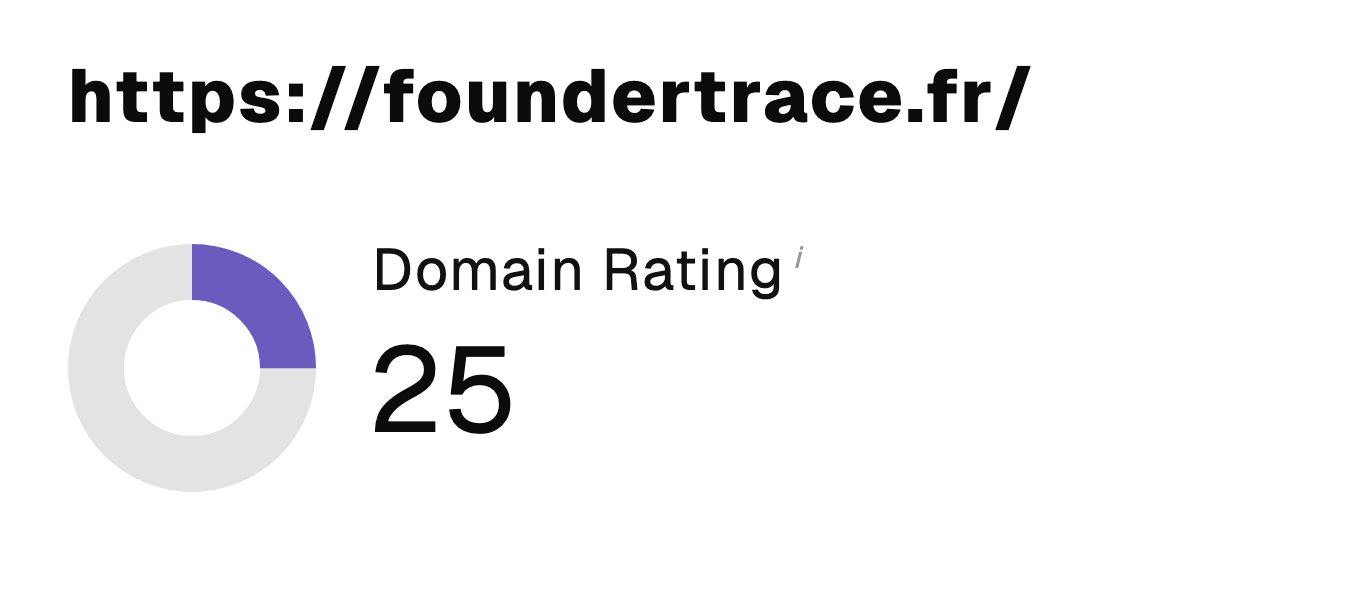 “I just let the Sorank software do its thing, and now my DR is 25 and my page is ranking higher.”
 Lucas Flandrefoundertrace.fr“I specialized in GEO thanks to Sorank. The GEO Leaderboard allows me to show my clients their position vs competitors on ChatGPT. It’s a real commercial differentiator.”
 MélanieSEO Freelance“Great service, works well for our website and helps us understand how to improve it to rank better on Google and elsewhere. Congrats, keep going, I recommend it.”
 Hugo T.E-commerce merchant