Preferences
Privacy is important to us, so you have the option of disabling certain types of storage that may not be necessary for the basic functioning of the website. Blocking categories may impact your experience on the website. More information

Privacy is important to us, so you have the option of disabling certain types of storage that may not be necessary for the basic functioning of the website. Blocking categories may impact your experience on the website. More information

The best SEO tools for startups in 2027, ranked by stage: free tools before launch, one suite for first customers, autopilot content for growth.
Tools


In short
the best SEO tools for startups depend on the stage you are at, not on the size of the feature list. Before product-market fit, a free stack is enough: Google Search Console, Bing Webmaster Tools, Google Analytics 4 and free tools such as those of Sorank. With your first customers, add one analysis suite at entry price (Ubersuggest or Ahrefs Starter from $29 per month, SE Ranking or Semrush above $100). In the growth phase, the bottleneck becomes publishing every week: that is where an autopilot content tool such as Sorank and a crawler such as Screaming Frog earn their place.
Want to go further? Ask
Transparency: Sorank is our own software. I ranked the tools by the startup stage they serve best, using the features and prices each company publishes on its own website, checked in October 2026. Sorank appears in the free stage for its free tools and in the growth stage for its paid plans, because that is where it is relevant; it is not the right first purchase for a startup that has no product pages yet.
Choosing the best SEO tools for startups is mostly a budget question. A founder with twelve months of runway cannot pay three overlapping subscriptions, and a startup with no indexed pages has nothing for a $139 suite to analyse. Google's own SEO Starter Guide notes that some changes take effect in a few hours while others can take several months, which is why the right stack grows with the company instead of being bought on day one. I ran an SEO agency for two years before building Sorank, and the most common waste I saw was tooling bought for a stage the company had not reached.
A startup should spend nothing on SEO tools before it has a product and a site worth indexing, around $30 to $140 per month once it publishes regularly for its first customers, and $150 to $400 per month in the growth phase, when content volume becomes the constraint. These bands come from the entry prices listed below, not from a survey.
The three stages I use in this article are defined by what the company needs from search:
To size the budget against your own numbers, the free SEO budget calculator works from your traffic goals, and the SaaS SEO ROI calculator estimates what organic sign-ups are worth for a subscription business.
The table below turns the three stages into tool stacks. Prices are shown in the currency each vendor displays on its pricing page, checked in October 2026.
| Monthly budget | Stage | Tool stack | What you get |
|---|---|---|---|
| $0 | Before the product | Google Search Console, Bing Webmaster Tools, Google Analytics 4, Sorank free tools and Chrome extension, Screaming Frog free version, Ahrefs Free | Indexing, real queries, Copilot citations, conversions, keyword ideas, on-page checks, crawl of up to 500 URLs |
| About $30 | First customers, founder writes | Free stack + Ubersuggest (plans from $29) or Ahrefs Starter ($29) | Keyword volumes and competitor research |
| $50 - $140 | First customers, regular publishing | Free stack + Sorank Essential ($49/month billed annually) or Semrush SEO plan ($139) or SE Ranking Core (€109) | Either automated production or a full analysis suite, rarely both |
| $150 - $400 | Growth | One analysis suite + Sorank (Essential $99 or Pro $249 monthly) + Screaming Frog licence (€245 per year, about €20 per month) | Research, weekly publishing, AI visibility tracking and technical crawling |
I evaluated each tool on five criteria that matter to a startup: the stage it serves, the entry price (and whether a free version exists), the job it does that no other tool in the stack does, how much time it saves a small team, and whether it measures visibility in AI assistants as well as in Google. Every feature and price comes from the vendor's own website, checked in October 2026; check prices again on the day you subscribe.
What it does. Google Search Console is Google's free service for site owners. It shows the queries that bring impressions and clicks, the pages Google has indexed and why others are excluded, and lets you inspect any URL. Google's starter guide recommends it to monitor and optimise how a site performs in Google Search.
Why a startup needs it. It is the only source of real Google query data for your own site.
Limit. It covers your site only: no competitor data, no keyword volumes for queries you do not yet appear on.
What it does. Bing Webmaster Tools is Microsoft's free equivalent of Search Console. Since February 2026 it includes an AI Performance report, in public preview, that counts how often your pages are cited in Microsoft Copilot, AI-generated summaries in Bing and some partner integrations, with page-level citation counts and the grounding queries used to retrieve your content, according to the Bing Webmaster blog.
Why a startup needs it. The AI Performance report is one of the few free sources of AI citation data.
Limit. The report counts citations only; Microsoft states it does not indicate ranking or placement inside the answer, and it covers Microsoft surfaces, not ChatGPT, Claude or Gemini.
What it does. Google Analytics 4 measures sessions, sources and conversion events across your site. For a startup, the useful report is acquisition by channel and source, tied to sign-ups or demo requests.
Why a startup needs it. Search Console shows which queries bring visitors; GA4 shows which pages turn them into customers. That link decides which topics deserve more articles.
Limit. It requires a consent setup in regions with cookie rules, and it says nothing about rankings or competitors.
What they do. Sorank publishes free tools that cover the gaps of the Google and Microsoft consoles: a free keyword research tool for topic ideas, a ChatGPT visibility checker to see whether ChatGPT mentions your brand, an AI Overview checker, an LLM citation checker, a GEO audit, robots.txt and sitemap checkers, an llms.txt generator and several calculators. On-page checks run in the free Sorank SEO Chrome extension, which displays recommendations on any page you open.
Why a startup needs them. They answer the two questions free consoles leave open at this stage: what to write about, and whether AI assistants already know the brand.
Limit. They are one-off checks. Weekly tracking of prompts and automated publishing are part of the paid plans.
What it does. Ubersuggest, Neil Patel's tool, gives keyword suggestions, site audits, rank tracking and competitor tracking. Its pricing page lists three paid plans from $29 to $99 per month, a 7-day free trial on monthly subscriptions and a lifetime access option; the entry plan includes 150 reports per day, one project and five tracked competitors.
Who it is for. A founder who writes the first articles alone and needs volumes and difficulty scores without a suite budget.
Limit. Its limits are smaller than those of the larger suites below.
What it does. Ahrefs maintains one of the reference backlink indexes. Ahrefs Free gives verified site owners Web Analytics, a Site Audit with 5,000 crawl credits per project per month and Site Explorer data on their own site. Paid plans start with Starter at $29 per month, which Ahrefs describes as a way to see what people search and spy on competitors, then Lite at $129, Standard at $249 and Advanced at $449.
Who it is for. A startup in a market where links decide rankings, or a founder who wants to study how competitors earn their links.
Limit. AI prompt tracking starts with Lite (5 prompts); writing and publishing stay manual.
What it does. SE Ranking combines rank tracking, keyword research, backlinks and site audit. Its European pricing page lists Core at €109 per month (€87.20 billed annually) with 10 projects and 2,000 keywords tracked daily, a 14-day free trial, and an AI Search add-on from €79 per month. Prices are localised by region.
Who it is for. A small marketing team that wants one complete suite at a lower price than the two market leaders.
Limit. AI tracking is a paid add-on on top of the plan.
What it does. Semrush covers keyword research, competitor analysis, rank tracking, site audit and AI visibility in one interface. Its free plan gives 10 reports per day and one demo project. The SEO plan is listed at $139 per month ($117.33 billed annually) with 5 websites and 500 keywords tracked daily, and includes custom prompt monitoring in AI search; a seven-day free trial is offered.
Who it is for. A funded startup with a marketer who will use research, audit and AI visibility every day.
Limit. At $139 per month it is the most expensive entry ticket in this stage, and it analyses rather than produces content.
What it does. Sorank is SEO and GEO software on autopilot. It reads your site (offers, audiences, products), creates the questions your customers ask AI assistants and asks them every week to ChatGPT, Claude and Gemini, plus Perplexity and Grok on Pro and Business, to measure whether your brand is mentioned and who is cited instead. It identifies your competitors on Google and in AI answers, extracts their keywords, sorts them by priority and fills an editorial calendar. It then writes the articles (built on the Google top 10, with internal links, external sources, images, FAQ, meta tags, JSON-LD schema and fact verification) and publishes them automatically on more than 10 CMS, including Shopify, WordPress, Webflow and Wix. More than 5,000 users work with it.
Pricing. Essential $99 per month or $49 per month billed annually (20 articles, 25 tracked AI prompts), Pro $249 or $129 annually (60 articles, 50 prompts), Business $499 or $249 annually (120 articles, 150 prompts). 3-day free trial and 90-day money-back guarantee.
Limit. There is no technical site audit inside the application (on-page checks run in the free Chrome extension) and no historical backlink index the size of Ahrefs. SEO results generally take 2 to 4 months. It suits a startup that already knows which topics bring customers.
What it does. Screaming Frog SEO Spider is a desktop crawler that finds broken links, redirects, duplicate pages, missing titles and meta data, hreflang errors and structured data issues, and generates XML sitemaps. The free version crawls up to 500 URLs; the paid licence is listed at €245 per year on its euro pricing page.
Who it is for. A startup whose site passes a few hundred URLs, or that runs on a JavaScript framework and needs to check what crawlers see.
Limit. It diagnoses; someone still has to fix what it finds, and it has no keyword or competitor data.
Every cell reflects what each vendor publishes on its own site in October 2026.
| Tool | Stage | Main job | Free option | Paid entry price | AI visibility |
|---|---|---|---|---|---|
| Google Search Console | Before the product | Queries, indexing | Free | None | No |
| Bing Webmaster Tools | Before the product | Bing indexing, Copilot citations | Free | None | Copilot and Bing AI summaries |
| Google Analytics 4 | Before the product | Traffic and conversions | Free | None | No |
| Sorank free tools | Before the product | Keyword ideas, AI checks, on-page extension | Free | See Sorank | One-off ChatGPT and AI Overview checks |
| Ubersuggest | First customers | Keywords, audit | 7-day trial | $29/month | Not published |
| Ahrefs | First customers | Backlinks, keywords | Ahrefs Free (own site) | $29/month (Starter) | From Lite, $129 |
| SE Ranking | First customers | Full suite | 14-day trial | €109/month (Core) | Add-on from €79 |
| Semrush | First customers | Full suite | Free plan, 7-day trial | $139/month (SEO) | Included in SEO plan |
| Sorank | Growth | Topics, writing, publishing | Free tools, 3-day trial | $99/month, $49 billed annually | Weekly prompts in ChatGPT, Claude, Gemini |
| Screaming Frog | Growth | Technical crawl | Free up to 500 URLs | €245/year | No |
Ahrefs and Semrush win on proprietary data, and no other tool here matches their backlink depth. Sorank is the only one that goes from topic to published article. The four free entries cover what a startup needs before it has customers.
Startups lose money on SEO tools in three predictable ways: they pay for overlapping suites, they target keywords they cannot win, and they ignore AI assistants even though their buyers use them to build shortlists.
An SEO tool cannot decide your positioning, choose your market or replace the judgment of the founder; it takes over the repetitive work so that the team keeps its time for those decisions.
For a wider comparison of software categories, our guide to SEO software covers suites, plugins and crawlers, and our ranking of the best AI SEO tools compares writing assistants and AI visibility trackers.
Choose by the constraint you have today:
The best SEO tools for startups follow the company's stage: free consoles before the product, one analysis suite with the first customers, then production and technical tools in the growth phase. Buy one paid tool per need, start measuring AI visibility from day one, and move to autopilot publishing once you know which topics bring customers. When you reach that point, you can start with the Sorank 3-day free trial.

Yes, if the product solves a problem people already search for, because each article keeps bringing visits after it is published while ad spend stops when the budget stops. SEO results generally take 2 to 4 months, so start with free tools and a few well-targeted articles before product-market fit. Increase the investment once Google Analytics shows which pages bring sign-ups.
Google Search Console, Bing Webmaster Tools and Google Analytics 4 cover indexing, real queries, Copilot citations and conversions at no cost. Add a free keyword research tool, a ChatGPT visibility checker and the Screaming Frog free version, which crawls up to 500 URLs. That stack is enough until you publish several articles a month.
Rarely. Both sell keyword research, rank tracking, site audits and backlink data, so paying for both duplicates most of the information. Pick Ahrefs if backlinks drive your market and Semrush if you want the broadest all-in-one suite, then spend the rest of the budget on a tool that does a different job, such as content production or technical crawling.
 Backlink Challenge
 AI Meta Description GeneratorAI Blog Title Generator
 Google Indexability CheckerAI Blog Outline GeneratorUTM Link Builder
 Keyword Clustering ToolCanonical Tag Checker
 XML Sitemap GeneratorBroken Link CheckerAI SEO Title GeneratorHeadline AnalyzerSERP Preview ToolRedirect Checker
 Hreflang Tag GeneratorHeading Structure AnalyzerHTTP Headers CheckerFavicon Extractor
 SERP CTR Calculator
 SEO vs Paid Search Savings Calculator
 SEO Share of Voice Calculator
 SEO ROI Calculator
 SEO Traffic and Revenue Forecast Calculator
 SEO Budget Calculator
 SEO Break-Even Calculator
 SaaS SEO ROI Calculator
 ROAS Calculator
 Reading Time Calculator
 Ranking Gain Simulator
 Organic Traffic Value Calculator
 Organic Traffic Estimator
 LTV to CAC Ratio Calculator
 Local SEO ROI Calculator
 Link Building Cost Calculator
 Keyword Value Calculator
 Keyword Opportunity Score Calculator
 Keyword Density Calculator
 GEO ROI Calculator
 GEO Content Investment Calculator
 Ecommerce SEO ROI Calculator
 Customer Lifetime Value Calculator
 Customer Acquisition Cost Calculator
 CTR Calculator
 Cost Per Article Calculator
 Conversion Rate Calculator
 Content Marketing ROI Calculator
 ChatGPT Referral Traffic Estimator
 Bounce Rate Calculator
 Backlink ROI Calculator
 AI Visibility Score Calculator
 AI Traffic Value Calculator
 AI Share of Voice Calculator
 Cost of AI Invisibility Calculator
 AI Citation Rate Calculatorllms.txt ValidatorAI Overview CheckerRobots.txt Checker
 AI SEO AuditLLM Readability CheckerSearchGPT Readiness Checker
 Structured Data LLM AuditWebsite Crawlability AI AuditWhy ChatGPT Is Not Recommending My Website
 Gemini Ranking ToolPerplexity Ranking CheckerLLM Citation CheckerAnswer Engine Optimization AuditGEO AuditAI Search Visibility TestChatGPT Visibility Checkerllms.txt Generator
 URL ExtractorWebpage to MarkdownSitemap CheckerSERP Volatility SensorPage Size Checker
 Word Counter
 Slug GeneratorSchema GeneratorRobots Generator
 OG PreviewMeta Tags Generator
 Image CompressorFavicon Generator
 On-Page SEO Audit
 Backlink Analysis Tool
 Keyword Research Tool
 Domain Authority Checker
THEY TRIED SORANK BEFORE YOU
 “I tested Sorank on a real client site and it's insane. It does everything an agency would bill you $1500 a month for. It's going into production on that client now.”
 Guillaume Guersanguersanguillaume.com“We are an Ads agency and we wanted to get our SEO back on track once and for all. Sorank gave us a clear view of our site, helped us prioritize optimizations, and properly structure our content. The tool is easy to use, well designed for a team, and very practical for centralizing tracking without having to juggle multiple platforms. A very solid foundation to start fresh with our SEO.”
 Gaspard MadouiAds Agency
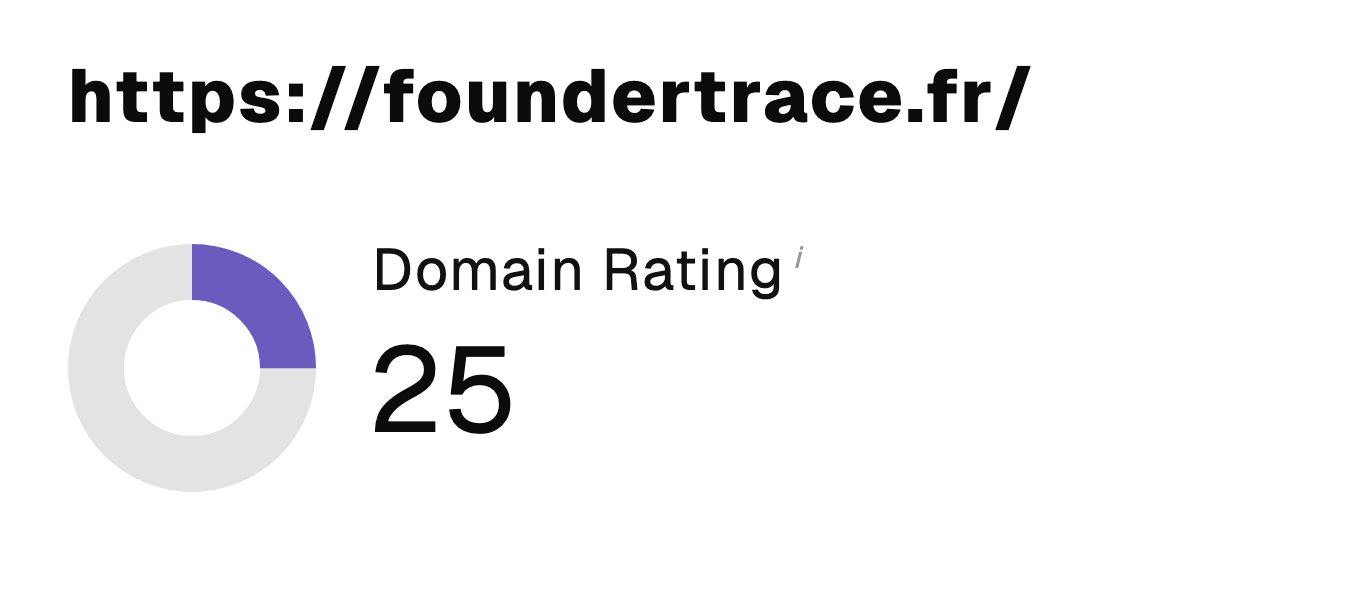 “I just let the Sorank software do its thing, and now my DR is 25 and my page is ranking higher.”
 Lucas Flandrefoundertrace.fr“I specialized in GEO thanks to Sorank. The GEO Leaderboard allows me to show my clients their position vs competitors on ChatGPT. It’s a real commercial differentiator.”
 MélanieSEO Freelance“Great service, works well for our website and helps us understand how to improve it to rank better on Google and elsewhere. Congrats, keep going, I recommend it.”
 Hugo T.E-commerce merchant