Preferences
Privacy is important to us, so you have the option of disabling certain types of storage that may not be necessary for the basic functioning of the website. Blocking categories may impact your experience on the website. More information

Privacy is important to us, so you have the option of disabling certain types of storage that may not be necessary for the basic functioning of the website. Blocking categories may impact your experience on the website. More information

Best ecommerce SEO tools in 2027: Search Console, Merchant Center, Screaming Frog, Semrush, Ahrefs, Shopify apps, Yoast and Sorank, with verified prices.
Tools


In short
the best ecommerce SEO tools in 2027 are a stack, and each piece solves one store problem. Start with Google Search Console and Google Merchant Center, both free, to see indexing and product listings. Add Screaming Frog to control faceted navigation, canonicals and duplicate product pages, Semrush or Ahrefs for transactional keywords and competitors, the SEO features of your platform (Shopify with a recognised app, or Yoast WooCommerce SEO on WooCommerce), and Sorank if you need blog articles that link to your product pages, published automatically, plus weekly tracking of what ChatGPT, Claude and Gemini answer about your category.
Want to go further? Ask
Choosing the best ecommerce SEO tools starts with a fact most generic lists skip: an online store breaks SEO in ways a blog never does. Google itself dedicates a full page of documentation to managing faceted navigation URLs, because filters on size, colour and price can generate a near endless set of URLs that waste crawl time before Google reaches the pages that sell. I have spent seven years on SEO and GEO, two of them running an SEO agency before I sold it to build Sorank, and the stores I saw losing traffic usually had tools, just not the one that matched their specific problem.
Ecommerce SEO is the work of getting product, collection and content pages of an online store found in Google and recommended by AI assistants. It differs from SEO for a service site on seven recurring problems, and each tool below is ranked on how well it handles some of them.
That last point is moving fast. Shopify announced agentic storefronts that let merchants' products be discovered in ChatGPT, Perplexity and Microsoft Copilot, and its CEO Tobi Lütke said the company is making every Shopify store "agent-ready by default", as reported by BetaKit. Your product data now feeds two audiences: Google and the assistants that recommend products.
I ranked each tool on the store problems listed above: crawl and indexing control, product structured data, keyword and competitor research, content production for collection and blog pages, compatibility with Shopify and WooCommerce, visibility in AI answers, and entry price relative to what the tool covers. The order follows the sequence in which a store usually needs them, from the free foundation to the paid layers.
Every price and feature below comes from the publisher's own website, pricing page or app listing, checked in October 2026. Prices change often, so check them again on the day you subscribe.
Transparency: Sorank is our own software. I placed it where it is relevant for a store, which is content and AI visibility, and I say plainly what it does not do: it does not crawl your site, it does not hold a backlink index and it does not manage your Merchant Center feed. Several tools below beat it on those jobs, and the table says so.
What they do. Google Search Console shows which pages Google indexes, which queries bring clicks, and reports errors on product structured data. Google Merchant Center receives your product feed. Its documentation on free listings states that your products can appear at no cost on Google Search, the Shopping tab, Images, Lens, Maps, YouTube and Gemini.
Best for. Every store, from the first day. No paid tool sees your own search data the way Search Console does.
Price. Free for both.
Where they fall short. They show problems without fixing them, they say nothing about your competitors, and they give no keyword ideas beyond the queries you already appear on.
Verdict. Set them up before buying anything else. Every other tool on this list is more useful once these two are connected.
What it does. Screaming Frog is a desktop crawler that explores your store the way a search robot does and lists status codes, redirects, canonical tags, duplicate titles and descriptions, and pages blocked by robots.txt. On a store, it is the tool that shows how many filter URLs your faceted navigation really generates.
Best for. Stores with large catalogues, many variants or layered filters, and anyone preparing a platform migration.
Price. Free up to 500 URLs. A licence costs €245 per year on its pricing page and removes that limit.
Where it falls short. It is a technical tool that requires interpretation, it gives no keyword data, and 500 URLs are quickly reached on a store with variants. For a wider comparison of crawlers, see our ranking of the best technical SEO tools.
Verdict. The reference for the technical problems specific to stores.
What it does. Semrush covers keyword research, competitor analysis, position tracking and site audit. Its pricing page in October 2026 also lists AI visibility tracking on every paid plan, with a number of daily prompts that grows with the plan.
Best for. Finding the commercial keywords your collections should target, and seeing which competitor pages rank on them.
Price. A free plan exists. Paid plans start at $139 per month (SEO plan), or $117.33 per month billed annually, with a seven day free trial.
Where it falls short. It does not write or publish your content, and the most complete plans quickly exceed the budget of a small store.
Verdict. The most complete research suite for a store that has a person to act on the data. On AI visibility measurement, it overlaps with Sorank and has a free entry point that Sorank does not offer.
What it does. Ahrefs is known for its backlink index, its keyword explorer and its site audit. For a store, it shows which pages of your competitors attract links and traffic, and which keywords their product and collection pages capture.
Best for. Stores that work on netlinking and want to understand why a competitor outranks them.
Price. The pricing page lists a Starter plan at $29 per month, Lite at $129, Standard at $249 and Advanced at $449, with up to 17% off on annual billing, plus a free tier for your own site data.
Where it falls short. Like Semrush, it produces analysis rather than pages, and the full set of features sits on the higher plans.
Verdict. The choice when links are your bottleneck.
What it does. Sorank is SEO and GEO software on autopilot. It reads your store (offers, targets, products), identifies your competitors on Google and in AI answers, extracts their keywords, sorts them by priority and fills an editorial calendar. It then writes articles with internal links to your product pages, external sources, FAQ, meta tags and JSON-LD schema, and publishes them automatically on more than ten CMS, including Shopify, WordPress (so WooCommerce stores), Webflow and Wix. Each week it asks ChatGPT, Claude and Gemini the questions your buyers ask (plus Perplexity and Grok on the Pro and Business plans) to measure whether your brand is mentioned and who is cited instead. For an example of AI citation data in ecommerce, see our study of how AI assistants cite Shopify.
Best for. Stores that know they need a regular blog to support their collections and products but have nobody to write it, and brands that want to know what AI assistants recommend in their category.
Price. Essential $99 per month without commitment or $49 per month billed annually (20 articles and 25 AI prompts tracked), Pro $249 or $129 (60 articles, 50 prompts), Business $499 or $249 (120 articles, 150 prompts), with a 3-day free trial and a 90-day money back guarantee.
Where it falls short. Sorank does not crawl your site, has no backlink index and does not manage Merchant Center. On-page checks go through its free Chrome extension, page by page. SEO results generally take 2 to 4 months.
Verdict. The tool for the content layer and AI visibility of a store, alongside a crawler and Search Console.
What it does. According to the Shopify Help Center, every store automatically generates a sitemap.xml file, lets you edit the title and meta description of products, collections and blog posts, lets you edit image alt text, and builds the H1 from the page title. Two SEO apps stand out on the Shopify App Store in October 2026: Booster SEO (rated 4.8 out of 5, free plan, Pro at $39 per month), which handles alt text, broken links, meta tags and structured data, and Plug in SEO (rated 4.6 out of 5, from $29.99 per month with a free trial), which adds audits, JSON-LD and redirects for broken links.
Best for. Shopify merchants who want quick fixes inside their admin. Our Shopify SEO and GEO guide details what the platform handles and what remains to do.
Price. Native features included in Shopify. Apps from free to around $80 per month.
Where it falls short. Some reviews report theme code left behind after an app is uninstalled, so check how an app modifies your theme before installing it.
Verdict. Enough for most small Shopify catalogues, combined with Search Console.
What it does. Yoast WooCommerce SEO adds product schema (price, availability, ratings, identifiers), breadcrumbs, product sitemaps that skip cart, checkout and filter pages, canonicals that consolidate filter and parameter URLs, and AI generated titles and meta descriptions. It includes everything in Yoast SEO Premium.
Best for. WooCommerce stores that want product structured data and filter control without code. Rank Math is the usual alternative, with a free version and a PRO plan from €7.99 per month billed annually. Our WooCommerce SEO and GEO guide covers the platform in detail, and the PrestaShop guide does the same for PrestaShop stores.
Price. $178.80 per year excluding VAT.
Where it falls short. It works only on WordPress, and it optimises the pages you already have without producing new content.
Verdict. The reference plugin for WooCommerce product pages.
| Tool | Main job for a store | Platforms | AI visibility tracking | Entry price (October 2026) |
|---|---|---|---|---|
| Google Search Console and Merchant Center | Indexing, product listings, structured data errors | All | No | Free |
| Screaming Frog | Facets, canonicals, duplicates, redirects | All | No | Free up to 500 URLs, €245 per year |
| Semrush | Keywords, competitors, position tracking | All | Yes, on paid plans | Free plan, then $139 per month |
| Ahrefs | Backlinks, competitor pages, keywords | All | Not verified | $29 per month (Starter) |
| Sorank | Articles linking to products, automatic publishing, AI answers | Shopify, WordPress, Webflow, Wix and more | Yes, weekly | $99 per month, $49 billed annually |
| Shopify native and apps | Meta tags, alt text, sitemap, schema | Shopify | Partial, depending on the app | Included, apps from free |
| Yoast WooCommerce SEO | Product schema, breadcrumbs, filter canonicals | WooCommerce | No | $178.80 per year |
Read the table by column. Screaming Frog, Search Console and Yoast own the technical and structured data jobs, where Sorank does nothing. Semrush and Ahrefs own research. Sorank owns the production and publication of content, and shares AI visibility tracking with Semrush.
A store just starting: Search Console, Merchant Center and your platform's native features. Zero cost, and enough to fix indexing and get free product listings.
A Shopify store with a growing catalogue: add a recognised SEO app, Screaming Frog once the catalogue exceeds a few hundred URLs, and a content tool to feed the blog. To estimate what extra organic traffic is worth for your margin, use our free ecommerce SEO ROI calculator.
A WooCommerce store: Yoast WooCommerce SEO or Rank Math, Search Console, Screaming Frog, then a research suite when you start chasing competitors.
A brand that competes on content and AI answers: Semrush or Ahrefs for research, Sorank for production, publication and weekly AI tracking. Our page on Sorank for ecommerce shows how the software fits a store.
Software takes the repetitive work: crawling, keyword extraction, writing and publishing articles, internal linking, weekly tracking in AI answers. The decisions remain human: which products to push, the price and margin, the structure of collections, the choice of platform, a migration plan, and negotiations with partners for links. No tool on this list decides those for you.
The best ecommerce SEO setup in 2026 is a stack matched to the problems of your store. Start with Search Console and Merchant Center, add Screaming Frog for facets and duplicates, your platform's SEO features for product schema, Semrush or Ahrefs for research, and Sorank when the blog and AI answers become the bottleneck. If that is your case, you can test Sorank with a 3-day free trial on the pricing page.

Google Search Console is the most useful free tool for a store, because it shows which product and collection pages Google indexes, which queries bring clicks and which structured data errors block rich results. Pair it with Google Merchant Center, which is also free and lets your products appear in free listings on Google. Screaming Frog adds a free crawl of up to 500 URLs.
Shopify already generates the sitemap and lets you edit titles, meta descriptions and alt text, so an app is useful mainly for bulk fixes and structured data. In October 2026, Booster SEO (free plan, Pro at $39 per month) and Plug in SEO (from $29.99 per month) are two of the most reviewed SEO apps on the Shopify App Store. Check how the app modifies your theme before installing it.
SEO results generally take 2 to 4 months to appear, and longer on competitive commercial keywords. Technical fixes such as removing useless filter URLs from the index can show effects sooner, once Google recrawls the pages. Content that targets collection and product questions builds traffic progressively as articles get indexed and linked.
 Backlink Challenge
 AI Meta Description GeneratorAI Blog Title Generator
 Google Indexability CheckerAI Blog Outline GeneratorUTM Link Builder
 Keyword Clustering ToolCanonical Tag Checker
 XML Sitemap GeneratorBroken Link CheckerAI SEO Title GeneratorHeadline AnalyzerSERP Preview ToolRedirect Checker
 Hreflang Tag GeneratorHeading Structure AnalyzerHTTP Headers CheckerFavicon Extractor
 SERP CTR Calculator
 SEO vs Paid Search Savings Calculator
 SEO Share of Voice Calculator
 SEO ROI Calculator
 SEO Traffic and Revenue Forecast Calculator
 SEO Budget Calculator
 SEO Break-Even Calculator
 SaaS SEO ROI Calculator
 ROAS Calculator
 Reading Time Calculator
 Ranking Gain Simulator
 Organic Traffic Value Calculator
 Organic Traffic Estimator
 LTV to CAC Ratio Calculator
 Local SEO ROI Calculator
 Link Building Cost Calculator
 Keyword Value Calculator
 Keyword Opportunity Score Calculator
 Keyword Density Calculator
 GEO ROI Calculator
 GEO Content Investment Calculator
 Ecommerce SEO ROI Calculator
 Customer Lifetime Value Calculator
 Customer Acquisition Cost Calculator
 CTR Calculator
 Cost Per Article Calculator
 Conversion Rate Calculator
 Content Marketing ROI Calculator
 ChatGPT Referral Traffic Estimator
 Bounce Rate Calculator
 Backlink ROI Calculator
 AI Visibility Score Calculator
 AI Traffic Value Calculator
 AI Share of Voice Calculator
 Cost of AI Invisibility Calculator
 AI Citation Rate Calculatorllms.txt ValidatorAI Overview CheckerRobots.txt Checker
 AI SEO AuditLLM Readability CheckerSearchGPT Readiness Checker
 Structured Data LLM AuditWebsite Crawlability AI AuditWhy ChatGPT Is Not Recommending My Website
 Gemini Ranking ToolPerplexity Ranking CheckerLLM Citation CheckerAnswer Engine Optimization AuditGEO AuditAI Search Visibility TestChatGPT Visibility Checkerllms.txt Generator
 URL ExtractorWebpage to MarkdownSitemap CheckerSERP Volatility SensorPage Size Checker
 Word Counter
 Slug GeneratorSchema GeneratorRobots Generator
 OG PreviewMeta Tags Generator
 Image CompressorFavicon Generator
 On-Page SEO Audit
 Backlink Analysis Tool
 Keyword Research Tool
 Domain Authority Checker
THEY TRIED SORANK BEFORE YOU
 “I tested Sorank on a real client site and it's insane. It does everything an agency would bill you $1500 a month for. It's going into production on that client now.”
 Guillaume Guersanguersanguillaume.com“We are an Ads agency and we wanted to get our SEO back on track once and for all. Sorank gave us a clear view of our site, helped us prioritize optimizations, and properly structure our content. The tool is easy to use, well designed for a team, and very practical for centralizing tracking without having to juggle multiple platforms. A very solid foundation to start fresh with our SEO.”
 Gaspard MadouiAds Agency
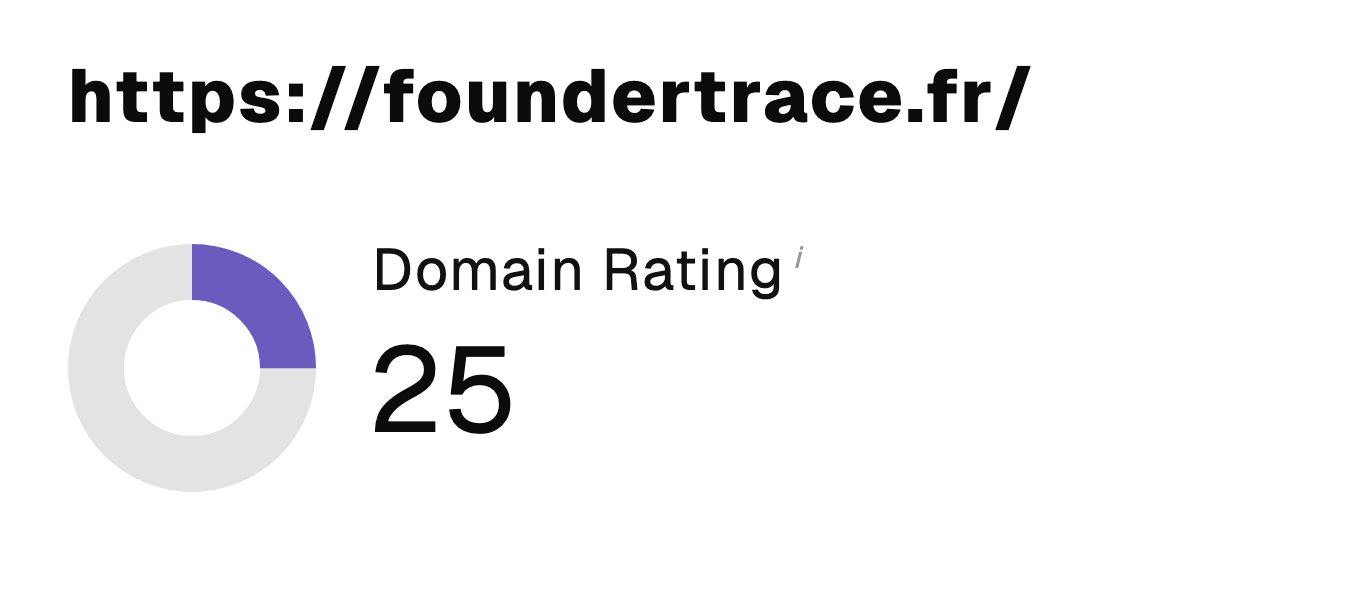 “I just let the Sorank software do its thing, and now my DR is 25 and my page is ranking higher.”
 Lucas Flandrefoundertrace.fr“I specialized in GEO thanks to Sorank. The GEO Leaderboard allows me to show my clients their position vs competitors on ChatGPT. It’s a real commercial differentiator.”
 MélanieSEO Freelance“Great service, works well for our website and helps us understand how to improve it to rank better on Google and elsewhere. Congrats, keep going, I recommend it.”
 Hugo T.E-commerce merchant