Preferences
Privacy is important to us, so you have the option of disabling certain types of storage that may not be necessary for the basic functioning of the website. Blocking categories may impact your experience on the website. More information

Privacy is important to us, so you have the option of disabling certain types of storage that may not be necessary for the basic functioning of the website. Blocking categories may impact your experience on the website. More information

Best SEO API in 2027: DataForSEO, Google Search Console, Ahrefs, Semrush, SE Ranking, SerpApi, Majestic and Moz compared on pricing, coverage and rate limits.
Tools


In short
the best SEO API in 2027 for most developers is DataForSEO, because it is the only one in this comparison that combines pay as you go billing (from $0.0006 per Google results page), SERP, keyword, backlink and AI answer data in one account, with a $50 minimum payment instead of a subscription. The Google Search Console API is the right first choice for data about your own site, since it is free. Ahrefs and Semrush make sense when your team already pays for those suites, SE Ranking is the cheapest subscription that includes API credits and AI visibility data, SerpApi is the simplest way to get raw results pages, and Majestic and Moz are specialists in link metrics. The deciding criterion is the billing unit: per request, per row, per credit or per month.
Want to go further? Ask
Transparency: Sorank is our own software, and it is not in this ranking because it does not sell raw SEO data through an API. It appears in the section on MCP servers, where it belongs. I ranked the eight APIs on their public pricing pages and official documentation, checked on 10 October 2026, and wrote "not published" wherever a vendor does not publish a number.
An SEO API is a programming interface that returns search data (results pages, keyword volumes, backlinks, rankings, AI answers) as structured JSON, so a script, a dashboard or an AI assistant can use it without a human copying numbers out of a tool. Some are free: Google states that all use of the Search Console API is free of charge, subject to usage limits. Most are not, and the way each vendor counts what you consume changes the real price far more than the headline figure does.
I compared the eight APIs on four criteria chosen before looking at who wins them, because they are the four questions a developer or an agency asks before writing the first line of code.
Every price below comes from the vendor's own pricing page or documentation, in the currency the vendor displays. Prices for data APIs move several times a year, so check them on the day you sign up.
What it does. DataForSEO sells SEO data as separate APIs billed per use. Its SERP API covers seven search engines (Google, Bing, YouTube, Yahoo, Baidu, Naver and Seznam) and returns parsed JSON or raw HTML. Alongside it sit keyword, backlink and on-page APIs, and an AI Optimization API that returns brand and domain mentions and citations across ChatGPT, Gemini, Google AI Overview, Claude and Perplexity, AI search volume for keywords, and responses collected from several language models.
Pricing. Pay as you go, with a minimum payment of $50 and a $1 credit for new accounts. A Google results page of 10 results costs $0.0006 in the standard queue (about 5 minutes), $0.0012 in the priority queue and $0.002 in live mode (up to 6 seconds). On the AI side, the LLM Mentions API is listed at $0.1 per request plus $0.001 per row, and AI Keyword Data at $0.01 per task plus $0.0001 per keyword.
Limits. 2,000 requests per minute by default, with lower caps on some live endpoints (12 per minute for live Google Ads keyword data). An official MCP server is published as open source.
Verdict. I would choose it to build a product or an internal tool, because you pay for exactly what you call and the AI answer data lives in the same account as the SERP data.
What it does. The Search Console API returns the clicks, impressions, click-through rate and average position Google records for a site you have verified, broken down by query, page, country, device and date. It also exposes URL Inspection (index status of a page) and sitemaps. It returns nothing about sites you do not own.
Pricing. Free.
Limits. Google publishes them in detail: 1,200 Search Analytics queries per minute per site and per user, and 2,000 URL inspections per day per site. A single Search Analytics request returns at most 25,000 rows, and Google warns that the API does not guarantee every data row.
Verdict. I would connect it first on any project: it is the only source of real Google clicks for your site, and it costs nothing. If you want the step-by-step method, our guide to checking a keyword position with a Google API walks through it.
What it does. The Ahrefs API v3 exposes the data behind Ahrefs: backlink analysis, keyword research, rank tracking and brand visibility across search and AI platforms. Ahrefs also runs an MCP server with setup guides for Claude, ChatGPT and Claude Code.
Pricing. API access starts on the Lite plan at $129 per month with 200,000 API units and 100 rows per request, then Standard at $249 (800,000 units, 200 rows), Advanced at $449 (2,000,000 units, 500 rows) and Enterprise from $1,499 per month with an annual commitment (4,000,000 units, unlimited rows). The pricing page lists "API and MCP access" from Lite.
Limits. 60 requests per minute by default, with HTTP 429 responses beyond that. Free test queries are available without an Enterprise plan.
Verdict. I would choose it when the team already lives in Ahrefs and needs its backlink index in scripts. Bought only for the API, the unit model is harder to forecast than per request billing.
What it does. The Semrush Standard API covers domain, keyword and backlink analytics plus the Projects data, and a separate Trends API returns traffic and market data. Semrush also publishes an MCP server compatible with ChatGPT, Claude, Gemini, Perplexity, Cursor, VS Code and Claude Code.
Pricing. On the current pricing page, "API data integration" appears on the Advanced plan, at $549 per month or $455.67 per month billed annually. API units are bought on top, in packages of 2, 5, 10 or 20 million units that expire at the end of each billing period. Semrush does not publish the price of those packages. Consumption depends on the report: the documentation gives 40 units per line for a backlinks call. The Trends API is sold separately, with a default of 10,000 requests per month.
Limits. No more than 10 requests per second from one IP address and 10 simultaneous requests per user, according to the API terms. Cached data must not be kept longer than one month without written consent.
Verdict. I would choose it when Semrush is already the reference tool of the team. For a new project, an unpublished unit price makes budgeting difficult.
What it does. The SE Ranking API covers keyword research, backlinks, domain analysis with SERP and traffic data, website audits and AI search visibility across ChatGPT, Gemini, Perplexity, AI Mode and AI Overviews. An MCP server, included in every plan, connects the data to Claude, Codex, Gemini or Cursor.
Pricing. API access is included in every plan: Core at $129 per month comes with 25,000 API credits per month, Growth at $279 per month with 100,000. An API add-on starts at $149 per month, and a standalone pay as you go option requires a $50 minimum deposit. The free trial lets you test the API.
Limits. Up to 10 requests per second by default, raised on request through support.
Verdict. I would choose it when a small team wants rankings, backlinks and AI visibility data through one subscription, without paying enterprise prices for API access.
What it does. SerpApi returns results pages as JSON for Google (including AI Overview, AI Mode, Maps, Shopping, Scholar and Trends), Bing, Baidu, Brave, DuckDuckGo, Yahoo, Yandex and Naver, plus marketplaces such as Amazon, eBay and Walmart, and YouTube. It does not publish keyword volumes or backlink data: it scrapes results pages and nothing else.
Pricing. Monthly plans by number of searches: free at 250 searches per month, Starter at $25 for 1,000, Developer at $75 for 5,000, Production at $150 for 15,000, and up to cloud plans of several million. Cached, errored and failed searches are not counted.
Limits. Throughput is capped per hour by plan: 50 searches per hour on the free plan, 200 on Starter, 1,000 on Developer, 3,000 on Production.
Verdict. I would choose it for a prototype or a product that needs results pages from many engines with a predictable monthly bill. Per results page, it costs more than DataForSEO at the same volume.
What it does. Majestic specialises in links: its API returns backlinks, referring domains and its own Trust Flow and Citation Flow metrics. There are no keyword volumes and no results pages.
Pricing. API access comes only with the API plan, at €379.99 per month or €316.66 per month billed annually (€3,799.90 per year), the prices displayed on its pricing page. The plan includes everything in PRO plus the full API, with 100 million analysis units, 20 million retrieval units and 500,000 index item info units. Higher unit levels exist on request.
Limits. Consumption is governed by those unit pools. No per minute rate is stated on the pricing page.
Verdict. I would choose it for link audits and link prospecting at scale, where a dedicated link index is the whole point.
What it does. The Moz API returns the metrics Moz created, Domain Authority and Page Authority, along with Spam Score and link metrics. It is the reference source when a client or a marketplace asks for a Domain Authority figure.
Pricing. The API is a subscription separate from Moz Pro, billed by rows. Moz publishes its tiers on its API pricing page, which could not be loaded on our verification date, so I do not quote a number here: check it directly.
Limits. Not verified on our check date.
Verdict. I would choose it when Domain Authority itself is the metric you are asked for. For anything broader, the APIs above cover more.
The cheapest SEO API depends on the billing unit. For data about your own site, the Search Console API costs nothing. For results pages at volume, per request billing (DataForSEO) beats monthly bundles. For backlinks inside a suite, the entry plan of the suite you already use is usually cheaper than a second subscription.
| API | Pricing model | Entry price (October 2026) | Coverage | Published rate limit |
|---|---|---|---|---|
| DataForSEO | Pay as you go | $50 minimum payment, Google SERP from $0.0006 per page | SERP on 7 engines, keywords, backlinks, AI mentions and responses | 2,000 requests per minute |
| Google Search Console API | Free | $0 | Your own sites: clicks, impressions, position, URL Inspection | 1,200 queries per minute per site, 2,000 inspections per day per site |
| Ahrefs API | Subscription with API units | Lite $129 per month, 200,000 units | Backlinks, keywords, rank tracking, brand visibility in AI | 60 requests per minute |
| Semrush API | Plan plus unit packages | Advanced $549 per month, unit price not published | Domain, keyword and backlink analytics, Trends API separate | 10 requests per second per IP |
| SE Ranking API | Credits in plans, add-on | Core $129 per month, 25,000 credits | Keywords, backlinks, SERP, audits, AI search visibility | Up to 10 requests per second |
| SerpApi | Monthly plan by searches | Free 250 searches, Starter $25 for 1,000 | Results pages on Google, Bing and 6 other engines, no volumes, no backlinks | 50 to 3,000 searches per hour by plan |
| Majestic API | API plan with unit pools | €379.99 per month | Backlinks, Trust Flow, Citation Flow | Not published, unit based |
| Moz API | Subscription by rows | Published on Moz's API pricing page | Domain Authority, Page Authority, Spam Score, links | Not verified |
Read the table by column. Only DataForSEO and SE Ranking return data about AI answers through the API as of October 2026, and Ahrefs adds brand visibility in AI platforms. Only Google is free. Only SerpApi covers marketplaces. And two vendors out of eight (Semrush and Moz) leave part of the real cost off the pages we could check, which is a cost in itself when you build a business on top of the data.
The right SEO API is the one whose billing unit matches how your project consumes data. A rank tracker calls the same queries every day, a keyword research tool calls thousands of new ones once, and an AI visibility tool calls prompts every week.
If you do not want to write code at all, a ready made product is faster than any API. Our ranking of SEO software compares the suites built on this kind of data, and our list of AI SEO tools covers the ones that write and publish content.
An MCP server is the faster way to connect an AI assistant to SEO data, and an API is the right way to connect code. The Model Context Protocol, published by Anthropic as an open standard in November 2024, lets Claude, ChatGPT or Cursor call a data source as a tool, without anyone writing the integration.
Four vendors in this ranking publish an official MCP server: DataForSEO, Ahrefs, Semrush and SE Ranking. Sorank publishes one too, for a different job. The difference is what the AI can do once connected. Data MCP servers let the AI read numbers. The Sorank MCP server lets the AI read and act on your account:
The Sorank MCP is included in every plan at no extra cost, with an active subscription on at least one site. For checking pages one at a time, our free SEO tools do the job without any API.
For most developers, DataForSEO is the best SEO API in 2026, because per request billing and AI answer data in the same account fit almost every project. Connect the free Search Console API first for your own site, keep Ahrefs or Semrush if your team already pays for them, and pick SE Ranking for an affordable subscription with AI visibility data. If what you want is an AI assistant that analyses your Search Console and AI visibility, then writes and publishes the articles, compare the Sorank plans: Essential at $99 per month or $49 per month billed annually, with a 3-day free trial.

Yes. The Google Search Console API is free and returns clicks, impressions, click-through rate and average position for the sites you have verified, within published usage limits. SerpApi also has a free plan of 250 searches per month, and DataForSEO gives new accounts a $1 credit to test its APIs.
Yes. In October 2026, Ahrefs includes API and MCP access from its Lite plan at $129 per month, with 200,000 API units and 100 rows per request. Higher plans add more units and rows, up to Enterprise from $1,499 per month. The default limit is 60 requests per minute.
An SEO API returns data to code that a developer writes, such as a script or a dashboard. An MCP server exposes the same kind of data as tools that an AI assistant like Claude or ChatGPT can call by itself during a conversation. Many vendors now offer both, and the MCP server is usually the faster way to work with SEO data from an AI.
 Backlink Challenge
 AI Meta Description GeneratorAI Blog Title Generator
 Google Indexability CheckerAI Blog Outline GeneratorUTM Link Builder
 Keyword Clustering ToolCanonical Tag Checker
 XML Sitemap GeneratorBroken Link CheckerAI SEO Title GeneratorHeadline AnalyzerSERP Preview ToolRedirect Checker
 Hreflang Tag GeneratorHeading Structure AnalyzerHTTP Headers CheckerFavicon Extractor
 SERP CTR Calculator
 SEO vs Paid Search Savings Calculator
 SEO Share of Voice Calculator
 SEO ROI Calculator
 SEO Traffic and Revenue Forecast Calculator
 SEO Budget Calculator
 SEO Break-Even Calculator
 SaaS SEO ROI Calculator
 ROAS Calculator
 Reading Time Calculator
 Ranking Gain Simulator
 Organic Traffic Value Calculator
 Organic Traffic Estimator
 LTV to CAC Ratio Calculator
 Local SEO ROI Calculator
 Link Building Cost Calculator
 Keyword Value Calculator
 Keyword Opportunity Score Calculator
 Keyword Density Calculator
 GEO ROI Calculator
 GEO Content Investment Calculator
 Ecommerce SEO ROI Calculator
 Customer Lifetime Value Calculator
 Customer Acquisition Cost Calculator
 CTR Calculator
 Cost Per Article Calculator
 Conversion Rate Calculator
 Content Marketing ROI Calculator
 ChatGPT Referral Traffic Estimator
 Bounce Rate Calculator
 Backlink ROI Calculator
 AI Visibility Score Calculator
 AI Traffic Value Calculator
 AI Share of Voice Calculator
 Cost of AI Invisibility Calculator
 AI Citation Rate Calculatorllms.txt ValidatorAI Overview CheckerRobots.txt Checker
 AI SEO AuditLLM Readability CheckerSearchGPT Readiness Checker
 Structured Data LLM AuditWebsite Crawlability AI AuditWhy ChatGPT Is Not Recommending My Website
 Gemini Ranking ToolPerplexity Ranking CheckerLLM Citation CheckerAnswer Engine Optimization AuditGEO AuditAI Search Visibility TestChatGPT Visibility Checkerllms.txt Generator
 URL ExtractorWebpage to MarkdownSitemap CheckerSERP Volatility SensorPage Size Checker
 Word Counter
 Slug GeneratorSchema GeneratorRobots Generator
 OG PreviewMeta Tags Generator
 Image CompressorFavicon Generator
 On-Page SEO Audit
 Backlink Analysis Tool
 Keyword Research Tool
 Domain Authority Checker
THEY TRIED SORANK BEFORE YOU
 “I tested Sorank on a real client site and it's insane. It does everything an agency would bill you $1500 a month for. It's going into production on that client now.”
 Guillaume Guersanguersanguillaume.com“We are an Ads agency and we wanted to get our SEO back on track once and for all. Sorank gave us a clear view of our site, helped us prioritize optimizations, and properly structure our content. The tool is easy to use, well designed for a team, and very practical for centralizing tracking without having to juggle multiple platforms. A very solid foundation to start fresh with our SEO.”
 Gaspard MadouiAds Agency
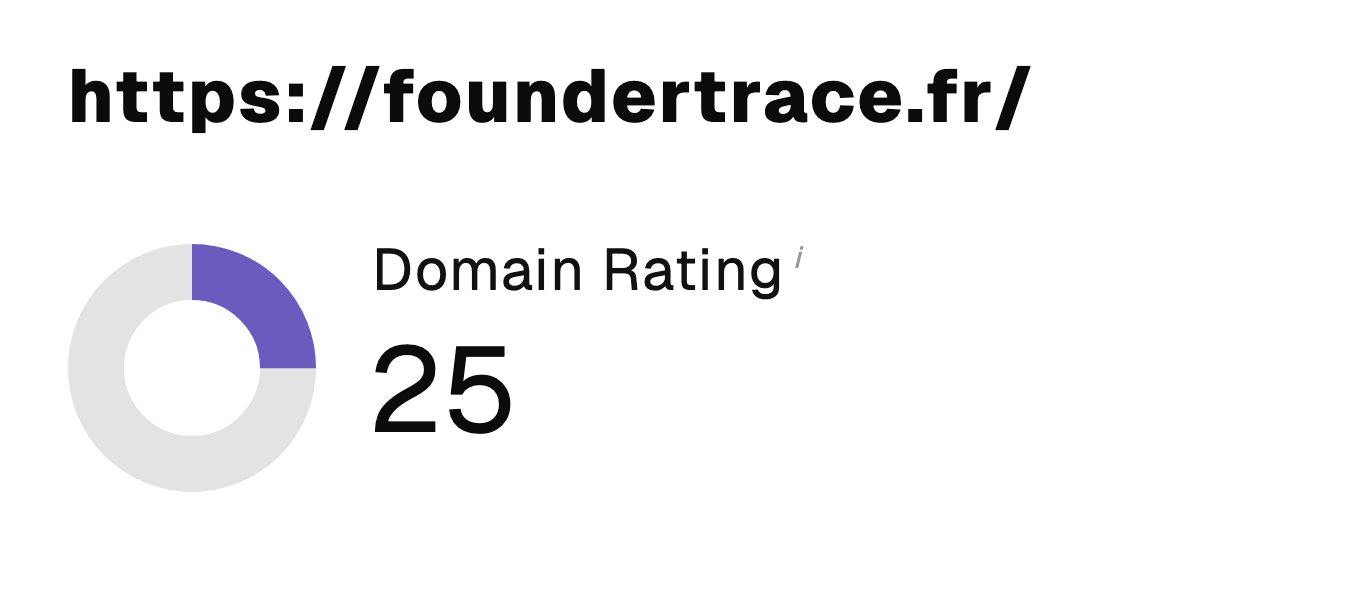 “I just let the Sorank software do its thing, and now my DR is 25 and my page is ranking higher.”
 Lucas Flandrefoundertrace.fr“I specialized in GEO thanks to Sorank. The GEO Leaderboard allows me to show my clients their position vs competitors on ChatGPT. It’s a real commercial differentiator.”
 MélanieSEO Freelance“Great service, works well for our website and helps us understand how to improve it to rank better on Google and elsewhere. Congrats, keep going, I recommend it.”
 Hugo T.E-commerce merchant