Preferences
Privacy is important to us, so you have the option of disabling certain types of storage that may not be necessary for the basic functioning of the website. Blocking categories may impact your experience on the website. More information

Privacy is important to us, so you have the option of disabling certain types of storage that may not be necessary for the basic functioning of the website. Blocking categories may impact your experience on the website. More information

Best technical SEO tools in 2027: Screaming Frog, Search Console, Sitebulb, PageSpeed Insights and 6 more, ranked by task with verified prices.
Tools


In short
the best technical SEO tools in 2027 are Screaming Frog SEO Spider for crawling a site the way a search engine does, Google Search Console for what Google actually indexes, Sitebulb for a prioritized audit you can hand to a developer, and PageSpeed Insights with Lighthouse for Core Web Vitals. Add Chrome DevTools for page-level debugging, Ahrefs Free or Semrush Site Audit for scheduled crawls inside a wider suite, Oncrawl or Botify for large sites and log files, and the free Sorank Chrome extension for a one-click check of a single page, AI crawlers included. Most sites under a few thousand URLs need only the free tier of three of them.
Want to go further? Ask
Transparency: Sorank is our own software, and its free extension and free tools appear in this ranking at eighth place, because Sorank is not a site crawler and should not be compared head-on with one. I ranked the tools on the technical jobs a site owner or SEO actually has to do (crawling, indexing, speed, JavaScript rendering, logs, structured data, AI crawler access), using the features and prices each company publishes on its own website, checked in October 2026.
Technical SEO is the work that decides whether a page can be fetched, rendered and indexed at all. Google's own documentation shows how literal this is: when crawling for Search, Googlebot crawls the first 2MB of a supported file, and anything after that limit is ignored. No amount of content work fixes a page that is cut off, blocked or invisible. The tools below exist to find those problems before they cost traffic, and in seven years of SEO work I have found that the order you use them in matters as much as which ones you pick. If the discipline itself is new to you, start with our definition of technical SEO.
Each technical task has one tool that does it best and, in most cases, a free option that covers small sites. The table below is the short answer; the ranking that follows explains each tool.
| Task | Best dedicated tool | Free option | What to check first |
|---|---|---|---|
| Crawling the whole site | Screaming Frog SEO Spider, Sitebulb | Screaming Frog free version (500 URLs), Ahrefs Free | Status codes, redirect chains, canonicals, orphan pages, duplicate titles |
| Indexing | Google Search Console | Google Search Console, Bing Webmaster Tools | Page indexing report, URL Inspection, sitemap status |
| Speed and Core Web Vitals | PageSpeed Insights, Lighthouse | Both are free | LCP, INP and CLS on mobile, from field data first |
| Server logs | Oncrawl, Botify, Screaming Frog Log File Analyser | None comparable | Which URLs Googlebot and AI bots really fetch, and how often |
| JavaScript rendering | Screaming Frog (paid), Sitebulb, Chrome DevTools | Chrome DevTools, URL Inspection in Search Console | Content present in the raw HTML, not only after rendering |
| Structured data | Google Rich Results Test, Screaming Frog | Rich Results Test, Sorank extension | Valid JSON-LD that matches the visible content |
| AI crawler access | Sorank robots.txt checker and extension | Both are free | GPTBot, OAI-SearchBot, ClaudeBot and PerplexityBot rules in robots.txt |
What it does. Screaming Frog SEO Spider is a desktop crawler for Windows, macOS and Linux that follows every link of a site and lists what it finds: status codes, redirects, titles, meta descriptions, headings, canonicals, hreflang, directives and duplicate content. The paid licence adds JavaScript rendering, custom extraction, saved crawls, crawl comparison, scheduling and integrations with Google Analytics, Search Console and PageSpeed Insights.
Who it is for. Anyone who audits sites regularly: in-house SEOs, freelancers and agencies. It is the tool most technical SEO tutorials assume you have.
Pricing. Free up to 500 URLs per crawl. The licence costs £199 per year per user, shown as €245 per year in euros, checked in October 2026. Log analysis is a separate product, the Log File Analyser, sold on its own licence.
Limit. It runs on your machine, so very large sites depend on your memory and disk, and the interface is a set of data tables you have to interpret yourself.
What it does. Google Search Console is the only tool that shows Google's own view of your site: the page indexing report with the reason each excluded URL is excluded, URL Inspection with the rendered HTML Googlebot saw, sitemap submission, the Core Web Vitals report from real users, crawl stats, manual actions and security issues.
Who it is for. Every site owner, without exception. A crawler tells you what could go wrong; Search Console tells you what Google actually did.
Pricing. Free. Pair it with Bing Webmaster Tools, also free, to get the same kind of data for Bing.
Limit. It reports on your own verified sites only, data arrives with a delay, and it does not crawl on demand the way a dedicated crawler does.
What it does. Sitebulb is a crawler available as Sitebulb Desktop and Sitebulb Cloud. Its site states that more than 300 issues are automatically checked and turned into prioritized Hints, with data visualizations and JavaScript rendering at no extra cost.
Who it is for. Consultants and teams who need to explain findings to non-specialists, because each Hint comes with the reason it matters.
Pricing. Sitebulb Desktop Lite is $18 per month on its pricing page, with a 14-day free trial; Sitebulb Cloud starts from £95 per month. Checked in October 2026.
Limit. Less flexible than Screaming Frog for custom extraction and scripted workflows, and the Cloud version is priced for teams.
What they do. PageSpeed Insights tests one URL and returns two kinds of data: field data from real Chrome users over the last 28 days, and lab data from Lighthouse that locates the cause of a slow page. Google's thresholds for a good experience are an LCP of 2.5 seconds or less, an INP of 200 milliseconds or less and a CLS of 0.1 or less, measured at the 75th percentile, according to web.dev's Core Web Vitals guide.
Who it is for. Developers and site owners fixing slow templates. Lighthouse also runs inside Chrome DevTools, so you can test pages that are not public yet.
Pricing. Free, no account needed.
Limit. One URL at a time, and lab scores move between runs. Judge field data and template trends, not a single score.
What it does. Chrome DevTools is built into the browser. The Network panel shows status codes, redirects, response headers and the size of every file; the Coverage panel shows unused CSS and JavaScript; the Performance panel records what blocks rendering; and you can switch the user agent to see what a bot receives.
Who it is for. Anyone who has found a problem with a crawler and now needs to understand why it happens on one specific page.
Pricing. Free.
Limit. The Elements panel shows the rendered page, not the raw HTML. To see what an AI crawler sees, use view-source or a raw fetch instead.
What it does. Ahrefs Free, the new name of Ahrefs Webmaster Tools, gives verified site owners Site Audit, which checks for more than 170 technical and on-page issues, plus Site Explorer for organic keywords and backlinks.
Who it is for. Site owners who want a recurring cloud crawl without installing anything or paying for a full suite.
Pricing. Free, with 5,000 crawl credits per verified project per month, on an unlimited number of verified sites. Checked in October 2026.
Limit. Only for sites you can verify, and the crawl allowance is too small for large sites.
What it does. Semrush Site Audit crawls a project on a schedule, scores its health and groups issues into errors, warnings and notices, next to keyword research, rank tracking and competitor data in the same account.
Who it is for. Teams that already pay for Semrush for keywords and want technical monitoring in the same place.
Pricing. Site Audit is included in the SEO plan, listed at $139 per month, with a free plan for testing and a 7-day free trial. Checked in October 2026.
Limit. Expensive if technical auditing is all you need, and less granular than a dedicated crawler.
What it does. The free Sorank SEO and GEO Chrome extension audits the page you are on in one click. Its tabs cover an SEO score and heading structure, images (missing alt text, potential size savings), internal and external links, a technical tab (robots.txt, sitemap, llms.txt, HTTPS, hreflang, HTML size against Google's 2MB limit, CSS and JavaScript coverage, Core Web Vitals on mobile and desktop), metadata with Open Graph and structured data, readability, and a GEO score with AI crawler permissions and an AI crawler view of the page. It works in Chrome, Edge, Brave and Opera.
Next to it, Sorank publishes free single-purpose tools: a robots.txt checker that shows which AI bots you allow or block, a sitemap checker that validates the file and its URLs, an HTTP headers checker that reveals X-Robots-Tag directives the HTML never shows, a redirect checker, an hreflang generator, a heading analyzer and a page size checker.
Who it is for. Anyone who wants a fast diagnosis of one page, during a call or before a fix, and anyone checking AI crawler access, which most classic crawlers do not report.
Pricing. Free.
Limit. It audits one page at a time and does not crawl a whole site, analyze logs or schedule audits. That is why it sits eighth: use it next to a crawler, not instead of one.
What it does. Oncrawl combines a cloud crawler with a Log Analyzer that shows how Googlebot, Bingbot and AI bots really move through a site, with unsampled data, scheduled crawls, a REST API and integrations.
Who it is for. E-commerce and media sites with tens of thousands of URLs, where crawl budget is a real constraint.
Pricing. Not published; access goes through a demo. Checked in October 2026.
Limit. Oversized for small sites, and log analysis needs access to server logs, which often means involving the hosting team.
What it does. Botify combines a site crawler, analytics of how AI agents and search bots hit your site through log analysis, and automation features for indexing and internal linking, aimed at very large sites.
Who it is for. Large retailers, marketplaces and publishers with millions of URLs and a dedicated SEO team.
Pricing. On request, through a demo. Checked in October 2026.
Limit. Priced and staffed for enterprises; a small business will not use most of it.
The entry price ranges from free to an enterprise quote. Five of the ten tools are free, and Screaming Frog and Semrush add a useful free tier.
| Tool | Type | Best for | Entry price (October 2026) |
|---|---|---|---|
| Screaming Frog SEO Spider | Desktop crawler | Full site crawls, custom checks | Free up to 500 URLs, then £199 per year (€245) |
| Google Search Console | Google data | Indexing, real-user Core Web Vitals | Free |
| Sitebulb | Desktop and cloud crawler | Prioritized, explained audits | $18 per month (Lite), 14-day trial |
| PageSpeed Insights and Lighthouse | Speed testing | Core Web Vitals diagnosis | Free |
| Chrome DevTools | Browser debugging | Headers, rendering, file weight | Free |
| Ahrefs Free | Cloud audit | Recurring audit of verified sites | Free, 5,000 crawl credits per project per month |
| Semrush Site Audit | Cloud audit in a suite | Teams already on Semrush | SEO plan at $139 per month |
| Sorank extension and free tools | Page audit, single-purpose checks | One-page diagnosis, AI crawler access | Free |
| Oncrawl | Cloud crawler and logs | Large sites, crawl budget | Not published, demo |
| Botify | Enterprise platform | Millions of URLs | On request |
AI crawler access is checked in robots.txt and in the raw HTML, and few classic crawlers report it by default. In 2026 this check matters as much as Googlebot access, because a single wrong line can remove a site from an AI assistant's answers.
The rules differ by bot. OpenAI's crawler documentation lists OAI-SearchBot, which surfaces sites in ChatGPT search; GPTBot, which collects content that may be used for training; and ChatGPT-User, which fetches a page when a user asks, and to which robots.txt rules may not apply. Blocking GPTBot keeps you out of training data, while blocking OAI-SearchBot keeps you out of ChatGPT search answers. On the Google side, Google-Extended is a product token that controls use of your content for Gemini and does not affect Google Search.
The second check is rendering. In a study of hundreds of millions of crawler requests, Vercel found that none of the major AI crawlers render JavaScript: ChatGPT's and Claude's crawlers fetch JavaScript files (11.50% and 23.84% of their requests) but do not execute them. A page whose content only appears after client-side rendering is visible to Google and empty for ChatGPT, Claude and Perplexity. Test it by searching the raw HTML for a sentence from the page, with view-source or the AI crawler view in the Sorank extension.
An llms.txt file is optional and has no confirmed effect on rankings or AI citations. It is a plain-text file at the root of a site that summarizes its key pages for language models, and Google states that you don't need to create AI text files or special markup to appear in AI Overviews or AI Mode.
My recommendation: create one if it costs you ten minutes, with our free llms.txt generator, and spend your real effort on the checks that are proven to matter: robots.txt rules per bot, content in the raw HTML, a clean sitemap and pages that load fast.
Run a technical audit in the order of what blocks traffic first: indexing, then rendering, then speed. A fast page that is not indexed earns nothing, and the free tools above cover every step on a small site.
For the full method of analyzing a site beyond the technical layer (content, keywords, backlinks, visibility in AI), read our step-by-step guide to SEO analysis.
Technical SEO tools find problems; they do not create the content that earns traffic. Once a site is crawlable, indexed and fast, its growth depends on publishing pages that answer what customers search for on Google and ask the AIs, and on linking them together.
That second part is the job Sorank automates. The software reads your site, finds the questions your customers ask ChatGPT, Claude and Gemini and checks every week whether your brand is mentioned, extracts your competitors' keywords into an editorial calendar, then writes and publishes the articles on your CMS with internal links, FAQ, meta tags and JSON-LD schema. The technical audit stays with the free extension and with the tools in this ranking; the content runs on autopilot. SEO results generally take 2 to 4 months.
For most sites, the best technical SEO stack in 2026 is free: Google Search Console, the free version of Screaming Frog, PageSpeed Insights and a robots.txt check for AI bots. Move to the paid Screaming Frog licence or Sitebulb when the site passes 500 URLs or needs JavaScript rendering, and to Oncrawl or Botify when crawl budget and logs become the real question. Once the technical foundation is clean, the next lever is content: compare the Sorank plans, from $99 per month or $49 per month billed annually, with a 3-day free trial and a 90-day money-back guarantee.

Google Search Console is the most important free tool, because it is the only one that shows how Google indexes your site. For crawling, the free version of Screaming Frog covers up to 500 URLs per crawl. PageSpeed Insights handles Core Web Vitals, and the free Sorank Chrome extension audits a single page in one click, AI crawler access included.
Screaming Frog is more flexible, with custom extraction, scripted workflows and a free version up to 500 URLs. Sitebulb is easier to read, because it turns issues into prioritized Hints with explanations you can pass to a developer. Many consultants use Screaming Frog for investigation and Sitebulb for client-facing audits.
Check Google Search Console every week and run a full crawl at least once a month on an active site. Run an extra crawl after every redesign, migration, template change or major plugin update, since those are the moments when noindex tags, redirect chains and robots.txt mistakes usually appear.
 Backlink Challenge
 AI Meta Description GeneratorAI Blog Title Generator
 Google Indexability CheckerAI Blog Outline GeneratorUTM Link Builder
 Keyword Clustering ToolCanonical Tag Checker
 XML Sitemap GeneratorBroken Link CheckerAI SEO Title GeneratorHeadline AnalyzerSERP Preview ToolRedirect Checker
 Hreflang Tag GeneratorHeading Structure AnalyzerHTTP Headers CheckerFavicon Extractor
 SERP CTR Calculator
 SEO vs Paid Search Savings Calculator
 SEO Share of Voice Calculator
 SEO ROI Calculator
 SEO Traffic and Revenue Forecast Calculator
 SEO Budget Calculator
 SEO Break-Even Calculator
 SaaS SEO ROI Calculator
 ROAS Calculator
 Reading Time Calculator
 Ranking Gain Simulator
 Organic Traffic Value Calculator
 Organic Traffic Estimator
 LTV to CAC Ratio Calculator
 Local SEO ROI Calculator
 Link Building Cost Calculator
 Keyword Value Calculator
 Keyword Opportunity Score Calculator
 Keyword Density Calculator
 GEO ROI Calculator
 GEO Content Investment Calculator
 Ecommerce SEO ROI Calculator
 Customer Lifetime Value Calculator
 Customer Acquisition Cost Calculator
 CTR Calculator
 Cost Per Article Calculator
 Conversion Rate Calculator
 Content Marketing ROI Calculator
 ChatGPT Referral Traffic Estimator
 Bounce Rate Calculator
 Backlink ROI Calculator
 AI Visibility Score Calculator
 AI Traffic Value Calculator
 AI Share of Voice Calculator
 Cost of AI Invisibility Calculator
 AI Citation Rate Calculatorllms.txt ValidatorAI Overview CheckerRobots.txt Checker
 AI SEO AuditLLM Readability CheckerSearchGPT Readiness Checker
 Structured Data LLM AuditWebsite Crawlability AI AuditWhy ChatGPT Is Not Recommending My Website
 Gemini Ranking ToolPerplexity Ranking CheckerLLM Citation CheckerAnswer Engine Optimization AuditGEO AuditAI Search Visibility TestChatGPT Visibility Checkerllms.txt Generator
 URL ExtractorWebpage to MarkdownSitemap CheckerSERP Volatility SensorPage Size Checker
 Word Counter
 Slug GeneratorSchema GeneratorRobots Generator
 OG PreviewMeta Tags Generator
 Image CompressorFavicon Generator
 On-Page SEO Audit
 Backlink Analysis Tool
 Keyword Research Tool
 Domain Authority Checker
THEY TRIED SORANK BEFORE YOU
 “I tested Sorank on a real client site and it's insane. It does everything an agency would bill you $1500 a month for. It's going into production on that client now.”
 Guillaume Guersanguersanguillaume.com“We are an Ads agency and we wanted to get our SEO back on track once and for all. Sorank gave us a clear view of our site, helped us prioritize optimizations, and properly structure our content. The tool is easy to use, well designed for a team, and very practical for centralizing tracking without having to juggle multiple platforms. A very solid foundation to start fresh with our SEO.”
 Gaspard MadouiAds Agency
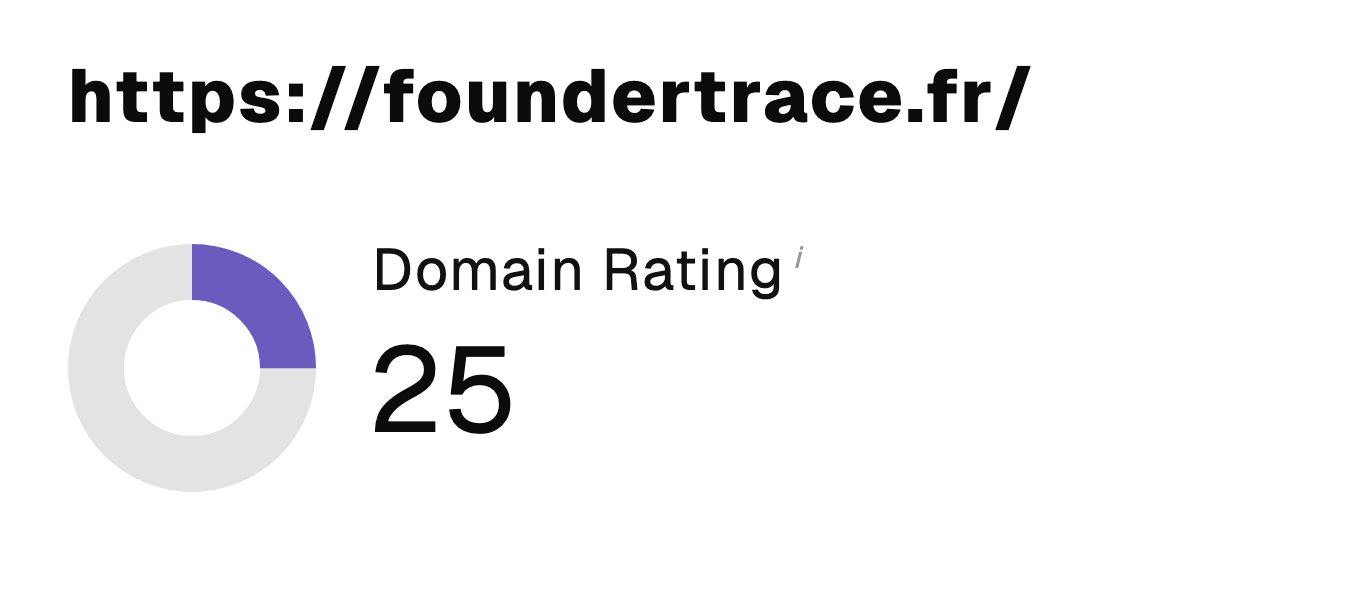 “I just let the Sorank software do its thing, and now my DR is 25 and my page is ranking higher.”
 Lucas Flandrefoundertrace.fr“I specialized in GEO thanks to Sorank. The GEO Leaderboard allows me to show my clients their position vs competitors on ChatGPT. It’s a real commercial differentiator.”
 MélanieSEO Freelance“Great service, works well for our website and helps us understand how to improve it to rank better on Google and elsewhere. Congrats, keep going, I recommend it.”
 Hugo T.E-commerce merchant