Preferences
Privacy is important to us, so you have the option of disabling certain types of storage that may not be necessary for the basic functioning of the website. Blocking categories may impact your experience on the website. More information

Privacy is important to us, so you have the option of disabling certain types of storage that may not be necessary for the basic functioning of the website. Blocking categories may impact your experience on the website. More information

SEO analysis in 7 steps: indexing, Search Console, Core Web Vitals, on-page, content, backlinks and AI visibility, with free Google tools and a priority plan.
Tools


In short
an SEO analysis answers seven questions in a fixed order: are your pages indexed, what does Search Console say about clicks and impressions, is the site technically fast and stable, are the pages well built, does the content target distinct queries, who links to you, and do Google AI Overviews and ChatGPT mention you. Most of it can be done for free with Google Search Console and PageSpeed Insights in an afternoon. The value lies in the last step: turning the findings into a short list of fixes ranked by impact.
Want to go further? Ask
An SEO analysis is the structured review of how a website is found, crawled, indexed and chosen by search engines and AI assistants, with the goal of deciding what to fix first. The starting point is always your own data: the Search Console Performance report gives clicks, impressions, click-through rate and average position for every query and page, which no third-party tool can measure as precisely for your site. I have run this method for seven years, first in the SEO agency I founded and sold, then while building Sorank, and the order of the steps matters more than the tools.
An SEO analysis is a diagnosis focused on decisions: it reads the data you already have to find where traffic is lost and why. An SEO audit is usually broader and more technical, a page-by-page inventory of errors produced by a crawler. In daily use the two words overlap, and a good analysis includes a light technical audit as one of its steps.
The difference shows in the deliverable. An audit often ends with hundreds of warnings of equal weight. An analysis ends with a ranked plan: three to ten actions, each tied to a page, a query and an expected effect. If you need the technical vocabulary, our glossary entry on the technical SEO audit defines each term.
Run the seven steps in order, because each one depends on the previous: a page that is not indexed cannot rank, and a page that does not rank cannot be cited by AI Overviews. The table summarizes the question each step answers and the tools that answer it.
| Step | Question asked | Free tool | Paid tool (examples) |
|---|---|---|---|
| 1. Indexing | Does Google index the pages that matter? | Search Console (Page indexing, URL Inspection) | Screaming Frog |
| 2. Performance | Which queries and pages win or lose clicks? | Search Console (Performance report) | Semrush, Ahrefs |
| 3. Technical and Core Web Vitals | Is the site fast, stable and crawlable? | PageSpeed Insights, Search Console (Core Web Vitals report) | Screaming Frog |
| 4. On-page | Are titles, headings and meta tags well built? | Sorank Chrome extension, on-page audit | Screaming Frog, Semrush |
| 5. Content and cannibalization | Does each query have one clear page? | Search Console (queries by page) | Ahrefs, Semrush |
| 6. Backlinks | Who links to the site, and to which pages? | Search Console (Links report) | Ahrefs, Majestic, Semrush |
| 7. AI visibility | Do AI Overviews and ChatGPT mention the brand? | Manual queries, AI Overview checker | Semrush, Sorank |
Indexing is the first check because nothing else matters for a page Google has not indexed. Open the Page indexing report in Search Console: it lists indexed URLs and the reason each excluded URL is excluded. Google states that "most sites have at least a few unindexed pages", so the goal is a narrower one: every page that sells or ranks must be indexed.
Check your homepage, category pages and best articles one by one with the URL Inspection tool. Then read the exclusion reasons: a noindex tag left after a redesign, a canonical pointing elsewhere, a page blocked by robots.txt or a page discovered but never crawled. The site: operator gives a quick estimate, but Google's own documentation says the list of URLs returned by site: is not always exhaustive, so treat it as a sample.
The Performance report shows which queries and pages bring clicks, and where impressions do not turn into visits. Its four metrics are clicks, impressions, click-through rate and average position, with filters by query, page, country, device and date. Compare the last three months with the same period a year earlier to remove seasonal effects.
Three readings produce most of the actions:
Clicks and impressions from AI Overviews and AI Mode are counted in the Performance report under the Web search type, according to Google's documentation on AI features. Since 2026, a separate generative AI performance report also shows how often your pages appeared in these features, by page, country, device and date, with impressions only: no clicks and no breakdown by query.
Core Web Vitals measure loading, responsiveness and visual stability with three metrics and fixed thresholds. According to Google Search Central, a good experience means a Largest Contentful Paint (LCP) within 2.5 seconds, an Interaction to Next Paint (INP) under 200 milliseconds and a Cumulative Layout Shift (CLS) under 0.1. Google says these metrics align with what its core ranking systems seek to reward, alongside other page experience aspects.
Run your main templates (homepage, category, product, article) through PageSpeed Insights and read the two blocks separately. Field data comes from real Chrome users over the previous 28 days, and a page passes the assessment when the 75th percentile of all three metrics is good. Lab data comes from a simulated Lighthouse load and is useful for debugging; its performance score is good from 90 to 100, needs improvement from 50 to 89 and is poor below 50.
Complete this step with a crawl of the site for broken links, redirect chains, missing canonicals and orphan pages. Screaming Frog is the reference desktop crawler; our comparison of the best technical SEO tools covers the alternatives by budget.
On-page analysis checks the elements Google reads first on each page: title tag, meta description, a single H1 containing the main keyword, a logical H2 and H3 hierarchy, image alt text, internal links and structured data. These elements are quick to fix and often explain why a page ranks below a weaker competitor.
Work page by page on the URLs selected in step 2. The free Sorank Chrome extension displays on-page recommendations on any page you visit, and the free on-page SEO audit gives the same check from a URL. For heading structure specifically, the heading analyzer shows the full H1 to H6 tree, which reveals skipped levels and multiple H1s at a glance.
Keyword cannibalization happens when several pages of the same site compete for one query, and Google alternates between them instead of ranking one strongly. In the Performance report, filter on an important query and open the Pages tab: if two or more URLs share impressions on it, you have a candidate.
For each case, decide between three options: merge the two pages and redirect the weaker one, rewrite one page to target a different intent, or strengthen the main page with internal links pointing to it. Then look for the opposite problem, content gaps: queries where competitors rank and you have no page at all. Semrush and Ahrefs list these gaps by domain; Search Console shows the early signs, queries with impressions but no dedicated page.
Backlink analysis measures which external sites link to you, to which pages and with which anchor text. The Links report in Search Console lists top linking sites, top linked pages and anchors for free. Ahrefs, Majestic and Semrush add history, competitor comparisons and authority scores.
Look at three things: whether your money pages receive any links at all, whether a few competitors are linked from sites that ignore you, and whether the anchor profile looks natural. Link acquisition takes months, so this step mostly feeds the long-term part of the plan.
AI visibility is the share of relevant questions for which AI assistants mention or cite your brand. It has become a step of its own because AI answers now sit above the links: a Pew Research Center study of 900 US adults found that users clicked a traditional result in 8% of visits when an AI summary appeared, against 15% without one.
Google states that no special optimization is required for AI Overviews and AI Mode: a page must be indexed and eligible to appear with a snippet. Steps 1 to 5 therefore already serve this step. To measure it, write ten questions your customers ask, test them in Google and in ChatGPT, and note who is cited. The free AI Overview checker does this for Google. Sorank automates it: the software creates the questions your customers ask and asks them every week to ChatGPT, Claude and Gemini (plus Perplexity and Grok on the Pro and Business plans), to show whether your brand is mentioned and who is cited instead.
A Google SEO analysis can be done entirely with six free Google tools, which cover steps 1 to 6 without any subscription. Each answers one precise question:
The limit of Google's tools is the outside view: they show your site well and your competitors not at all. That is where paid suites such as Semrush, Ahrefs or SE Ranking are useful, for competitor keywords and backlinks.
Rank each finding by expected impact divided by effort, and keep the plan to ten actions or fewer. An analysis that produces eighty recommendations produces no action. Score each finding from 1 to 3 on impact (traffic or revenue at stake) and on effort (time, developer needed or not), then start with high impact and low effort.
| Priority | Typical finding | Why this rank |
|---|---|---|
| 1 | Important page not indexed, accidental noindex, robots.txt block | Blocks all traffic on the page; often fixed in minutes |
| 2 | Pages in positions 5 to 15 with many impressions | Closest to page one gains; title and content edits only |
| 3 | Cannibalization on a business query | One merge or redirect consolidates signals |
| 4 | Missing or duplicate titles, H1 and meta descriptions | Fast, template-level fixes |
| 5 | Core Web Vitals failing on a main template | Needs a developer; one fix covers many pages |
| 6 | Content gaps against competitors | New pages take weeks to write and months to rank |
| 7 | Weak backlink profile, absence from AI answers | Long-term work, measured over quarters |
Write each action with an owner, a target page, a date and the metric that will prove it worked (clicks on the page, position on the query, mention in AI answers). Re-run the analysis every quarter: SEO results generally take 2 to 4 months to show, so a monthly full analysis mostly measures noise.
Software handles the repetitive, measurable work; people keep the decisions. Tools read data faster and more often than any person: indexing reports, crawl errors, keyword lists, competitor gaps, AI mentions. They cannot decide whether a page should be merged with another, negotiate a link with a partner, plan a migration or arbitrate between two business priorities.
Sorank sits on the execution side of the plan. The software reads your site, finds the competitors visible on Google and in AI answers, extracts their keywords, sorts them by priority and fills an editorial calendar; it then writes the articles (with internal links, sources, FAQ, meta tags and JSON-LD schema, plus an anti-cannibalization check) and publishes them automatically to more than 10 CMS, including WordPress, Shopify, Webflow and Wix. It does not run a technical audit of your site: on-page checks go through the free Chrome extension, and technical fixes stay with your developer. If you prefer to delegate the whole diagnosis to people, our guide on choosing an SEO audit agency lists the questions to ask before signing.
A useful SEO analysis follows seven steps in order, from indexing to AI visibility, and ends with a ranked plan rather than a list of errors. Start with Search Console this week: check the indexing of your ten most important pages, then work on the pages in positions 5 to 15, before spending anything on paid tools. When the plan calls for steady content production and AI visibility tracking, Sorank does that work on autopilot: the Essential plan costs $99/month, or $49/month billed annually, with a 3-day free trial and a 90-day money-back guarantee. See Sorank plans and pricing.

Connect your site to Google Search Console, check the Page indexing report, then read the Performance report for queries in positions 5 to 15 and pages with a low click-through rate. Add PageSpeed Insights for Core Web Vitals and a free on-page checker for titles and headings. These free tools cover indexing, performance, technical health and on-page quality; only competitor data requires a paid suite.
For a site of a few dozen pages, a focused analysis with Search Console and PageSpeed Insights takes an afternoon. Large e-commerce sites need a full crawl and several days to review templates, filters and cannibalization. Plan to repeat it every quarter, since changes generally take 2 to 4 months to show in search results.
An SEO audit is usually an exhaustive technical inventory of errors, often produced by a crawler page by page. An SEO analysis reads performance data to understand where traffic is lost and decides what to fix first. In practice a good analysis includes a light technical audit and ends with a short, prioritized action plan.
 Backlink Challenge
 AI Meta Description GeneratorAI Blog Title Generator
 Google Indexability CheckerAI Blog Outline GeneratorUTM Link Builder
 Keyword Clustering ToolCanonical Tag Checker
 XML Sitemap GeneratorBroken Link CheckerAI SEO Title GeneratorHeadline AnalyzerSERP Preview ToolRedirect Checker
 Hreflang Tag GeneratorHeading Structure AnalyzerHTTP Headers CheckerFavicon Extractor
 SERP CTR Calculator
 SEO vs Paid Search Savings Calculator
 SEO Share of Voice Calculator
 SEO ROI Calculator
 SEO Traffic and Revenue Forecast Calculator
 SEO Budget Calculator
 SEO Break-Even Calculator
 SaaS SEO ROI Calculator
 ROAS Calculator
 Reading Time Calculator
 Ranking Gain Simulator
 Organic Traffic Value Calculator
 Organic Traffic Estimator
 LTV to CAC Ratio Calculator
 Local SEO ROI Calculator
 Link Building Cost Calculator
 Keyword Value Calculator
 Keyword Opportunity Score Calculator
 Keyword Density Calculator
 GEO ROI Calculator
 GEO Content Investment Calculator
 Ecommerce SEO ROI Calculator
 Customer Lifetime Value Calculator
 Customer Acquisition Cost Calculator
 CTR Calculator
 Cost Per Article Calculator
 Conversion Rate Calculator
 Content Marketing ROI Calculator
 ChatGPT Referral Traffic Estimator
 Bounce Rate Calculator
 Backlink ROI Calculator
 AI Visibility Score Calculator
 AI Traffic Value Calculator
 AI Share of Voice Calculator
 Cost of AI Invisibility Calculator
 AI Citation Rate Calculatorllms.txt ValidatorAI Overview CheckerRobots.txt Checker
 AI SEO AuditLLM Readability CheckerSearchGPT Readiness Checker
 Structured Data LLM AuditWebsite Crawlability AI AuditWhy ChatGPT Is Not Recommending My Website
 Gemini Ranking ToolPerplexity Ranking CheckerLLM Citation CheckerAnswer Engine Optimization AuditGEO AuditAI Search Visibility TestChatGPT Visibility Checkerllms.txt Generator
 URL ExtractorWebpage to MarkdownSitemap CheckerSERP Volatility SensorPage Size Checker
 Word Counter
 Slug GeneratorSchema GeneratorRobots Generator
 OG PreviewMeta Tags Generator
 Image CompressorFavicon Generator
 On-Page SEO Audit
 Backlink Analysis Tool
 Keyword Research Tool
 Domain Authority Checker
THEY TRIED SORANK BEFORE YOU
 “I tested Sorank on a real client site and it's insane. It does everything an agency would bill you $1500 a month for. It's going into production on that client now.”
 Guillaume Guersanguersanguillaume.com“We are an Ads agency and we wanted to get our SEO back on track once and for all. Sorank gave us a clear view of our site, helped us prioritize optimizations, and properly structure our content. The tool is easy to use, well designed for a team, and very practical for centralizing tracking without having to juggle multiple platforms. A very solid foundation to start fresh with our SEO.”
 Gaspard MadouiAds Agency
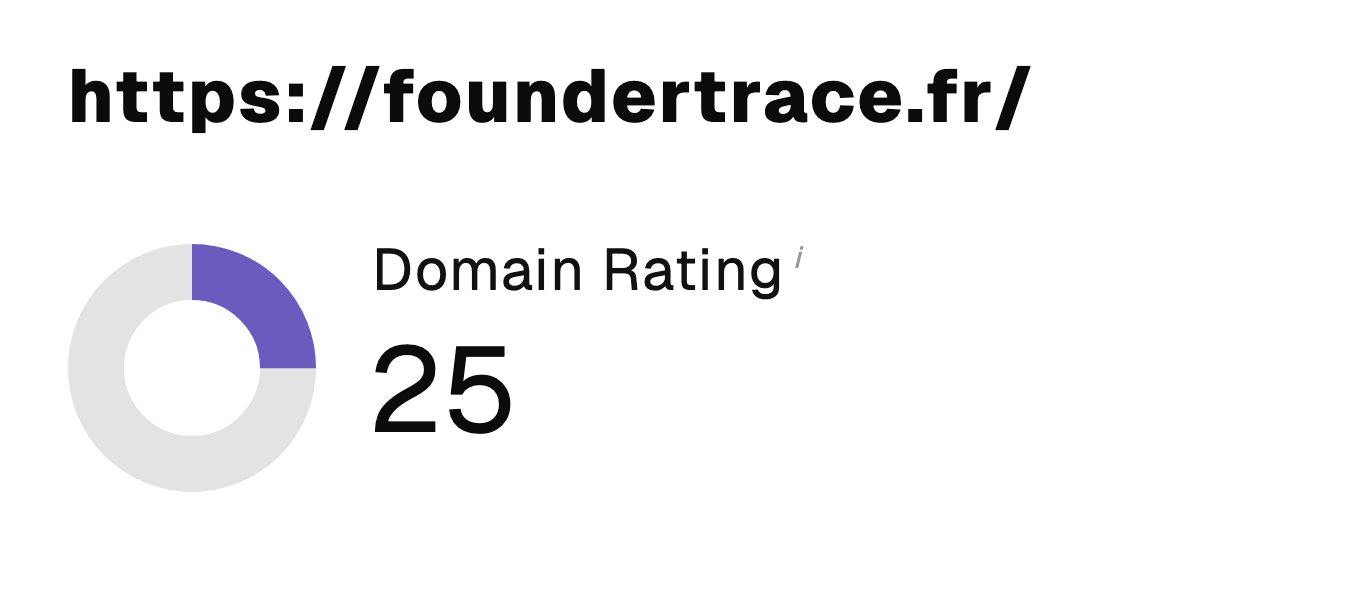 “I just let the Sorank software do its thing, and now my DR is 25 and my page is ranking higher.”
 Lucas Flandrefoundertrace.fr“I specialized in GEO thanks to Sorank. The GEO Leaderboard allows me to show my clients their position vs competitors on ChatGPT. It’s a real commercial differentiator.”
 MélanieSEO Freelance“Great service, works well for our website and helps us understand how to improve it to rank better on Google and elsewhere. Congrats, keep going, I recommend it.”
 Hugo T.E-commerce merchant