Preferences
Privacy is important to us, so you have the option of disabling certain types of storage that may not be necessary for the basic functioning of the website. Blocking categories may impact your experience on the website. More information

Privacy is important to us, so you have the option of disabling certain types of storage that may not be necessary for the basic functioning of the website. Blocking categories may impact your experience on the website. More information

Hiring an SEO audit agency in 2026? What a good audit covers, published price data, deliverables to demand, 10 questions to ask and the warning signs.

Tools


In short
a good SEO audit agency hands you a prioritized list of fixes across five areas (technical health, content, keywords, backlinks and now visibility in AI answers), with an impact estimate and an execution plan for each item. Most small businesses in one published survey paid between $101 and $750, and the price rises with page count and depth. Before you pay, run the free checks yourself, and plan the budget for what comes after the audit: the weekly publishing that turns a diagnosis into traffic.
Want to go further? Ask
Hiring an SEO audit agency is usually the first paid step a company takes in search, and it is the step where buyers have the least information to judge what they receive. Google itself publishes a page for this exact situation, Do you need an SEO?, which lists the questions to ask a provider and the claims that should make you walk away. I ran an SEO agency for two years and wrote audits for its clients before selling it to build Sorank. This guide explains what a serious audit contains in 2026, what it costs according to published data, and how to tell a useful diagnosis from a rebranded tool export.
An SEO audit is a structured diagnosis of why a website does or does not earn search traffic, ending with a ranked list of actions. A complete audit in 2026 covers five areas. If one of them is missing from the proposal, ask why before you sign.
| Area | What is checked | What a useful output looks like |
|---|---|---|
| Technical health | Crawling, indexing, redirects, canonicals, sitemap, robots.txt, Core Web Vitals, mobile rendering, structured data | Each issue tied to the URLs affected and the fix your developer has to make |
| Content | Thin pages, duplicates, cannibalization, outdated pages, heading structure, answer quality | Pages to rewrite, merge, expand or remove, in order |
| Keywords | Queries you already rank for, near misses on page 2, gaps versus competitors, intent of each target | A keyword map: one intent, one page |
| Backlinks | Referring domains, anchor distribution, risky links, links competitors earn that you do not | A short list of realistic link targets, never a bulk disavow by default |
| AI visibility | Whether ChatGPT, Gemini, Claude or Google AI Overviews mention your brand on the questions your buyers ask, and who is cited instead | A list of prompts where you are absent and the pages that should answer them |
Agencies run these checks with the standard tools of the trade, such as Google Search Console, Screaming Frog, Semrush, Ahrefs or Majestic. The tools find the issues; the agency's value is the ranking of those issues by business impact, which no crawler can do for you.
Because a growing share of searches now end on an AI-generated answer, and those answers cite a short list of sources. An audit that only measures blue-link rankings measures half of the channel.
The clearest public measurement comes from Pew Research Center, which tracked the browsing of 900 US adults in March 2025. About 18% of their Google searches produced an AI summary. When a summary appeared, users clicked a traditional result in 8% of visits, against 15% when there was none, and clicked a link inside the summary in about 1% of visits.
Google states in its documentation on AI features that there are no additional requirements to appear in AI Overviews or AI Mode, and that SEO best practices remain relevant. Two consequences for your audit: the technical and content sections still matter most, and the agency should add a check of the questions where AI answers name your competitors and not you. That last check is often called a GEO audit (generative engine optimization).
Published data puts most small-business audits in the low hundreds of dollars, with a long tail into five figures for large sites. In a survey of 250 US businesses published by the agency WebFX, 43% paid between $101 and $750 for an SEO audit, 12% paid between $1,001 and $2,500, and a little over 11% paid more than $5,500.
That survey comes from a single provider and covers the United States only, so treat it as an order of magnitude, not a market price. What moves the price is consistent across agencies:
| Price driver | Why it raises the cost |
|---|---|
| Number of indexable pages | More templates and more edge cases to review by hand |
| E-commerce catalogue | Facets, pagination, out-of-stock pages and duplicate product URLs |
| Several languages or countries | Hreflang, localized keywords and one keyword map per market |
| AI visibility section | Prompts to build and test on several assistants |
| Migration or redesign context | Redirect mapping and before/after comparison |
| Implementation support | Hours of follow-up with your developers after delivery |
Compare offers on scope, never on the headline price: how many pages are reviewed by a human, whether a keyword map is included, whether the AI section exists, and how many hours of follow-up are in the quote.
The duration depends on site size and on how quickly you grant access, so ask for a dated calendar in the proposal. A small brochure site can be reviewed in days; a large catalogue or a multi-country site takes several weeks, mostly because of manual review and the time spent with your team.
The calendar should show three milestones: access granted (Search Console, analytics, CMS read access), delivery of the audit, and a review meeting where the agency walks your team through the priorities. An audit delivered by email without that meeting is rarely implemented.
Demand a prioritized action list, an impact estimate per action and an execution plan, all in a format your team can work from. A 90-page document with 400 warnings sorted by tool category is a cost, not a deliverable.
Ask questions whose answers can be checked: scope, method, people and follow-up. Google's own list includes asking for examples of previous work, whether the provider follows Google Search Essentials, what results to expect and in what timeframe, and whether every change and its reasoning will be shared with you.
The two most common warning signs are a raw automated export resold as expertise and a promise of positions. Both are easy to spot before you pay.
A one-off audit suits a team that can execute; ongoing support suits a team that cannot. The audit tells you what to do. The question is who will do it every week for the following months.
| Criterion | One-off audit | Ongoing agency support |
|---|---|---|
| Best for | A team with a developer and someone to write | A team with no internal SEO capacity |
| Budget shape | One payment | Monthly retainer |
| Main risk | The audit is never implemented | Paying monthly for work you cannot measure |
| What to require | A prioritized plan and a review meeting | A monthly scope in pages, links and hours |
If you are weighing an agency against a freelance specialist for the follow-up, our ranking of the best SEO consultants in France covers that decision.
You can run most first-level checks yourself in an afternoon, which lets you brief the agency precisely and judge its proposal. Start with these four.
For the method behind these checks, read our guide to SEO analysis. If the free checks show nothing beyond a few missing tags, you may need less audit and more content.
The real bottleneck after an audit is execution: content written and published every week, over months. Most audits end with the same top priorities: target the queries where you are on page 2, fill the topics where competitors rank and you do not, answer the questions buyers ask AI. All three need new pages, published on a regular schedule, and SEO results generally take 2 to 4 months to show.
Here is the honest split between people and software for that phase.
| Keep with a person (agency, consultant or in-house) | Hand to software |
|---|---|
| Strategy and priorities from the audit | Finding competitors' keywords and filling an editorial calendar |
| Site migration and redesign | Writing articles with internal links, FAQ, meta tags and JSON-LD |
| Partnership and link negotiations | Publishing on your CMS on schedule |
| Developer tickets on templates and speed | Asking ChatGPT, Claude and Gemini your buyers' questions every week |
| The final decision on what to publish | Avoiding cannibalization between new and existing pages |
That right-hand column is what I built Sorank to do. Sorank is software that reads your site, creates the questions your customers ask AI and tests them every week on ChatGPT, Claude and Gemini (plus Perplexity and Grok on Pro and Business), extracts the keywords of your competitors on Google and in AI answers, writes the articles and publishes them automatically on more than 10 CMS, including Shopify, WordPress, Webflow and Wix. Plans start at $99 per month, or $49 per month billed annually, for 20 articles per month; details are on the pricing page. Sorank does not replace the technical part of an audit: for that, use the free extension above or a specialist.
Build a list of three providers, send each the same brief, and compare the answers to the 10 questions above. For names, our ranking of the 10 best SEO agencies in France reviews each agency on public information, including whether AI visibility is a named service.
Send the same brief to all three: your site, your main offers, the countries you sell in, your Search Console access level, the free checks you have already run, and the budget you can commit after the audit. Agencies that answer with questions about your business rather than a standard price list are usually the ones that will produce a usable audit.
A good SEO audit agency delivers a prioritized plan across technical health, content, keywords, backlinks and AI visibility, with an impact estimate per action, a baseline and a review meeting. Prices vary widely, so compare scope rather than headline price, and refuse any guarantee of rankings. Run the free checks first, buy the audit that matches your capacity to execute, and budget for the weekly content that follows, because that is where results come from. To automate that part, see the Sorank plans with a 3-day free trial.

In a survey of 250 US businesses published by the agency WebFX, 43% paid between $101 and $750 for an SEO audit, and a minority paid several thousand dollars. The price rises with the number of pages, an e-commerce catalogue, several languages, an AI visibility section and follow-up hours. Compare offers on scope rather than on the headline price.
A small site can be audited in a few days, while a large catalogue or a multi-country site takes several weeks, mostly because of manual review. The calendar also depends on how quickly you grant access to Search Console, analytics and your CMS. Ask for a dated calendar with a review meeting at the end.
Yes, for the first level. Google Search Console shows indexing issues and the queries you appear for, and free tools such as an on-page audit, a GEO audit or a Chrome extension flag missing tags, heading problems and slow pages. An agency adds manual review, prioritization by business impact and a keyword map, which matter most on large or complex sites.
 Backlink Challenge
 AI Meta Description GeneratorAI Blog Title Generator
 Google Indexability CheckerAI Blog Outline GeneratorUTM Link Builder
 Keyword Clustering ToolCanonical Tag Checker
 XML Sitemap GeneratorBroken Link CheckerAI SEO Title GeneratorHeadline AnalyzerSERP Preview ToolRedirect Checker
 Hreflang Tag GeneratorHeading Structure AnalyzerHTTP Headers CheckerFavicon Extractor
 SERP CTR Calculator
 SEO vs Paid Search Savings Calculator
 SEO Share of Voice Calculator
 SEO ROI Calculator
 SEO Traffic and Revenue Forecast Calculator
 SEO Budget Calculator
 SEO Break-Even Calculator
 SaaS SEO ROI Calculator
 ROAS Calculator
 Reading Time Calculator
 Ranking Gain Simulator
 Organic Traffic Value Calculator
 Organic Traffic Estimator
 LTV to CAC Ratio Calculator
 Local SEO ROI Calculator
 Link Building Cost Calculator
 Keyword Value Calculator
 Keyword Opportunity Score Calculator
 Keyword Density Calculator
 GEO ROI Calculator
 GEO Content Investment Calculator
 Ecommerce SEO ROI Calculator
 Customer Lifetime Value Calculator
 Customer Acquisition Cost Calculator
 CTR Calculator
 Cost Per Article Calculator
 Conversion Rate Calculator
 Content Marketing ROI Calculator
 ChatGPT Referral Traffic Estimator
 Bounce Rate Calculator
 Backlink ROI Calculator
 AI Visibility Score Calculator
 AI Traffic Value Calculator
 AI Share of Voice Calculator
 Cost of AI Invisibility Calculator
 AI Citation Rate Calculatorllms.txt ValidatorAI Overview CheckerRobots.txt Checker
 AI SEO AuditLLM Readability CheckerSearchGPT Readiness Checker
 Structured Data LLM AuditWebsite Crawlability AI AuditWhy ChatGPT Is Not Recommending My Website
 Gemini Ranking ToolPerplexity Ranking CheckerLLM Citation CheckerAnswer Engine Optimization AuditGEO AuditAI Search Visibility TestChatGPT Visibility Checkerllms.txt Generator
 URL ExtractorWebpage to MarkdownSitemap CheckerSERP Volatility SensorPage Size Checker
 Word Counter
 Slug GeneratorSchema GeneratorRobots Generator
 OG PreviewMeta Tags Generator
 Image CompressorFavicon Generator
 On-Page SEO Audit
 Backlink Analysis Tool
 Keyword Research Tool
 Domain Authority Checker
THEY TRIED SORANK BEFORE YOU
 “I tested Sorank on a real client site and it's insane. It does everything an agency would bill you $1500 a month for. It's going into production on that client now.”
 Guillaume Guersanguersanguillaume.com“We are an Ads agency and we wanted to get our SEO back on track once and for all. Sorank gave us a clear view of our site, helped us prioritize optimizations, and properly structure our content. The tool is easy to use, well designed for a team, and very practical for centralizing tracking without having to juggle multiple platforms. A very solid foundation to start fresh with our SEO.”
 Gaspard MadouiAds Agency
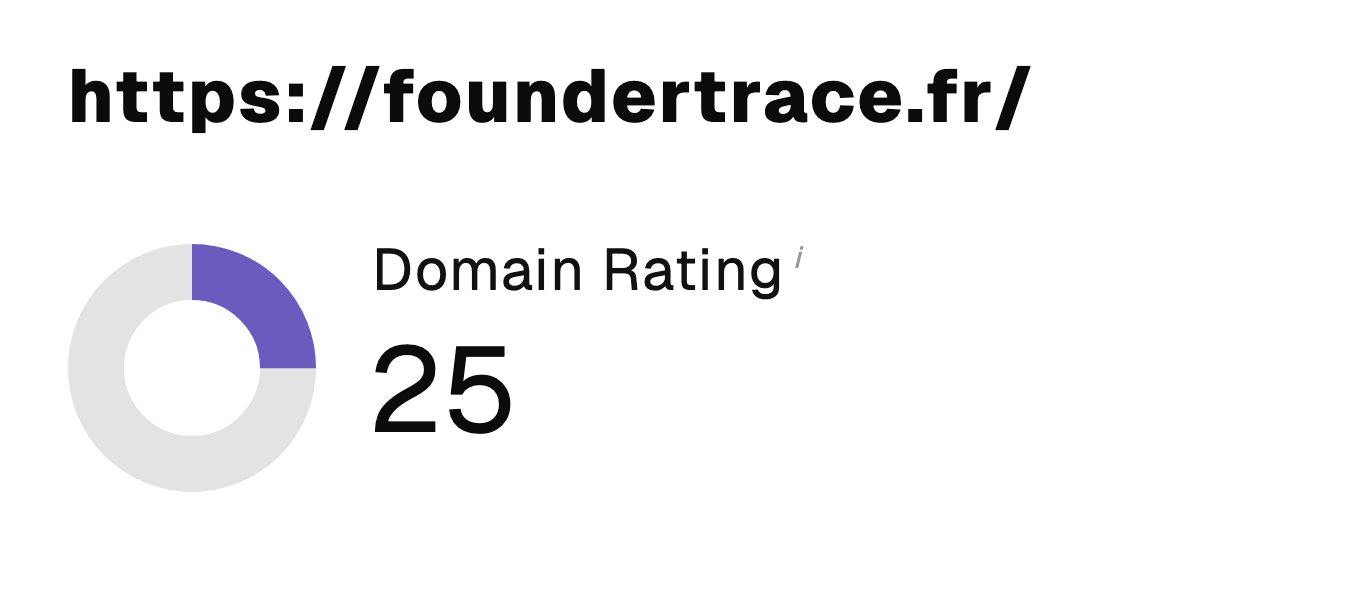 “I just let the Sorank software do its thing, and now my DR is 25 and my page is ranking higher.”
 Lucas Flandrefoundertrace.fr“I specialized in GEO thanks to Sorank. The GEO Leaderboard allows me to show my clients their position vs competitors on ChatGPT. It’s a real commercial differentiator.”
 MélanieSEO Freelance“Great service, works well for our website and helps us understand how to improve it to rank better on Google and elsewhere. Congrats, keep going, I recommend it.”
 Hugo T.E-commerce merchant