
Preferences
Privacy is important to us, so you have the option of disabling certain types of storage that may not be necessary for the basic functioning of the website. Blocking categories may impact your experience on the website. More information

Privacy is important to us, so you have the option of disabling certain types of storage that may not be necessary for the basic functioning of the website. Blocking categories may impact your experience on the website. More information

The best AI tools for content creation in 2026, ranked by format: text, images, design, video, voice and SEO blog articles, with real strengths and limits.
Tools


In short
the best AI tool for content creation depends on the format you produce. ChatGPT is the most versatile all-rounder, Claude writes the most natural long texts, Canva is the easiest way to turn ideas into designs, Midjourney produces the most striking images, Runway leads for generated video, ElevenLabs for voice and Descript for editing podcasts and videos. If your goal is a blog that brings organic traffic and citations in the AIs, a dedicated tool such as Sorank writes and publishes SEO articles on autopilot.
Want to go further? Ask
Transparency: Sorank is our own software. It appears in this list only for the format where it is relevant (SEO and GEO blog articles), and for every other format the tools below are better choices than ours. The descriptions come from public information published by each company and from hands-on use, checked in October 2026. Features change quickly, so check the current version before you buy.
We ranked each tool on the quality of what it produces in its own format and on how much editing that output still needs. A tool that creates a beautiful image but forces you through ten attempts scores lower than a tool that gets close on the first or second try.
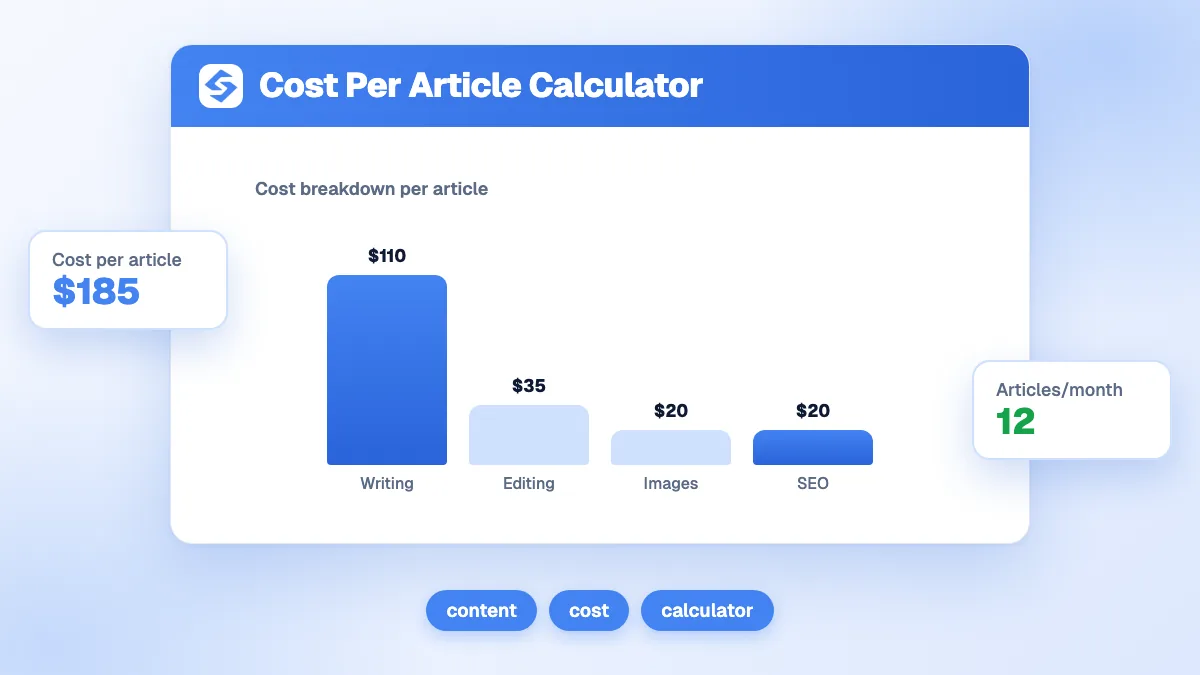
We did not rank on price: plans change often and depend on volume. Where a free plan exists and is stable, we say so. If you want to compare the real cost of producing a piece of content with AI against a freelancer, our cost per article calculator gives an estimate in a minute.
What it does. ChatGPT, from OpenAI, writes, rewrites, summarises and brainstorms in dozens of languages. It also generates images inside the conversation, reads files and searches the web, which makes it a natural first stop for almost any content task.
Who it is for. Anyone who needs drafts, outlines, social posts, email copy or idea lists, from solo creators to large teams.
Strengths. Very wide range of formats in one place, fast iteration, a large ecosystem of custom assistants and integrations, and a free plan to start.
Limits. Without a precise brief, texts tend to sound generic. It does not publish anything to your site, does not know your keywords or your competitors, and facts must be checked before publication.
What it does. Claude, from Anthropic, is a general assistant known for long, well structured and natural sounding texts. It handles very long documents, which makes it strong for reports, guides, white papers and rewriting existing content.
Who it is for. Writers, marketers and founders who produce long form content and want a draft that needs less rewriting.
Strengths. Tone and nuance, ability to follow detailed style guides, analysis of long source documents, and a free plan.
Limits. Image generation is not its strength, and like ChatGPT it does not handle SEO research, publishing or tracking. You still bring the brief, the keywords and the fact checking.
What it does. Canva is a design platform with AI features grouped under Magic Studio: text to image, background removal, resizing a design for every network, AI writing and presentations. Millions of templates do most of the layout work.
Who it is for. Marketers, small businesses and creators who need social posts, banners, presentations and simple videos without a designer.
Strengths. Very short learning curve, brand kits to keep colours and fonts consistent, collaboration, and a generous free plan.
Limits. Generated images are less striking than Midjourney's, and template based designs can look similar to what others publish. Advanced video editing stays basic.
What it does. Midjourney generates images from text prompts with a strong aesthetic signature, and can now animate images into short clips. It runs on its web app and on Discord.
Who it is for. Brands, illustrators, agencies and creators for whom visual quality is the priority: campaign visuals, concept art, covers, moodboards.
Strengths. Among the best image quality on the market, fine control of style, aspect ratio and variations, and a very active community for inspiration.
Limits. Paid plans only, a learning curve to write effective prompts, and text inside images remains less reliable than in some competitors. It handles neither layout nor publishing.
What it does. Runway generates and edits video with AI: text to video, image to video, extending or restyling shots, removing objects and backgrounds. Its recent generation models are used by creative studios and advertising teams.
Who it is for. Video creators, agencies and marketing teams who want B-roll, ad concepts or visual effects without a full production.
Strengths. High quality generation, a complete set of editing tools around the models, and a free tier to test.
Limits. Clips are short and consistency of characters over several shots still needs work. Heavy use quickly becomes expensive, and long videos still require a classic editor.
What it does. ElevenLabs creates realistic voices from text, clones a voice with consent, dubs videos into other languages and generates sound effects.
Who it is for. Podcasters, YouTubers, course creators, publishers turning articles into audio, and companies localising video.
Strengths. Very natural voices in many languages, fine control of emotion and pace, and a free plan.
Limits. Voice cloning raises consent and brand questions you must manage, and long productions still need a human listen to catch pronunciation errors.
What it does. Descript transcribes your audio or video and lets you edit it like a text document: delete a sentence in the transcript and it disappears from the recording. Its AI assistant removes filler words, improves sound, creates clips and drafts show notes.
Who it is for. Podcasters, video creators and marketing teams who record a lot and want to edit fast.
Strengths. The fastest way to edit spoken content, good transcription, clip creation for social networks, and a free plan.
Limits. Less precise than a professional editing suite for complex projects, and it improves content you recorded rather than creating it from nothing.
What it does. Sorank analyses your site and your competitors, finds the keywords, plans a calendar, then writes and publishes one article a day with images, automatic internal linking, anti cannibalisation, fact checking, FAQ and structured data. It publishes to more than 10 CMS (WordPress, Shopify, Webflow, Wix...) and tracks every week the questions asked to ChatGPT, Claude, Gemini or Perplexity to see whether your brand is cited. See how the blog article generator works.
Who it is for. Businesses, e-commerce sites and agencies that want a blog bringing organic traffic and citations in the AIs without writing every article themselves.
Strengths. It covers the whole chain from keyword to publication and tracking, which general assistants do not. 5000 users, with results usually visible in 2 to 4 months.
Limits. It is built for blog articles only: no social visuals, no video, no voice, no podcast editing. For those formats, every other tool in this list is better. It also needs a site with a CMS to publish to.
| Tool | Best for | Main strength | Main limit |
|---|---|---|---|
| ChatGPT | All-round text and ideas | Versatility, free plan | Generic without a precise brief |
| Claude | Long, natural writing | Tone, long documents | No image generation focus |
| Canva | Designs and social visuals | Ease of use, templates | Designs can look similar |
| Midjourney | Striking images | Image quality and style | Paid only, prompt learning curve |
| Runway | Generated video | Generation and editing tools | Short clips, cost at scale |
| ElevenLabs | Voice and dubbing | Natural multilingual voices | Consent and review needed |
| Descript | Podcast and video editing | Edit by editing the transcript | Limited for complex projects |
| Sorank | SEO and GEO blog articles | Keyword to publication to AI tracking | Blog articles only |
Start from the format that brings you the most business, then add tools one at a time. Buying five subscriptions at once usually ends with two unused ones.
Content made with AI is also read by AI assistants. Articles that answer a question in the first lines, use clear headings and cite sources are more likely to be quoted in ChatGPT or Google AI Overviews. Multimodal models now read text, images and video together, which is explained in our page on multimodal AI. For a full method beyond tools, read our guide to AI content creation.
The main risks are inaccurate facts, generic content and unclear rights, and all three are manageable with a review step. AI tools can state false information with confidence, so every figure, name and date must be checked against a source. Generic content is the second risk: if you and your competitors use the same tool with the same prompts, you publish the same ideas. Bring your own data, examples and opinions. Finally, check the terms of each tool for commercial use, and never clone a voice or a face without written consent.
Google's guidance on AI generated content, published on Google Search Central, says that the way content is produced matters less than its usefulness, and that mass producing pages mainly to manipulate rankings is spam.
The best AI tools for content creation in 2026 are specialists: ChatGPT and Claude for text, Canva and Midjourney for visuals, Runway for video, ElevenLabs for voice, Descript for editing. Pick the one that matches your main format, keep a general assistant, and keep a human review before publishing. If your priority is a blog that ranks on Google and gets cited by the AIs, you can compare dedicated options in our list of the best AI blog writers, or try Sorank with a 3-day free trial from the pricing page.

For most people the best free starting point is a general assistant such as ChatGPT or Claude for text, paired with the free plan of Canva for visuals. Both cover drafts, ideas and simple designs without paying. Free plans have usage limits, so heavy weekly production usually moves to a paid plan within a few weeks.
Yes, if the content is useful, accurate and written for a real search intent. Google states that it rewards helpful content whatever the way it is produced and penalises content made mainly to manipulate rankings. AI drafts still need fact checking, a clear structure, internal links and a human point of view to rank and to be cited by the AIs.
Most teams need two to four tools, because no single product is the best at text, images, video and voice at the same time. A common stack is one general assistant, one design tool, one video or audio tool and, for a blog, a dedicated tool that handles SEO, publishing and tracking. Start with the format that brings you the most business.
 AI Content Brief Generator
 FAQ Schema GeneratorAI Blog Post Ideas GeneratorStructured Data Validator
 Alt Text Checker
 Internal Link AnalyzerBacklink ChallengeAI Meta Description GeneratorAI Blog Title Generator
 Google Indexability CheckerAI Blog Outline GeneratorUTM Link BuilderKeyword Clustering ToolCanonical Tag Checker
 XML Sitemap GeneratorBroken Link CheckerAI SEO Title GeneratorHeadline AnalyzerSERP Preview ToolRedirect Checker
 Hreflang Tag GeneratorHeading Structure AnalyzerHTTP Headers CheckerFavicon Extractor
 SERP CTR Calculator
 SEO vs Paid Search Savings Calculator
 SEO Share of Voice Calculator
 SEO ROI Calculator
 SEO Traffic and Revenue Forecast Calculator
 SEO Budget Calculator
 SEO Break-Even Calculator
 SaaS SEO ROI Calculator
 ROAS Calculator
 Reading Time Calculator
 Ranking Gain Simulator
 Organic Traffic Value Calculator
 Organic Traffic Estimator
 LTV to CAC Ratio Calculator
 Local SEO ROI Calculator
 Link Building Cost Calculator
 Keyword Value Calculator
 Keyword Opportunity Score Calculator
 Keyword Density Calculator
 GEO ROI Calculator
 GEO Content Investment Calculator
 Ecommerce SEO ROI Calculator
 Customer Lifetime Value Calculator
 Customer Acquisition Cost Calculator
 CTR Calculator
 Cost Per Article Calculator
 Conversion Rate Calculator
 Content Marketing ROI Calculator
 ChatGPT Referral Traffic Estimator
 Bounce Rate Calculator
 Backlink ROI Calculator
 AI Visibility Score Calculator
 AI Traffic Value Calculator
 AI Share of Voice Calculator
 Cost of AI Invisibility Calculator
 AI Citation Rate Calculatorllms.txt ValidatorAI Overview CheckerRobots.txt CheckerAI SEO AuditLLM Readability CheckerSearchGPT Readiness Checker
 Structured Data LLM AuditWebsite Crawlability AI AuditWhy ChatGPT Is Not Recommending My Website
 Gemini Ranking ToolPerplexity Ranking CheckerLLM Citation CheckerAnswer Engine Optimization AuditGEO AuditAI Search Visibility TestChatGPT Visibility Checkerllms.txt Generator
 URL ExtractorWebpage to MarkdownSitemap CheckerSERP Volatility SensorPage Size Checker
 Word Counter
 Slug GeneratorSchema GeneratorRobots Generator
 OG PreviewMeta Tags Generator
 Image CompressorFavicon Generator
 On-Page SEO Audit
 Backlink Analysis Tool
 Keyword Research Tool
 Domain Authority Checker
THEY TRIED SORANK BEFORE YOU
 “I tested Sorank on a real client site and it's insane. It does everything an agency would bill you $1500 a month for. It's going into production on that client now.”

 Guillaume Guersanguersanguillaume.com“We are an Ads agency and we wanted to get our SEO back on track once and for all. Sorank gave us a clear view of our site, helped us prioritize optimizations, and properly structure our content. The tool is easy to use, well designed for a team, and very practical for centralizing tracking without having to juggle multiple platforms. A very solid foundation to start fresh with our SEO.”
 Gaspard MadouiAds Agency
 “I just let the Sorank software do its thing, and now my DR is 25 and my page is ranking higher.”
 Lucas Flandrefoundertrace.fr“I specialized in GEO thanks to Sorank. The GEO Leaderboard allows me to show my clients their position vs competitors on ChatGPT. It’s a real commercial differentiator.”
 MélanieSEO Freelance“Great service, works well for our website and helps us understand how to improve it to rank better on Google and elsewhere. Congrats, keep going, I recommend it.”
 Hugo T.E-commerce merchant























