Preferences
Privacy is important to us, so you have the option of disabling certain types of storage that may not be necessary for the basic functioning of the website. Blocking categories may impact your experience on the website. More information

Privacy is important to us, so you have the option of disabling certain types of storage that may not be necessary for the basic functioning of the website. Blocking categories may impact your experience on the website. More information
Master alt text for SEO and accessibility. Why it matters, how to write it, and the biggest mistakes most sites make.






Tools


Summary
Alt text (alternative text) is a short description of an image used by search engines and screen readers. It helps both SEO and accessibility.
Want to go further? Ask
Alt text (short for "alternative text") is a brief textual description of an image. It serves two critical purposes: it helps search engines understand and index images, and it allows visually impaired users to understand what the image shows. Yet most websites get alt text wrong. They either skip it entirely or write meaningless descriptions like "image1.jpg" or "screenshot." This creates accessibility barriers and misses SEO opportunities.
In 2026, alt text matters more than ever because image search is growing, and Google increasingly uses images and visual content for ranking signals. Additionally, accessibility is becoming a legal and ethical requirement. Finally, AI systems use image descriptions to understand context and relevance. Good alt text serves all these audiences: search engines, visually impaired users, and AI systems. This guide teaches you how to write alt text correctly.
Web.dev explains that alt text serves multiple audiences: search engines, screen readers for accessibility, and browsers when images fail to load. When an image doesn't load due to poor connection or a broken link, the browser displays the alt text in place of the image. Screen readers read alt text aloud to visually impaired users. Google uses alt text to understand images and match them to search queries.
From an SEO perspective, alt text helps Google understand images in your content and improves the relevance and comprehensiveness of your page. A page about "chocolate cake recipes" with relevant images properly described helps Google understand that the page is authoritative on the topic. Google's guidance on images in search explains how alt text influences image indexing and appearance in Google Images.
Alt text is an HTML attribute that describes the image. Image title is a separate attribute that usually displays as a tooltip when users hover over an image. Many sites confuse these. Alt text should describe the image content. Title can be more creative or humorous, though it's not recommended. Example: Alt text for a screenshot: "Screenshot showing Sorank dashboard with AI mention tracking data." Title: "Check your AI citations in real time."
Always include alt text. Title is optional. Some sites include both; others include only alt text. For accessibility and SEO, alt text is what matters. Prioritize alt text. If you can only add one attribute, add alt text.
Write alt text as a short, descriptive sentence describing what the image shows and its context on the page. Be specific. "A screenshot" is vague. "Screenshot of Sorank's GEO dashboard showing AI mention tracking across ChatGPT, Perplexity, and Claude" is specific and descriptive. Describe the subject, action, and context.
Use 100-125 characters when possible. One sentence usually suffices. Include your target keyword if it fits naturally without sounding forced. "Title tag best practices screenshot" works if discussing title tags. If the image is decorative (a divider line, a background image, a bullet point icon), use empty alt text: `alt=""` so screen readers skip it. Decorative images shouldn't take up space in the alt text stream.
Screenshots and diagrams: "Screenshot of [tool/interface] showing [what it displays]." Example: "Screenshot of Google Search Console showing Core Web Vitals data." Charts and graphs: Describe the data and trend. "Bar chart comparing page load times across 5 popular CMS platforms, showing WordPress slowest and Webflow fastest." Infographics: Provide brief summary. "Infographic showing the 7 steps of the SEO process from keyword research to measuring results."
Photographs: "Photo of [subject] [doing/showing what]." Example: "Photo of a developer reviewing code on multiple monitors." Logos: Just the brand name. "Sorank logo." Icons: Describe their purpose. "Green checkmark icon indicating completion." Product images: "Sorank GEO dashboard interface on laptop screen."
Include your target keyword in alt text if it fits naturally. If you're writing an article about "title tag optimization," and your image shows a title tag example, naturally include the keyword: "Title tag example showing best practices for length and keyword placement." This helps Google understand the relevance of both the image and the page.
However, never force keywords unnaturally. "Title tag title tag optimization title tag screenshot" is keyword stuffing and hurts readability and user experience. Prioritize clarity for humans. If keywords don't fit naturally, skip them. Google's webmaster guidance recommends focusing on helpful alt text rather than keyword optimization. The algorithmic benefit of natural keyword inclusion is minimal compared to the accessibility and clarity benefit of good descriptions.
Google Images is a major traffic driver. Optimizing alt text can boost your visibility in Google Images search results. Google's guidelines for images explain how alt text impacts image indexing and ranking. Images with descriptive alt text are more likely to be indexed and ranked highly for relevant image searches. For queries like "title tag examples" or "SEO checklist", image search results appear alongside web results. A well-optimized image with proper alt text can drive significant traffic from image search.
Including relevant keywords in alt text helps Google match your image to search queries. A screenshot of an SEO dashboard with alt text "Free SEO audit dashboard showing rankings and keyword tracking" will rank for "SEO audit dashboard," "SEO tracking tool," and related keywords. This diversifies your traffic sources beyond just web search rankings.
Mistake 1: Empty or missing alt text. Every image should have alt text unless it's purely decorative. Mistake 2: Redundant alt text matching image captions. If an image has a caption below it, the alt text doesn't need to repeat the caption. Add context or details the caption doesn't. Mistake 3: Keyword stuffing. "Title tag optimization keywords SEO best practices title tags" is spam.
Mistake 4: Too long. More than 125 characters is usually too much. Mistake 5: Describing the obvious. "Red button" is unnecessary. "Subscribe button to receive weekly SEO tips" is helpful. Mistake 6: Using image filename as alt text. "IMG_12345.jpg" tells nobody anything. Mistake 7: Using "image of" or "picture of" unnecessarily. Alt text is already an image description; you don't need to say "image." Just describe directly.
Proper alt text is essential for accessibility. Visually impaired users rely on screen readers, which read alt text aloud. If your alt text is vague or missing, these users cannot understand your content. From a legal standpoint, websites must be accessible under the Americans with Disabilities Act (ADA) and European Accessibility Act (EAA). Missing alt text can expose you to legal liability. Accessibility isn't just a legal requirement; it's an ethical imperative to make your content accessible to all users regardless of ability.
The W3C's Web Accessibility Initiative provides detailed guidance on writing good alt text for different image types. The principle is simple: if you removed the image, would someone reading only the alt text still understand the content? If not, your alt text needs more detail. Test your site with a screen reader tool to hear how your alt text sounds aloud and whether it makes sense in context.
Audit your site for missing or poor alt text. Use your browser's developer tools to inspect images or use SEO tools to crawl your site and identify missing alt text attributes. Create a spreadsheet of pages with images, current alt text, and improved alt text. Prioritize pages that are important to your SEO strategy (high-volume keyword pages, pillar content). Even a single page with missing alt text on 20 images is an opportunity to improve both accessibility and SEO simultaneously.
Test your alt text by disabling images in your browser and reading the page. Does the alt text alone make sense? Can you understand what each image shows and its relevance to the content? If not, improve the alt text. Monitor your Google Images traffic in Google Search Console. Improved alt text should correlate with increased image search traffic over time. Track which images bring the most traffic and optimize their alt text further as you refine your strategy.
Alt text describes images for both SEO and accessibility. Write descriptive, concise alt text (100-125 characters) that explains what the image shows and its context. Include keywords naturally, but prioritize clarity. Use different approaches for screenshots, diagrams, photographs, and icons. Avoid keyword stuffing and redundant descriptions. Audit your site for missing or poor alt text and update it systematically, starting with your most important pages. Good alt text multiplies your content's value across multiple audiences.
Good alt text serves multiple audiences: Google's image indexing, visually impaired users, and AI systems that analyze visual content. It's a small effort with outsized returns for accessibility, user experience, and SEO. Start with your high-priority pages today and build the habit of writing good alt text with every new image you add. For a comprehensive SEO audit including image alt text analysis, run Sorank's free SEO audit.
Sources

Yes. Alt text helps Google understand images and index them for image search. It also improves page accessibility for visually impaired users using screen readers. While alt text is not a primary ranking factor like backlinks or content quality, it matters because it helps Google understand your page topic and improves user experience. Pages with well-optimized images and alt text tend to rank better than pages with poor alt text.
Keep alt text concise: 100-125 characters is ideal. Describe what the image shows and its function on the page. A single sentence is usually enough. 'Screenshot of Sorank dashboard showing AI mention tracking metrics' is good. 'Screenshot showing metrics that displays different numbers in multiple colors on the Sorank platform' is too long and wordy. Be specific without being overly detailed.
Include your target keyword if it fits naturally, but prioritize clarity over keyword optimization. Alt text is primarily for accessibility. A visually impaired user needs to understand what the image shows. If your keyword naturally describes the image, include it. If forcing it in makes the text unclear, skip it. Prioritize description and user experience first; SEO second.
THEY TRIED SORANK BEFORE YOU
 “I tested Sorank on a real client site and it's insane. It does everything an agency would bill you $1500 a month for. It's going into production on that client now.”
 Guillaume Guersanguersanguillaume.com“We are an Ads agency and we wanted to get our SEO back on track once and for all. Sorank gave us a clear view of our site, helped us prioritize optimizations, and properly structure our content. The tool is easy to use, well designed for a team, and very practical for centralizing tracking without having to juggle multiple platforms. A very solid foundation to start fresh with our SEO.”
 Gaspard MadouiAds Agency
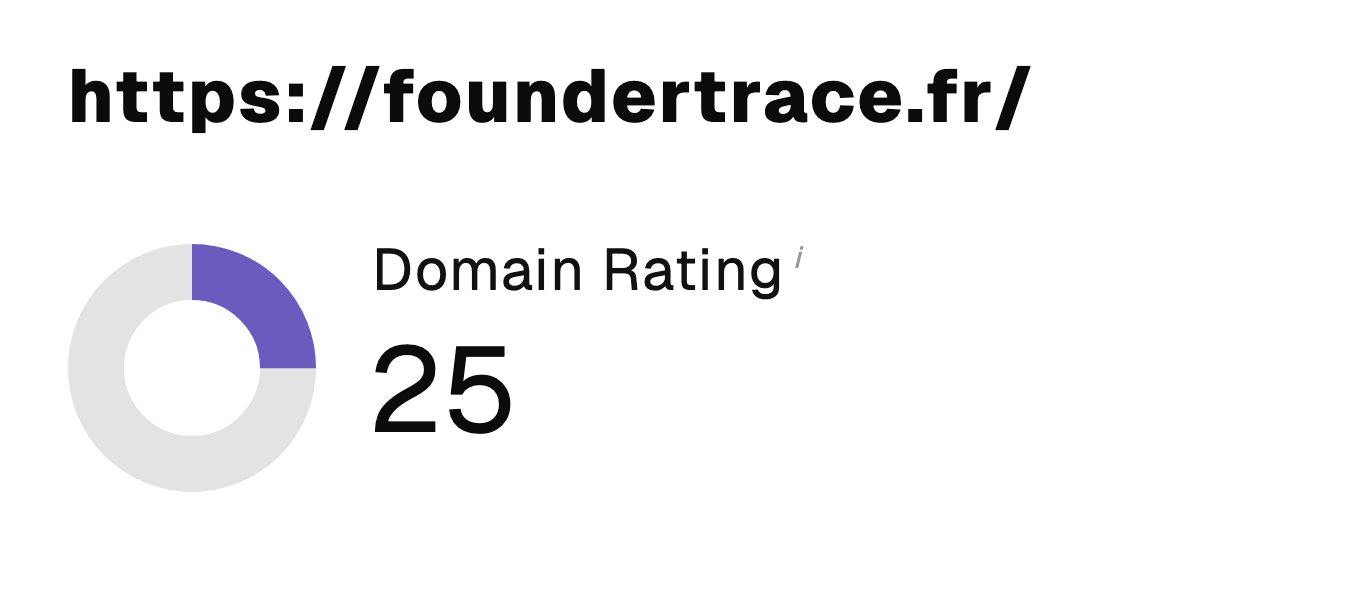 “I just let the Sorank software do its thing, and now my DR is 25 and my page is ranking higher.”
 Lucas Flandrefoundertrace.fr“I specialized in GEO thanks to Sorank. The GEO Leaderboard allows me to show my clients their position vs competitors on ChatGPT. It’s a real commercial differentiator.”
 MélanieSEO Freelance“Great service, works well for our website and helps us understand how to improve it to rank better on Google and elsewhere. Congrats, keep going, I recommend it.”
 Hugo T.E-commerce merchant