Preferences
Privacy is important to us, so you have the option of disabling certain types of storage that may not be necessary for the basic functioning of the website. Blocking categories may impact your experience on the website. More information

Privacy is important to us, so you have the option of disabling certain types of storage that may not be necessary for the basic functioning of the website. Blocking categories may impact your experience on the website. More information

Learn schema markup for SEO. Add structured data to rich snippets, FAQs, products, articles, and improve click-through rates.







Tools


Founder of Sorank, 7+ years of experience in SEO, GEO enthusiast.
Summary
Schema markup is structured data added to HTML that helps search engines understand content context, enabling rich snippets and improving click-through rates.
Want to go further? Ask
Schema markup (also called structured data) is code added to your website that tells search engines what your content means in a machine-readable format. Instead of Google having to infer that a review has a 5-star rating, you explicitly tell Google with schema: "This is a review with a 5-star rating." Schema enables rich snippets: enhanced search results with star ratings, prices, availability, FAQs, and more. Users see rich results and are more likely to click, driving higher click-through rates and traffic.
In 2026, schema markup has become more important because it helps search engines understand content context in the age of AI. The AIs that cite sources rely on schema to understand what a page is about. Additionally, as search results become more visual (with rich snippets), plain text results stand out less. Adding schema markup is a quick way to improve your search appearance and visibility. This guide covers the main schema types and how to implement them.
Schema.org is the open standard for structured data markup. It provides a vocabulary of property names and values that describe things. A "Review" schema has properties like "reviewRating," "author," "reviewBody," and "datePublished." A "Product" schema has "name," "price," "description," and "image." Markup follows one of three formats: JSON-LD (recommended by Google), Microdata, or RDFa.
Google's documentation recommends JSON-LD format because it's easiest to implement and doesn't require HTML changes. JSON-LD is a script block added to the page head or body. It doesn't affect page rendering or styling, only tells Google how to interpret the content. Google reads the JSON-LD, understands the page structure, and displays rich snippets in search results.
JSON-LD (JSON for Linking Data) is a script block with JSON code. It's Google's preferred format. It's clean, separate from HTML, and easy to add without touching page structure. Microdata uses HTML attributes (itemscope, itemtype, itemprop) directly in your HTML. It works but requires HTML modifications and is more complex. RDFa (Resource Description Framework in Attributes) uses HTML attributes (resource, property, typeof) similar to Microdata.
For new implementations, use JSON-LD. It's easier, Google prefers it, and it separates content from metadata. If you're updating existing pages, JSON-LD is still the best choice. Most modern CMS platforms (WordPress, Webflow, HubSpot) have plugins or built-in tools to add JSON-LD schema without coding.
Article schema is for blog posts and news articles. It includes fields like headline, datePublished, author, description, and image. Google displays article rich snippets with date published and author. Product schema is for ecommerce sites. It includes name, description, price, image, and rating. Google displays product rich snippets with price and star rating, increasing click-through rates significantly.
LocalBusiness schema is for local businesses. It includes business name, address, phone number, hours of operation, and reviews. Google displays this in local results and knowledge panels. FAQ schema is for FAQ pages. It includes questions and answers as arrays. Google displays FAQs as expandable snippets in search results. Review and AggregateRating schema add star ratings to products and businesses. Reviews with high ratings see significantly higher CTR.
Event schema is for events. It includes event name, date, location, and description. Organization schema provides basic business information (name, logo, address, social profiles). Recipe schema is for food sites. It includes ingredients, cooking time, nutrition, and rating. Choose schema matching your content type.
Article schema for a blog post includes: headline (page title), datePublished (publication date), dateModified (update date), author (author name and URL), description (meta description or excerpt), image (featured image), and mainEntity (usually Article). Example JSON-LD structure:
{"@context": "https://schema.org", "@type": "Article", "headline": "Title Tags: Write Clickable SEO Titles", "datePublished": "2026-04-29", "dateModified": "2026-04-29", "author": {"@type": "Person", "name": "John Smith", "url": "https://example.com/about"}, "description": "Learn to write title tags that rank and drive clicks", "image": "https://example.com/image.jpg"}
Most WordPress SEO plugins (like Yoast or RankMath) auto-generate Article schema. For Webflow, add custom code blocks with JSON-LD. HubSpot automatically generates Article schema for blog posts. Check your CMS documentation for schema implementation options.
Product schema includes: name, description, price, priceCurrency, image, availability, aggregateRating (star rating), and reviews. Example:
{"@context": "https://schema.org", "@type": "Product", "name": "Sorank", "description": "GEO and SEO automation platform", "price": "99", "priceCurrency": "EUR", "image": "https://example.com/product-image.jpg", "aggregateRating": {"@type": "AggregateRating", "ratingValue": "4.8", "reviewCount": "450"}}
Detailed product schema with reviews, offers, and availability can look complex, but ecommerce platforms like Shopify, WooCommerce, and BigCommerce auto-generate it. Google's Product schema documentation provides detailed property requirements and examples.
Use both, for different questions. The Schema Markup Validator checks whether your markup is valid Schema.org, whatever the type. Google's Rich Results Test checks whether that markup makes the page eligible for a Google rich result. Search Console then monitors the whole site over time.
| Tool | What it checks | Best used for |
|---|---|---|
| Schema Markup Validator | Syntax and vocabulary for every Schema.org type, including types Google does not display | Debugging JSON-LD, checking Organization, Person or custom types |
| Rich Results Test | Only the types Google supports for rich results, against Google's required and recommended properties | Confirming eligibility for product, review, FAQ, breadcrumb or article features |
| Search Console reports | Valid and invalid items detected on crawled pages | Catching errors across templates after deployment |
A reliable workflow follows that order:
Keep in mind that a clean validation is a prerequisite, not a guarantee: as Google's structured data documentation states, valid markup does not ensure a rich snippet will appear.
FAQ schema turns FAQ pages into rich snippets with expandable Q&A in search results. This increases visibility and CTR. The structure is straightforward: an array of FAQPage items, each containing a question and answer. Example:
{"@context": "https://schema.org", "@type": "FAQPage", "mainEntity": [{"@type": "Question", "name": "What is SEO?", "acceptedAnswer": {"@type": "Answer", "text": "SEO is search engine optimization..."}}, {"@type": "Question", "name": "Why does SEO matter?", "acceptedAnswer": {"@type": "Answer", "text": "SEO matters because..."}}]}
Google's FAQ schema documentation includes validation guidelines and examples. FAQ schema is quick to implement and improves visibility significantly. If you have a FAQ page, add this schema.
Google's Rich Results Test tool validates schema markup and shows how it will appear in search results. Paste your URL or code, and the tool shows any validation errors. Fix errors and re-test. The tool also shows which rich snippets Google recognizes from your schema. Use this to verify your implementation before publishing.
Also test with Schema.org's documentation and tools. Keep your schema updated. If you update page content (like adding reviews to a product), update the corresponding schema. Check Search Console for schema-related messages or errors. If Google flags your schema, fix it immediately.
Schema markup doesn't directly boost rankings, but it boosts click-through rates by making results more attractive and trustworthy. A product result with a 4.8-star rating and price visible is more compelling than a plain text result. An FAQ result with expandable answers helps searchers find information faster. Higher CTR signals relevance and can indirectly improve rankings. Additionally, schema helps Google understand page context and content type, improving keyword matching.
For AI systems like ChatGPT and Perplexity, schema provides additional context about page credibility, author expertise, and review ratings. This can influence whether the AI cites your page as a source. Data shows that pages with properly implemented schema see 20-40% increases in click-through rate compared to plain text results. For ecommerce sites, rich snippets with price and rating can increase product page CTR by 30-50%, directly translating to more sales.
BreadcrumbList schema shows your page's position in your site hierarchy. A breadcrumb like "Home > Blog > SEO > Title Tags" helps users understand where they are and enables quick navigation back. Google displays breadcrumbs in search results, improving visibility and CTR. Implementation is straightforward: create a JSON-LD array showing the hierarchy.
SitelinksSearchBox schema adds a search box directly on your knowledge panel in search results, letting users search your site from the SERP. This requires Organization schema plus SitelinksSearchBox. Major sites like Amazon, Wikipedia, and large brands use this. It's an advanced feature but worth implementing for large sites with internal site search.
Mistake 1: Mismatched schema. Adding Product schema to a blog post or Article schema to a product page confuses Google. Match schema to content type. Mistake 2: Invalid or outdated data. Showing a product as in-stock when it's out of stock. Showing old publication dates. Update schema when content changes. Mistake 3: Hidden schema. Don't add fake schema (e.g., fake reviews or ratings). Google penalizes this.
Mistake 4: Incomplete schema. Minimal schema is better than incorrect schema. If you can't populate all required fields accurately, include only the fields you can verify. Mistake 5: Forgetting dateModified. Update this when you update content. It tells Google your content is fresh. Mistake 6: Not testing. Always test schema with Google's Rich Results Test before publishing.
Schema markup adds structured data to your HTML, enabling rich snippets in search results and improving click-through rates. The main benefit is improved appearance, not direct ranking improvement. Choose schema matching your content type: Article for blogs, Product for ecommerce, FAQ for FAQ pages, LocalBusiness for local sites, and so on. Implement in JSON-LD format, the most popular and Google-recommended format. Test with Google's Rich Results Test before publishing. Keep schema updated when content changes.
Start with your highest-priority pages. If you run a blog, add Article schema. If you have products, add Product schema. If you have a FAQ page, add FAQ schema. Each schema implementation is usually quick and can provide noticeable CTR improvements within weeks. For comprehensive technical SEO setup including schema audit and implementation, try Sorank's SEO automation platform.
Sources

Schema markup is not a direct ranking factor. Google has stated that schema markup itself doesn't improve rankings. However, it improves search result appearance (rich snippets, star ratings, pricing, FAQs) which increases click-through rate (CTR). Higher CTR signals relevance and can indirectly improve rankings. Additionally, schema helps Google understand page content more accurately, which can improve keyword matching. The main benefit of schema is improved appearance and CTR, not direct ranking boost.
The most impactful schema types are Article (for blog posts and news), Product (for ecommerce), LocalBusiness (for local SEO), FAQ (for FAQ pages), Review/AggregateRating (for reviews and ratings), Event (for events), and Recipe (for food sites). Choose schema types matching your content. Article schema on blogs, Product schema on product pages, LocalBusiness on your contact page. Multiple relevant schema types can be used on a single page.
Bad or incorrect schema markup doesn't directly hurt rankings. However, Google may ignore the markup or flag it as rich result eligibility issues in Search Console. If you implement schema incorrectly (wrong property names, invalid data types), Google simply doesn't use it. Fix validation errors in Google's Rich Results Test tool. Update your schema if it becomes outdated or incorrect. Valid, accurate schema is always safe and beneficial.
THEY TRIED SORANK BEFORE YOU
 “I tested Sorank on a real client site and it's insane. It does everything an agency would bill you $1500 a month for. It's going into production on that client now.”
 Guillaume Guersanguersanguillaume.com“We are an Ads agency and we wanted to get our SEO back on track once and for all. Sorank gave us a clear view of our site, helped us prioritize optimizations, and properly structure our content. The tool is easy to use, well designed for a team, and very practical for centralizing tracking without having to juggle multiple platforms. A very solid foundation to start fresh with our SEO.”
 Gaspard MadouiAds Agency
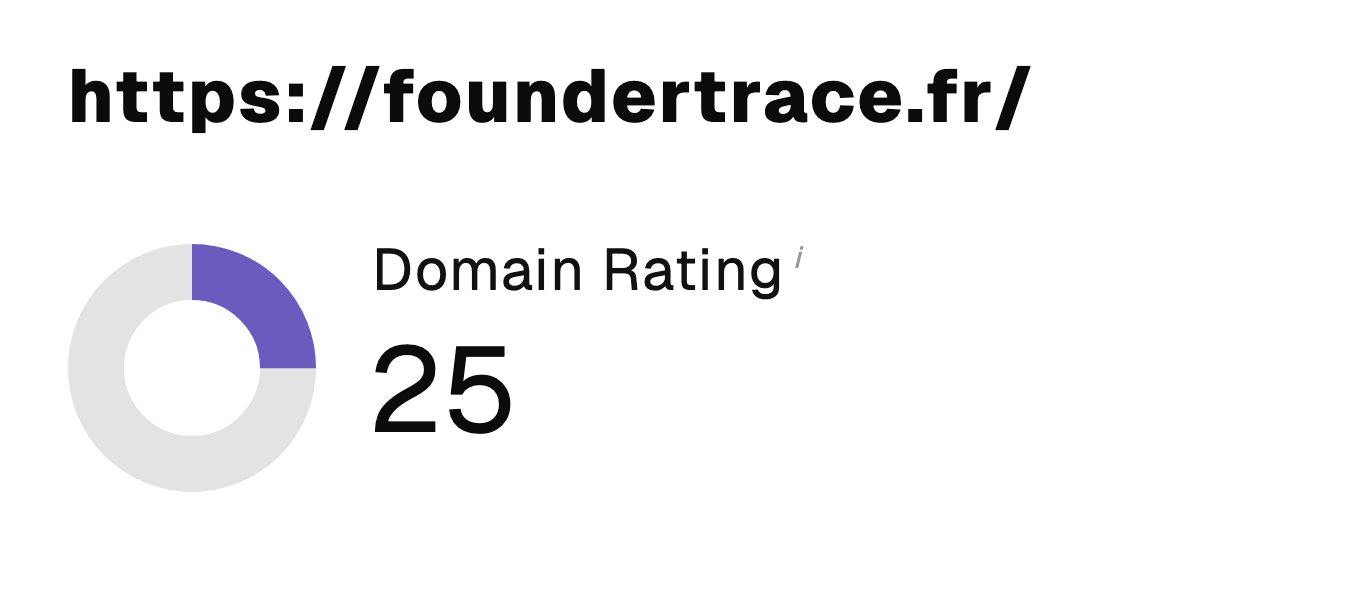 “I just let the Sorank software do its thing, and now my DR is 25 and my page is ranking higher.”
 Lucas Flandrefoundertrace.fr“I specialized in GEO thanks to Sorank. The GEO Leaderboard allows me to show my clients their position vs competitors on ChatGPT. It’s a real commercial differentiator.”
 MélanieSEO Freelance“Great service, works well for our website and helps us understand how to improve it to rank better on Google and elsewhere. Congrats, keep going, I recommend it.”
 Hugo T.E-commerce merchant