Preferences
Privacy is important to us, so you have the option of disabling certain types of storage that may not be necessary for the basic functioning of the website. Blocking categories may impact your experience on the website. More information

Privacy is important to us, so you have the option of disabling certain types of storage that may not be necessary for the basic functioning of the website. Blocking categories may impact your experience on the website. More information

Are you wondering whether your job and your skills are threatened by AI? Then read our Top 65 jobs that will survive artificial intelligence

Tools


Summarize this article with AI
Artificial intelligence (AI) is no longer just a trend: it is profoundly reshaping the job market. From data processing to translation, including logistics and finance, robots and algorithms are gaining ground. This rise raises a crucial question: which jobs are really threatened by AI, and which ones will resist automation?
In this guide, we will first review the impact of AI on the professional world, then draw on the U.S. Career Institute study's ranking of 65 "AI-resistant" jobs, meaning those least likely to be replaced by machines. Finally, we will explain why these professions are likely to endure in a world where AI plays an increasingly central role.
If you are wondering whether your job is among those threatened by AI, know that automation today mainly affects:
According to several studies, up to 40% of jobs could be heavily impacted by AI over the next two decades. However, impacted does not mean eliminated: AI can replace certain tasks, but not necessarily the entire job, especially if it involves human relationships, creativity, or complex decision-making. Even in writing-heavy fields, many companies choose to keep a human editorial team by working with agencies that specialise in content and copywriting rather than automating the craft entirely.
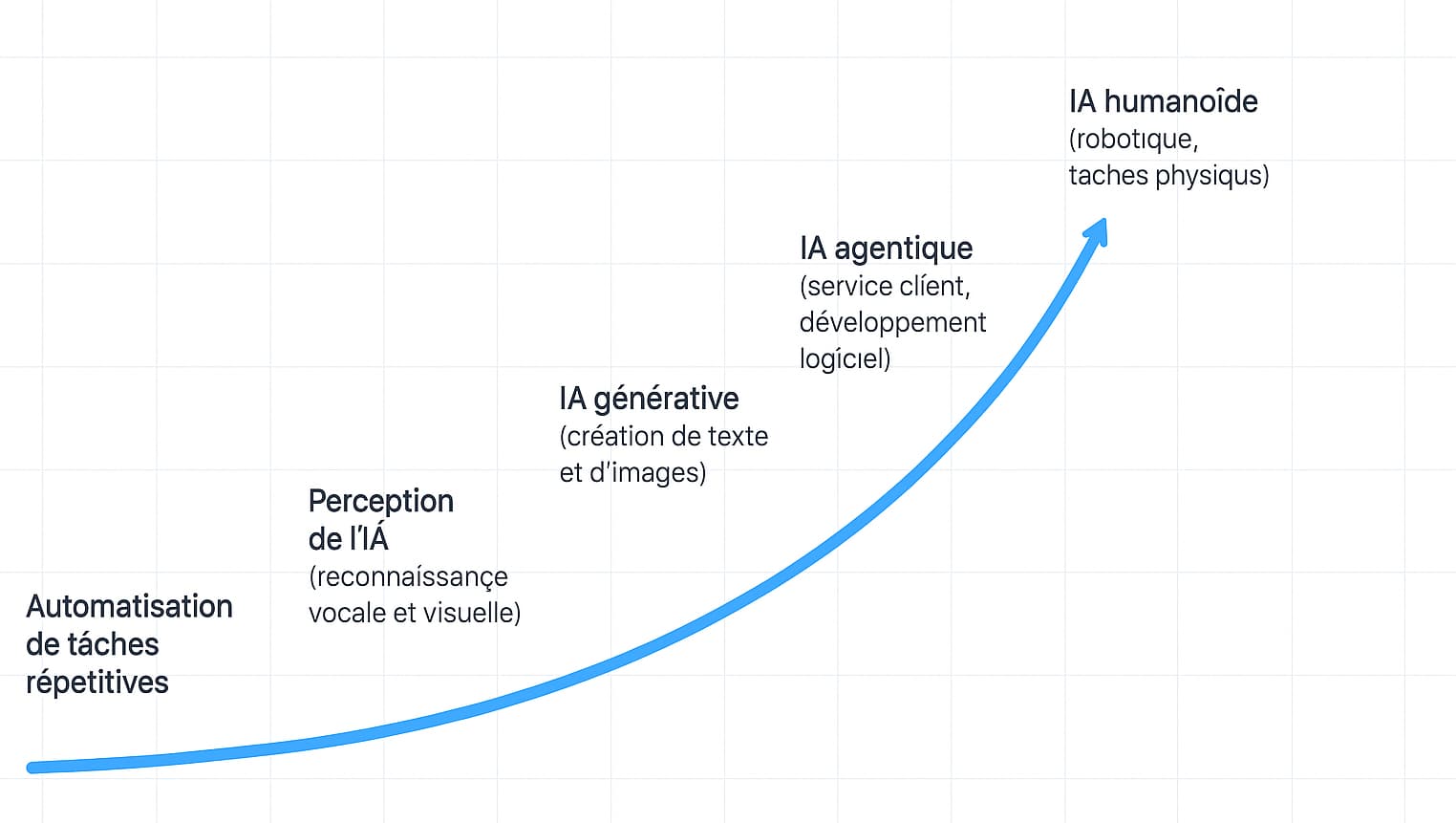
Some jobs resist automation better than others. Why? Three major criteria can be identified that make a job less vulnerable to AI:
Professions requiring empathy, emotional intelligence, and direct interaction, such as healthcare, therapy, or teaching, are far less exposed. AI, however advanced, can only mimic emotional understanding without truly embodying it.
Jobs requiring instant responsiveness to unforeseen events (medical emergencies, crisis situations, major logistical disruptions) remain hard to automate. Algorithms excel at analyzing known patterns, but struggle with the purely unexpected.
When it comes to solving novel problems or demonstrating advanced creativity, humans retain the advantage. AI relies on pre-existing data and statistical models. It excels at finding correlations, less so at making true conceptual breakthroughs.
Drawing on data from the U.S. Career Institute, here is an overview of professions expected to retain a strong human component. They are often called "AI-resistant" jobs, that is, positions whose growth projections through 2032 remain favorable despite the rise of robotics and AI.
For each job, the U.S. Career Institute data gives:
From Nurse Practitioners to Manufactured Building Installers, including teachers, biomedical engineers, and even choreographers, you will see how human connection, on-the-ground contact, and the creative dimension retain an edge over simple automation.
The complete ranking of the 65 jobs, with median salary and projected growth, is available in the U.S. Career Institute data cited above.
Having an "AI-resistant" job does not mean you can skip adapting. On the contrary, here are a few tips:
Automation is not a myth: it is already at work in many sectors. Yes, jobs are threatened by AI, but not all of them. Jobs deeply rooted in human relationships, creativity, or handling the unexpected retain (and will retain) a large share of manual and intellectual activity.
Rather than viewing AI as an absolute threat, it is wiser to consider it an ally capable of taking on repetitive tasks and freeing up time for the human dimension of work. Businesses navigating this shift are also the ones investing in specialists who track how the AIs represent a brand online, which is why agencies dedicated to AI visibility in France are seeing growing demand, since the same technology reshaping jobs is reshaping how customers find companies.
Ultimately, adaptability, training, and constant questioning remain the most effective tools for navigating a world in which artificial intelligence plays an ever-growing role.

Yes, as long as the company complies with the legal dismissal procedures in force. In France, an employer must justify the elimination of the position and respect the employee’s rights, even if the cause is technological.
They can request support for career transition, claim their entitlement to statutory severance, and seek training aid to reposition themselves in a less automatable job.
Administrative roles, customer support functions, data entry, and certain accounting or legal jobs are the most exposed to automation by AI.
 AI Content Brief Generator
 FAQ Schema Generator
 AI Blog Post Ideas Generator
 Structured Data Validator
 Alt Text Checker
 Internal Link Analyzer
 Backlink Challenge
 AI Meta Description Generator
 AI Blog Title Generator
 Google Indexability Checker
 AI Blog Outline Generator
 UTM Link Builder
 Keyword Clustering Tool
 Canonical Tag Checker
 XML Sitemap Generator
 Broken Link Checker
 AI SEO Title Generator
 Headline Analyzer
 SERP Preview Tool
 Redirect Checker
 Hreflang Tag Generator
 Heading Structure Analyzer
 HTTP Headers Checker
 Favicon Extractor
 SERP CTR Calculator
 SEO vs Paid Search Savings Calculator
 SEO Share of Voice Calculator
 SEO ROI Calculator
 SEO Traffic and Revenue Forecast Calculator
 SEO Budget Calculator
 SEO Break-Even Calculator
 SaaS SEO ROI Calculator
 ROAS Calculator
 Reading Time Calculator
 Ranking Gain Simulator
 Organic Traffic Value Calculator
 Organic Traffic Estimator
 LTV to CAC Ratio Calculator
 Local SEO ROI Calculator
 Link Building Cost Calculator
 Keyword Value Calculator
 Keyword Opportunity Score Calculator
 Keyword Density Calculator
 GEO ROI Calculator
 GEO Content Investment Calculator
 Ecommerce SEO ROI Calculator
 Customer Lifetime Value Calculator
 Customer Acquisition Cost Calculator
 CTR Calculator
 Cost Per Article Calculator
 Conversion Rate Calculator
 Content Marketing ROI Calculator
 ChatGPT Referral Traffic Estimator
 Bounce Rate Calculator
 Backlink ROI Calculator
 AI Visibility Score Calculator
 AI Traffic Value Calculator
 AI Share of Voice Calculator
 Cost of AI Invisibility Calculator
 AI Citation Rate Calculator
 llms.txt Validator
 AI Overview Checker
 Robots.txt Checker
 AI SEO Audit
 LLM Readability Checker
 SearchGPT Readiness Checker
 Structured Data LLM Audit
 Website Crawlability AI Audit
 Why ChatGPT Is Not Recommending My Website
 Gemini Ranking Tool
 Perplexity Ranking Checker
 LLM Citation Checker
 Answer Engine Optimization Audit
 GEO Audit
 AI Search Visibility Test
 ChatGPT Visibility Checker
 llms.txt Generator
 URL Extractor
 Webpage to Markdown
 Sitemap Checker
 SERP Volatility Sensor
 Page Size Checker
 Word Counter
 Slug Generator
 Schema Generator
 Robots Generator
 OG Preview
 Meta Tags Generator
 Image Compressor
 Favicon Generator
 On-Page SEO Audit
 Backlink Analysis Tool
 Keyword Research Tool
 Domain Authority Checker
THEY TRIED SORANK BEFORE YOU
 “I tested Sorank on a real client site and it's insane. It does everything an agency would bill you $1500 a month for. It's going into production on that client now.”
 Guillaume Guersanguersanguillaume.com“We are an Ads agency and we wanted to get our SEO back on track once and for all. Sorank gave us a clear view of our site, helped us prioritize optimizations, and properly structure our content. The tool is easy to use, well designed for a team, and very practical for centralizing tracking without having to juggle multiple platforms. A very solid foundation to start fresh with our SEO.”
 Gaspard MadouiAds Agency
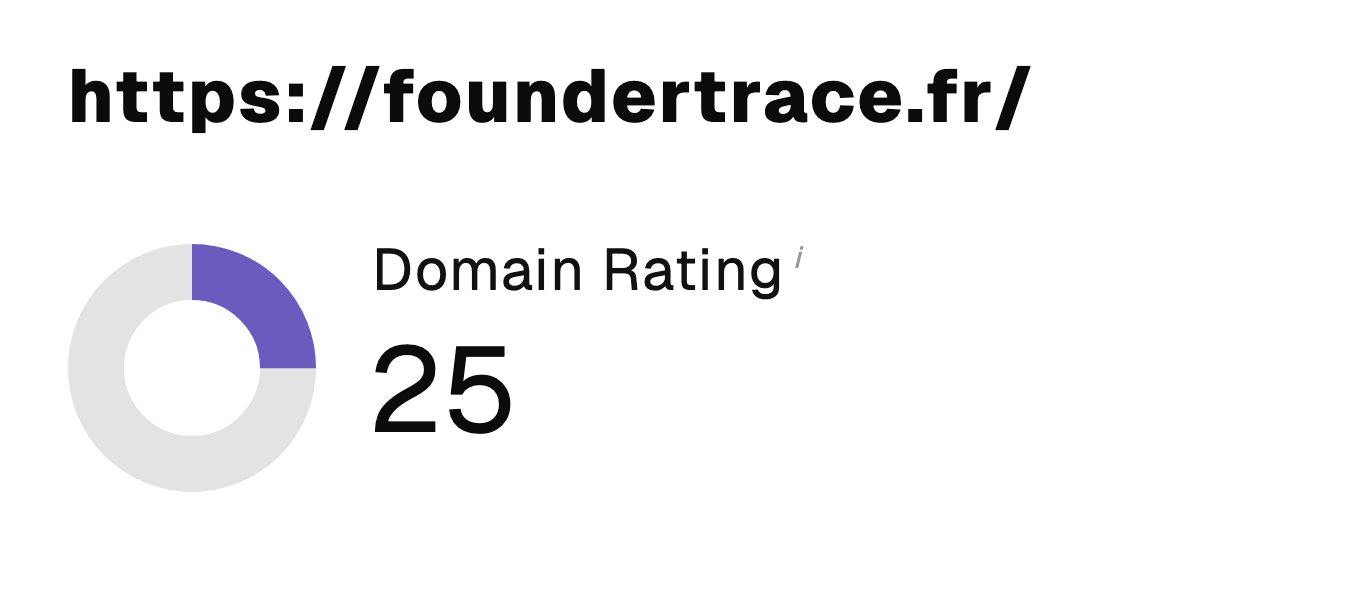 “I just let the Sorank software do its thing, and now my DR is 25 and my page is ranking higher.”
 Lucas Flandrefoundertrace.fr“I specialized in GEO thanks to Sorank. The GEO Leaderboard allows me to show my clients their position vs competitors on ChatGPT. It’s a real commercial differentiator.”
 MélanieSEO Freelance“Great service, works well for our website and helps us understand how to improve it to rank better on Google and elsewhere. Congrats, keep going, I recommend it.”
 Hugo T.E-commerce merchant