
Preferences
Privacy is important to us, so you have the option of disabling certain types of storage that may not be necessary for the basic functioning of the website. Blocking categories may impact your experience on the website. More information

Privacy is important to us, so you have the option of disabling certain types of storage that may not be necessary for the basic functioning of the website. Blocking categories may impact your experience on the website. More information

The best AI blog writer depends on your workflow. We compare 8 AI content writers in 2026: autopilot publishing, brand voice, SEO optimisation and limits.

Tools


In short
the best AI blog writer depends on how much of the work you want to hand over. Sorank is the choice if you want articles researched, written and published on your site on autopilot. Jasper is the strongest for brand voice in marketing teams, Surfer for optimising each article against the search results, Writesonic for writing combined with AI visibility tracking, Frase for research and briefs, and Copy.ai for content workflows in sales and marketing. ChatGPT and Claude remain the best general assistants if you write and edit yourself.
Want to go further? Ask
Transparency: Sorank is our own software. We placed it where it is relevant (end to end blog production and publication) and we state below where the other AI content writers are better than ours, which happens on several criteria. Descriptions come from information each company publishes and from hands-on use, checked in October 2026. Tools change fast, so check features before you buy.
We ranked each AI blog writer on how close its output gets to a publishable, ranking article, and on how much work remains for you afterwards. A tool that writes fast but leaves you hours of research, formatting and uploading is less useful for a blog than its speed suggests.
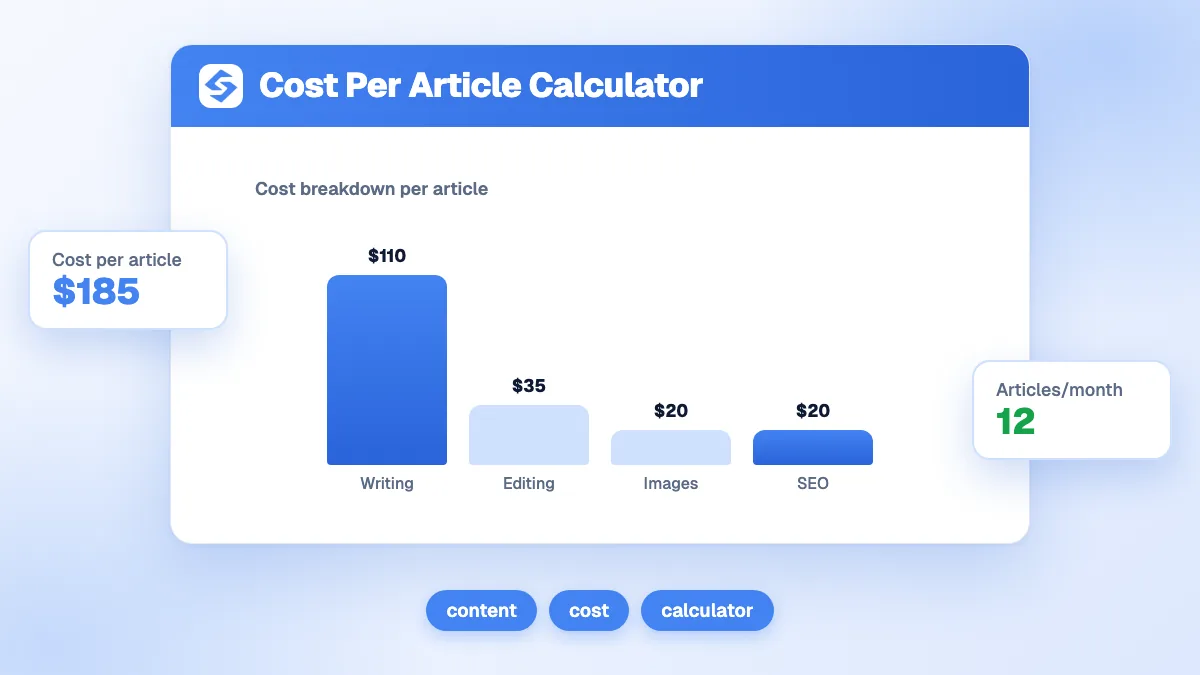
We did not use price as a criterion, because plans change often. To compare the cost of an AI written article with a freelance one, use our cost per article calculator.
What it does. Sorank analyses your site and your competitors, finds the keywords, plans an editorial calendar, then writes and publishes one article a day with images, automatic internal linking, anti cannibalisation, fact checking, FAQ and structured data. It publishes directly to more than 10 CMS (WordPress, Shopify, Webflow, Wix...) and tracks each week the questions asked to ChatGPT, Claude, Gemini or Perplexity to show whether your brand is cited and who is cited instead. It also lets you obtain natural backlinks automatically, placed in real articles on sites of the same theme, one way only. Details on the blog article generator page.
Who it is for. Small businesses, e-commerce sites, SaaS and agencies that want a blog that grows organic traffic without writing or uploading articles themselves.
Strengths. The whole chain in one tool, from keyword to publication to tracking in the AIs. 5000 users, results usually visible in 2 to 4 months, and a 90 day guarantee.
Limits. It is built to run a whole blog and offers no live editor for crafting one piece at a time. If you want to sit in an editor and craft each sentence with a live optimisation score, Surfer or Frase fit better. For multichannel marketing copy (ads, emails, landing pages) under a strict brand voice, Jasper is stronger.
What it does. Jasper is an AI content platform for marketing teams. It stores your brand voice, style guide and company knowledge, and uses them across blog posts, campaigns, emails and social content, with marketing agents that chain research, drafting and optimisation.
Who it is for. Mid size and large marketing teams producing many formats who need every piece to sound like the brand.
Strengths. Brand voice and knowledge base, collaboration and approvals, wide range of marketing formats, integrations with the usual marketing stack.
Limits. SEO is one feature among many: keyword strategy, publication scheduling and tracking in the AIs are not its core. Pricing is aimed at teams more than solo bloggers, and drafts still need fact checking.
What it does. Surfer is known for its Content Editor, which scores your article from 0 to 100 against the pages that rank, with suggestions on terms, headings, length and images. It adds AI generation of drafts and outlines inside the editor, an assistant to rewrite passages, content audits and AI visibility features.
Who it is for. SEO writers, content managers and agencies who write or edit each article themselves and want data driven guidance.
Strengths. Clear on-page guidance, a score that teams understand, integrations with Google Docs and WordPress, and a long track record in content optimisation.
Limits. Followed blindly, the score pushes toward over optimisation and look alike articles. It helps you write a better article but you still decide the calendar and do the publishing work, and its keyword research is less deep than dedicated suites.
What it does. Writesonic combines an AI article writer that researches the web and competitors with GEO features that monitor how your brand appears in ChatGPT, Perplexity, Gemini and Google AI Overviews.
Who it is for. Marketing teams that want long articles and AI visibility data in the same platform.
Strengths. Long form drafts grounded in web sources, a wide set of writing tools, and an early move into tracking visibility in the AIs.
Limits. The AI visibility features sit on the higher plans, the interface covers many tools and takes time to master, and articles still need editing for tone and accuracy.
What it does. Frase analyses the top results for a query, extracts their headings, questions and topics, and turns them into a content brief, then helps you write and optimise the article with AI.
Who it is for. Content strategists, freelance writers and agencies who produce briefs for writers or want to understand a search result page before writing.
Strengths. Fast and readable research, good briefs, question extraction that helps build FAQ sections, and a lighter learning curve than larger suites.
Limits. Its AI drafts are less polished than the best general assistants, and it does not run a publication calendar on your site.
What it does. Copy.ai has evolved from a copywriting tool into a go to market platform: chat, templates, a knowledge base for your brand and workflows that chain steps, such as turning one blog post into several social posts.
Who it is for. Companies that want to automate repetitive content tasks across sales and marketing, with blog writing as one part.
Strengths. Workflow automation, many integrations, and a quick start for short form copy.
Limits. Long blog articles usually need more structural editing than with the specialists above, and the advanced workflow plans are priced for companies.
What it does. ChatGPT drafts outlines, sections and full articles, rewrites, summarises and searches the web, in many languages.
Who it is for. Bloggers and marketers who want a fast co writer and are ready to handle research, SEO and publication themselves.
Strengths. Versatility, speed, a free plan, and good results when the brief is precise.
Limits. It does not know your keywords, competitors or existing pages, so it cannot avoid cannibalisation or link your articles together. Facts must be checked and nothing is published for you.
What it does. Claude writes long, well structured and natural texts and handles very long source documents, which makes it strong for in depth guides and rewriting existing posts.
Who it is for. Writers and founders who want drafts that sound human and need less rewriting.
Strengths. Tone, nuance, respect of detailed style guides, analysis of long documents, and a free plan.
Limits. Same as ChatGPT: no keyword research, no publishing, no tracking. You bring the SEO method around it.
| Tool | Best for | Main strength | Main limit |
|---|---|---|---|
| Sorank | Blog on autopilot | Keyword to publication to AI tracking | No live editor for crafting each article |
| Jasper | Brand voice in teams | Brand voice, knowledge base | SEO is not its core |
| Surfer | On-page optimisation | Content score and guidance | Risk of over optimisation |
| Writesonic | Writing plus AI visibility | Sourced drafts, GEO tracking | GEO on higher plans |
| Frase | Research and briefs | Fast SERP analysis | Less polished drafts |
| Copy.ai | Sales and marketing workflows | Automation, integrations | Long posts need restructuring |
| ChatGPT | Co writing | Versatility, free plan | No SEO context, no publishing |
| Claude | Natural long drafts | Tone, long documents | No SEO context, no publishing |
Choose according to the part of the work you want to keep: writing, optimising, or nothing at all. The three profiles below cover most cases.
Whatever the tool, test it on three real keywords from your market, then compare the drafts on accuracy, structure and editing time. Also check that the articles are easy for AI assistants to quote: a direct answer at the start of each section, self contained paragraphs and clear data. Our page on LLM ready content explains these criteria, and our guide to SEO writing covers the method behind a ranking article.
Yes, when they are useful, accurate and part of a consistent publication plan. Google explains on Google Search Central that it rewards helpful content however it is produced, and treats mass produced pages made mainly to manipulate rankings as spam. In practice, the articles that perform share the same traits:
AI assistants such as ChatGPT, Gemini and Perplexity favour the same qualities when they pick sources to cite. If you want to go beyond writing, our list of the best AI tools for content creation covers images, video and audio.
The best AI blog writer in 2026 is the one that matches your workflow. Writers who want control will be best served by ChatGPT or Claude with Surfer or Frase; marketing teams by Jasper or Copy.ai; businesses that want a blog running on autopilot, from keyword to publication and tracking in the AIs, by Sorank. You can test it with a 3-day free trial from the pricing page.

It depends on how much of the process you want to delegate. For drafts you edit yourself, ChatGPT or Claude are excellent. For optimising drafts against search results, Surfer or Frase are strong. For brand voice in a marketing team, Jasper leads. To have articles researched, written and published on your site with no manual step, a tool like Sorank covers the full chain.
An AI content writer is good for SEO when it starts from real keyword research, follows search intent, checks facts and adds internal links and structured data. A raw draft pasted from a chatbot rarely ranks on its own. Google judges usefulness and quality, so the tool matters less than the brief, the editing and the regularity of publication.
Yes, current AI blog writers can produce a complete article with headings, FAQ and images in a few minutes. The quality depends on the input: a precise keyword, a clear angle, your own examples and a fact check. Most businesses either review each draft before publishing or use a tool with built in fact checking and review a sample each week.
 AI Content Brief Generator
 FAQ Schema GeneratorAI Blog Post Ideas GeneratorStructured Data Validator
 Alt Text Checker
 Internal Link AnalyzerBacklink ChallengeAI Meta Description GeneratorAI Blog Title Generator
 Google Indexability CheckerAI Blog Outline GeneratorUTM Link BuilderKeyword Clustering ToolCanonical Tag Checker
 XML Sitemap GeneratorBroken Link CheckerAI SEO Title GeneratorHeadline AnalyzerSERP Preview ToolRedirect Checker
 Hreflang Tag GeneratorHeading Structure AnalyzerHTTP Headers CheckerFavicon Extractor
 SERP CTR Calculator
 SEO vs Paid Search Savings Calculator
 SEO Share of Voice Calculator
 SEO ROI Calculator
 SEO Traffic and Revenue Forecast Calculator
 SEO Budget Calculator
 SEO Break-Even Calculator
 SaaS SEO ROI Calculator
 ROAS Calculator
 Reading Time Calculator
 Ranking Gain Simulator
 Organic Traffic Value Calculator
 Organic Traffic Estimator
 LTV to CAC Ratio Calculator
 Local SEO ROI Calculator
 Link Building Cost Calculator
 Keyword Value Calculator
 Keyword Opportunity Score Calculator
 Keyword Density Calculator
 GEO ROI Calculator
 GEO Content Investment Calculator
 Ecommerce SEO ROI Calculator
 Customer Lifetime Value Calculator
 Customer Acquisition Cost Calculator
 CTR Calculator
 Cost Per Article Calculator
 Conversion Rate Calculator
 Content Marketing ROI Calculator
 ChatGPT Referral Traffic Estimator
 Bounce Rate Calculator
 Backlink ROI Calculator
 AI Visibility Score Calculator
 AI Traffic Value Calculator
 AI Share of Voice Calculator
 Cost of AI Invisibility Calculator
 AI Citation Rate Calculatorllms.txt ValidatorAI Overview CheckerRobots.txt CheckerAI SEO AuditLLM Readability CheckerSearchGPT Readiness Checker
 Structured Data LLM AuditWebsite Crawlability AI AuditWhy ChatGPT Is Not Recommending My Website
 Gemini Ranking ToolPerplexity Ranking CheckerLLM Citation CheckerAnswer Engine Optimization AuditGEO AuditAI Search Visibility TestChatGPT Visibility Checkerllms.txt Generator
 URL ExtractorWebpage to MarkdownSitemap CheckerSERP Volatility SensorPage Size Checker
 Word Counter
 Slug GeneratorSchema GeneratorRobots Generator
 OG PreviewMeta Tags Generator
 Image CompressorFavicon Generator
 On-Page SEO Audit
 Backlink Analysis Tool
 Keyword Research Tool
 Domain Authority Checker
THEY TRIED SORANK BEFORE YOU
 “I tested Sorank on a real client site and it's insane. It does everything an agency would bill you $1500 a month for. It's going into production on that client now.”

 Guillaume Guersanguersanguillaume.com“We are an Ads agency and we wanted to get our SEO back on track once and for all. Sorank gave us a clear view of our site, helped us prioritize optimizations, and properly structure our content. The tool is easy to use, well designed for a team, and very practical for centralizing tracking without having to juggle multiple platforms. A very solid foundation to start fresh with our SEO.”
 Gaspard MadouiAds Agency
 “I just let the Sorank software do its thing, and now my DR is 25 and my page is ranking higher.”
 Lucas Flandrefoundertrace.fr“I specialized in GEO thanks to Sorank. The GEO Leaderboard allows me to show my clients their position vs competitors on ChatGPT. It’s a real commercial differentiator.”
 MélanieSEO Freelance“Great service, works well for our website and helps us understand how to improve it to rank better on Google and elsewhere. Congrats, keep going, I recommend it.”
 Hugo T.E-commerce merchant























