Preferences
Privacy is important to us, so you have the option of disabling certain types of storage that may not be necessary for the basic functioning of the website. Blocking categories may impact your experience on the website. More information
Privacy is important to us, so you have the option of disabling certain types of storage that may not be necessary for the basic functioning of the website. Blocking categories may impact your experience on the website. More information

Compare the 10 best blogger outreach tools: official starting prices, strengths, limits, who each one suits and how to choose the right one for your team.

In short
The best blogger outreach tool for most teams is BuzzStream, from $49 a month, because it keeps prospects, emails and link tracking in one place. Pitchbox suits agencies, Hunter and GMass suit small budgets, and BuzzSumo, Ahrefs or JustReachOut help you find the right writers first.
Want to go further? Ask
Quick quiz
How should you run your blog?
Sorank matches your answers


Test it for 3 days on your own site and see where you stand on Google, ChatGPT and the other AIs.
Start 3-day free trial3 days free, then stop whenever you want. 90-day results guarantee, conditions apply.
BuzzStream, Pitchbox and Linkee cover the whole job: find blogs, write to them, track the links. The seven others do one part of it better or cheaper. The table gives the cheapest published plan of each tool, read on its official site on November 25, 2026.
| Tool | Best for | Main strength | Published starting price |
|---|---|---|---|
| 1. BuzzStream | Small teams and consultants | Contact history, email and link monitoring together | $49 a month |
| 2. Pitchbox | Agencies building links at volume | Prospecting, sequences, mailbox health and client reports | $210 a month, billed yearly |
| 3. Linkee | SEO freelancers who want vetting done for them | Filters out weak sites before you write | $80.83 a month |
| 4. BuzzSumo | PR and content teams | Finds authors through the content they publish | $199 a month, billed yearly |
| 5. Ahrefs Content Explorer | SEO teams that already use Ahrefs | Blog search with authority and traffic filters | €229 a month (Standard) |
| 6. JustReachOut | Founders doing their own PR | Guest posts, podcasts and journalists in one workflow | $98 a month, billed yearly |
| 7. Hunter | Finding the right email address | Public sources shown for each address | Free, then €34 a month billed yearly |
| 8. Snov.io | Email finder and sender in one plan | Mailbox rotation and condition based follow-ups | Free trial plan, then $39 a month |
| 9. Mailshake | Simple email sequences | Low entry price and built-in list cleaning | $29 a month ($25 billed yearly) |
| 10. GMass | Gmail users with a small list | Runs from Gmail and Google Sheets | €26 a month (€17 billed yearly) |
A tool had to meet three conditions to get in: a working official site, features that serve outreach to blogs, and a published price. We read every product and pricing page. We did not use affiliate rankings or copied prices from other lists.
The order follows coverage. A tool that handles research, emailing and follow-up in one place ranks above a tool that does one step. A lower rank does not mean a weaker product: GMass is tenth and may be the right choice for a one-person blog.
Note on currencies
Hunter, Ahrefs and GMass show prices in euros to visitors in Europe. The amounts on your screen may be in dollars. Temporary promotions are left out.
Each review says what the tool is, who it suits, what it does well, one honest limit, and the price on the official site on November 25, 2026.
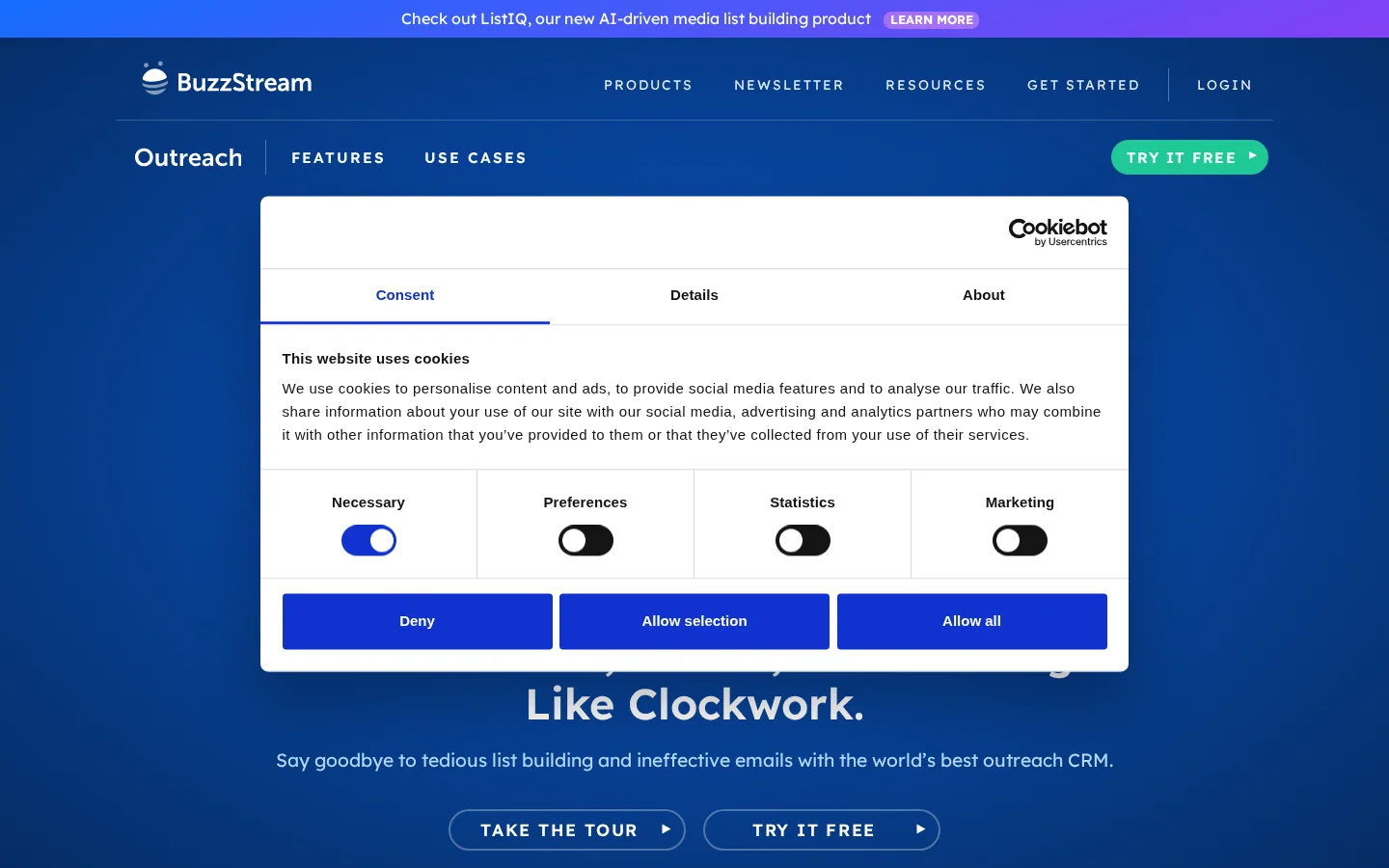
BuzzStream is an outreach platform for digital PR, link building and content promotion. Think of it as a contact database built around websites instead of sales deals. You keep publisher metrics, contacts, emails and replies together.
Who it is for: consultants, in-house SEO teams and small agencies that contact the same writers several times a year.
Strengths:
Limit: automated follow-ups, bulk sending and the Ahrefs integration start with Growth. On Starter, you follow up by hand and you are limited to 500 contacts and 30 prospecting searches.
Price: Starter $49 a month (1 user, 500 contacts), Growth $174 (3 users, 25000 contacts), Professional $424 (6 users, 100000 contacts), Custom from $999. A free trial exists on each plan. The same page also shows an older comparison table with other plan names: rely on the plan cards at the top.
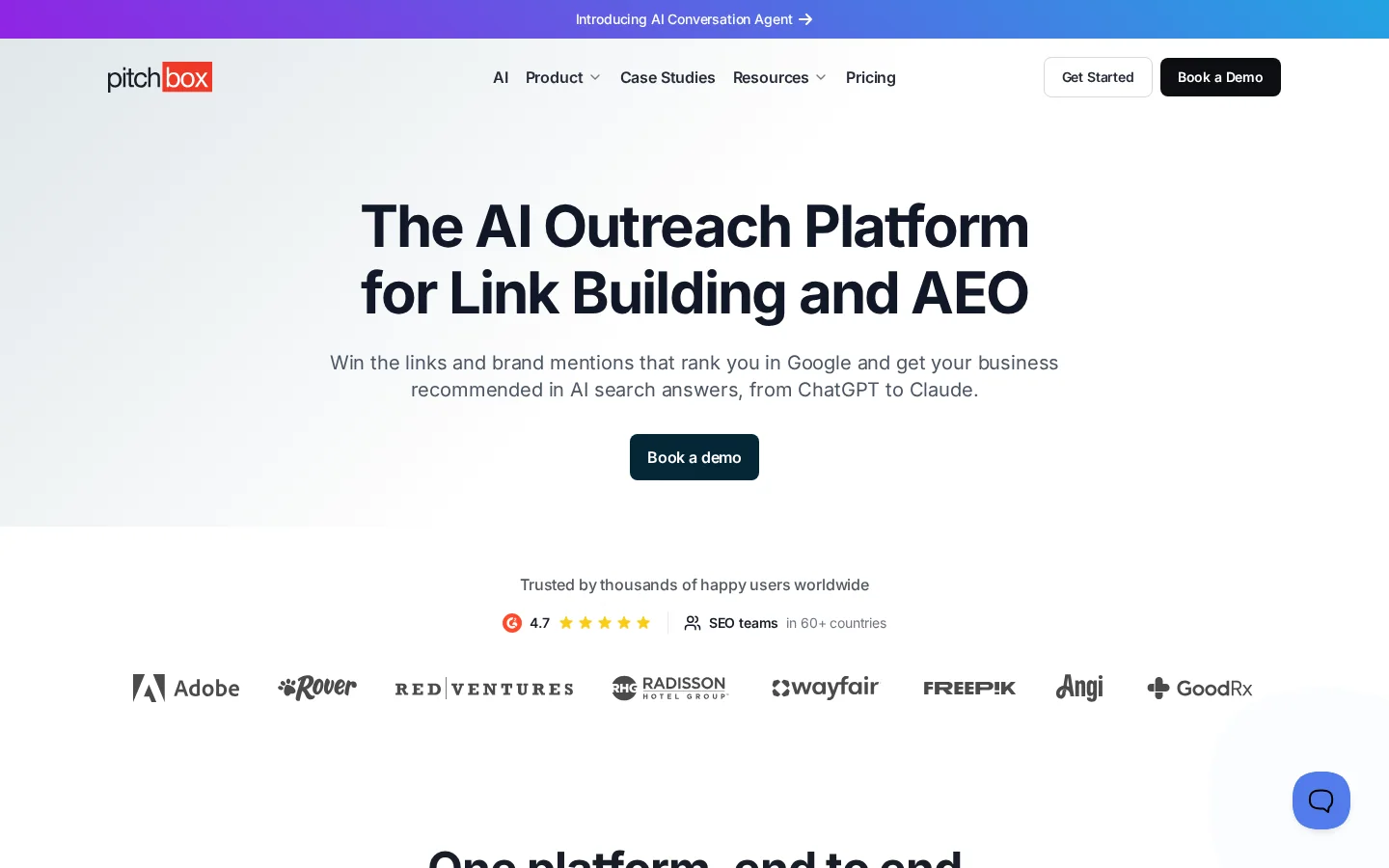
Pitchbox is an outreach platform for link building and digital PR at volume. You start from a topic, a keyword or a competitor. It returns publisher sites with contact data and SEO metrics, then runs the emails and the link tracking.
Who it is for: agencies and in-house teams with several campaigns, several mailboxes and clients to report to.
Strengths:
Limit: every plan requires a one-year commitment, even when you pay monthly. You also go through a demo before a trial. It is heavy for someone who sends 30 pitches a month.
Price: Pro $300 a month, or $210 billed yearly (2 users, 2 email accounts, 2000 outreach emails). Advanced $600 or $420 (unlimited users, 5000 emails). Scale $1200 or $825 (25000 emails). Enterprise: not published.
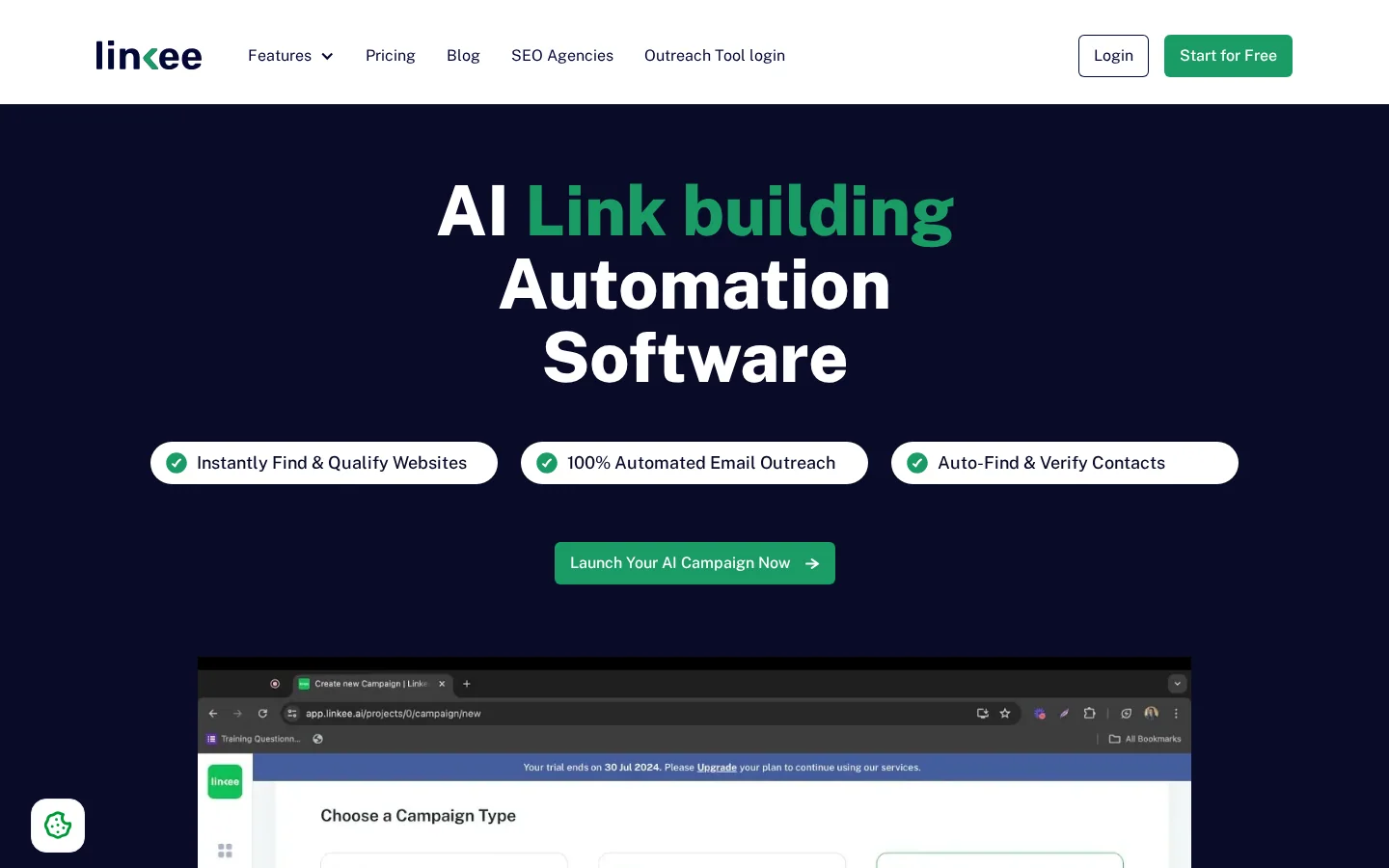
Linkee is an AI link building tool that goes from a keyword to an outreach campaign. It finds relevant sites, vets them, looks for email addresses, then sends and follows up.
Who it is for: SEO freelancers and small agencies who lose most of their time sorting bad prospects.
Strengths:
Limit: the pricing page contradicts itself. The Essential card says two linked email accounts and the help section says one. Ask support for written confirmation before you pay.
Price: Essential $80.83 a month (10000 credits), Pro $164.17 (25000 credits, CRM access), Agency $298.33 (60000 credits, unlimited projects). The trial gives 500 credits for 14 days, without a credit card.
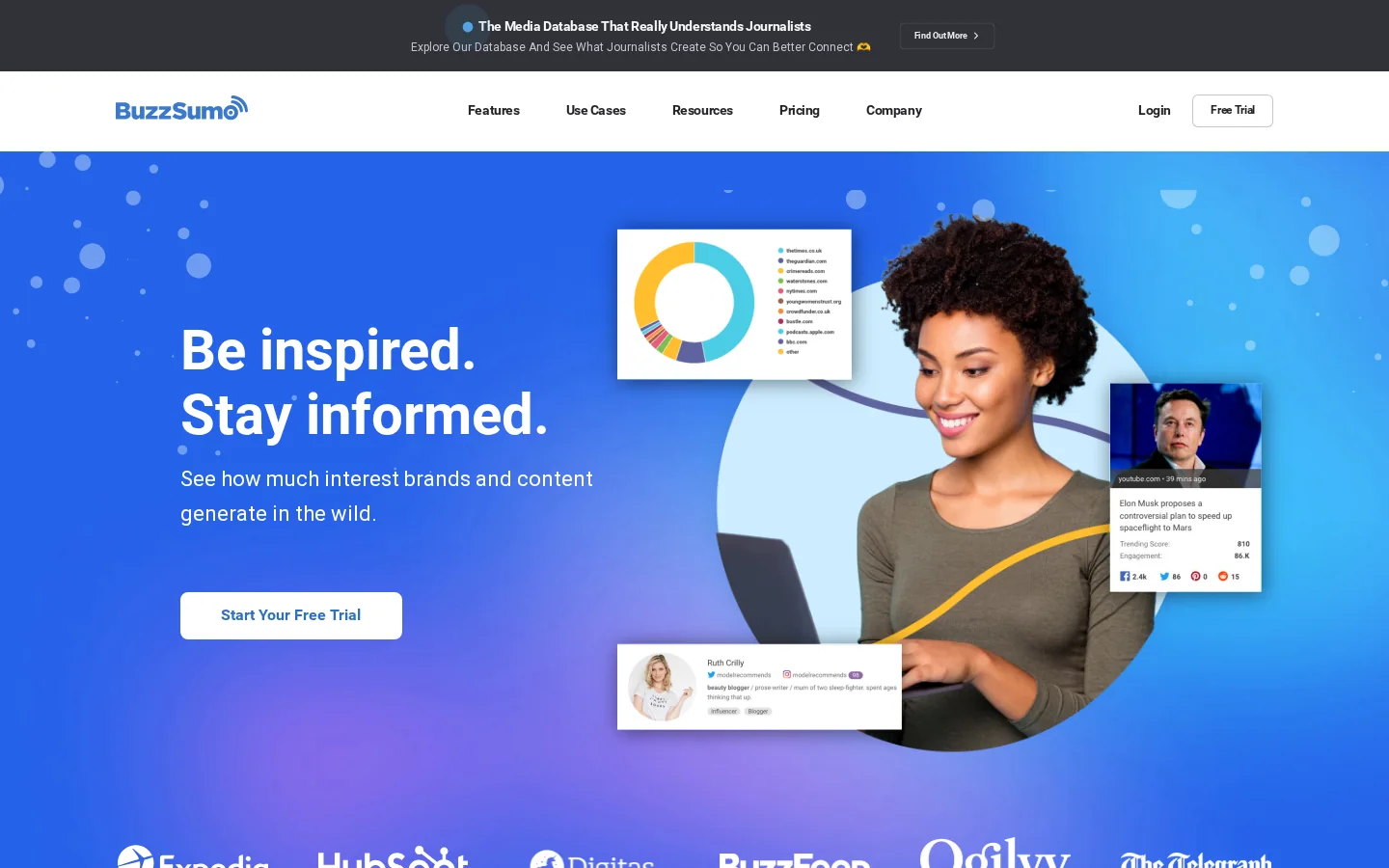
BuzzSumo is a content research and media database tool. You search a topic, see which articles got attention, and find the people who wrote or shared them. That makes it a discovery tool first.
Who it is for: PR and content teams that pitch studies, data or stories to writers who cover the subject.
Strengths:
Limit: the media database and the outreach module start with the PR & Comms plan. The cheapest plan helps you find content, not contact people.
Price: Content Creation $199 a month (1 user), PR & Comms $299 (5 users), Suite $499 (10 users), Enterprise $999 (30 users), all with yearly billing. A trial is offered.
 Ahrefs Content Explorer
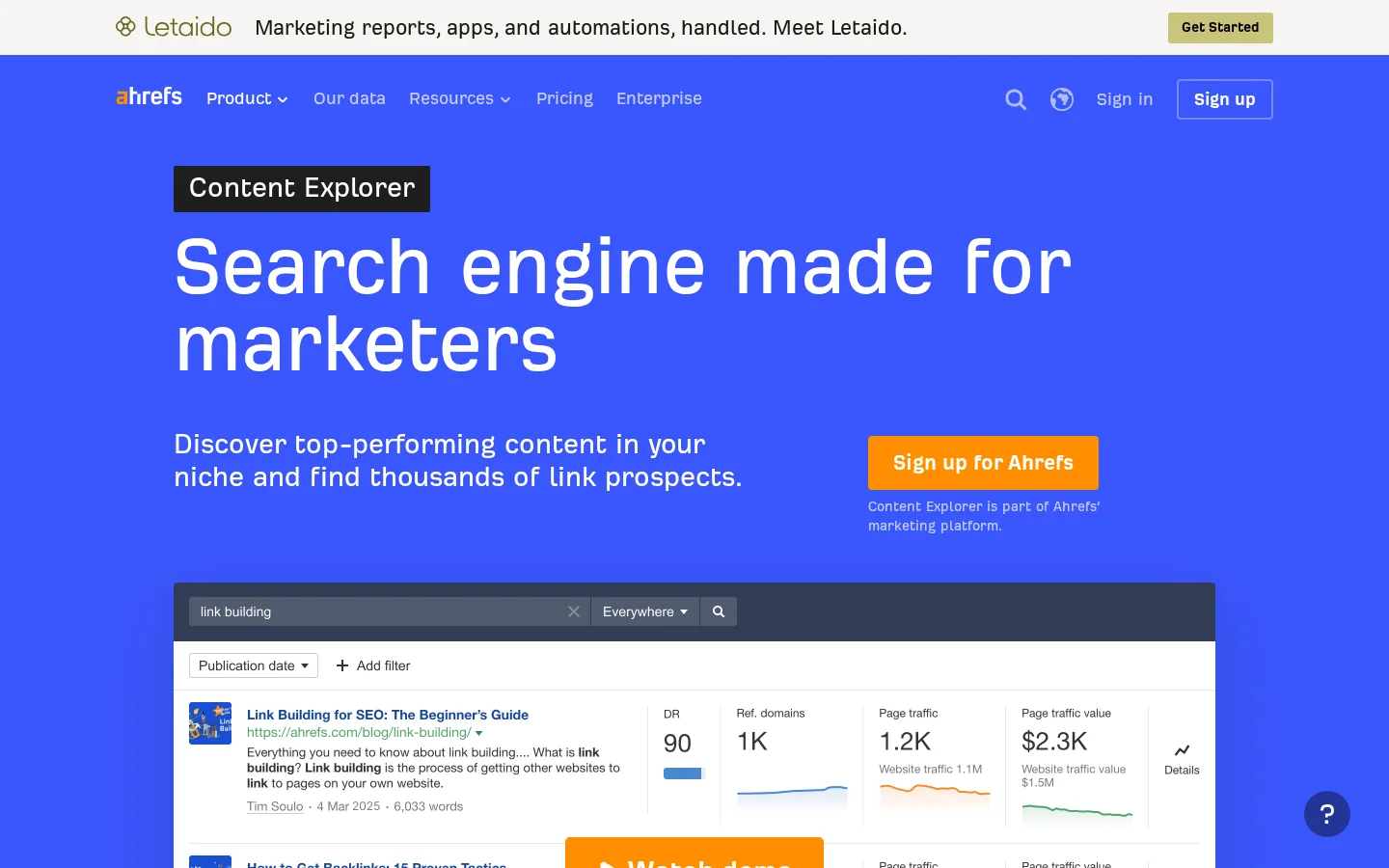
Ahrefs Content Explorer is a search engine for web content with SEO filters. You type a topic and get pages with their authority, traffic, author and publication date. It is one of the quickest ways to turn a subject into a list of blogs that really get visits.
Who it is for: SEO teams that already pay for Ahrefs. Read our full Ahrefs review before buying it for outreach alone.
Strengths:
Limit: it finds prospects and stops there. You need another tool to find addresses and send emails.
Price: included in Standard (€229 a month), Advanced (€419) and Enterprise. It is not included in Lite (€119), and Starter (€27) is not listed as including it. Prices exclude tax.
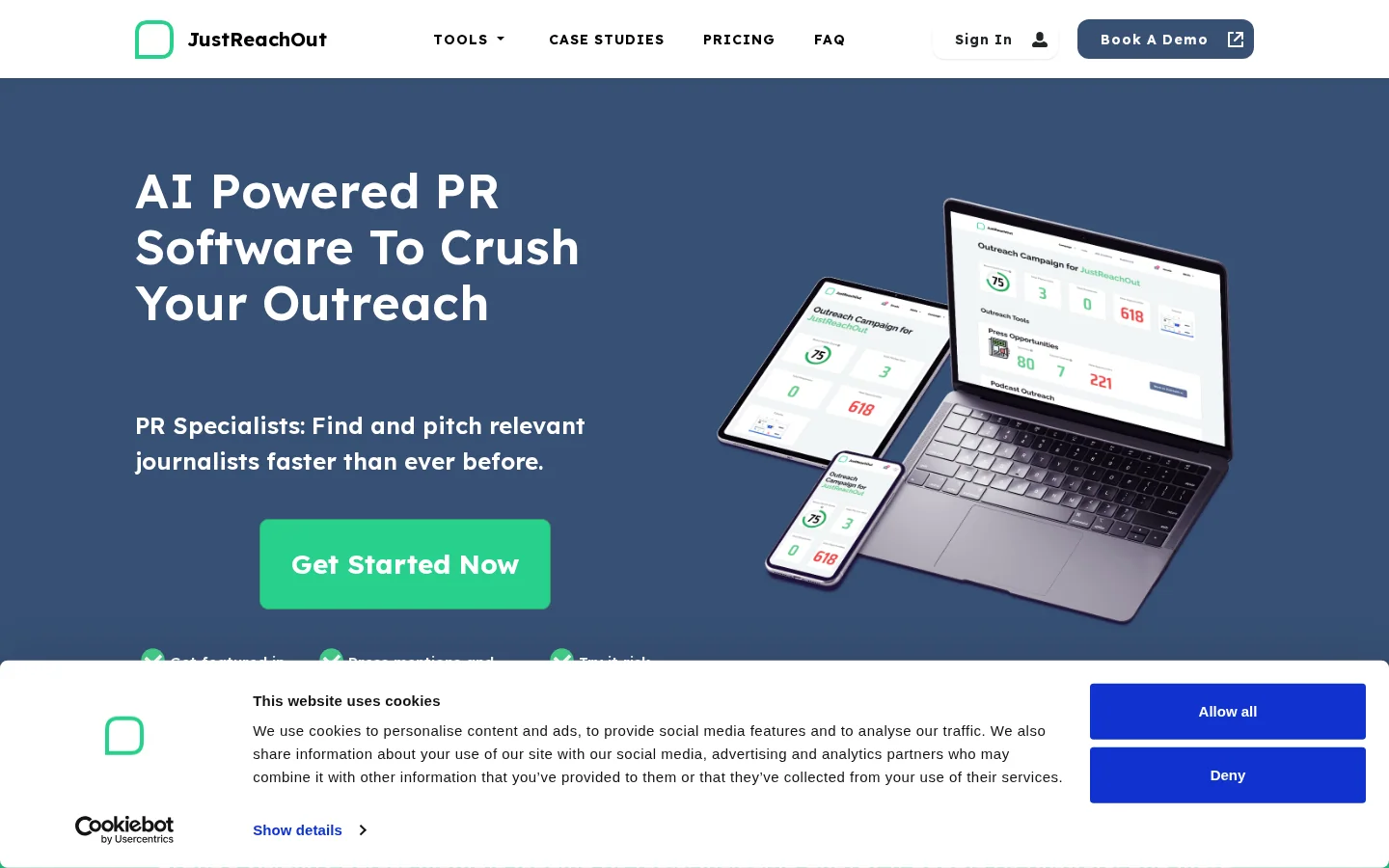
JustReachOut is PR outreach software. Its modules cover journalists, pitch requests, podcasts, broken links and guest posts. It suits people who want to be told where to pitch.
Who it is for: founders, PR consultants and small companies that pitch few people, carefully.
Strengths:
Limit: volume is small for the price. Starter Outreach allows 100 emails a month for one brand and one person.
Price: Starter Outreach $147 a month or $98 billed yearly (100 emails), Advanced $247 or $165 (300 emails, 2 members), Ultimate $497 or $331 (1000 emails, 5 members).
 Hunter
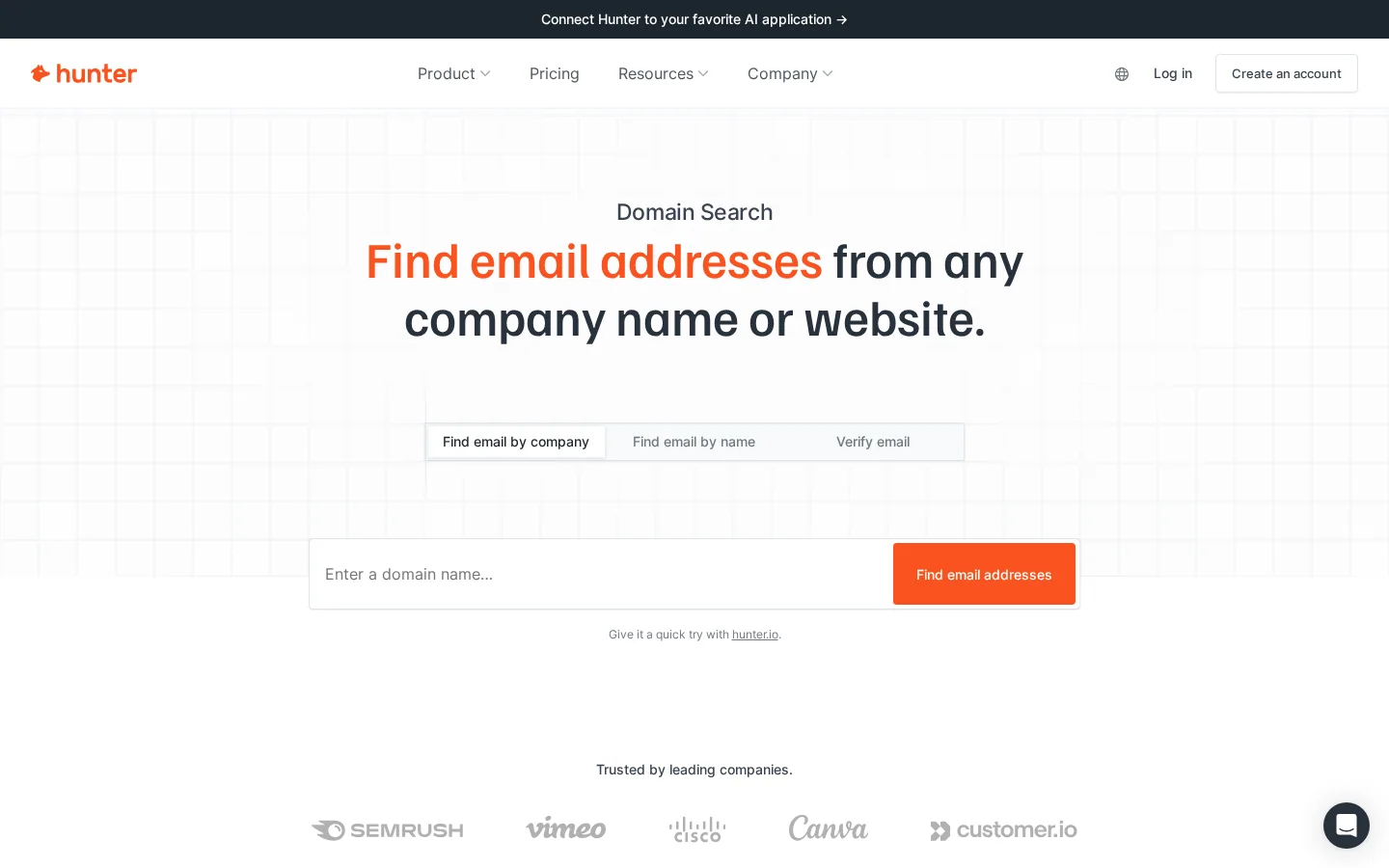
Hunter finds and checks professional email addresses, then sends sequences from your own inbox. Give it a blog domain and Domain Search returns the public addresses it knows. Each one shows its web sources and the dates they were found.
Who it is for: anyone who already has a list of blogs and needs the right person behind each one.
Strengths:
Limit: the product is built around companies. A solo blogger who only publishes a contact form may return no result, and you get no authority or traffic metric on the blog.
Price: Free, Starter €49 a month or €34 billed yearly (2000 credits a month), Growth €149 or €104 (10000 credits), Scale €299 or €209 (25000 credits).
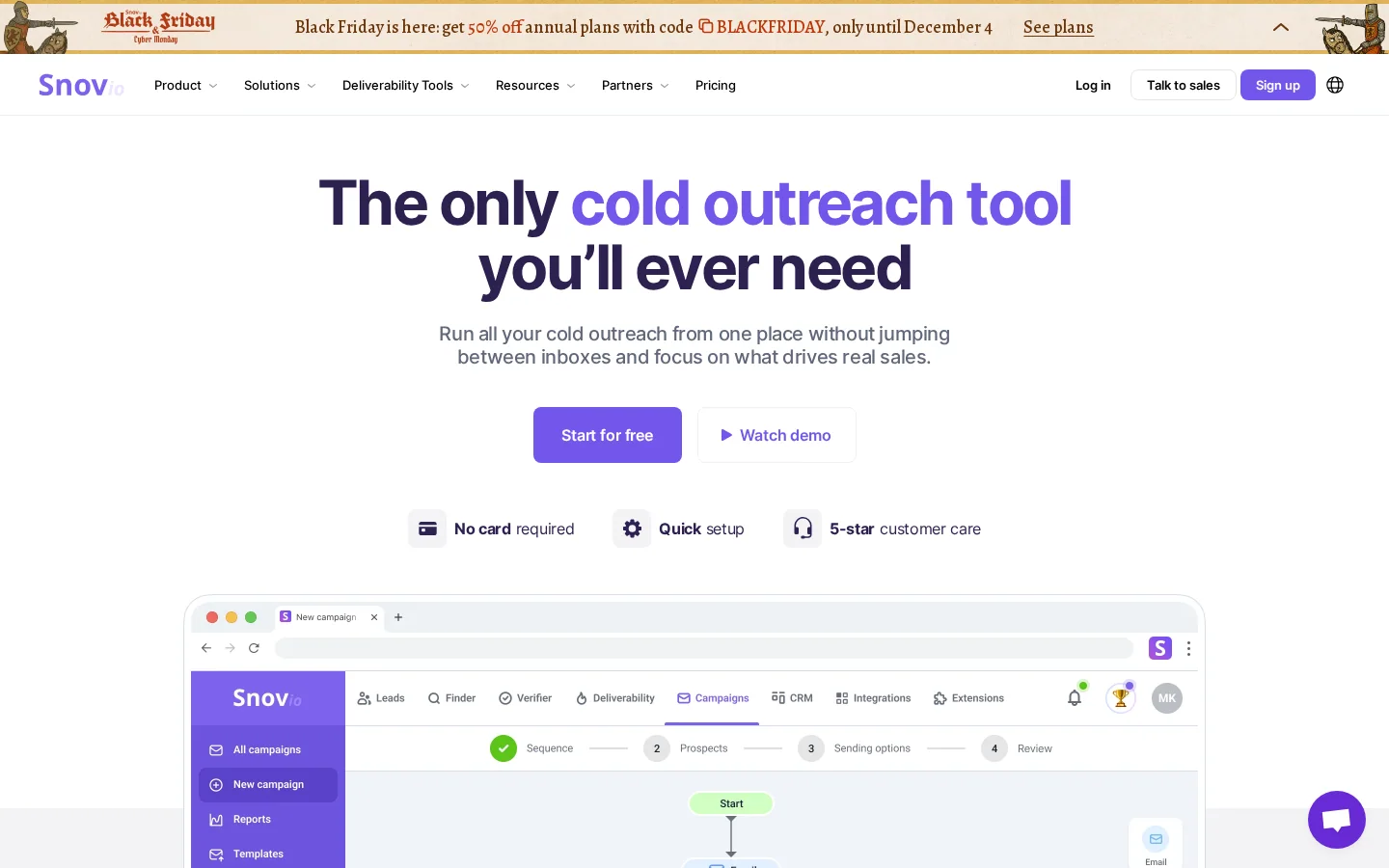
Snov.io is a prospecting platform: email finder, verifier, inbox warm-up, email and LinkedIn campaigns, and a CRM. It was made for sales, but the sending part works for a list of bloggers.
Who it is for: small teams that want to find, check and send inside one subscription.
Strengths:
Limit: the pages we read describe no blog discovery by topic or SEO metric. You must bring your own list of sites.
Price: a Trial plan renews each month (50 credits, 100 recipients). Starter $39 a month (1000 credits, 5000 recipients), Pro from $99 (5000 credits, 25000 recipients), Ultra $738.
 Mailshake
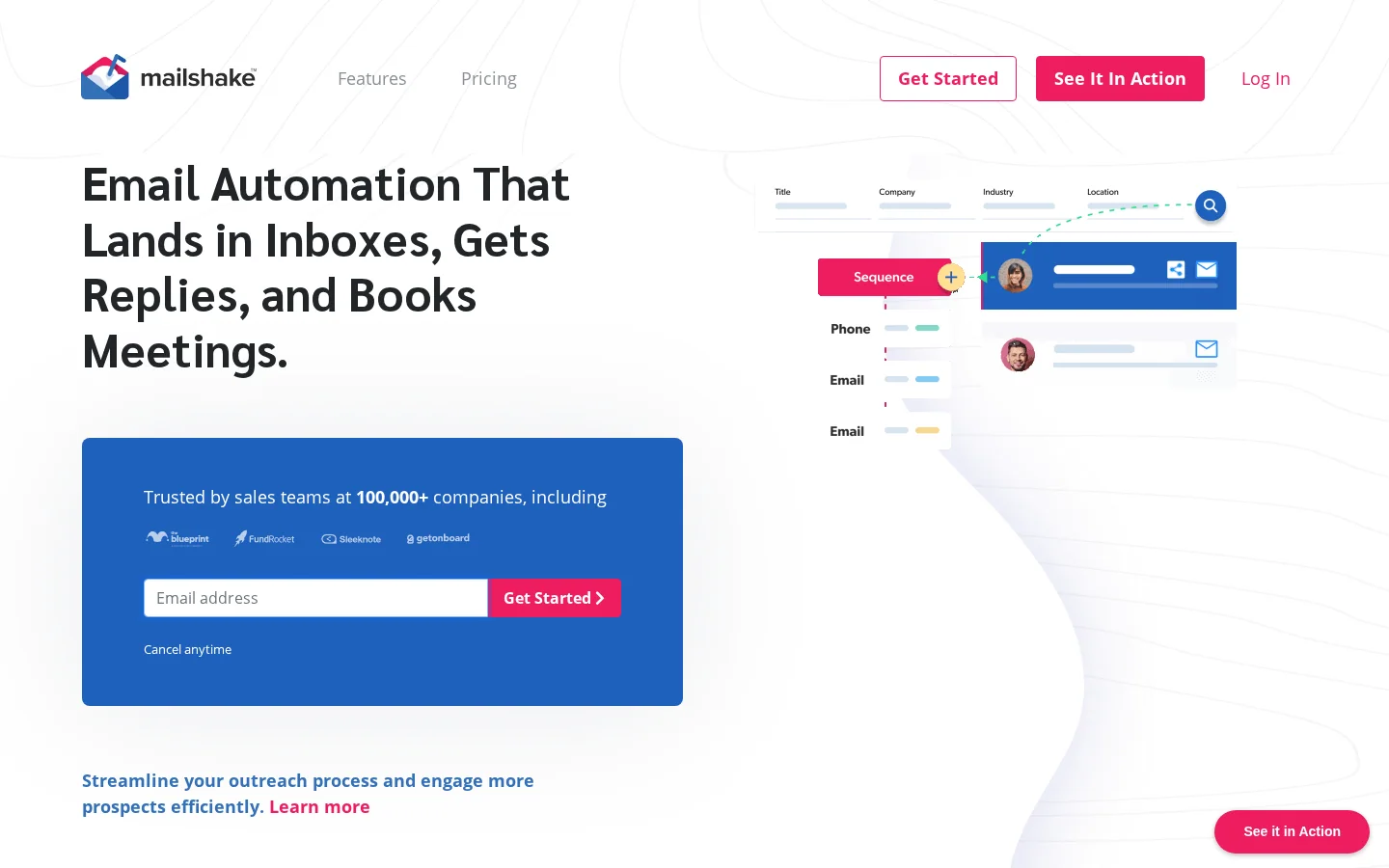
Mailshake is an email sequence tool. You import a list, write a first message and its follow-ups, and manage the whole campaign on one dashboard.
Who it is for: people who have their prospects in a spreadsheet and want a light sender with guardrails.
Strengths:
Limit: no free trial, payment is taken up front. Finding contacts is a paid add-on (Data Finder, $19 a month).
Price: Starter $29 a month or $25 billed yearly (1 address, 1500 sends), Email Outreach $49 or $45 (2 addresses, unlimited sends), Sales Engagement $99 or $85 (10 addresses).
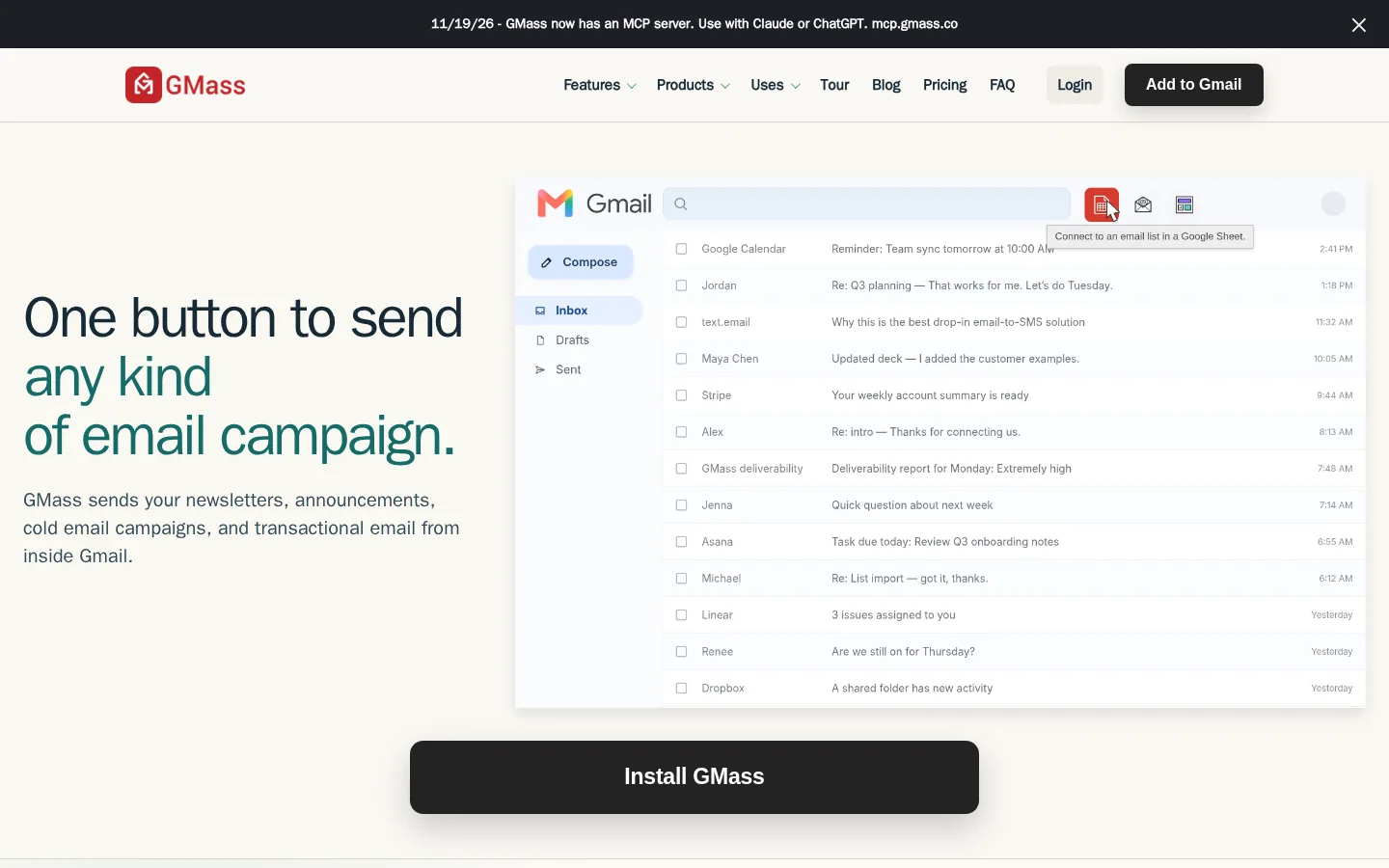
GMass adds campaigns to Gmail. The rows of a Google Sheet become recipients and the columns become merge fields. You write in Gmail, click the GMass button instead of Send, and the replies arrive where you already work.
Who it is for: bloggers, founders and small shops with a short list and a Gmail account.
Strengths:
Limit: no research, no vetting, no link tracking. Automatic follow-ups and A/B tests are missing from Standard: you need Premium.
Price: Standard €26 a month or €17 billed yearly, Premium €35 or €25, Professional €52 or €43. The free version is limited to 50 emails a day.

A blogger outreach tool helps you find relevant blogs, identify the right person, send a personal message, follow up, and record the result. Very few do all five steps well. Knowing which step blocks you tells you what to buy.
The five jobs of blogger outreach software
The goal is usually a guest article, a product review, a mention in a list, or a link to a useful resource. It belongs to link building when you aim for links, and to PR when you aim for coverage. Guest blogging is only one of its forms.
Blogger outreach targets people who publish pages on a website. Influencer platforms index creators on social networks, with audience data and payment features. If your targets live on Instagram or TikTok, look at influencer marketing tools instead.
Cold email software sends sales sequences at volume. It can send your pitches, but it knows nothing about blogs. Our list of cold email software covers that side in detail.
In a sales tool, the record is a person or a company. In an outreach tool, the record is a domain. That difference matters as soon as two colleagues work on the same list. With a person record, both can write to two authors of the same blog. With a domain record, the second one sees the first conversation.
There are four workable setups: an all-in-one platform, a stack of specialists, a media database, or a spreadsheet with Gmail. The right one depends on how many pitches you send and how many people send them.
| Setup | Principle | When to use it | Advantage | Limit | Example |
|---|---|---|---|---|---|
| All-in-one platform | Research, email and tracking in one record | Several campaigns or several people | No lost history | Higher fixed cost | BuzzStream or Pitchbox |
| Specialist stack | One tool for each step | You already pay for an SEO suite | Best data at each step | Manual exports between tools | Ahrefs, Hunter and Mailshake |
| Media database | Start from writers and what they cover | You pitch stories, data or experts | Better fit between topic and person | Fewer small blogs | BuzzSumo or JustReachOut |
| Spreadsheet and Gmail | You research by hand | A short list of blogs you really know | Very cheap, very personal | Does not scale to a team | Hunter Free and GMass |
All-in-one platform vs specialist stack
A fifth route exists: not doing outreach at all. If your goal is contextual links and you have no time to email anyone, Sorank offers natural backlink acquisition from sites in your niche, placed inside published articles. Outreach remains the way to earn reviews, guest articles and relationships with specific writers.
Choose with three numbers: how many blogs you contact each month, how many people send, and what you already pay for. Then check whether the plan you can afford includes follow-ups, because that is where entry plans are cut.
Before you enter your card
Your volume should decide the plan, not the opposite. Use this formula, then replace the rates with your own after the first campaign.
pitches needed = target links / (reply rate x placement rate)

Example:
target links    = 10
reply rate      = 8.5%   (Backlinko and Pitchbox average)
placement rate  = 33%    (assumption, use your own)
pitches needed  = 10 / (0.085 x 0.33) = about 356
At 356 pitches, plus one follow-up each, JustReachOut Starter (100 emails a month) is too small and BuzzStream Starter (500 contacts) is nearly full. To judge the money side, put your own figures in the backlink return calculator.
A first campaign fits in one afternoon: 25 blogs, one clear offer, one message and one follow-up. Keep it small so that you can read every blog you write to.
Start from a topic, never from a list of sites sold by somebody. These Google searches work without any subscription. Replace the topic with yours.
"trail running" intitle:"write for us"
"trail running" inurl:blog "best shoes"
"trail running" "reviewed by" -amazon
"competitor name" review -site:competitor.com
site:substack.com "trail running"
In Ahrefs Content Explorer, search the topic and filter by language, publication date (last 12 months) and website traffic. The date filter matters most: it removes abandoned blogs. For guest articles, our method to find and vet guest posting sites gives more footprints.
Give each blog 0, 1 or 2 points on five criteria. Pitch from 7 points. This grid takes a few minutes for each blog and saves the whole campaign.
| Criterion | 0 point | 1 point | 2 points |
|---|---|---|---|
| Topic fit | Publishes about everything | Related topic | Your exact topic |
| Freshness | No article for 6 months | One article a month | Several a month |
| Real author | No name | Name only | Name, biography and social profile |
| Outgoing links | Casino or loan links in unrelated articles | Mixed | Links that serve the reader |
| Audience signs | None | Some search traffic | Traffic, comments or a newsletter |
Use Domain Rating to sort, not to decide. A small blog read by your buyers can bring more than a strong site that covers everything.
Free tool
Check the authority of a blog before you pitch it with our free domain authority checker. No account with an SEO suite is needed.
Look at the author page first, then the masthead, then the social profile. Use Hunter or Snov.io only to confirm the address. An editor's address beats info@, and a contact form beats a guessed address.
State who you are, what you noticed, what you offer, and one question. Four short paragraphs are enough. Here is a base you can paste.
Subject: The missing step in your heel drop guide

Hi [first name],

Your guide on heel drop explains the transition well. One reader
asked in the comments how long it takes, and it is not answered.

We measured it with 12 runners over 8 weeks and can share the table,
with the raw data, for you to use as you like.

Would it help if I sent it over?

[your name], [role], [company]
Only write what is true: if you have no data, offer something else you really have, such as a photo set, an expert answer or a product to test. More examples are in our email outreach guide with commented templates.
The same pitch, before and after
Wait four to five working days, then send a short follow-up in the same thread with one new element. The Backlinko and Pitchbox study of 12 million outreach emails, published in 2019, is old but remains a useful reference on this exact practice. Its main results fit in four numbers.
What 12 million outreach emails showed
Source: Backlinko and Pitchbox, April 2019
Be careful with the last figure. Two contacts at a magazine is reasonable. Two contacts at a three-person blog looks like spam.
Three sets of rules apply: Google's link policy, mailbox provider requirements and the law on commercial email. A tool does not protect you from any of them.
Google's spam policies, read in November 2026, list as link spam "exchanging money for links, or posts that contain links" and "sending someone a product in exchange for them writing about it and including a link". Links with optimized anchor text in guest posts distributed on other sites are in the list too.
Sending a product for review is not forbidden. The link must be qualified, so that it does not pass ranking credit:
<a href="[address of the product page]" rel="sponsored">Trail shoes tested</a>Say it in your pitch: "If you review it, please use a sponsored link". Editors see that you know the rules, and you stay safe. Let the author choose the anchor text.
Google's email sender guidelines, in force since February 2024, require SPF or DKIM from every sender to Gmail accounts. From 5000 messages a day, you need SPF, DKIM and DMARC, plus one-click unsubscribe for marketing messages. The spam rate must stay below 0.3%, and Google recommends less than 0.10%.
In practice, set up all three even for 20 emails a day. The records look like this for Google Workspace:
example.com.          TXT  "v=spf1 include:_spf.google.com ~all"
_dmarc.example.com.   TXT  "v=DMARC1; p=none; rua=mailto:[email protected]"
google._domainkey     TXT  (key generated in the Admin console)
One bad list can push you over the limit: at 0.3%, three complaints in 1000 emails are enough. If the mailbox is new, read our comparison of email warm-up software first.
In the United States, section 7704 of title 15 of the US Code governs commercial email. It forbids misleading headers and subject lines, requires a working opt-out and a valid postal address, and gives you 10 business days to honor a refusal. Other countries have stricter consent rules, so check the one where the blogger lives.
Warning
Never put bloggers in a newsletter because they answered one pitch. It is a different purpose, and one spam complaint costs more than one lost subscriber.
Most failed campaigns come from the list or from the offer, not from the software. Here are the mistakes that cost the most, how to spot them and how to fix them.
What it is: paying for unlimited sends when you have 40 prospects. How to spot it: you use less than a tenth of your monthly allowance. Fix: spend first on discovery, and send from Gmail until the list justifies a platform.
What it is: sorting by score and pitching from the top. How to spot it: many refusals for topic reasons, or price lists in reply. Fix: use the five-criteria grid above and treat a price list as a signal to leave.
What it is: a first name and a page title inserted by software. How to spot it: remove the tags and the email fits any blog. Fix: add one custom column in your sheet, written by a human, with one remark on one article.
What it is: duplicates across exports, clients or colleagues. How to spot it: replies such as "your colleague already wrote to me". Fix: make the domain the unique key, in the tool or in the spreadsheet.
=COUNTIF(Contacts!B:B, B2)>1Column B holds the root domain. Add this formula as a conditional format and duplicates turn red before you send.
What it is: a sales sequence applied to writers. How to spot it: angry replies and a rising spam rate in Postmaster Tools. Fix: one follow-up, two at most, each with something new.
What it is: counting a placement once and forgetting it. How to spot it: pages removed, redirected or changed to another URL months later. Fix: monitor monthly. Our guide to managing a link building program gives a tracking sheet, and broken link building shows how to use other sites' dead pages as a reason to write.
Several tools recommended elsewhere are closed, unreachable or sell something else. We checked them on November 25, 2026 and left them out.
The LinkHunter case holds a lesson. A tool that depends on scraping one search engine can lose its data overnight. Export your contacts and notes every month, whatever you use.
Pick BuzzStream if you want one answer: it covers the five jobs, starts at $49 a month and grows with a team. Pick Pitchbox if outreach is your agency's product. Pick Hunter Free with GMass Premium if you are alone with a short list.
Do this today, before any subscription:
This ranking reflects my own experience and opinion as an SEO expert with more than 7 years in the field. It is based on verified facts, but the order itself is my personal view.
BuzzStream is the best choice for most small teams, because it keeps blog records, emails and link monitoring in one place from $49 a month. Pitchbox suits agencies with high volume. Hunter with GMass is a cheaper setup for one person with a short list.
Yes, for small volumes. Hunter has a free plan with 50 credits a month and sequences up to 500 recipients, Snov.io has a trial plan that renews every month, and the free version of GMass sends up to 50 emails a day. Google searches and a spreadsheet cover the rest.
Yes, writing to bloggers to offer useful content is allowed. Google's spam policies target links obtained in exchange for money, products or services. If you pay or send a product, the link should carry the sponsored or nofollow attribute.
We analyse your competitors, your website and your AI visibility to create a tailored content plan for free.
 Duplicate Content Checker
 Mobile-Friendly Test
 Website Speed Test
 Subdomain Finder
 Domain Age Checker
 CMS Detector
 Googlebot Simulator
 Nofollow Link Checker
 Meta Tag Checker
 Keyword Cannibalization Checker
 Keyword Intent Checker
 Keyword Extractor
 Google Ads Cost Calculator
 CPC Calculator
 Local Citation Finder
 Reddit Threads Finder
 Disavow File Generator
 Redirect Generator
 Canonical Tag Generator
 Passive Voice Checker
 Google Location Changer
 Google Review Calculator
 Google Review Link Generator
 Keyword Combiner
 Podcast Show Notes Generator
 AI Content Rewriter
 AI Text Humanizer
 ChatGPT Prompt Generator
 Twitter Thread Generator
 Tweet Generator
 Landing Page Copy Generator
 Google Ads Copy Generator
 Pinterest Pin Description Generator
 Anchor Text Generator
 Social Media Post Generator
 LinkedIn Post Generator
 Free AI Writer
 Review Response Generator
 LSI Keyword Generator
 YouTube Video Ideas Generator
 YouTube Tag Generator
 YouTube Description Generator
 Product Description Generator
 CTA Generator
 Blog Introduction Generator
 Conclusion Generator
 Hook Generator
 AI Content Brief Generator
 FAQ Schema Generator
 AI Blog Post Ideas Generator
 Structured Data Validator (Schema Validator)
 Alt Text Checker
 Internal Link Analyzer
 Backlink Challenge
 AI Meta Description Generator
 AI Blog Title Generator
 Google Indexability Checker
 AI Blog Outline Generator
 UTM Link Builder
 Keyword Clustering Tool
 Canonical Tag Checker
 XML Sitemap Generator
 Broken Link Checker
 AI SEO Title Generator
 Headline Analyzer
 SERP Preview Tool
 Redirect Checker
 Hreflang Tag Generator
 Heading Structure Analyzer
 HTTP Headers Checker
 Favicon Extractor
 SERP CTR Calculator
 SEO vs Paid Search Savings Calculator
 SEO Share of Voice Calculator
 SEO ROI Calculator
 SEO Traffic and Revenue Forecast Calculator
 SEO Budget Calculator
 SEO Break-Even Calculator
 SaaS SEO ROI Calculator
 ROAS Calculator
 Reading Time Calculator
 Ranking Gain Simulator
 Organic Traffic Value Calculator
 Organic Traffic Estimator and Website Traffic Checker
 LTV to CAC Ratio Calculator
 Local SEO ROI Calculator
 Link Building Cost Calculator
 Keyword Value Calculator
 Keyword Opportunity Score Calculator
 Keyword Density Calculator
 GEO ROI Calculator
 GEO Content Investment Calculator
 Ecommerce SEO ROI Calculator
 Customer Lifetime Value Calculator
 Customer Acquisition Cost Calculator
 CTR Calculator
 Cost Per Article Calculator
 Conversion Rate Calculator
 Content Marketing ROI Calculator
 ChatGPT Referral Traffic Estimator
 Bounce Rate Calculator
 Backlink ROI Calculator
 AI Visibility Score Calculator
 AI Traffic Value Calculator
 AI Share of Voice Calculator
 Cost of AI Invisibility Calculator
 AI Citation Rate Calculator
 llms.txt Validator
 AI Overview Checker and AI Overviews Rank Checker
 Robots.txt Checker
 AI SEO Audit
 LLM Readability Checker
 SearchGPT Readiness Checker
 Structured Data LLM Audit
 Website Crawlability AI Audit
 Why ChatGPT Is Not Recommending My Website
 Gemini Ranking Tool
 Perplexity Ranking Checker
 LLM Citation Checker
 Answer Engine Optimization Audit
 GEO Audit
 AI Search Visibility Test
 ChatGPT Visibility Checker
 llms.txt Generator
 URL Extractor
 Webpage to Markdown
 Sitemap Checker
 SERP Volatility Sensor
 Page Size Checker
 Word Counter
 Slug Generator
 Schema Generator
 Robots Generator
 OG Preview
 Meta Tags Generator
 Image Compressor
 Favicon Generator
 On-Page SEO Audit: SEO Checker and SEO Analyzer
 Backlink Analysis Tool
 Keyword Research Tool
 Domain Authority Checker
 “I tested Sorank on a real client site and it's insane. It does everything an agency would bill you $1500 a month for. It's going into production on that client now.”

 Guillaume Guersanguersanguillaume.com“We are an Ads agency and we wanted to get our SEO back on track once and for all. Sorank gave us a clear view of our site, helped us prioritize optimizations, and properly structure our content. The tool is easy to use, well designed for a team, and very practical for centralizing tracking without having to juggle multiple platforms. A very solid foundation to start fresh with our SEO.”
 Gaspard MadouiAds Agency
 “I just let the Sorank software do its thing, and now my DR is 25 and my page is ranking higher.”
 Lucas Flandrefoundertrace.fr“I specialized in GEO thanks to Sorank. The GEO Leaderboard allows me to show my clients their position vs competitors on ChatGPT. It’s a real commercial differentiator.”
 MélanieSEO Freelance“Great service, works well for our website and helps us understand how to improve it to rank better on Google and elsewhere. Congrats, keep going, I recommend it.”
 Hugo T.E-commerce merchant