Preferences
Privacy is important to us, so you have the option of disabling certain types of storage that may not be necessary for the basic functioning of the website. Blocking categories may impact your experience on the website. More information

Privacy is important to us, so you have the option of disabling certain types of storage that may not be necessary for the basic functioning of the website. Blocking categories may impact your experience on the website. More information

The best content optimization tools in 2026 compared: Surfer, Clearscope, MarketMuse, Frase, Semrush, NeuronWriter, Yoast and Sorank, with real strengths and limits.

Tools


In short
Surfer is the most complete content optimization tool for most teams in 2026, with a live editor, auto-optimization and AI visibility tracking. Clearscope is the best choice for editorial teams who want simple, precise grading. MarketMuse fits large sites that plan content by topic authority, Frase fits teams that want research, briefs and SEO plus GEO scoring at a moderate budget, and Semrush SEO Writing Assistant fits teams already paying for Semrush. If you would rather not optimize articles by hand at all, Sorank writes and publishes articles that are already optimized for Google and the AIs.
Want to go further? Ask
Transparency: Sorank is our own software. We built this ranking from the features each company publishes on its own website and from public documentation, checked in October 2026. We did not include tools we could not verify, we did not publish third party prices (they change too often), and we say clearly where the other tools are stronger than ours.
The phrase content optimization tools covers software that helps you improve a page so it answers a query better than the pages already ranking. In 2026 the job has two sides: matching what Google expects for a query, and making the page easy for ChatGPT, Gemini, Perplexity, Claude and Google AI Overviews to understand and quote.
We ranked the tools on what they change in the final page. Five criteria counted:
We also looked for something that score based tools tend to miss: information gain, meaning the original facts, examples or data a page adds compared with what already ranks. No tool can invent that for you, so we favoured tools that do not push writers toward copying the consensus.
What it does. Surfer analyses the pages that rank for a keyword and gives you a Content Editor with a live Content Score, term suggestions, structure guidance and an auto-optimize function. It also includes an AI writer and an AI Tracker that monitors whether your brand appears in AI generated answers.
Who it is for. Content teams, agencies and freelancers who optimize many articles per month and want one tool for briefs, writing and optimization.
Strengths. Very fast workflow, clear guidance for writers, integrations with Google Docs and WordPress, and a growing set of AI visibility features.
Limits. It is easy to chase the score instead of the reader, and the AI visibility tracking is sold as an extra. Surfer's own correlation study between its score and rankings is vendor research, so treat it with caution.
What it does. Clearscope grades a draft against top ranking content, recommends missing terms and topics, and shows a content grade writers can aim for. It now also tracks how often your brand is mentioned in AI answers and monitors existing content for refresh opportunities through Google Search Console data.
Who it is for. In house content teams and publishers with professional writers who want clean reports rather than many options.
Strengths. Probably the cleanest interface of the category, reliable recommendations, good Google Docs and WordPress integrations, and a content inventory that helps you decide which pages to update.
Limits. Positioned at the premium end, with no free plan. It optimizes what you write; it does not plan or publish content for you.
What it does. MarketMuse inventories your site, measures how well you cover each topic, and recommends which pages to create or update first. Its briefs and optimization views go deeper into topic modelling than most editors. MarketMuse was acquired by Siteimprove in late 2024 and is now part of a broader platform.
Who it is for. Large sites and content strategists who manage hundreds or thousands of pages.
Strengths. Site level view of topical gaps, prioritization by potential, and detailed briefs that help structure a topic cluster.
Limits. Steeper learning curve, and the full value appears mostly at enterprise scale. Small sites may find it heavy for their needs.
What it does. Frase started as a research and brief tool that gathers the headings and questions of top results. Its 2026 version combines an SEO score and a GEO score, an auto-optimize option, AI visibility tracking and an agent that runs research and optimization tasks from plain instructions.
Who it is for. Small teams, freelancers and agencies that want fast briefs and optimization at a moderate budget.
Strengths. Quick research of questions people ask, useful briefs, and an explicit focus on how AI assistants read and cite content.
Limits. Many features were rebuilt recently, so some workflows change often. Recommendations can be less precise than Clearscope on competitive queries.
What it does. The SEO Writing Assistant works as a Google Docs add-on, a WordPress plugin and a Microsoft Word add-in. It scores drafts on SEO, readability, tone of voice and originality, using Semrush data for recommended keywords. Semrush also sells a broader Content Toolkit with topic research, briefs and an AI writer.
Who it is for. Marketing teams already on a Semrush subscription who want optimization inside their usual documents.
Strengths. Works where writers already write, adds tone and originality checks, and connects with the rest of the Semrush keyword and competitor data.
Limits. Recommendations are less detailed than specialist editors, and the content tools are sold separately from the core SEO plans, which can make the total bill confusing.
What it does. NeuronWriter analyses the top results for a keyword and suggests terms, headings and questions with a live score, plus an AI writer and a content plan per project.
Who it is for. Freelancers, bloggers and small agencies who want most of what Surfer offers on a tighter budget.
Strengths. Solid term recommendations and competitor analysis for the price, and multilingual support useful for sites outside English.
Limits. The interface feels dated in places, the built in AI writer is average, and integrations sit on higher plans.
What it does. Yoast SEO is a WordPress plugin that checks on page basics for a focus keyword (title, meta description, headings, links) and runs a readability analysis on sentence length, passive voice and paragraph structure. The Premium version adds AI generation of titles and meta descriptions and internal linking suggestions.
Who it is for. WordPress site owners who want a free safety net for every page they publish.
Strengths. Free plan, huge user base, simple traffic light signals, and readability checks that help any writer.
Limits. It does not compare your content with the pages that rank, so it cannot tell you which topics are missing. It works as a hygiene checker for each page.
What it does. Sorank is an SEO and GEO software that works on autopilot. It analyses your site and competitors, finds keywords, plans a calendar, then writes and publishes one article per day with images, automatic internal linking, anti-cannibalization, fact checking, FAQ and structured data, on more than 10 CMS such as WordPress, Shopify, Webflow and Wix. It tracks every week whether the AIs cite your brand, and helps you get natural backlinks automatically, placed in real articles on sites of the same theme, one way only.
Who it is for. Founders, SMEs and marketing teams that lack the time to write and optimize each article by hand.
Strengths. Optimization happens upstream, while writing, so there is no draft to score afterwards. It also covers planning, publishing and AI mention tracking in one place.
Limits. If your team writes everything by hand and wants a live score inside Google Docs, Surfer, Clearscope or the Semrush assistant fit that workflow better. MarketMuse goes further on site wide topic modelling for very large sites.
| Tool | Best for | Main strengths | Main limit |
|---|---|---|---|
| Surfer | All in one optimization | Live editor, auto-optimize, AI tracker | AI tracking sold as an extra |
| Clearscope | Editorial teams | Simple, precise grading, content inventory | Premium positioning, no free plan |
| MarketMuse | Large sites, topic planning | Site level topic gaps, deep briefs | Learning curve, enterprise oriented |
| Frase | Research and briefs | Questions research, SEO and GEO scores | Features change often |
| Semrush SEO Writing Assistant | Semrush users | Google Docs, Word and WordPress, tone checks | Less detailed than specialists |
| NeuronWriter | Tight budgets | Good term suggestions for the price | Dated interface, average AI writer |
| Yoast SEO | WordPress basics | Free plan, readability analysis | No comparison with ranking pages |
| Sorank | Hands off publishing | Optimized articles written and published, AI tracking | No live score for hand written drafts |
A page optimized for the AIs answers the question early, in passages that make sense on their own. AI assistants pick short, self contained passages to quote. A page that opens each section with a direct answer, defines its terms and adds sourced facts is easier to cite than a page stuffed with related terms. The Princeton study that introduced the term GEO (Aggarwal et al., 2023) found that adding citations, quotations and statistics raised the visibility of sources in generative answers.
Practical checks to add to any tool:
Start from who writes your content and how many pages you publish. The right tool depends more on your workflow than on any feature list.
Whatever you choose, run a quick SERP analysis yourself before writing: no score replaces understanding what the searcher wants.
The best content optimization tool is the one that makes your pages more useful to readers. Surfer and Clearscope lead for teams that write and optimize by hand, MarketMuse for site wide planning, Frase and NeuronWriter for moderate budgets, Semrush for its existing users and Yoast as a free WordPress base. If you want articles that are written, optimized for Google and the AIs, and published for you, you can try Sorank with a 3-day free trial on the pricing page.
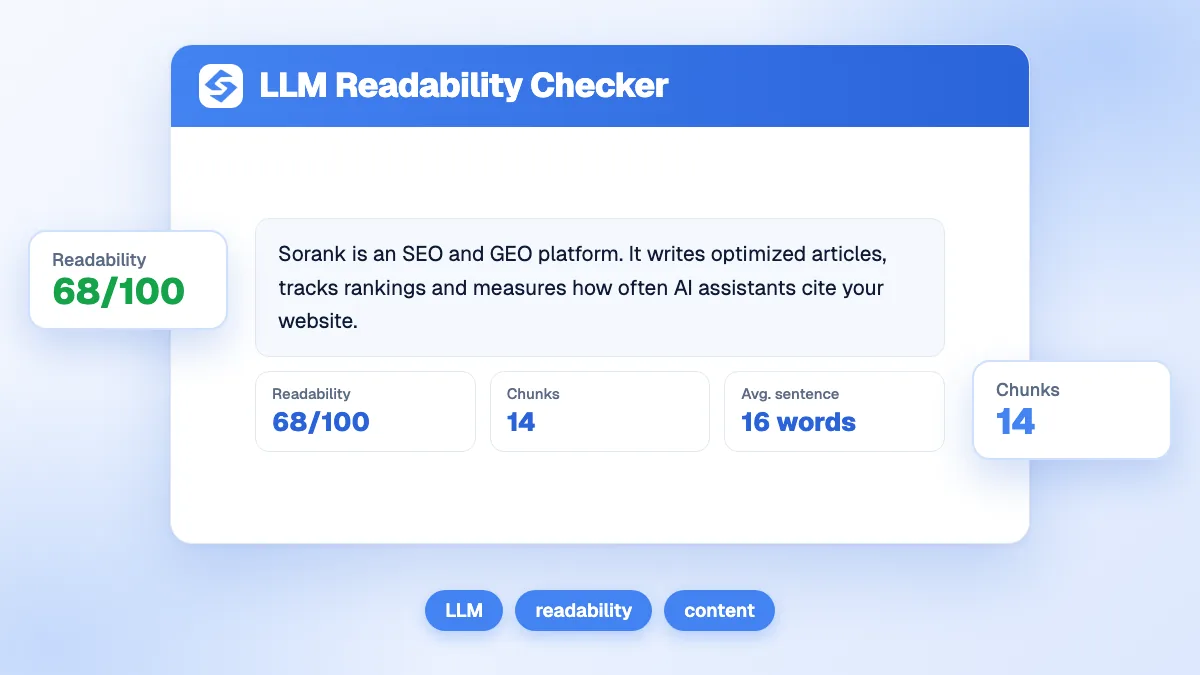

A content optimization tool compares your page with the pages that already rank for the same query, then lists the topics, terms, questions and headings you are missing. Most give a score while you write. The better ones in 2026 also check whether the page is easy for AI assistants to quote and track whether your brand appears in their answers.
Surfer suits teams that want many features in one place: a content editor, an auto-optimize option, an AI writer and an AI visibility tracker. Clearscope suits editorial teams that want a simple, precise grading interface and clean reports for writers. Both are serious tools; the choice depends on whether you value breadth or simplicity.
No. A content score measures how closely your page matches the topics covered by top results, which is one signal among many. Links, search intent, brand authority, page experience and original information all weigh on rankings. Use the score as a checklist against missing topics, and stop optimizing once the page fully answers the question.
 AI Content Brief Generator
 FAQ Schema GeneratorAI Blog Post Ideas GeneratorStructured Data Validator
 Alt Text Checker
 Internal Link AnalyzerBacklink ChallengeAI Meta Description GeneratorAI Blog Title Generator
 Google Indexability CheckerAI Blog Outline GeneratorUTM Link BuilderKeyword Clustering ToolCanonical Tag Checker
 XML Sitemap GeneratorBroken Link CheckerAI SEO Title GeneratorHeadline AnalyzerSERP Preview ToolRedirect Checker
 Hreflang Tag GeneratorHeading Structure AnalyzerHTTP Headers CheckerFavicon Extractor
 SERP CTR Calculator
 SEO vs Paid Search Savings Calculator
 SEO Share of Voice Calculator
 SEO ROI Calculator
 SEO Traffic and Revenue Forecast Calculator
 SEO Budget Calculator
 SEO Break-Even Calculator
 SaaS SEO ROI Calculator
 ROAS Calculator
 Reading Time Calculator
 Ranking Gain Simulator
 Organic Traffic Value Calculator
 Organic Traffic Estimator
 LTV to CAC Ratio Calculator
 Local SEO ROI Calculator
 Link Building Cost Calculator
 Keyword Value Calculator
 Keyword Opportunity Score Calculator
 Keyword Density Calculator
 GEO ROI Calculator
 GEO Content Investment Calculator
 Ecommerce SEO ROI Calculator
 Customer Lifetime Value Calculator
 Customer Acquisition Cost Calculator
 CTR Calculator
 Cost Per Article Calculator
 Conversion Rate Calculator
 Content Marketing ROI Calculator
 ChatGPT Referral Traffic Estimator
 Bounce Rate Calculator
 Backlink ROI Calculator
 AI Visibility Score Calculator
 AI Traffic Value Calculator
 AI Share of Voice Calculator
 Cost of AI Invisibility Calculator
 AI Citation Rate Calculatorllms.txt ValidatorAI Overview CheckerRobots.txt CheckerAI SEO AuditLLM Readability CheckerSearchGPT Readiness Checker
 Structured Data LLM AuditWebsite Crawlability AI AuditWhy ChatGPT Is Not Recommending My Website
 Gemini Ranking ToolPerplexity Ranking CheckerLLM Citation CheckerAnswer Engine Optimization AuditGEO AuditAI Search Visibility TestChatGPT Visibility Checkerllms.txt Generator
 URL ExtractorWebpage to MarkdownSitemap CheckerSERP Volatility SensorPage Size Checker
 Word Counter
 Slug GeneratorSchema GeneratorRobots Generator
 OG PreviewMeta Tags Generator
 Image CompressorFavicon Generator
 On-Page SEO Audit
 Backlink Analysis Tool
 Keyword Research Tool
 Domain Authority Checker
THEY TRIED SORANK BEFORE YOU
 “I tested Sorank on a real client site and it's insane. It does everything an agency would bill you $1500 a month for. It's going into production on that client now.”

 Guillaume Guersanguersanguillaume.com“We are an Ads agency and we wanted to get our SEO back on track once and for all. Sorank gave us a clear view of our site, helped us prioritize optimizations, and properly structure our content. The tool is easy to use, well designed for a team, and very practical for centralizing tracking without having to juggle multiple platforms. A very solid foundation to start fresh with our SEO.”
 Gaspard MadouiAds Agency
 “I just let the Sorank software do its thing, and now my DR is 25 and my page is ranking higher.”
 Lucas Flandrefoundertrace.fr“I specialized in GEO thanks to Sorank. The GEO Leaderboard allows me to show my clients their position vs competitors on ChatGPT. It’s a real commercial differentiator.”
 MélanieSEO Freelance“Great service, works well for our website and helps us understand how to improve it to rank better on Google and elsewhere. Congrats, keep going, I recommend it.”
 Hugo T.E-commerce merchant