Preferences
Privacy is important to us, so you have the option of disabling certain types of storage that may not be necessary for the basic functioning of the website. Blocking categories may impact your experience on the website. More information

Privacy is important to us, so you have the option of disabling certain types of storage that may not be necessary for the basic functioning of the website. Blocking categories may impact your experience on the website. More information

Discover topic clusters and pillar pages. Organize content by topic, build topical authority, and rank for head keywords.







Tools


Summary
Topic clusters organize content around a central pillar page connected to cluster pages targeting related keywords, building topical authority.
Want to go further? Ask
Traditional SEO treats every keyword as a standalone target. Build a page, optimize it, rank it. That approach is slow and inefficient. Modern SEO uses topic clusters. Instead of single pages competing for individual keywords, you build a constellation of related pages that strengthen one another and demonstrate topical expertise to Google. The result: faster rankings, higher traffic, and stronger competitive positioning.
This guide explains how to build topic clusters, build pillar pages, organize cluster pages, and use internal linking to build the topical authority that Google rewards with higher rankings and featured snippets.
A topic cluster is a content strategy that organizes pages around a central topic (the pillar) with related sub-topic pages (cluster pages) that link to and from the pillar. The pillar page is a comprehensive guide that covers the broad topic. Cluster pages target specific long-tail keywords inside that topic.
For example, a pillar page might be "Content Marketing Strategy: A Complete Guide." Cluster pages target related long-tail keywords: "content marketing for SaaS," "content marketing for nonprofits," "content marketing on a tight budget," "content marketing team structure," "how to measure content marketing ROI." Every cluster page links to the pillar, the pillar links to the cluster pages, and cluster pages link to each other when relevant.
Google has emphasized the importance of topical authority and expertise. Topic clusters build topical authority directly. By creating multiple related pages on the same topic, you signal to Google that you're an expert. Google rewards that expertise with better rankings.
A pillar page is a comprehensive guide that covers a broad topic at a high level. It should be 2,000-4,000 words, well-structured with clear sections, and cover every major sub-topic. The pillar page isn't the most detailed page on every sub-topic, those are the cluster pages. The pillar page is the overview that links readers to the deeper detail pages.
Pillar pages target head keywords or broad keyword phrases. Examples: "SEO," "Content Marketing," "Email Marketing," "Project Management Software." Those head keywords typically have high search volume but high competition. Still, when supported by 10-20 strong cluster pages, a pillar page can rank for its head keyword despite the competition.
Structure your pillar page logically. Start with an introduction explaining why the topic matters. Build sections for every major sub-topic, with each section 300-500 words introducing the concept and linking to the relevant cluster page. Include a table of contents linking to every section for UX. End with a conclusion and CTA.
Cluster pages target specific long-tail keywords related to the pillar topic. They're deeper, more specific guides than the pillar. While the pillar covers "content marketing" broadly, cluster pages cover specific aspects: "content marketing for nonprofits," "long-form content marketing," "content marketing budget," "content marketing tools," and so on.
Each cluster page should be 1,200-2,000 words and target one primary long-tail keyword. The page should cover that specific angle thoroughly, providing value to readers interested in that particular aspect. Cluster pages rank faster than pillar pages because long-tail keywords face less competition. See our long-tail keyword strategy guide for a detailed strategy.
Build cluster pages around the keywords you've identified through keyword research. Aim for keywords with 100-1,000 monthly searches and realistic competition. A cluster page targeting a keyword with 50 searches will rank quickly but bring minimal traffic. A cluster page targeting a keyword with 5,000 searches may face strong competition. Balance volume and difficulty for optimal ROI.
The power of topic clusters is cumulative. A pillar page ranking for its head keyword brings modest traffic. But when 10 cluster pages rank for their long-tail keywords and all funnel authority to the pillar through internal links, the pillar's authority increases substantially.
Topical authority is the signal Google uses to understand expertise. If your site has 20 comprehensive pages on content marketing and related topics, all linking to one another, Google recognizes you as an authority on content marketing. That authority flows to every page in the cluster, lifting their rankings.
What's more, cluster pages support each other contextually. A page on "content marketing for SaaS" can reference and link to pages on "email marketing for SaaS," "landing pages for SaaS," and other complementary topics. These contextual links improve UX (readers can explore related topics) and signal to Google that your content is interconnected and complete.
Internal linking is the connective tissue of topic clusters. The pillar page links to every cluster page in its introduction and in every relevant section. Each cluster page links back to the pillar page and to other related cluster pages when contextually appropriate. See our complete internal linking guide for the full strategy.
Link anchor text should be descriptive. Instead of "read more," use the actual topic as the anchor text. For example, "Learn more about content marketing for SaaS" beats "read more." Descriptive anchor text helps Google understand the topical relationship between pages and distributes semantic meaning across the cluster.
Avoid over-linking. Don't create artificial links just to bump up the link count. Link when it genuinely helps readers discover related content. A well-designed topic cluster has natural linking patterns that emerge from content relationships, not from forced internal-linking schemes.
Step 1: Choose your pillar topic based on business priorities and keyword research. Pick a topic important to your audience and aligned with your expertise.
Step 2: Research long-tail keywords related to that pillar topic. Aim for 10-20 keywords with reasonable search volume (50-500 monthly searches) and realistic difficulty. Those become your cluster pages.
Step 3: Build the pillar page first as a comprehensive guide covering every sub-topic at a high level. Link from each section to the relevant cluster page (you can link to pages that don't exist yet; fill those URLs in as you create cluster pages).
Step 4: Build cluster pages one by one, targeting each long-tail keyword. Every cluster page should cover its specific sub-topic in depth. Link from each cluster page back to the pillar in the introduction or conclusion.
Step 5: Link cluster pages to each other where contextually relevant. A page on "email marketing automation" should link to your page on "email marketing templates" if that relationship makes sense for readers.
Step 6: Monitor rankings and traffic. Track how the cluster performs. Cluster pages should rank within 4-12 weeks. As cluster pages rank, they funnel authority to the pillar. Within 3-6 months, your pillar page should show ranking improvements for its head keyword.
Siloed content organizes pages hierarchically: home > category > subcategory > page. Links flow downward inside the silo, and pages in one silo don't link to pages in other silos. Silos are rigid and can limit topical authority.
Topic clusters are hub-and-spoke: a central pillar with cluster pages radiating outward. Links flow between every page in the cluster, creating a more fluid, interconnected structure. Clusters are more flexible and better support modern SEO than rigid silos. Use clusters for topics where you want to build strong topical authority. Use silos for large, multi-category sites where separation makes sense (e.g., separate product categories).
Modern search engines evaluate semantic relationships between content. Topic clusters work because they make those relationships explicit through linking and topical coherence. Advanced clustering strategies go beyond simple hub-and-spoke models. Consider overlapping cluster pages: a page on "email marketing for SaaS companies" might link to both your "Email Marketing" pillar and your "SaaS Marketing" pillar, sitting at the intersection of two topics.
Build semantic tagging and entity markup using schema.org markup to declare topical relationships explicitly. A page tagged with schema.org Article and mentioning schema.org Organization entities helps Google understand the topical position of your content. Pages that reference one another inside clusters and use consistent entity terminology create stronger semantic signals than siloed pages without cross-cluster linking.
Consider the content lifecycle inside clusters. A cluster evolves: the pillar starts broad, cluster pages get specific, then you add tertiary pages covering sub-sub-topics. Your "SEO" pillar might have cluster pages on "technical SEO," "on-page SEO," and "link building." Then you add tertiary pages under "technical SEO" for "Core Web Vitals," "XML sitemaps," and "robots.txt optimization." That nested cluster structure handles topic depth while maintaining semantic coherence.
Google's guidance on measuring SEO performance applies to cluster strategy: track rankings, impressions, clicks, and conversions. A cluster is effective when: the pillar ranks for the head keyword, 80%+ of cluster pages rank in the top 20 within six months, cluster pages show rising rankings thanks to authority flow from the pillar, internal links drive 15-25% of cluster pageviews, and the cluster generates 300+ monthly organic visits at maturity. Less effective clusters fail on one or more of these metrics, indicating a need for restructuring or reinforcement.
Track cluster cohesion: make sure every page inside a cluster uses consistent terminology and semantic markers. A weak cluster has pages that don't link to one another, use inconsistent language, or target unrelated keywords. Audit your cluster monthly: add missing cluster pages, add internal links where contextually appropriate, refresh stale content, and consolidate duplicates. A healthy cluster requires ongoing maintenance.
Topic clusters increase your chances of winning featured snippets. When Google sees that you have comprehensive coverage of a topic across multiple linked pages, it trusts your expertise more. Featured snippet positions often go to pages that demonstrate authority and context.
Optimize your cluster pages for featured snippets by including clear definitions, lists, tables, and step-by-step instructions. Your pillar page and cluster pages might target different featured snippet formats. A "what is" question might earn a definition snippet; a "how to" question might earn a steps snippet. Cluster diversity helps you capture different snippet types.
For complex topics, you can build sub-clusters inside your main cluster. Your top-level pillar is "digital marketing." Beneath it, you have sub-pillars for "content marketing," "SEO," and "social media marketing." Each sub-pillar has its own cluster pages. That structure mirrors real information hierarchies and helps Google understand your site's organization. Users can browse broadly ("digital marketing") or deeply ("content marketing for nonprofits"). Multi-level clusters require more content but provide stronger topical authority across multiple topic areas.
Yes. A topic cluster gives AI assistants several reasons to pick your site. When ChatGPT, Perplexity or Google AI Overviews split a question into sub-questions, a cluster has a page ready for each one, so your site can be retrieved several times for the same answer. The internal links between the pillar and its cluster pages also make the relationship between your pages and entities explicit.
Two adjustments make a cluster more AI-friendly: start each cluster page with a direct answer to its question, and cover the comparison and "best" questions buyers ask, not only definitions. See which sub-questions an AI searches for with Sorank's query fan-out analysis, then build or check your clusters with the topical cluster generator.
Topic clusters organize content around a central pillar page with related cluster pages, building the topical authority Google rewards with better rankings. Build a pillar page that covers your broad topic, then build 10-20 cluster pages targeting specific long-tail keywords inside that topic. Link your pages strategically, with every cluster page linking to the pillar and cluster pages linking to related cluster pages. That hub-and-spoke structure demonstrates expertise, improves UX, and helps you rank for both head keywords (on the pillar) and long-tail keywords (on cluster pages). Start by choosing a pillar topic important to your business, researching related keywords using Google's keyword guide, and building your first cluster. Monitor rankings and traffic, then expand to additional clusters in different topic areas. Use Search Console to track cluster performance. Start building topical authority with our keyword research tool to identify the best pillar topics and cluster keywords for your niche and accelerate growth through strategic topic-cluster organization.
Sources

Topic clusters are similar to topic silos, but more fluid. A silo is strict: pages are organized hierarchically and only link within their silo. A topic cluster is flexible: the pillar is the hub, the cluster pages link to it and to each other when relevant. Clusters are more modern and SEO-friendly than rigid silos. Both approaches build topical authority, but clusters allow more nuanced internal linking and content relationships.
A topic cluster typically has 5-20 cluster pages, depending on the breadth of the topic. A narrow topic (a specific software feature) might have 5 cluster pages. A broad topic (content marketing) might have 30+. Start with 5-10 related long-tail keywords and build one cluster page per keyword. As you add content, the cluster grows naturally. Quality matters more than quantity; 10 excellent cluster pages beat 50 mediocre ones.
Not strictly, but it's highly recommended. A pillar page acts as a hub, linking to cluster pages and receiving links from them. That architecture makes topical authority explicit to Google. You can build authority with siloed content alone, but a pillar page accelerates the process and makes your topical authority clearer to both users and search engines.
THEY TRIED SORANK BEFORE YOU
 “I tested Sorank on a real client site and it's insane. It does everything an agency would bill you $1500 a month for. It's going into production on that client now.”
 Guillaume Guersanguersanguillaume.com“We are an Ads agency and we wanted to get our SEO back on track once and for all. Sorank gave us a clear view of our site, helped us prioritize optimizations, and properly structure our content. The tool is easy to use, well designed for a team, and very practical for centralizing tracking without having to juggle multiple platforms. A very solid foundation to start fresh with our SEO.”
 Gaspard MadouiAds Agency
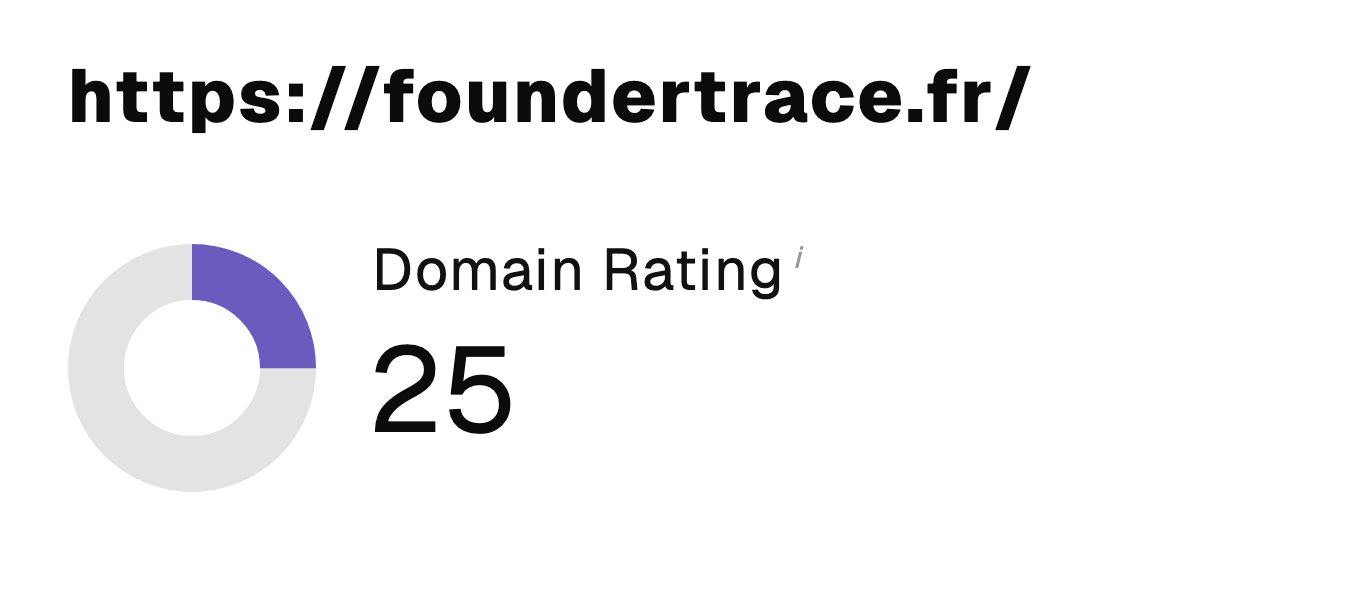 “I just let the Sorank software do its thing, and now my DR is 25 and my page is ranking higher.”
 Lucas Flandrefoundertrace.fr“I specialized in GEO thanks to Sorank. The GEO Leaderboard allows me to show my clients their position vs competitors on ChatGPT. It’s a real commercial differentiator.”
 MélanieSEO Freelance“Great service, works well for our website and helps us understand how to improve it to rank better on Google and elsewhere. Congrats, keep going, I recommend it.”
 Hugo T.E-commerce merchant