Preferences
Privacy is important to us, so you have the option of disabling certain types of storage that may not be necessary for the basic functioning of the website. Blocking categories may impact your experience on the website. More information

Privacy is important to us, so you have the option of disabling certain types of storage that may not be necessary for the basic functioning of the website. Blocking categories may impact your experience on the website. More information
Master internal linking strategy to improve crawlability, distribute authority, and boost rankings across your site.






Tools


Summary
Internal linking is linking from one page on your site to another page on your site. It improves crawlability, distributes authority, and guides users to conversion pages, all of which boost rankings.
Want to go further? Ask
Internal linking is one of the most underutilized SEO tactics because it's completely within your control and generates immediate results. Every time you write content, you have the opportunity to link to other pages on your site, distributing authority and helping Google understand your site structure. Unlike backlinks, you don't have to wait for someone else to link to you. You can improve your internal linking today.
In 2026, internal linking strategy matters more than ever because it directly impacts topical authority. When you create a comprehensive pillar page and link to it from 10 related articles, you signal to Google that this is your authoritative resource on the topic. The algorithm then ranks all related articles higher because they're connected to an authority page. This creates a flywheel: better content structure leads to better rankings, which leads to more backlinks and mentions, which further strengthens authority.
Google recommends using crawlable links (text links) to make your site easier to navigate. Google's crawlers follow text links to discover pages. If a page is not linked to from anywhere on your site, Google might not crawl or index it. Internal links create a pathway for crawlers to reach all your content. The more interconnected your pages, the more efficiently Google can crawl your site.
Crawl budget is the number of pages Google crawls in a given time period. Larger sites should optimize internal linking to ensure crawlers reach all important pages. If your homepage links to your main pillar pages, and those pages link to supporting articles, Google can efficiently discover your entire site structure in fewer crawl requests.
Link equity flows from high-authority pages to linked pages. If your homepage has high domain authority and links to a target page, that target page receives an authority boost. This is why sitemap links and footer navigation links are weak compared to body content links. Body content links are more selective; a link in body text to one specific page passes more equity to that page than a link in the footer to 50 pages.
Use this to your advantage. Link your most authoritative pages to your target ranking pages. If your homepage has the highest authority, link from it to your high-priority target pages. If you have a pillar article (comprehensive guide) that ranks well, link from it to supporting articles. This guides link equity flow and boosts the rankings of your most important content. Web.dev's learning paths use strategic internal linking to build topical authority in each section.
Link distance matters. Pages linked directly from your homepage (one click away) are crawled and ranked higher priority than pages three or four clicks away. This is called crawl depth. To maximize visibility for target pages, link to them from your highest-authority pages and keep them within two or three clicks from the homepage.
When planning your site architecture, prioritize links from important pages to important target pages. If a critical product page is buried four levels deep in your navigation, create a direct link to it from your homepage or main category page. Reduce friction. The shorter the path from homepage to target page, the faster Google crawls and ranks it. Additionally, users appreciate shortcuts, so you're optimizing for both crawlers and human visitors simultaneously.
Topic clusters are groups of related pages centered around a main pillar page. For example, on-page SEO is your pillar. Title tags, meta descriptions, headers, and keyword optimization are supporting pages. Your pillar page links to all supporting pages. Supporting pages link back to the pillar. This structure signals to Google that your pillar is the authoritative resource on the topic.
When you build a topic cluster correctly, your pillar page ranks for the main keyword, and all supporting pages rank for related long-tail keywords. As your topical authority grows, Google begins ranking your pages for keywords you didn't explicitly optimize for, because the algorithm understands you're an expert on the topic. This is the power of topical authority: comprehensive coverage of a topic creates a flywheel of rankings. The more interconnected your content, the stronger this effect becomes, exponentially increasing your organic visibility over time.
Anchor text is the visible, clickable text of a link. It tells both users and search engines what the linked page is about. "Click here" tells nothing. "Learn how internal linking boosts rankings" tells users and Google that the link leads to a page about internal linking. Descriptive anchor text improves both user experience and SEO.
Use your target keyword in anchor text when relevant, but don't force it. If you're linking to your on-page SEO article, good anchor texts include "on-page SEO," "on-page optimization," "page optimization," or "optimize your pages." These are natural phrases a writer would use. Avoid over-optimization with exact match anchor text for every link. Vary your anchor text to look natural. Google's structured data guidance shows how context and links work together to improve page understanding.
There are a few proven patterns. Hub and spoke means one main pillar page (hub) links to 5-10 supporting pages (spokes), and spokes link back to the hub. Sequential linking means pages link in a sequence, like chapters in a book. Contextual linking means pages link naturally in the body of content when relevant. Network analysis research confirms that hub-and-spoke models optimize information flow and authority distribution for building topical authority. The strongest internal link structure uses all three patterns in combination.
Don't over-link. Every link dilutes the value passed to target pages. If you have 50 internal links on a single page, each link passes little value. A page with 5 selective links to the most important pages passes more value to those targets. Be strategic. Link to pages that (1) users would want to click and (2) are important to your SEO goals.
Link from high-authority pages to target pages. If your homepage has the most authority, use it strategically to boost rankings for key target pages. Use descriptive anchor text that describes the linked page. Link naturally in body content; links in sidebars and footers are weaker. Create topic clusters around main themes and link them together.
Use breadcrumb navigation to help users understand site structure and pass equity to parent category pages. Update old content with links to new content. When you publish a new article, link to it from related articles. This accelerates indexing and distributes authority quickly. Use 404 redirect pages (pages users land on that don't exist) to identify broken links and update them to point to working content. Regularly audit your internal linking to ensure your most important pages are receiving appropriate link equity and that no critical pages are orphaned (not linked from anywhere).
Don't link from important pages to low-quality pages unless necessary. Each link you add reduces link equity distributed to other links. Don't use "next" and "previous" navigation links instead of semantic links. Don't over-link pagination pages. Don't link to pages you don't want Google to crawl (use rel="nofollow" or robots.txt instead). Don't create internal link spam by linking excessively for SEO without considering user value.
The rule of thumb: would a real user want to click this link? If not, don't include it. Internal linking should serve both users and search engines. When it does both simultaneously, you've optimized correctly. A poorly planned internal link structure can actually dilute your site's authority and create confusion for both users and crawlers.
Auditing internal linking for SEO means checking that every important page receives links from relevant pages, close to the home page. Four checks cover most problems:
Every new article is a chance to fix the structure: link it to the pillar page of its topic, and add a link to it from two or three older pages on the same subject. Sorank adds these internal links automatically each time it publishes an article, within the same topic cluster. The free URL extractor lists the links of any page to speed up the audit.
Internal linking is a free lever to improve your site's crawlability, distribute authority, and build topical authority. Strategic internal linking guides Google to your most important pages and tells the algorithm that you're an expert on key topics. Start by mapping your main topics and creating pillar pages. Link supporting articles to your pillar and back. Use descriptive anchor text. Update old content with links to new content. Monitor your link flow with tools like Google Search Console and SEO crawlers.
Over time, a well-structured internal linking strategy will boost all your rankings and create a cohesive site architecture that both users and search engines navigate easily. To audit your internal linking structure and find missed linking opportunities, try Sorank's SEO audit tool.
Sources

Internal links help Google crawl your site more efficiently and understand your site structure. They also distribute link equity (authority) from high-authority pages to important target pages, boosting their ranking potential. Additionally, internal links keep users on your site longer and guide them to conversion pages. Better crawlability, better authority distribution, and better user experience all lead to higher rankings.
Anchor text and link text are the same thing: the visible, clickable text of a hyperlink. 'Click here' is weak anchor text. 'Learn about on-page SEO' is strong anchor text because it describes what the linked page is about. Descriptive anchor text tells both users and search engines what to expect when they click. This helps search engines understand and rank the linked page for related keywords.
There's no hard limit, but pages typically have 3-7 internal links pointing to them from other pages on the site. More important pages (like your main pillar page) should receive more links from related pages. Link naturally. Don't force 10 links into a page if it only warrants 3. Quality and relevance matter more than quantity. Link to pages that genuinely add value to the reader.
THEY TRIED SORANK BEFORE YOU
 “I tested Sorank on a real client site and it's insane. It does everything an agency would bill you $1500 a month for. It's going into production on that client now.”
 Guillaume Guersanguersanguillaume.com“We are an Ads agency and we wanted to get our SEO back on track once and for all. Sorank gave us a clear view of our site, helped us prioritize optimizations, and properly structure our content. The tool is easy to use, well designed for a team, and very practical for centralizing tracking without having to juggle multiple platforms. A very solid foundation to start fresh with our SEO.”
 Gaspard MadouiAds Agency
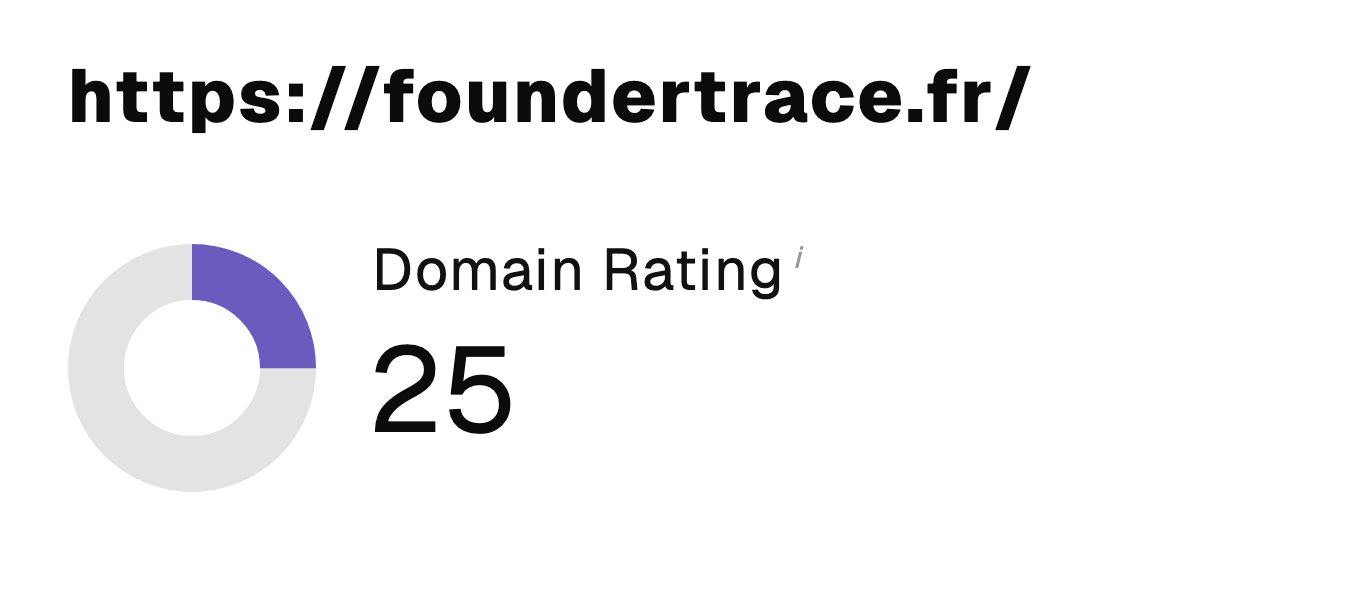 “I just let the Sorank software do its thing, and now my DR is 25 and my page is ranking higher.”
 Lucas Flandrefoundertrace.fr“I specialized in GEO thanks to Sorank. The GEO Leaderboard allows me to show my clients their position vs competitors on ChatGPT. It’s a real commercial differentiator.”
 MélanieSEO Freelance“Great service, works well for our website and helps us understand how to improve it to rank better on Google and elsewhere. Congrats, keep going, I recommend it.”
 Hugo T.E-commerce merchant