Preferences
Privacy is important to us, so you have the option of disabling certain types of storage that may not be necessary for the basic functioning of the website. Blocking categories may impact your experience on the website. More information

Privacy is important to us, so you have the option of disabling certain types of storage that may not be necessary for the basic functioning of the website. Blocking categories may impact your experience on the website. More information

A long-tail keyword is a longer, specific, lower-volume search query that converts better and ranks faster, and now powers conversational AI search visibility.







Tools


Summary
A long-tail keyword is a longer, more specific search query (usually three or more words) with lower search volume, lower competition, and clearer intent. These phrases convert better, rank faster, and increasingly match how people query the AIs.
Want to go further? Ask
Most search traffic does not come from a handful of popular phrases. It comes from millions of unique, specific queries that each get searched only a few times. A long-tail keyword is one of those longer, more detailed phrases, typically three or more words, that a user types when they know exactly what they want. Instead of searching "running shoes," they search "best running shoes for flat feet women." The phrase is more specific, the volume is lower, and the intent is much clearer.
The name comes from the search demand curve. A small number of broad "head" terms sit at the front with enormous volume, then a long tail of specific phrases stretches out behind them. Studies have estimated that long-tail queries make up the large majority of all Google searches, and roughly 15% of daily queries have never been searched before. That endless variety is exactly why long-tail strategy matters: you cannot rank for every broad term, but you can own thousands of specific ones.
Specificity, not just length, defines a long-tail keyword. Length is a useful signal, most long-tail phrases run three to seven words, but the real marker is how narrowly the query describes a need. "Coffee" is a head term. "Organic coffee subscription for cold brew" is long-tail because it names the product, the type, and the use case.
Three traits travel together in long-tail phrases: lower search volume, lower competition, and higher intent. Each individual phrase brings modest traffic, but together they add up to the majority of qualified visits. Because fewer sites target each exact phrase, you can rank without the authority that broad terms demand.
Head terms are short, broad, and high-volume ("shoes," "insurance," "CRM"). They attract huge traffic and brutal competition, and the intent behind them is ambiguous. Someone searching "shoes" might want to buy, compare, learn, or just browse.
Body keywords (sometimes called medium-tail) sit in the middle: two or three words with a qualifier that hints at intent, like "women's running shoes." Long-tail keywords are the most specific tier, and they reveal intent almost completely. A healthy strategy targets all three, but for newer sites the long tail is where you win first. Understanding the broader practice of keyword research helps you map terms across the entire curve.
Specific queries signal advanced intent. A user who searches "buy noise cancelling headphones under 200" is closer to a decision than one who searches "headphones." The closer a query is to a purchase or a precise answer, the higher the chance the visitor takes the action you want.
The numbers support this. Industry analyses have repeatedly found that long-tail keywords convert at meaningfully higher rates than head terms, often more than double. The reason is alignment: when your page answers the exact phrasing of the query, the visitor finds what they came for and is far more likely to convert.
Fewer competitors target each exact phrase, which lowers the keyword difficulty and makes ranking realistic. Head terms can take months or years of authority building to crack. A well-written page can rank for a specific long-tail phrase quickly, sometimes within weeks, because the competitive field is thin.
This is why long-tail keywords are the smartest starting point for new and growing sites. Rather than fighting incumbents for "project management software," you target "project management software for small construction teams" and capture a defined, motivated audience. Checking the keyword difficulty of each phrase tells you which battles you can actually win.
Long-tail phrases clarify intent more than any other keyword type. "How to clean a coffee machine with baking soda" is unmistakably informational. "Espresso machine with built-in grinder for sale" is transactional. The wording itself tells you what content to build. Matching your page to the underlying search intent is what turns a ranking into a conversion.
Still, never assume intent from the words alone. Check the live results. Google's guidance on helpful content makes clear that pages succeed when they satisfy the real need behind the query, so look at what already ranks and confirm your format matches.
Google's own surfaces are a free starting point. Autocomplete, People Also Ask, and Related Searches expose the exact phrases real users type. Type a seed term and watch the suggestions populate with specific variations and questions.
Dedicated tools go deeper. Keyword research platforms let you filter by volume, difficulty, and question format, and they surface phrases competitors rank for that you do not. Google Search Console is especially powerful here: its performance report reveals queries where your pages already appear on page two or three, ready to be improved. Sorank's keyword research tool automates this discovery and groups related long-tail phrases into clusters you can target with a single page.
Forums and question sites reveal authentic language. Reddit, Quora, niche communities, and product review threads show how your audience actually describes problems, often with phrasing no tool captures. Mining these sources uncovers content gaps and the natural-language queries that fuel long-tail strategy.
Pair this with the related metrics in your toolkit. Even a low search volume can be worth targeting when the intent is strong and the competition is light, because a handful of high-intent visits often outperforms a flood of unqualified ones.
AI search has made long-tail queries more valuable, not less. When people ask ChatGPT, Perplexity, or Google's AI features a question, they phrase it in full, natural sentences. Average query length has grown as users get comfortable with conversational search, and those longer queries are, by definition, long-tail. Content built around specific questions is exactly what the AIs look for when they synthesize and cite answers.
There is also a traffic nuance. Broad and medium-tail queries are more likely to trigger AI Overviews that answer the user without a click. Many long-tail queries are more specific than an AI summary covers, which can preserve direct clicks to your page. Targeting precise, intent-rich phrases protects your traffic on two fronts: it earns citations in AI answers and keeps the queries that still send visitors directly to your site.
Cluster, do not scatter. Rather than writing a thin page for every individual phrase, group related long-tail keywords that share the same intent and answer them in one comprehensive piece. A single guide on "choosing running shoes for flat feet" can rank for dozens of related long-tail variations at once.
Then connect those clusters with internal links so search engines and AI systems see the depth of your coverage. Over time, this compounding library of specific, high-intent pages becomes a durable traffic engine that broad-term competitors cannot easily copy.
A long-tail keyword adds detail to a broad topic: a use case, a location, a budget, a comparison or a problem. These examples show how one head term branches into long-tail queries for each search intent:
| Head term | Intent | Long-tail keyword example |
|---|---|---|
| running shoes | Informational | how to choose running shoes for flat feet |
| running shoes | Commercial | best running shoes for beginners under 100 dollars |
| running shoes | Transactional | buy waterproof trail running shoes women size 8 |
| CRM | Commercial | CRM for real estate agents with WhatsApp integration |
| accountant | Local | freelance accountant for startups in Lyon |
Each long-tail keyword deserves its own page only when the intent differs. Variations with the same intent ("cheap running shoes for beginners" and "affordable beginner running shoes") belong on one page, otherwise you create keyword cannibalization. Sorank's keyword research groups these variations automatically and flags easy wins, and you can explore ideas for free with the keyword suggestions tool.
Long-tail keywords are the specific, lower-volume, higher-intent phrases that make up most of search. They convert better, rank faster, face less competition, and now align perfectly with conversational AI search. The winning approach is to research the exact phrases your audience uses, group them into intent-driven clusters, and build genuinely helpful pages around them. Start small with achievable terms, measure what ranks, and expand your clusters around the topics where you gain traction. See how Sorank uncovers high-converting long-tail keywords and tracks your visibility across search and the AIs.
Sources

There is no strict cutoff, but most long-tail keywords contain three or more words. Length is only a signal, though. What truly defines a long-tail keyword is specificity: how narrowly the phrase describes a single, clear need. A four-word phrase that is still vague behaves like a head term, while a precise three-word query can be genuinely long-tail. Focus on intent and specificity rather than counting words.
Yes, in most cases. Each long-tail keyword brings modest traffic on its own, but they collectively make up the majority of all searches. They also convert at much higher rates because the intent is clearer, and they are far easier to rank for thanks to lower competition. A handful of high-intent visitors who take action is usually more valuable than a large volume of unqualified traffic from a broad term.
They matter more than ever. People phrase questions to AI in full, natural sentences, which are essentially long-tail queries. Content built around specific questions is exactly what AI systems read, synthesize, and cite. In addition, many long-tail queries are too specific to be fully answered by an AI overview, so they can still drive direct clicks to your page. Targeting precise, conversational phrases helps you win both AI citations and organic traffic.
THEY TRIED SORANK BEFORE YOU
 “I tested Sorank on a real client site and it's insane. It does everything an agency would bill you $1500 a month for. It's going into production on that client now.”
 Guillaume Guersanguersanguillaume.com“We are an Ads agency and we wanted to get our SEO back on track once and for all. Sorank gave us a clear view of our site, helped us prioritize optimizations, and properly structure our content. The tool is easy to use, well designed for a team, and very practical for centralizing tracking without having to juggle multiple platforms. A very solid foundation to start fresh with our SEO.”
 Gaspard MadouiAds Agency
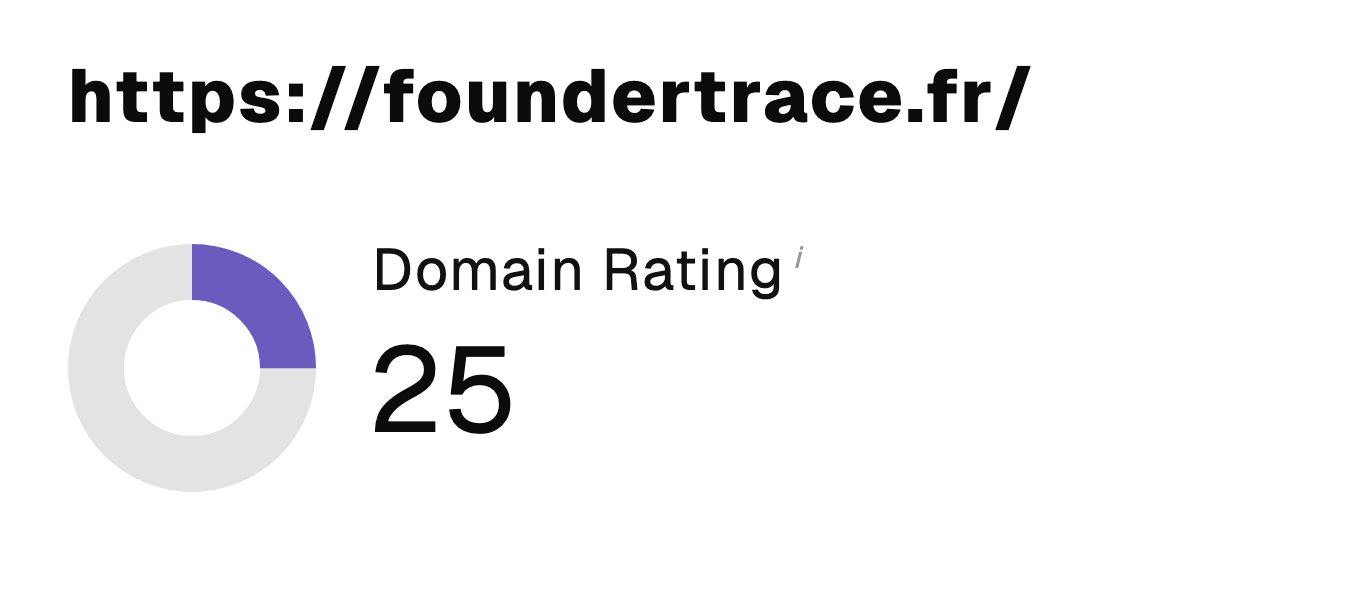 “I just let the Sorank software do its thing, and now my DR is 25 and my page is ranking higher.”
 Lucas Flandrefoundertrace.fr“I specialized in GEO thanks to Sorank. The GEO Leaderboard allows me to show my clients their position vs competitors on ChatGPT. It’s a real commercial differentiator.”
 MélanieSEO Freelance“Great service, works well for our website and helps us understand how to improve it to rank better on Google and elsewhere. Congrats, keep going, I recommend it.”
 Hugo T.E-commerce merchant