Preferences
Privacy is important to us, so you have the option of disabling certain types of storage that may not be necessary for the basic functioning of the website. Blocking categories may impact your experience on the website. More information

Privacy is important to us, so you have the option of disabling certain types of storage that may not be necessary for the basic functioning of the website. Blocking categories may impact your experience on the website. More information

Master keyword research in 2026. Learn search volume, intent, competition analysis, and how to find profitable keywords.







Tools


Summary
Keyword research is discovering the search terms your audience uses to find solutions, then building content strategy around those keywords to drive qualified traffic.
Want to go further? Ask
Keyword research is the foundation of modern SEO. It answers the most critical question: what should you write about and optimize for? Without keyword research, you're creating content in the dark, hoping someone searches for it. With keyword research, you're building on actual demand signals, ensuring every piece of content you create targets words people are actively searching for.
In 2026, keyword research is even more important because the landscape has diversified. Google searches, AI assistant queries, voice searches, and conversational questions all generate search traffic. Understanding not just the keywords but the intent, context, and phrasing behind them separates SEO winners from those spinning their wheels. This guide walks you through the full process, from initial brainstorming to final prioritization.
All keywords fall into four categories based on what the searcher wants. Informational intent means someone wants to learn ("how to optimize images for web"). Navigational intent means they're looking for a specific site ("HubSpot login"). Commercial intent means they're researching options ("best CRM software"). Transactional intent means they're ready to buy ("buy Vue.js hosting").
Each type requires different content. Blog posts target informational intent. Your homepage or tool login page target navigational intent. Comparison or review pages target commercial intent. Product pages, sign-up pages, and checkout pages target transactional intent. Matching content type to intent is critical because a user with transactional intent will bounce from an educational article, no matter how well-written.
Start with brainstorming. What problems does your product or service solve? What questions do your customers ask in sales calls? What features do you want to be found for? List 10 to 20 core keywords, also called "seed keywords." These are broad, high-level keywords that define your business category.
For example, if you run a fitness platform, your seed keywords might be "workout app," "personal training," "fitness tracking," "weight loss program." Don't worry about volume yet. Just capture the main themes. Google's Search Central documentation emphasizes starting with these core topics before expanding.
Once you have seed keywords, expand them into longer variations. These are called long-tail keywords (3+ words) and they're valuable because they're more specific and often less competitive. "Workout app" is broad. "Best free workout app for beginners" is a long-tail version of the same idea, with much lower competition and higher conversion intent.
Tools can help you find variations. Google Search Console shows actual search queries that led people to your site, giving you real data on how people phrase searches. Google's autocomplete feature (the dropdown when you start typing) also shows popular variations. Check competitor sites in your industry to see what keywords they're optimizing for.
Search volume is how many people search for a keyword monthly (on average). Higher volume means more potential traffic but usually higher competition. Keyword difficulty (KD) is a score (0-100) estimating how hard it is to rank in the top 10 for that keyword. Higher KD means you'll need more backlinks, more content depth, and more authority.
The sweet spot is keywords with decent volume (100+ monthly searches) and achievable difficulty (30-60 KD range). These bring traffic without requiring you to outrank massive established sites. For new sites, targeting 20-40 KD keywords is smarter than going for the highest-volume, 90+ KD keywords you'll never rank for.
Commercial potential is how likely a keyword is to lead to a conversion (sale, sign-up, lead). Keywords with high intent closer to purchase are worth more. A keyword like "buy SaaS software" has higher commercial potential than "what is SaaS." Some keywords have low search volume but high value because searchers are ready to spend money.
Look at the search results for your target keyword. If the top results are product pages and pricing pages, the intent is clearly commercial. If the top results are blogs and guides, the intent is informational. Research shows that commercial and transactional keywords drive 3x higher conversion rates than informational keywords, so prioritize them if your goal is sales or sign-ups.
Keyword difficulty varies dramatically based on competition and domain authority requirements. A brand new website cannot realistically rank for "SEO" (KD 90+) in the first year. You'll be competing against established sites with thousands of backlinks and decades of domain history. Instead, new sites should focus on long-tail keywords in the KD 20-50 range, where you can establish initial rankings and gain momentum.
As your domain authority grows through backlinks and content, you can gradually target more competitive keywords. This is the concept of "climbing the difficulty ladder." Start with easy wins to build momentum, then progressively target harder keywords as your site's authority increases. A keyword with 100 monthly searches and KD 30 may bring 10 monthly visitors initially, but ranks quickly. Three months later, expand to keywords with 300+ volume and KD 45 based on your new authority.
Track your site's ability to rank for keywords at different difficulty levels. If you're ranking in top 10 for several KD 50 keywords, you're ready to target KD 60. If KD 50 keywords are still on page 2, focus on building more backlinks and content depth before jumping to higher difficulty targets. This prevents wasted effort on keywords you can't yet rank for.
Examine what competitors are ranking for. Enter a competitor's domain into search tools and see which keywords drive them traffic. Look for gaps: keywords your competitors rank for that you're missing. These are opportunities. Also look for keywords where you rank but competitors don't, which you should double down on.
Web.dev's SEO learning path emphasizes the importance of analyzing competitor content structure to understand how they're targeting keywords with depth and topical authority. If your competitor is ranking with a thin page, you can outrank them with better, longer content on the same topic.
Now prioritize. Create a spreadsheet with columns for keyword, search volume, difficulty, intent, commercial value, and priority ranking. Sort by a formula: volume x (100 - difficulty) x commercial value. This weights high-opportunity keywords (good volume, low difficulty, high value) at the top.
Group keywords by topic cluster. Related keywords should be addressed in the same pillar page or series of linked articles. For example, "meta description" and "title tag" both relate to on-page SEO and should be mentioned in your main on-page SEO guide. This builds topical authority, which helps you rank for all related keywords faster. Our Sorank platform automates keyword research and clusters, saving hours of manual work.
AI assistants like ChatGPT and Perplexity handle searches differently than Google. They answer conversational questions, often without clicking links. However, they still cite sources. The keywords you optimize for should also inform the topics and questions you create content around, because being cited in AI answers requires topical authority and expertise, which keyword research uncovers.
Keyword research in 2026 is about understanding the full search landscape: Google queries, AI questions, voice searches, and social queries. The principles remain the same. Find what people want, understand their intent, and create content that answers their specific question. Do this well, and both Google and the AIs will send you traffic.
Several approaches complement each other. Google Search Console provides real queries users typed to find your site, revealing language and phrasing your audience actually uses. Google Autocomplete and "People Also Ask" sections show genuine search behavior. Answer the Public aggregates these data sources into visual keyword clusters.
Paid keyword research tools (many with free tiers) speed up the process significantly. They provide search volume estimates, difficulty scores, and competition metrics at scale. However, they all have limitations: volume estimates vary between tools, and difficulty algorithms differ. Always cross-reference data from multiple sources and validate with actual search results before committing to a keyword strategy. Free tools like Google Trends can show seasonality patterns, revealing which keywords spike during certain months or events, helping you time content publication strategically.
Keyword research is the strategic foundation of all SEO work. It reveals what your audience is searching for, what intent they have, and how to prioritize your content calendar. The process involves identifying seed keywords, expanding to long-tail variations, assessing volume and difficulty, and analyzing commercial potential. In 2026, you must also consider how those keywords translate to AI search and topical authority.
The best keywords are those with real search demand, manageable difficulty, and alignment with your business model. Start with research, then build content that comprehensively answers the questions behind those keywords. Over time, you'll build topical authority and begin ranking for dozens of related keywords automatically. To streamline this entire process and automate content generation around your keyword strategy, start with Sorank's keyword research and content automation tools.
Sources

Keyword research is the process of discovering the words and phrases your target audience searches for online. It matters because it informs your entire SEO strategy. If you optimize for keywords nobody searches for, you'll get no traffic. If you target high-intent keywords, you attract customers ready to buy or convert. Keyword research bridges the gap between what your business offers and what people actually want.
Search intent is the reason someone types a query into Google. There are four main types: informational (learning), navigational (finding a site), commercial (comparing products), and transactional (buying now). Match your content type to intent. A page targeting 'how to write a title tag' should be educational. A page targeting 'project management software' should help users compare and buy. Mismatched intent kills conversion rates.
Evaluate keywords on three dimensions: search volume (is anyone searching?), commercial intent (will they convert?), and difficulty (can I rank?). Low-volume keywords are easier to rank but bring less traffic. High-volume, low-difficulty keywords are rare. Aim for 'middle-ground' keywords with decent volume, clear intent match, and achievable difficulty. Long-tail keywords (3+ words) are often easier to rank and attract more qualified traffic.
THEY TRIED SORANK BEFORE YOU
 “I tested Sorank on a real client site and it's insane. It does everything an agency would bill you $1500 a month for. It's going into production on that client now.”
 Guillaume Guersanguersanguillaume.com“We are an Ads agency and we wanted to get our SEO back on track once and for all. Sorank gave us a clear view of our site, helped us prioritize optimizations, and properly structure our content. The tool is easy to use, well designed for a team, and very practical for centralizing tracking without having to juggle multiple platforms. A very solid foundation to start fresh with our SEO.”
 Gaspard MadouiAds Agency
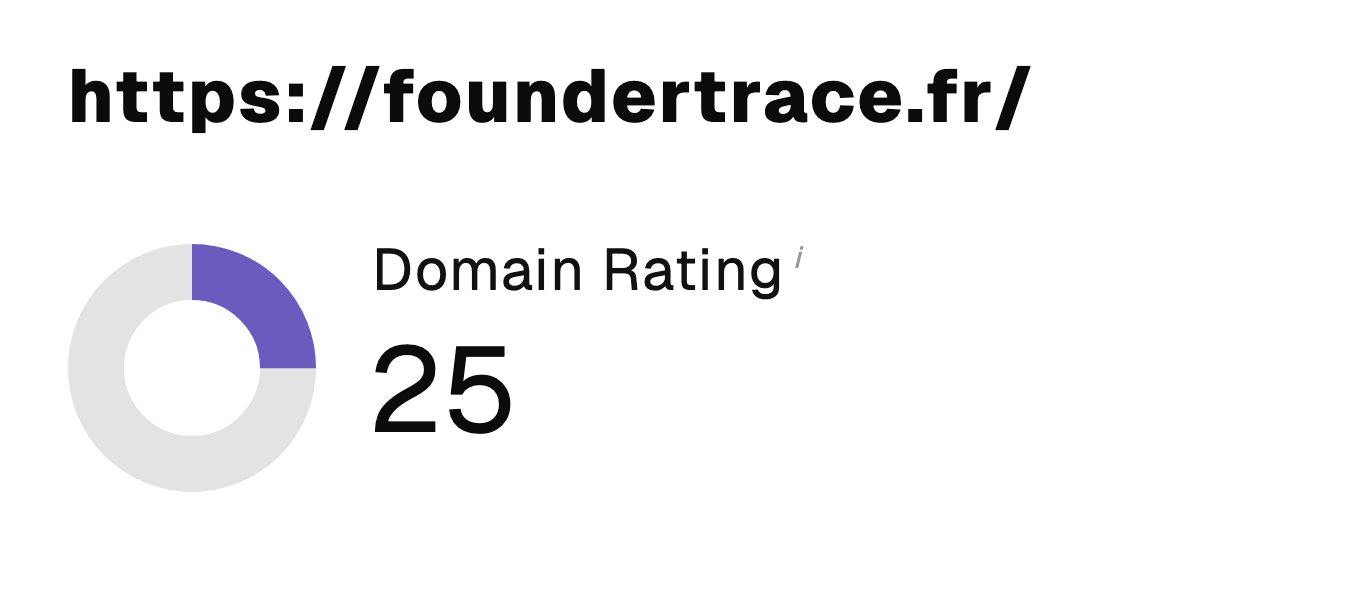 “I just let the Sorank software do its thing, and now my DR is 25 and my page is ranking higher.”
 Lucas Flandrefoundertrace.fr“I specialized in GEO thanks to Sorank. The GEO Leaderboard allows me to show my clients their position vs competitors on ChatGPT. It’s a real commercial differentiator.”
 MélanieSEO Freelance“Great service, works well for our website and helps us understand how to improve it to rank better on Google and elsewhere. Congrats, keep going, I recommend it.”
 Hugo T.E-commerce merchant